



In the world of high-stakes horology, there are watches that tell time, and then there are those that tell a story of recording time.
During a recent record-shattering Phillips auction in New York, US, the gavel fell at a staggering USD10.8mil (RM43.8mil) for a piece of titanium and gold that redefined both categories.
The sale set a new world auction record for F.P.Journe and a new world auction record for a watch by an independent watchmaker.
This wasn’t just a luxury accessory; it was the F.P.Journe “FFC” Prototype and the personal timepiece of cinematic titan Francis Ford Coppola.
The story began not in a Swiss workshop, but over a glass of wine at the award-winning filmmaker’s Inglenook winery in 2012.
The director of The Godfather posed a deceptively simple question to master watchmaker François-Paul Journe: “Has anyone ever tried to tell time using the five fingers of a human hand?”
Journe, a man who rarely takes cues from anyone, was captivated.
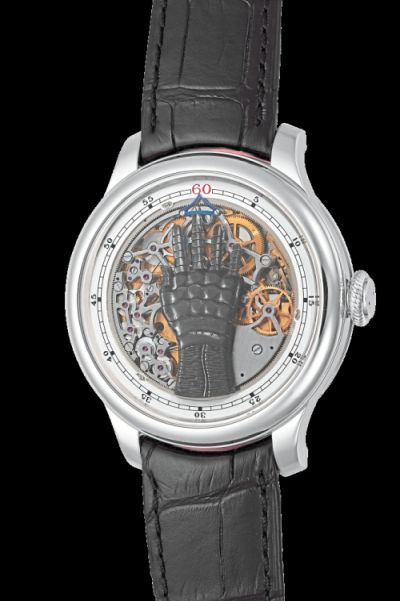
It took seven years of relentless engineering to turn that “what if” into a mechanical reality, resulting in a movement only 8.1mm thick.
This was a watch that lacked traditional hands entirely.
Instead, in its place is a central, black-gloved automaton inspired by the 16th-century prosthetic designs of surgeon Ambroise Paré which uses articulated fingers to “count” the hours.
This gives the watch a futuristic, almost steampunk look with overlapping metallic plates and screws reminiscent of medieval gauntlets.
The FFC Prototype features steel bridges, and is one of only two prototypes alongside François-Paul’s with a rotating white minutes ring and a black-treated titanium hand.
The FFC is the first and only Journe timepiece which idea came from someone other than François-Paul, and is one of only six prototype timepieces assembled by François-Paul himself that have been sold.
While the mechanism is a feat of genius, Journe and Coppola acted as guardians of a different craft.
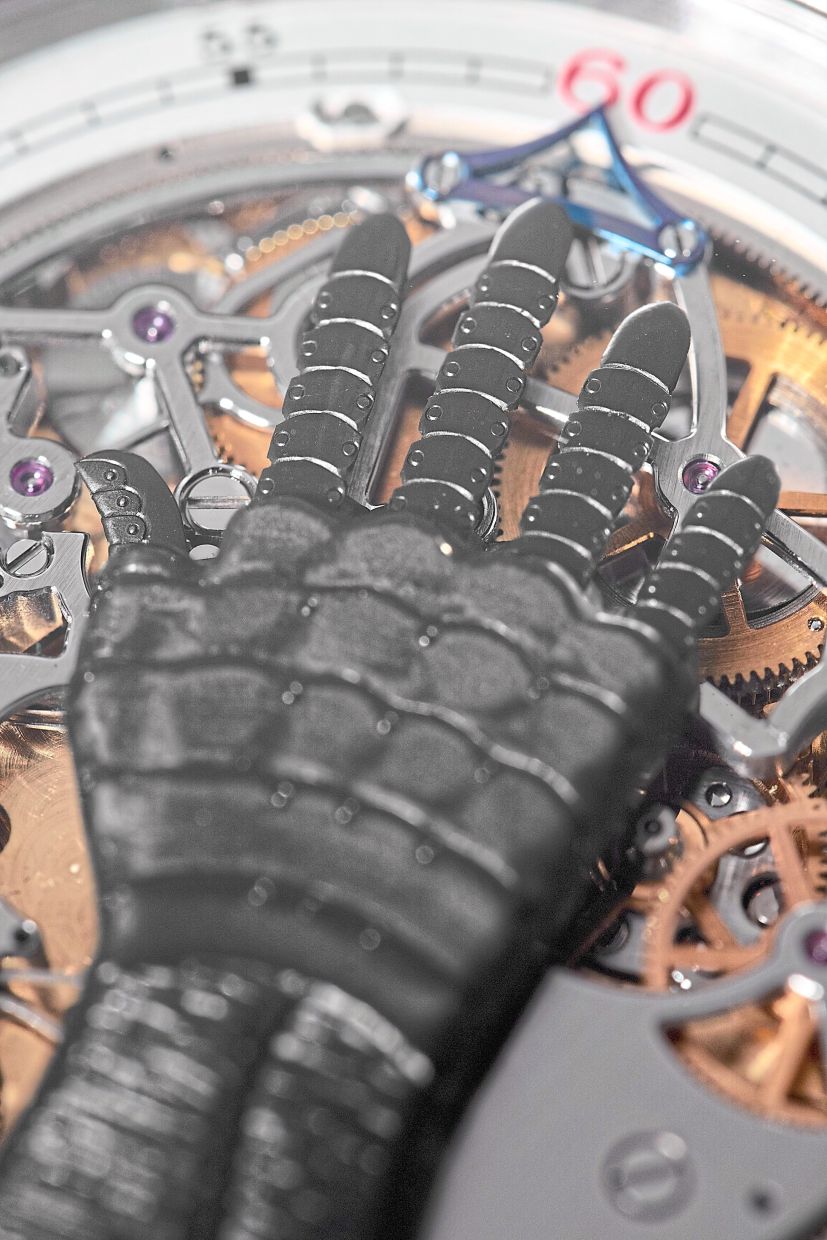
They took a 500-year-old anatomical study and wove it into the “Octa” calibre movement, proving that true innovation requires a deep respect for the past.
“This FFC Prototype is more than a watch – it is a singular work of art, a technical marvel and a deeply personal object, made for one of the greatest filmmakers of all time.
“Its incredible provenance, remarkable creativity and exceptional rarity place it firmly among the most important timepieces ever to appear at auction,” said Paul Boutros, deputy chairman and head of watches, Americas.
For Coppola, parting with the watch was an act of sacrifice for his art.
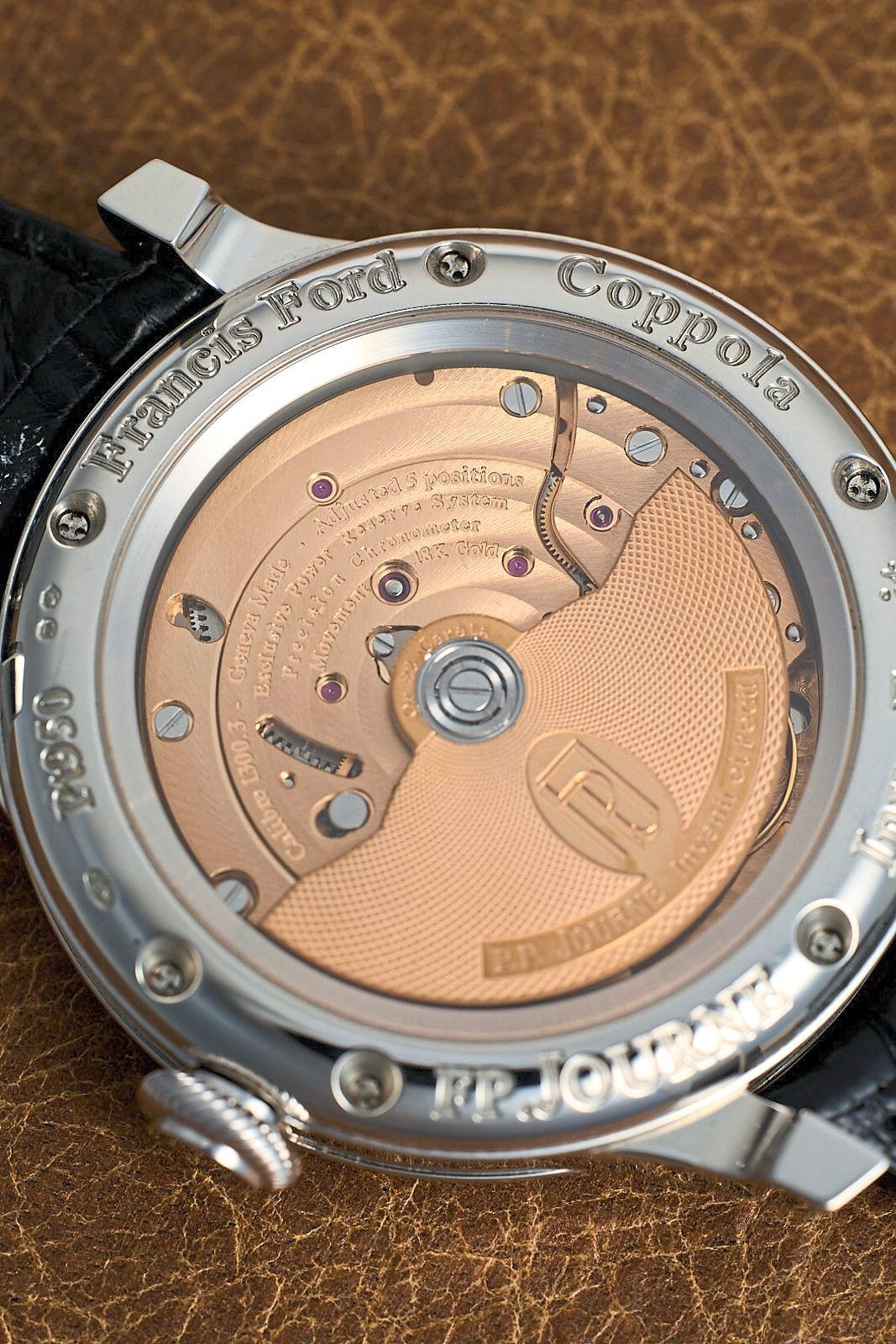
The proceeds from the auction − making it the most expensive F.P.Journe ever sold − were reportedly directed toward his self-funded epic, Megalopolis.
It is the ultimate movie move: trading a physical heirloom to ensure a creative legacy lives on.
In an era of digital perfection, the FFC reminds us that we crave the tactile and human touch.
Whether it’s the anatomical study of yesteryears or the black titanium fingers of a million-dollar watch, heritage isn’t something you keep in a box.
It’s something you wear and move with, and eventually, pass on.
