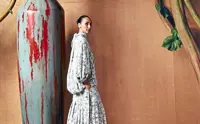
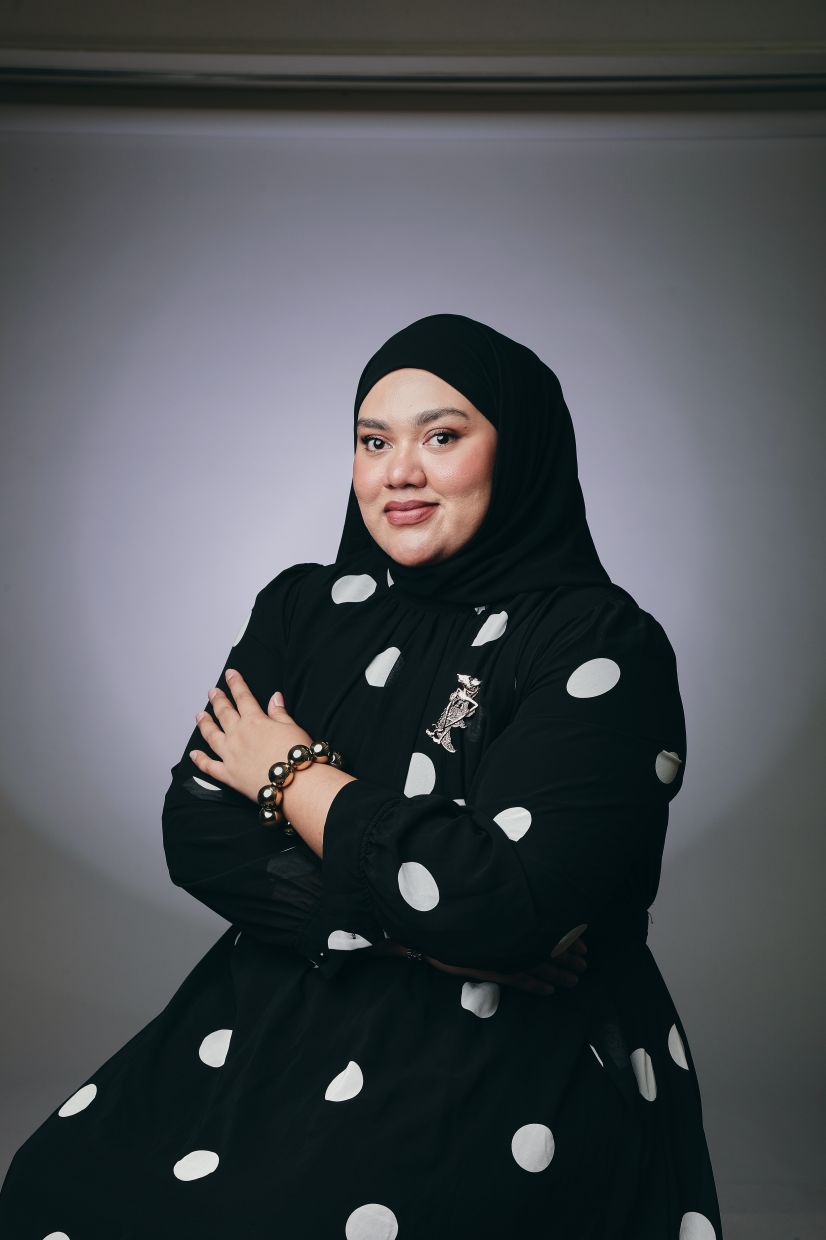
It is often said that those who can’t, teach – a notion Natasha Khan disproves. As both a designer and a lecturer, she is equally comfortable crafting garments in the studio as she is guiding the next generation of fashion talents.
Despite having an outward stern demeanour, Natasha quickly warms up during the photoshoot and interview.
It is perhaps an indication of how she adopts a no-nonsense approach when dealing with her students.
The 27-year-old Malaysian, currently attached to Management & Science University, laughs when questions turn to how they might react to seeing her fronting the fashion pages of a newspaper.
“I think they’re more used to me being a serious educator,” she shares.
“When in class, I carry myself in a more proper manner. I’m mentoring about 50 students per semester, so I have to be as focused as can be on that.”
Natasha reveals that Khan is her mother’s surname. She only adopted it as an “industry name”, which is now also what she calls her fashion label.
Born Nur Alia Natasha Yahaya in Penang, her upbringing informs her passion for all things stylish.
“The women in my family love to dress up,” she says. “Like my mum and grandmother, they will really put thought into their outfits whenever leaving the house, even if it’s for a trip to the market.”
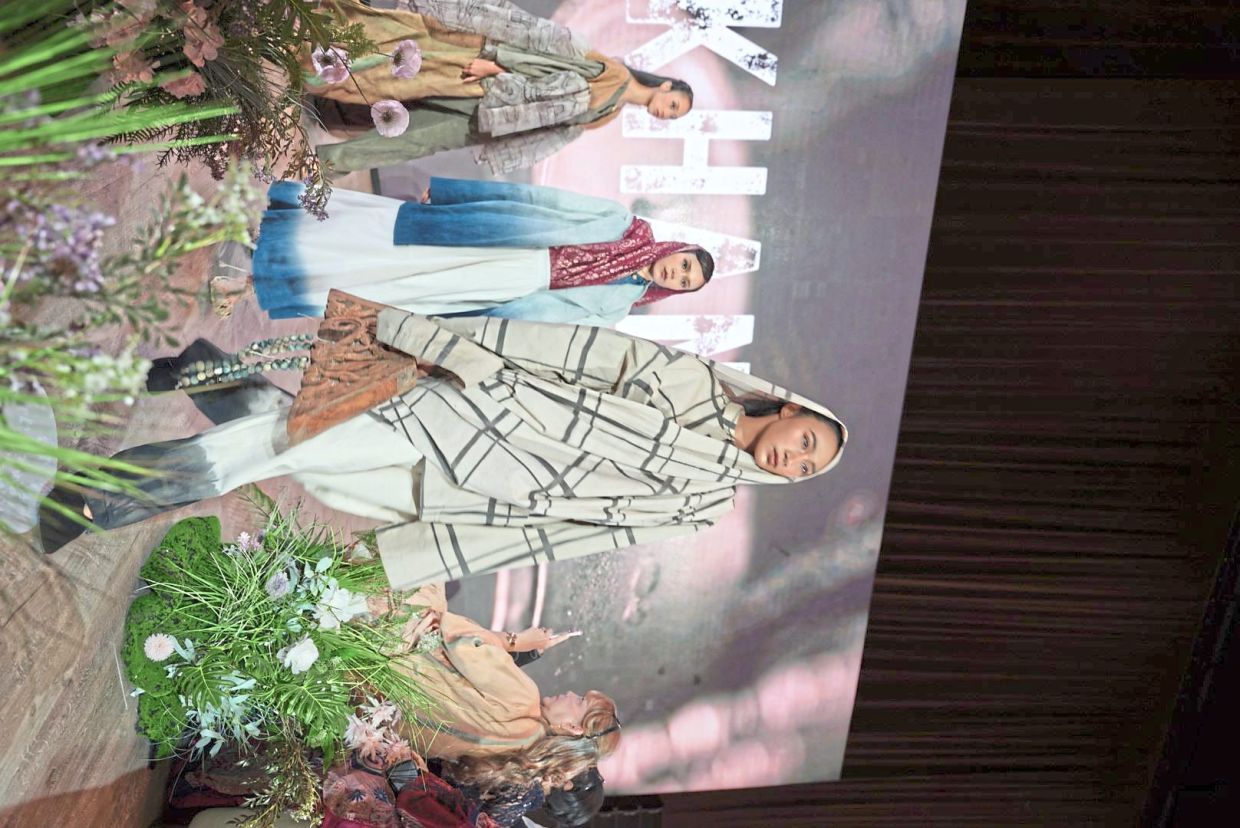
Talking about her Nkhan brand, she relates that it is one rooted in sustainability, storytelling and cultural consciousness.
“My work often carries the spirit of ‘Malaysian-ness’ – the humility and resilience, as well as the quiet rebellion expressed through upcycling, textile experimentation and silhouettes that honour our past while moving confidently into the future.”
You wear two hats as both a designer and an educator. How did that come about?
I began teaching after finishing my studies in fashion. It was a calling I didn’t expect, but one I grew into naturally.
When I stepped into the classroom and saw how young creatives responded to being guided, challenged and supported, I knew I didn’t want to choose between the two. Both fuel each other.
Read more: Staying ahead in fashion: Malaysian stylist Andrea Wong’s narrative approach
As a practising designer, what lessons from your own challenges have most influenced how you mentor young creatives?
My biggest lesson is that process matters more than perfection.
I struggled with wanting things to be flawless, especially in sustainable fashion where experimentation is messy and unpredictable.
Now I teach my students that failure is part of the journey. It sharpens creativity, builds resilience and makes you braver.
I mentor them to trust slow growth, to honour research and to always ask why they are creating. Without intention, design becomes empty.
What did the real world teach you the hard way? How do you pass that lesson on now?
The industry showed me that talent alone is never enough. Consistency, humility and adaptability matter just as much.
No textbook talks about burnout, client pressure, production delays or the emotional toll of constantly making. But these challenges taught me to protect my mental and creative well-being.
To my students, I emphasise boundaries, self-awareness and the importance of understanding the business side of fashion.
I teach them to be artists and professionals, because both are essential for survival.
Do you think Malaysian designers today feel pressured to be “global”, and what gets lost when they chase that?
Yes – and I think when designers chase “global”, they sometimes lose the intimacy nuances, and cultural honesty that make their work uniquely Malaysian.
The world doesn’t need more homogenised fashion. It needs voices that reflect their roots with pride. Designers should aim to be globally relevant, but not globally generic.
Social media has made success look instant. It also gives the impression that virality is more attractive than mastery. Young designers often measure their worth through likes, impressions and trends. It’s both empowering and dangerous.
It’s empowering because it gives visibility. But it becomes unhealthy when they equate visibility with value.
I always remind them: your craft must outlive the algorithm.
Read more: How Hatta Dolmat designs for impact, keeping fashion both responsible and bold
What’s the first memory you have of falling in love with fashion, and does that excitement still feel the same today?
My earliest memory is watching how clothes could transform people – the confidence, the expression, the storytelling. I was fascinated by how fabric could become emotion.
And yes, the excitement still feels the same, but now it carries depth.
Today, fashion is not just love. It’s responsibility, research and impact. The spark is still there, just more mature.
When you imagine Malaysian fashion ten years from now, where do you hope your influence – both as an educator and a designer – will still be felt?
I hope my influence is felt in the mindset of young designers who dare to question, dare to experiment and dare to design with purpose.
I want to see a generation who values fashion not as a trend, but as a commitment – who understands culture not as decoration, but as narrative, who creates fashion that heals, connects and represents.
If 10 years from now, Malaysian fashion is more thoughtful, more responsible and more proudly rooted, and if even a small part of that came from my classrooms or my collections, then I’ve done what I was meant to do.