One thing about loving pets is that we witness the ageing process at a rapid pace.
One moment your beloved pet is a wriggling energetic puppy and the next day you spot grey hairs in that muzzle while your pet’s greetings involve less jumping and more tail wagging.
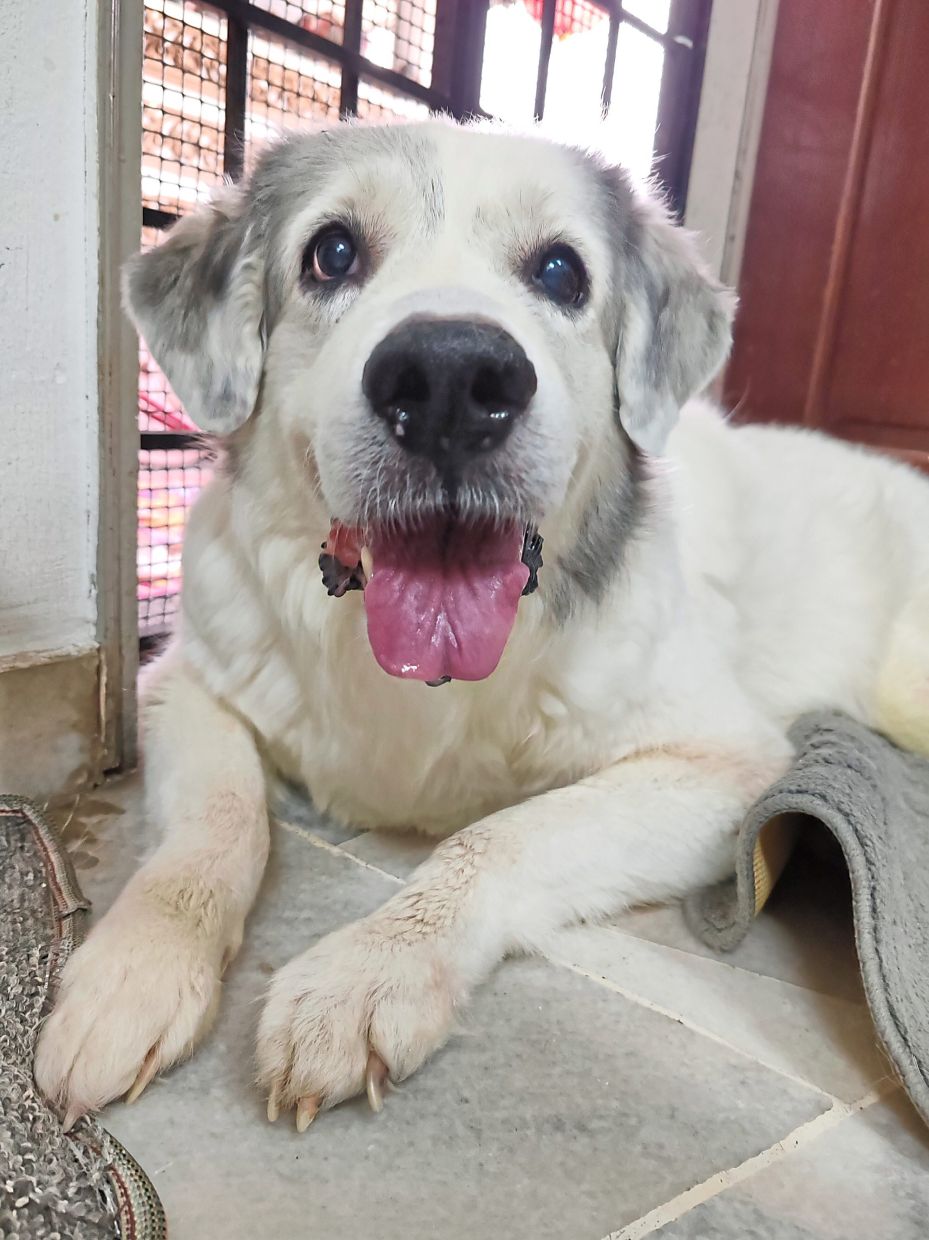
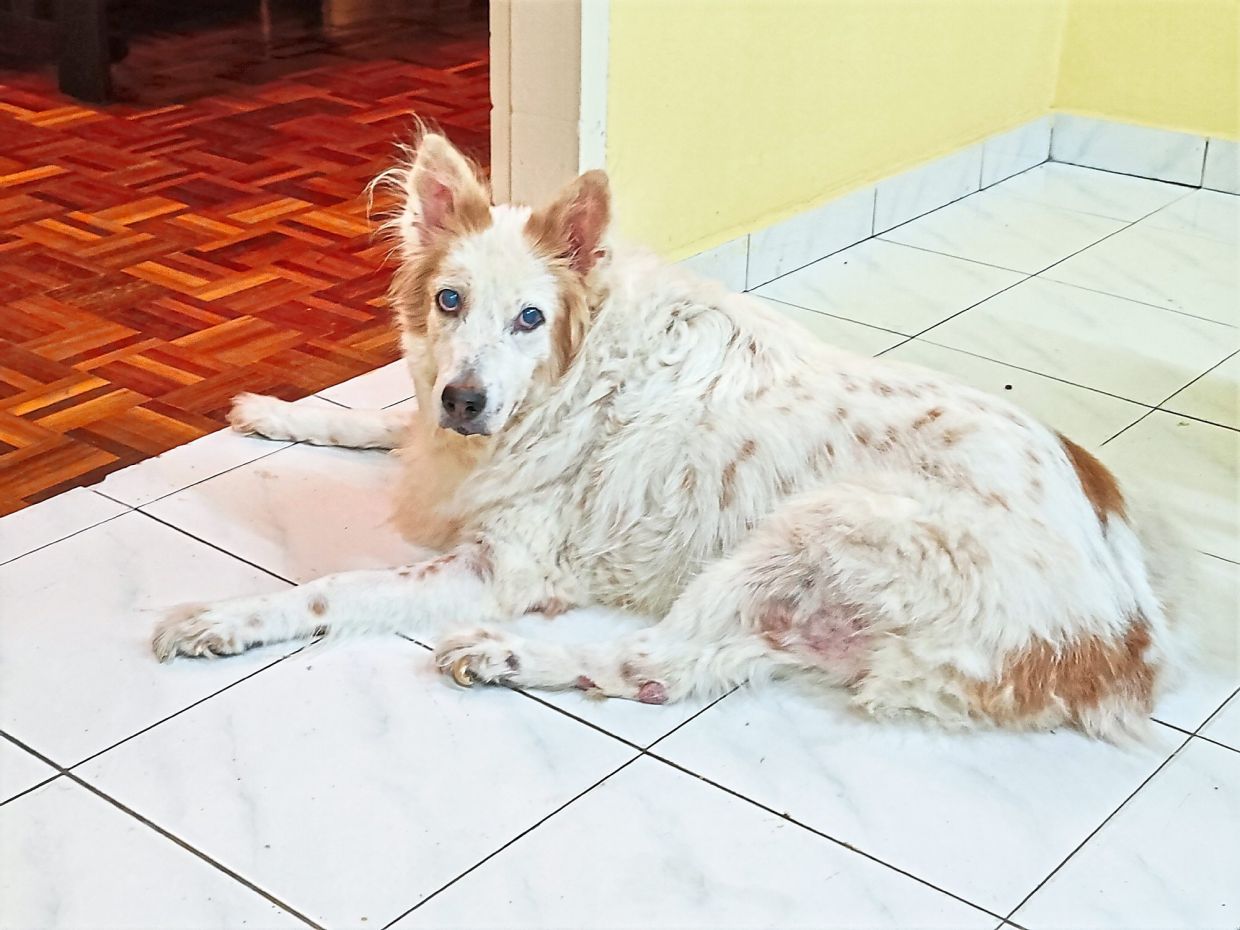
Olive Chan, a veterinary assistant who has also rescued animals for over 15 years, has two senior dogs: Lizzy, a 14-year-old mixed breed, and Hestia, a 12-year-old Pyrenean Mountain Dog. In human terms, both ladies are in their late 70s.
“When Lizzy was young, she was very keen on tricks and toys,” Chan remembers. “Now that she’s older, she has mellowed and slowed down. What I notice most is that her eyesight has deteriorated.”
“Lizzy is not blind but she has difficulty seeing. She startles sometimes if you touch her, so I now let her know I’m there by saying hello before I give her a hug.”
Pyrenean Mountain Dogs originally worked in the mountains separating Spain and France, protecting sheep, goats and cows from attack by wolves and bears. They are therefore huge dogs, with an impressive presence.
Their presence is so iconic that Louis XIV of France, the famous Sun King, brought them to court and called them Royal Dogs of France.
Hestia has a royal heritage and like elderly indulged ladies, she can be difficult.
“Tia gets grumpy if you try to help her move,” Chan sighs.
“She’s very independent but she’s quite old now, and big dogs like her become stiff. Sometimes she needs help but she’s not keep on us giving her a hand. She can get nippy sometimes too but it’s very gentle. Also, I can see she doesn’t mean it.”
Keeping them happy
Given the old lady was bred to fight bears, the fact that she doesn’t hurt is testament to her gentle nature.
But it does raise an important question: how do you keep older pets happy?
“They key is making walks and playtime fun but comfortable,” Chan says. “When they were young, we had lots of walks. Today we have very few.”
Tia’s legs are weaker than Lizzy’s, something that may be due to genetics.
Mixed breeds like Lizzy tend to have fewer inherited or genetically related health issues. Also, large dogs tend to have shorter lifespans than smaller dogs.
A 2024 British study analysing Pyrenean Mountain Dogs reported that these dogs live around 10.9 years. At 12, Tia is therefore unusual; which may be due partly at least to the care that Chan lavishes on her.
“Tia doesn’t like to walk much, and at her age I also worry about infection,” Chan reveals. “She’s indoors most of the day with us, and I massage her legs. I also give her a range of supplements that the vet recommended.”
One of the most interesting and useful habits that supports the old girls is that Chan has worked very hard to create a senior dog-friendly home.
“They are trained to use human toilet space,” she reveals. “They know which is their loo. This helps because it means we don’t have to go outside in the heat of the day.”
As such, the two ladies can go potty whenever they feel like it, and within just a few steps, which saves everyone a lot of trouble.
“If Lizzy turns fully blind, we will have to move the furniture and make sure it never moves,” Chan says. “But we’re not there yet. And when we have to do something new, we use the leash to give her a cue of where to go and follow.”
Enjoying life
All the prep and thought is working well because the two old ladies enjoy life.
“Tia and Lizzy love playing,” Chan laughs. “They’re a bit stiff and they don’t roll around like they did when they were little and limber but they still wrestle.”
“Tia rolls around and Lizzy jumps all over her, nipping her ears. They get all excited, panting with open mouths and lolling tongues – which is classic dog laughter. They roughhouse until Lizzy is sneezing with excitement. They may be old, but they laugh like pups.”
What has changed quite a bit since their puppy days is their activity patterns.
“Tia is awake early and sits with me,” Chan says. “But Lizzy sleeps till lunchtime. All their games and play now take place in the afternoons and evenings.”
Their fur is also changing.
“Lizzy’s fur has gone a lot paler with age,” Chan observes. “She’s gone from vibrant brown to latte. Tia used to have a dark black splodge on her nose, but it has turned white. I didn’t notice so much until I was looking at old photos – you can see her nose age!”
Lizzy’s fur is low maintenance but Tia has a thick coat meant to protect her in icy winters.
“She sheds at certain times of year, and then turns fluffy again,” Chan says. “It requires a lot of combing.”
Finally, there is diet. Like human old folks, dogs need to adjust their diets and the way they eat in their golden years.
Older dogs typically need smaller meals and more frequently. Also, a good water source is vital to keep them hydrated.
“I cut down on fat and give them a lot of meat and veg,” Chan says. “And Mum cooks treats like chicken soup, her special recipe for dogs.”
No wonder Lizzy and Tia are smiling in their photos: an in-house bespoke toilet, massages, wrestling matches and all of that topped off with lovingly crafted soups and treats.
In their golden years, Lizzy and Tia are definitely living their best life.