
When she bought a sliver of land on the side of Highway 1 in Bodega Bay, California, Qing Tang-Oxley didn’t fully understand how difficult it would be to build a house on the steep site, which dropped sharply to the water. But there were signs.
The lot had languished on the market for years, as the price was reduced. She asked a local architect for his assessment, which was not favourable.
“He said ‘I would not buy this if it was free’,” recalled Tang-Oxley, 68, because trying to build there would be almost impossible.
Her husband, Eldon Oxley, 86, agreed.
“He said I would lose my shirt,” Tang-Oxley said.
But Tang-Oxley chose to look at the points in the lot’s favour: There was nothing else on the market in her price range, an engineer she hired said the land could at least support a house, and she only wanted to build something small.
“I always wanted to have a little house, a tiny home,” Tang-Oxley said.
She was also no stranger to overcoming adversity. She had moved to the United States from China a few months after the Tiananmen Square massacre of 1989 with only US$100 (RM408), then worked her way through college to become a doctor specialising in internal medicine.
She bought the lot for US$145,000 (RM591,845) in 2018, determined to build a small structure that would serve as a second home for now, and a full-time retirement home in the future.
Looking for an architect who wouldn’t simply crush her dream, she contacted Neal Schwartz, founder of the San Francisco-based firm Schwartz and Architecture.
Schwartz guessed that the lot had been on the market so long because there was no obvious building site.
“You look down this steep slope and say ‘It’s just unbuildable’,” he said.
Schwartz also knew construction plans would need to be approved not only by Sonoma County’s building division, but also the California Department of Transportation and the California Coastal Commission.
Nevertheless, Schwartz liked Tang-Oxley’s enthusiasm and positive outlook.
“We’re always up for a challenge,” he said. “So it was just like ‘Yeah, let’s do this thing’.”
Taking into account the space a building would need to leave from the highway, the water and neighbouring properties, as well as a requirement to position the foundation well above flood level, Schwartz and Architecture outlined the maximum allowable building envelope for a home, which was tiny.
But, within that envelope, the architects managed to design a 730sq ft (68sqm), single-storey cottage elevated on tall posts, with a single bedroom and bathroom.
The design seemed simple enough, but gaining approval from three different government entities was decidedly not.
Including pandemic-related delays, it took more than four years to get the building plans approved.
At the same time, contractors balked at building on such a vertiginous site, and provided quotes that were far beyond Tang-Oxley’s budget to account for elaborate construction methods.
After reaching roadblocks with two different contractors, Schwartz recommended Simon Fairweather, the founder of Fairweather & Associates, who determined he could build the house in a simpler way, for a lower cost.
“We just slowly, inch by inch, got through everything,” Schwartz said. “Like, we needed a new report on the biology, something on the structure and something on the geology. It was so well-studied by all the regulatory bodies.”
When things were at a low point, Tang-Oxley sent Schwartz an ancient Chinese fable by email.
With no note of explanation, she recounted The Foolish Old Man Who Removed The Mountains, a tale about a 90- year-old man who was determined to dig two mountains out of his way, believing that even if he failed, future generations of his children would complete the task.
Gods, impressed by the old man’s perseverance, intervened to remove the mountains.
“There was a purpose to say that when you do enough, and are determined enough, anything can be overcome,” Tang-Oxley said. “I didn’t want to give up.”
Construction finally began in February 2025 and the house was completed in April.
From a garage next to the highway, stairs descend to a courtyard leading to the home, which almost appears to
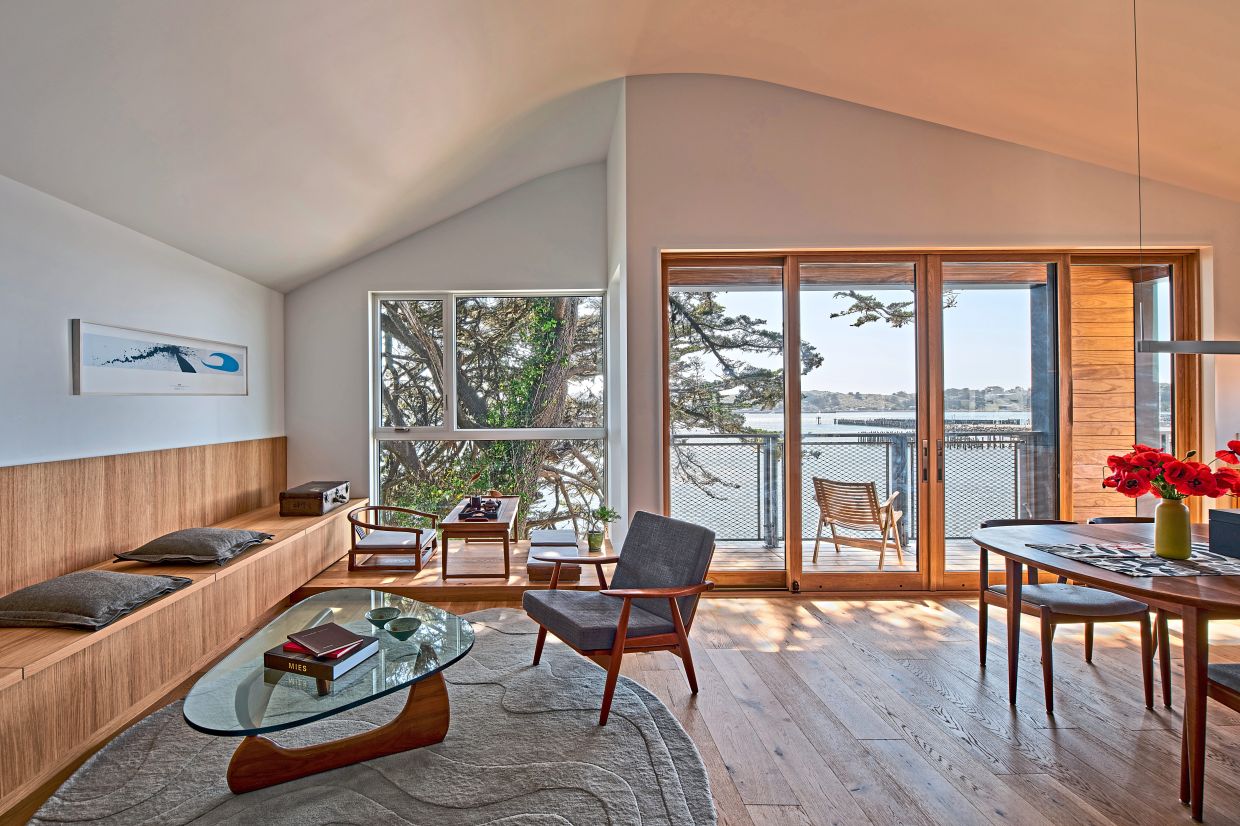
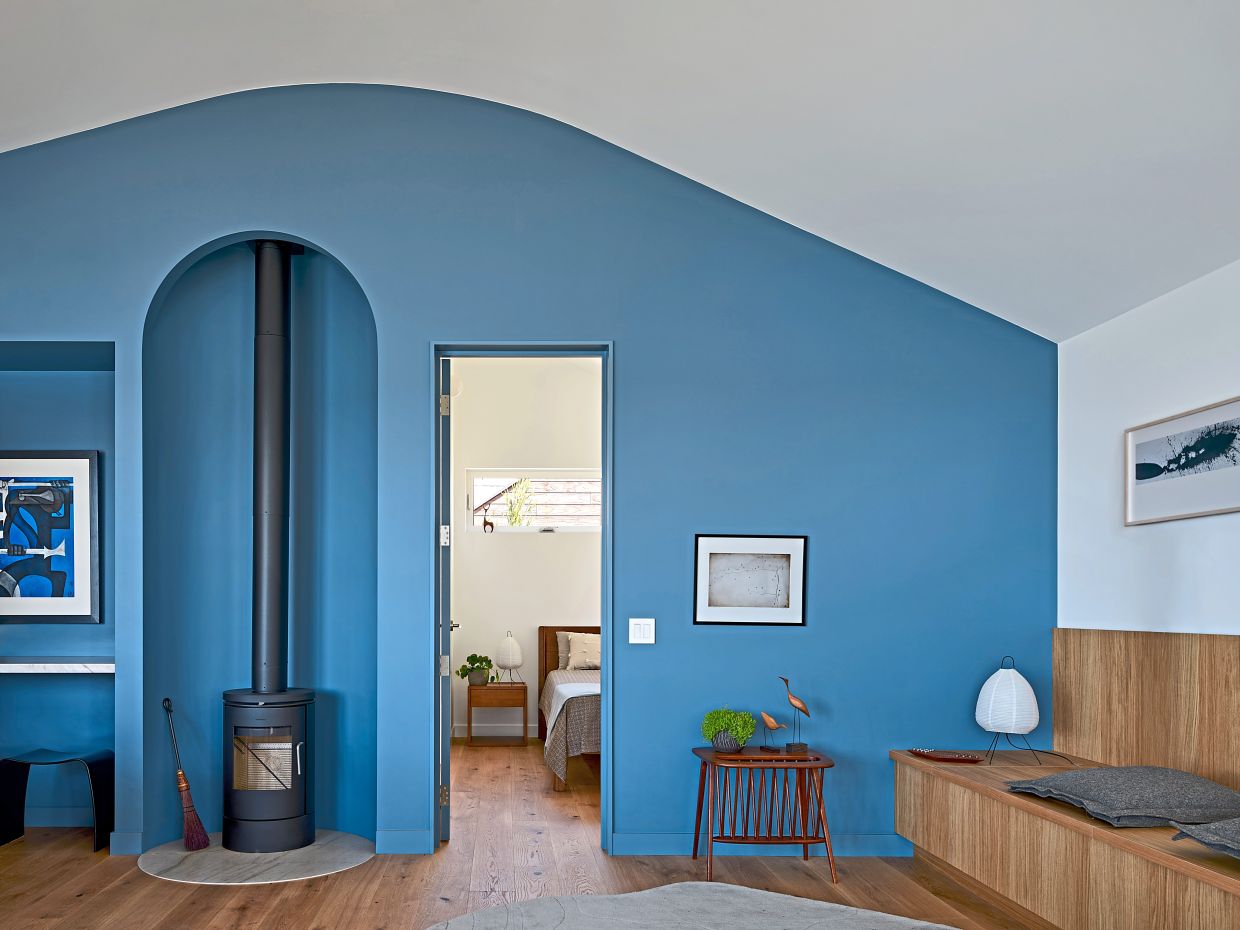
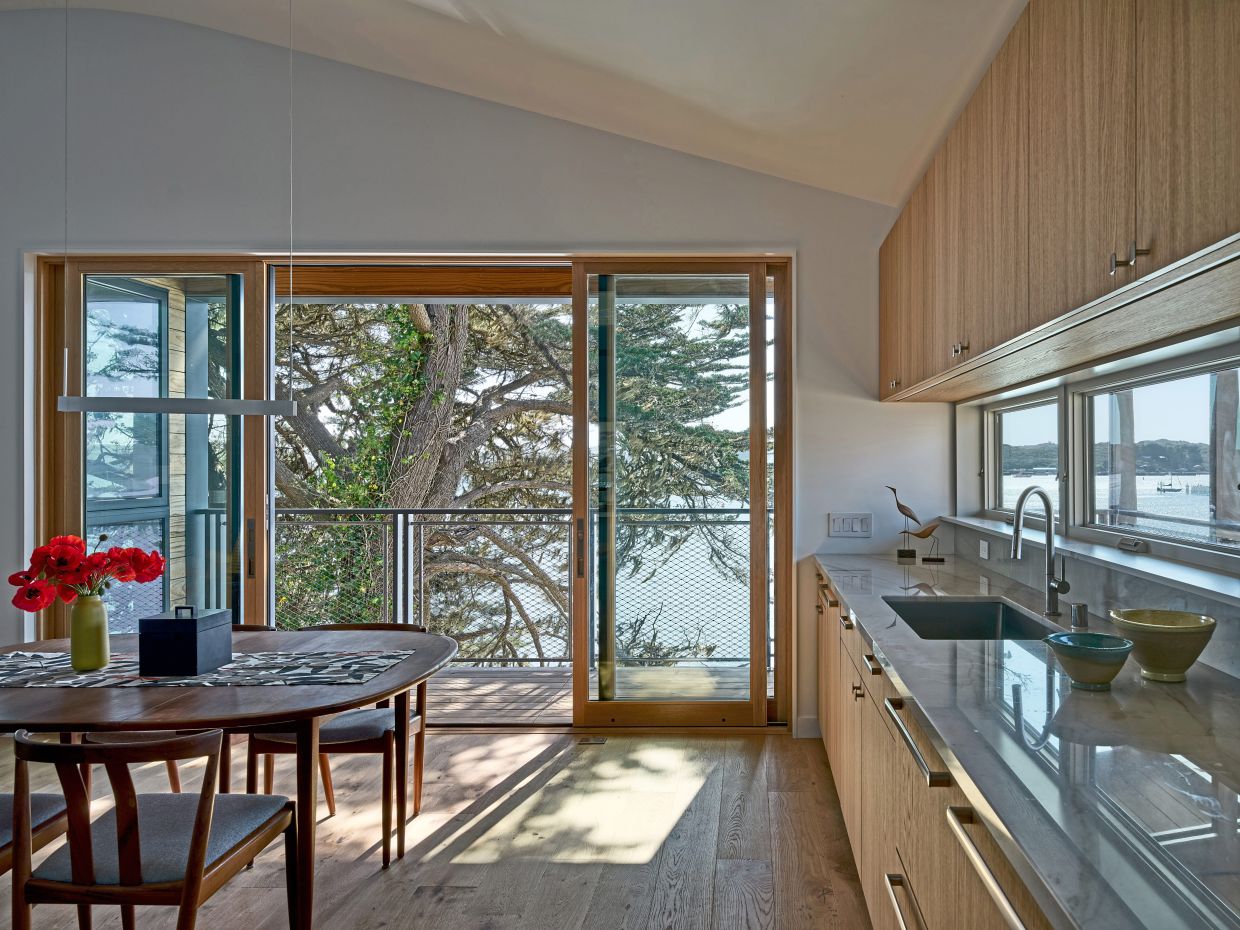
hover in midair. Its gently curved roof has asphalt shingles layered to resemble fish scales. Inside, one large room contains the kitchen, dining and living spaces.
Tang-Oxley estimated that building the structure cost more than US$2.2mil (RM9mil), which was roughly four times what she expected at the outset.
“This house is not a financial win,” she said, adding that she plans to delay her retirement to pay for it.
But, it was worth building for more emotional rewards.
“It’s so close to nature,” she said. “I have no regret. It’s so much, the experience.” – ©2026 The New York Times Company