For billions of years, the moon has been orbiting Earth. At an average distance of around 384,400 kilometres, it shapes life on our planet more profoundly than many people realise.
On International Moon Day, marked every year on July 20 to commemorate the first crewed moon landing in 1969, here is a scientific look at the question: What would happen if the moon were suddenly to disappear?
The answer from NASA, the US space agency, is unambiguous: Earth would be an entirely different place. Some effects would be felt immediately - darker nights and significantly weaker tides, for example.
Others - such as changes to the stability of Earth's axis or its rotation - would only unfold over longer or extremely long periods of time.
The moon is Earth's only natural satellite. Although no life is possible on the moon itself, since it has no atmosphere, it plays a decisive role in sustaining life on Earth.
Its gravitational pull acts as a stabiliser for Earth's axis. That axis is currently tilted at around 23.5 degrees relative to Earth's orbit around the Sun - and it is precisely this tilt that gives the northern and southern hemispheres their distinct seasons.
If Earth's companion were to disappear, the tilt of Earth's axis would become far less stable. According to calculations by the Royal Museums Greenwich, it could then fluctuate wildly.
In an extreme scenario, the axis could stand almost upright - in which case seasons would barely exist. If it tilted more sharply in the other direction, regions of Earth could face far more intense summers, harsher winters or even ice ages.
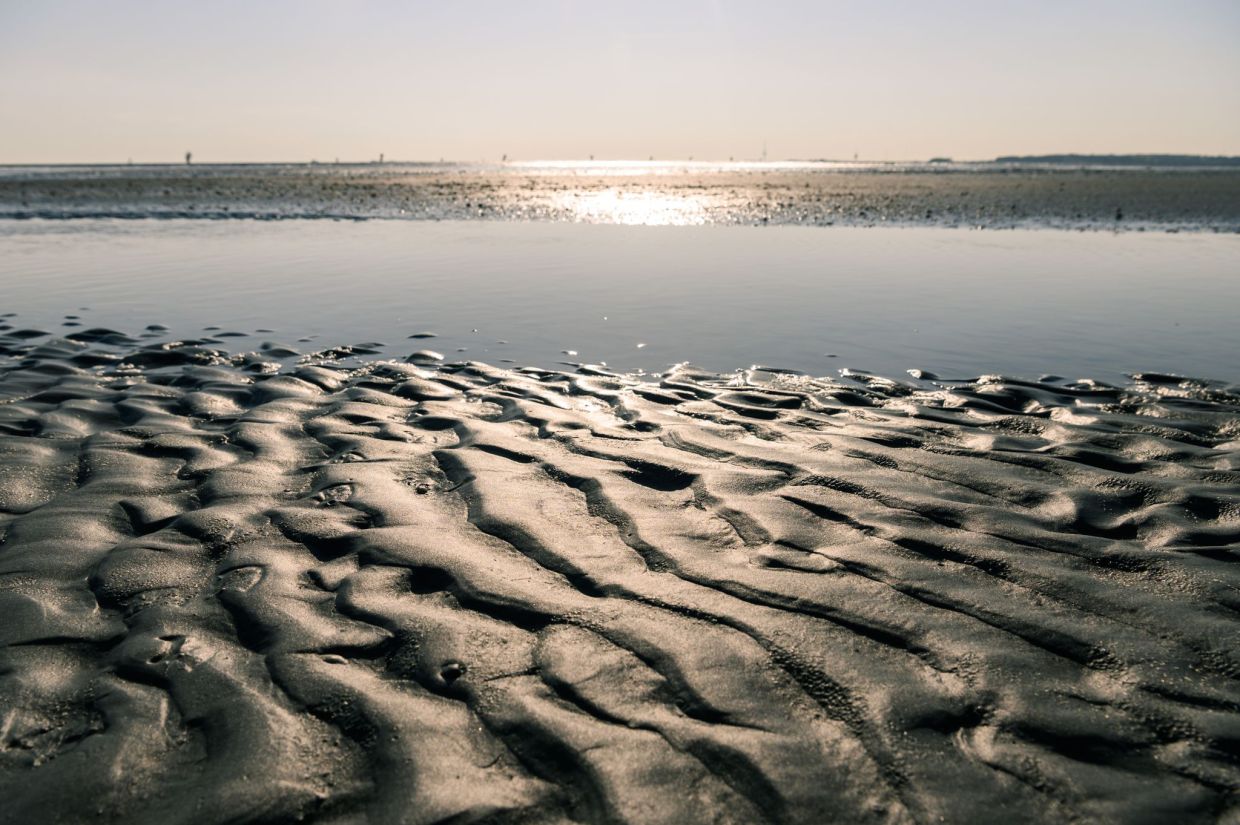
The moon is the primary driver of the tides. Its gravitational pull causes the largest part of the ebb and flow of the seas. "The Sun also has an effect on the tides, but its influence is only about half as strong as that of the moon," says Martin Knapmeyer of the German Aerospace Centre (DLR).
That means that without the moon, the tides would diminish massively. Coastal ecosystems that depend on the regular cycle of tides would change fundamentally. Species such as mussels, starfish, snails and many types of crustacean could lose their habitats.
Since the tides also influence ocean currents that distribute heat around the globe, temperature differences between regions could become more pronounced.
The moon influences our home planet in yet another way. Over billions of years, its gravitational pull has gradually slowed Earth's rotation - from just a few hours in the distant past to around 24 hours today.
"If we were to beam the moon away right now, that braking effect would stop - but there would be no force to speed Earth's rotation back up again," says Knapmeyer.
For the time being, the length of a day would therefore remain as it is, the researcher says. But eventually the Sun would slow Earth's rotation further - until, perhaps billions of years from now, Earth always faces the same side towards the Sun, just as the moon today always shows us the same face.
The animal world would feel the consequences of the moon's disappearance immediately. Many nocturnal species navigate by moonlight or have adapted their hunting and reproductive behaviour to the lunar cycle.
Without the moon, nights would be considerably darker. Some predators would find it harder to track down prey, while other species might benefit from the additional darkness. Such shifts could significantly alter existing ecosystems. – dpa