



How well can a robotic bird mimic a real one?
That's what Grand Teton National Park is trying to find out with mechanical sage grouse replicas built to influence the behaviours of real sage grouse, whose numbers have long been declining across the American West.
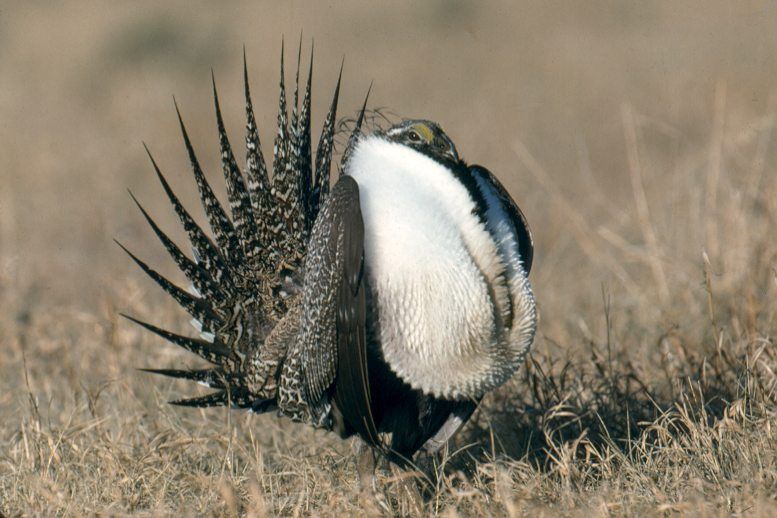
Sage Grouse, which are about the size of chickens, are the largest grouse in North America. They're known for their round bodies, superior camouflage and, on males, pointed tail feathers and yellow chest sacs that inflate during mating dances.
Since 1965, their populations have dropped by 80% across the West, and at a breeding site inside Grand Teton, the male sage grouse count dropped from 73 in 1950 to three last year, according to WyoFile.
The park's southern sagebrush flats were historically a favourite site for grouse, but they were degraded over time by grazing cows, which reduced the birds' food and the places they could hide. In addition, flights taking off and landing at the nearby Jackson Hole Airport (the only airport inside a US national park) sometimes even hit the birds.
Cows haven't grazed those flats for decades, though, and the new robotic birds are part of an effort to move the real ones back to a place where they can again thrive. In addition, park staff members have partnered with the airport to restore an area south of the airport's busy runways in hopes of moving the birds away from the tarmac.
"Over the past eight years at Grand Teton National Park, we've been working with staff, youth crews, and community partners to restore about 100 acres of former pasture near the Jackson Hole Airport back into high-quality sage-grouse habitat," park spokesperson Emily Davis wrote in an email to SFGate.
That includes planting native plants and keeping raised mounds, called leks, open for the birds to breed.
This spring, the park took the next steps for the project using locally developed technology. "One of the challenges with restoration is that even when you create great habitat, wildlife doesn't always show up right away," Davis wrote.
Help from local high school
Male sage grouse strut and fluff their spiky tail feathers in an elaborate courtship ritual every spring. Robotic birds made by the RoboBroncs, the local robotics team at Jackson Hole High School, simulate this activity in an attempt to draw in the real ones.
The robotic grouse are made to look lifelike, with real feathers provided by the Wyoming Game and Fish Department. Other materials, like a white blanket from TJ Maxx and foam from a HelloFresh meal kit, appear less realistic.
Some of the decoys move around, dancing like the birds do to attract a mate, while some are stationary. Recorded breeding calls are played at the scene, with clucking and cooing beginning at 5am each day. The robots even puff up their chests just like male grouse do. Robotics mentor Gary Duquette told WyoFile that the finished result was "kind of a Frankenbird."
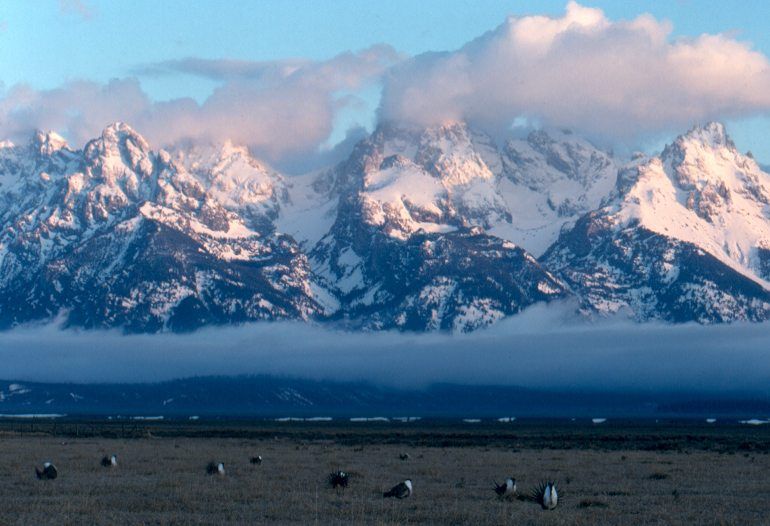
"To help jumpstart that activity, the team built lifelike stationary and robotic decoys and they play recorded breeding sounds to simulate an active lek," Davis wrote, referring to an area where male birds congregate and perform courtship displays.
"The idea is to encourage birds to begin displaying and mating at the restored site. Because brood-rearing happens near the lek, this can help draw more sage-grouse to the area over time."
The park hopes the robotic birds can help lure the birds away from the airport runway, where they spend time in close proximity to planes getting deiced. According to Davis, 32 sage grouse were killed by aircraft between 1990 and 2013.
"So shifting bird activity away from the runway is an important outcome for both wildlife conservation and public safety," she wrote. Peak courtship for the bird runs until mid-May, and until then, a trail camera will be recording the area so park staff can see if any actual sage grouse arrive. – SFGate, San Francisco/dpa
