
It is hard to contemplate a Malay meal today without the presence of rice. In fact, rice is so indefatigably intertwined with Malay cuisine that its absence in a daily meal is inconceivable to many people.
Yet did you know that until the 15th century, sago was the daily staple in the Malay Peninsula and rice was the domain of the rich? According to food historian Khir Johari in his seminal book The Food Of Singapore Malays: Gastronomic Travels Through The Archipelago, “rice was a limited commodity consumed by those wealthy enough to afford it.”
It was only in the 16th century that the manually intensive sago flour was gradually replaced by widespread rice cultivation in the Malay Peninsula, with methods purportedly introduced from Siam (modern-day Thailand).
In Khir’s book, he details how rice was once cultivated in two kinds of fields: ladang (swidden fields) and bendang (irrigated fields for wet cultivation). A third type of rice cultivation called tenggala also existed, which involved an animal ploughing the fields and distributing seeds.
A 1931 article in the British North Borneo Herald mentions how paddy farming was exclusively done by the Malay community, which is likely why rice is so ubiquitous in the cuisine.
Agrarian Malays of the past also held a complex belief system that revolved around rice, many of which revolved around harvesting an abundant crop.
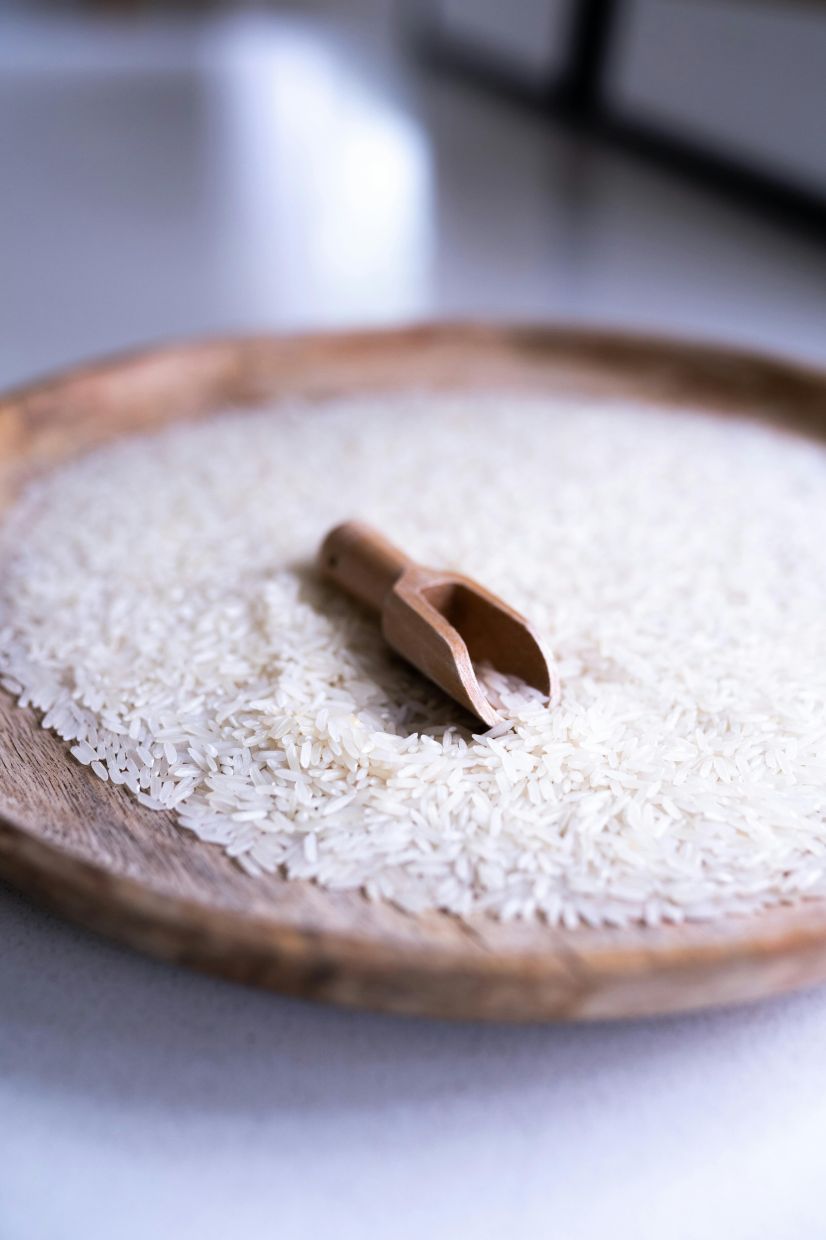
A lot of these rituals revolved around “semangat padi” or ‘rice spirit’. Khir’s book details how planting was often preceded by the berpuar ceremony, which was meant to ward off unwanted elements.
There were also a few superstitions around paddy farming – loud noises were frowned upon, as were uncouth behaviour and activities.
Rice is also mentioned in ancient texts like the Sulalatus Salatin, where it is associated with the first Malay kings.
In traditional Malay cultural practices and ceremonies like adat membelah mulut, which celebrates a newborn baby, rice dishes like pulut kunyit play a significant role and are distributed to close family and friends.
In the past, most Malay families also often cooked their wedding feasts themselves, and this was preceded by a day called Hari Pilih Beras, where family members gathered “to weed out unhusked grains and weevils” says Khir in his book.
Since it first went mainstream, rice has infiltrated every strata of Malay society and is a culinary bedrock in both everyday meals as well as celebratory fare, having permeated Malay cultural practices and traditions for over 500 years now.
Here, we take a look at the different Malay rice dishes that have become richly celebrated in Malay cuisine and culture, a byproduct of a simple grain that was introduced to the country a few centuries ago.

Nasi ulam
Although relatively popular throughout Malaysia, nasi ulam in its most traditional sense is rarely made these days. A traditional Malay and Straits Chinese (Peranakan) dish, nasi ulam once consisted of up to exactly 44 different kinds of shoots, leaves, herbs and roots, either blanched or steamed and chopped finely or simply julienned raw.
As the years have passed, many of these herbaceous elements have disappeared from the local culinary topography and these days, the most commonly utilised leaves and shoots include daun kesum (torch ginger bud), Vietnamese mint leaves, lemongrass, turmeric, galangal, daun kesum and daun mengkudu.
According to Datin Kalsom Taib in her cookbook Malaysia’s Culinary Heritage, some of the herbs that were previously used included buah jering (jering beans), petai belalang, cemperai leaves, guava leaves and even the curiously named sambung nyawa (purple passion vine leaves). In the Peranakan iteration, flaked fish is often included in the dish as well.
Nasi ambeng
According to Khir’s book, the word “ambeng” in “nasi ambeng” is derived from the Javanese word “ambengan” which means “to sit around while guarding”.
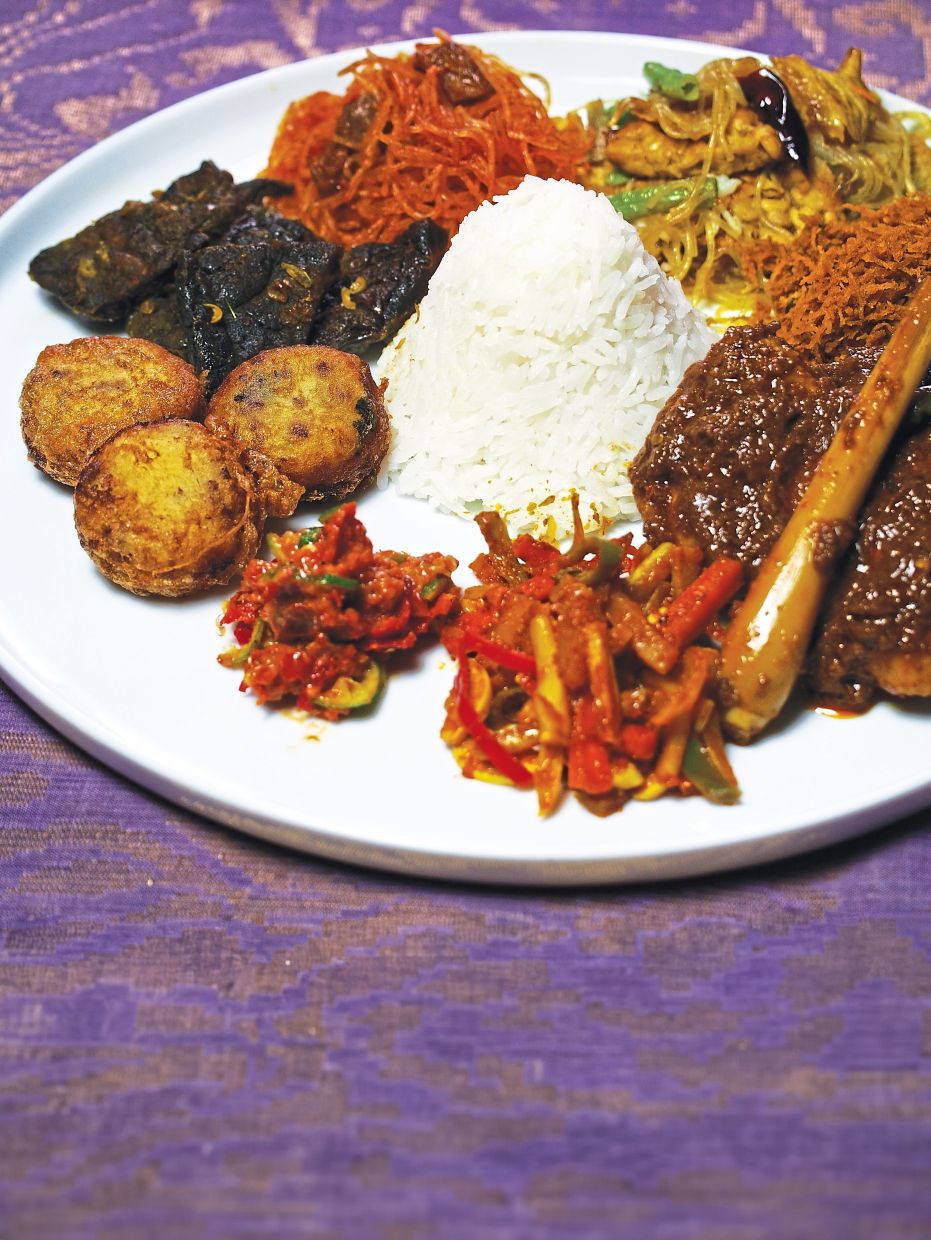
Nasi ambeng is a significant Javanese dish that is essentially rice paired with an odd number of dishes (often seven or nine), like ayam ungkep, urap-urap, and bergedel (potato and meat patty) served on a large platter, which is meant to be shared.
The odd number of dishes is by design – in Javanese culture, the number seven (pitu) represents upholding order and dignity, while the number nine symbolises beauty and perfection.
Guests are supposed to sit around the platter and share the food – typically four or five guests can share one large platter. As a matter of tradition, guests are not meant to polish off the platter; instead, a little bit should be left unconsumed. This symbolises a blessing or “berkat”.
Nasi ambeng’s many symbolic permutations represent a slice of the richness of the ancient Javanese belief system wound around culinary rituals.
Nasi kerabu
Nasi kerabu is thought to have originated in the 15th century in the eastern state of Kelantan, where denizens incorporate a lot of fresh herbs in their diets. The word “kerabu” means a mix of fresh herbs, which is a key component of this dish.
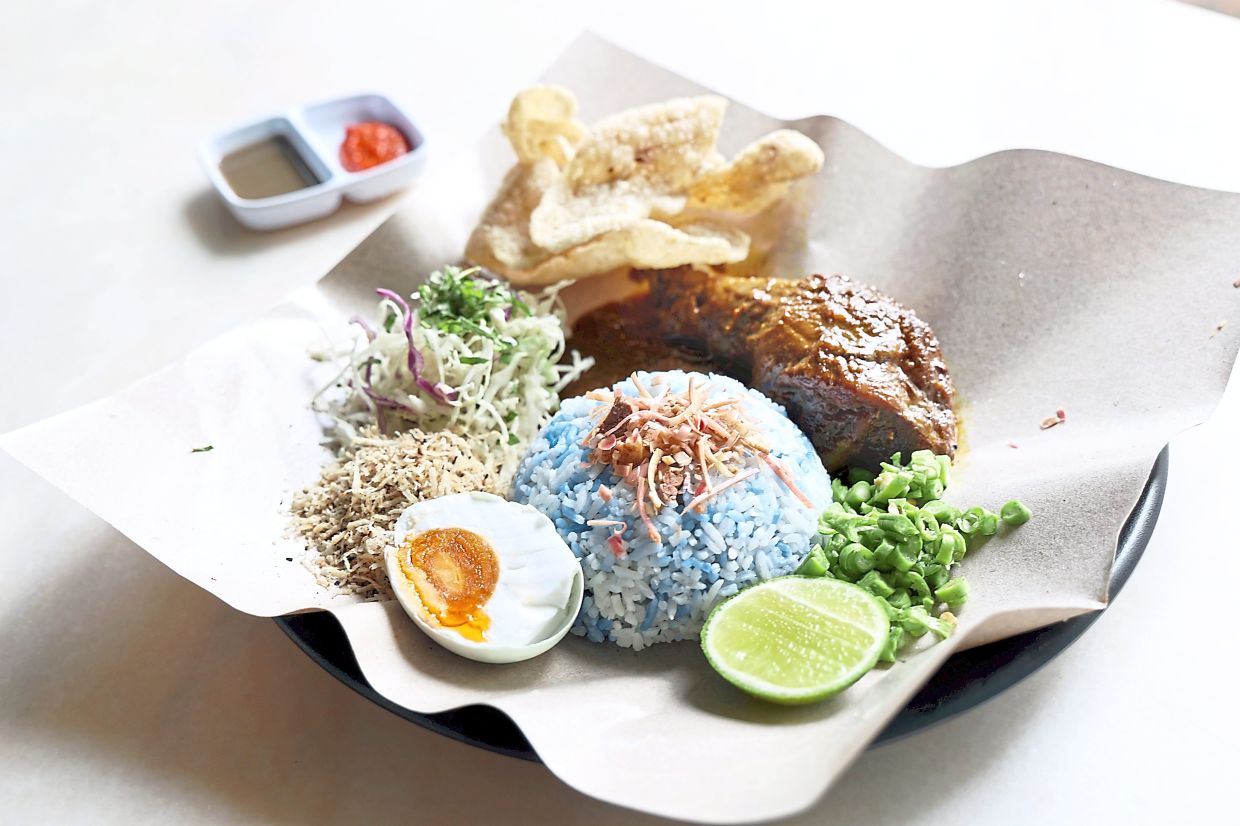
The most unique attribute of nasi kerabu is the blue pea flower that is used to tinge the rice an effervescent shade of blue.
The rice is accompanied by a range of herbs and fresh greens like daun kesum, torch ginger bud, four-angled beans, julienned cucumbers and many more. This is then accentuated with slices of fried fish or ayam percik, salted eggs, solok lada, sambal belacan, budu and keropok.
Nasi minyak
Popular in eastern states like Terengganu, nasi minyak is thought to have its roots in Melaka’s famed spice route heyday in the 15th century. It is likely to have been introduced in Malaysia by Arab and Indian traders.
Traditionally, it was once thought of as luxury food because it used expensive ingredients like clarified butter (ghee) and spices, which is why it was served mostly to royalty.
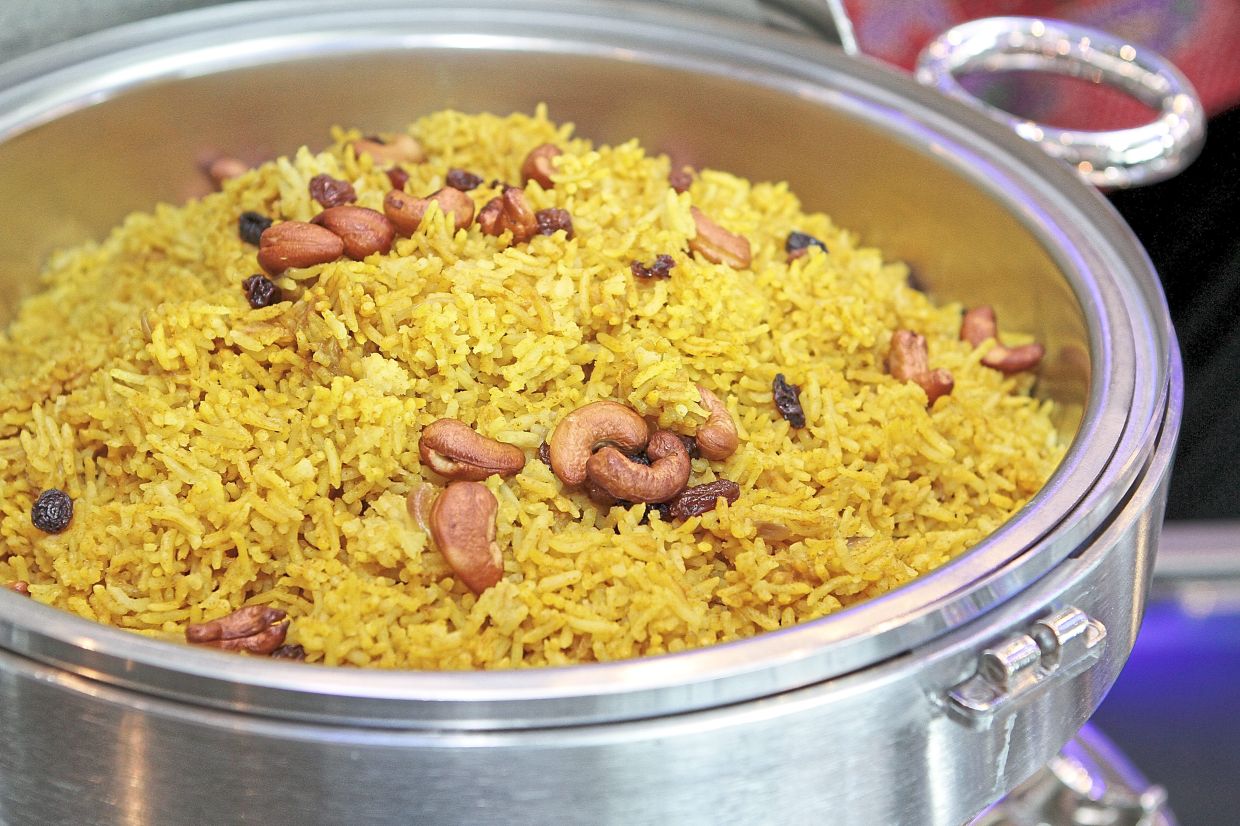
Over time, it has evolved into a wedding staple at the kenduris (feasts) typically thrown to celebrate newlyweds. To make nasi minyak, spices and aromatics like onions are stir-fried first with ghee, then rice and water are added, followed by evaporated milk and yoghurt.
This is topped with saffron, rose water and coriander leaves. Nasi minyak is most often served with rendang or kurma ayam and remains a glorious vestige of the palatial past.
Nasi kebuli
A recipe that traces its roots to the 16th-century Mughal imperial kitchen, Khir’s book details how it was mentioned in the Hikayat Aceh in 1620 and Adat Raja-Raja Melayu in 1770 as being a dish that was served in royal feasts.
In Pahang, nasi kebuli is known as “nasi kebawah duli” or “royal rice”, as it was thought to have been introduced to Sultan Mahmud Shah of Pahang in the early 20th century during a visit to Kuala Lipis.
Nasi kebuli is a fragrant, spiced rice dish that is infused with spices and ingredients like ginger, onion, cinnamon, cumin seeds, ground pepper, cardamom, cloves, almonds and raisins. It is traditionally cooked with goat meat and ghee and is often a celebratory dish.
The Pahang version is often served with chicken that is first marinated with turmeric and spices and then fried to perfection.
Nasi lemak
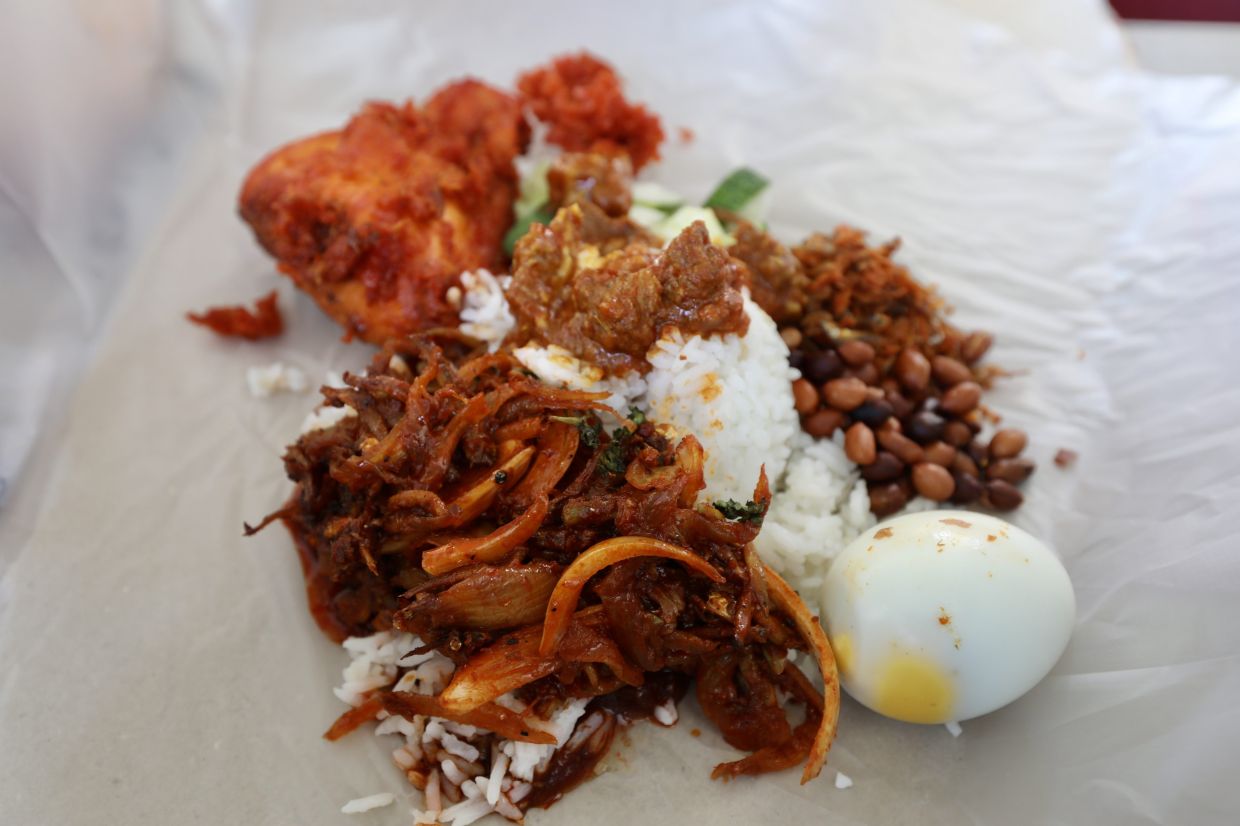
Probably the most famous “nasi” dish in the entire country, nasi lemak is thought to have started out as a farmers’ meal that bloomed through the west coast of Malaysia.
Thought of as a fortifying meal, nasi lemak is packed with rice laced with coconut milk, fried ikan bilis (anchovies), cucumbers, a hard-boiled egg, nuts and a fiery sambal to complete the dish. It was often eaten by agrarian Malays who toiled long hours under the sun and required a meal that provided adequate nourishment.
The first mention of nasi lemak dates back to 1909 in Sir Olaf Windstedt’s The Circumstances Of Malay Life, although there is also Malay folklore that surrounds its creation.
The most popular one is a story about Mak Kuntum and her daughter, Seri. Tasked with cooking rice one day, Seri’s misadventures resulted in coconut milk spilling into a pot of boiling rice. When asked what she had made, Seri replied, “Nasi le, mak!” which is purportedly how nasi lemak got its name.
In 2025, nasi lemak made it into the Oxford Advanced Learner’s Dictionary.
Nasi dagang
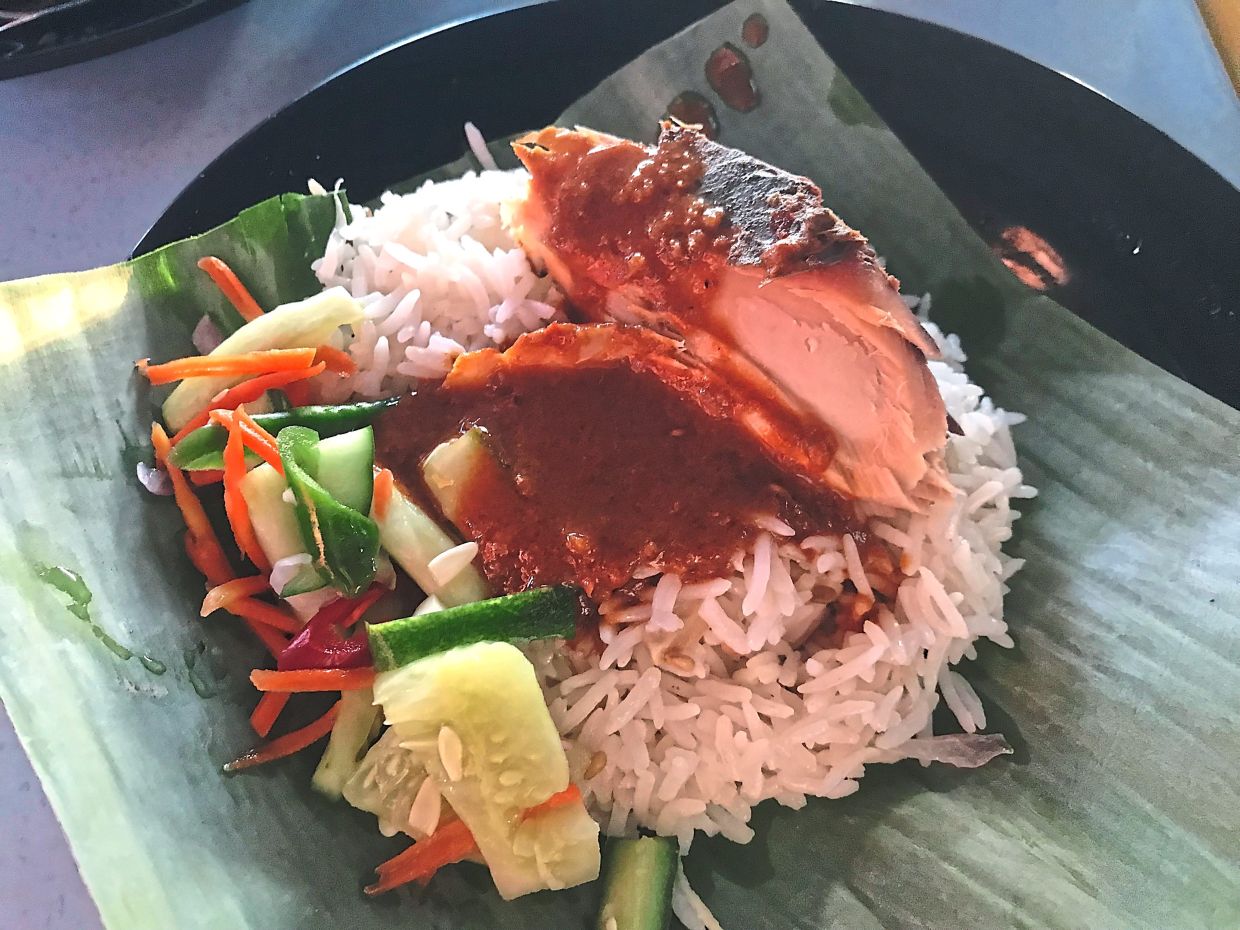
A staple breakfast dish in Kelantan and Terengganu, in the past, nasi dagang actually functioned as a hearty, satiating meal for fishermen who brought this conical-shaped package wrapped in banana leaves with them when they went out to sea.
In Terengganu, nasi dagang is made up of white rice steamed in coconut milk and served with fish curry, made up of longtail tuna (called ikan tongkol or aya hitam).
In Kelantan, however – according to Kalsom in her book – the rice concoction used is one-part red glutinous rice to three parts white glutinous rice and the rice mixture is then served with chicken curry.
Nasi kunyit
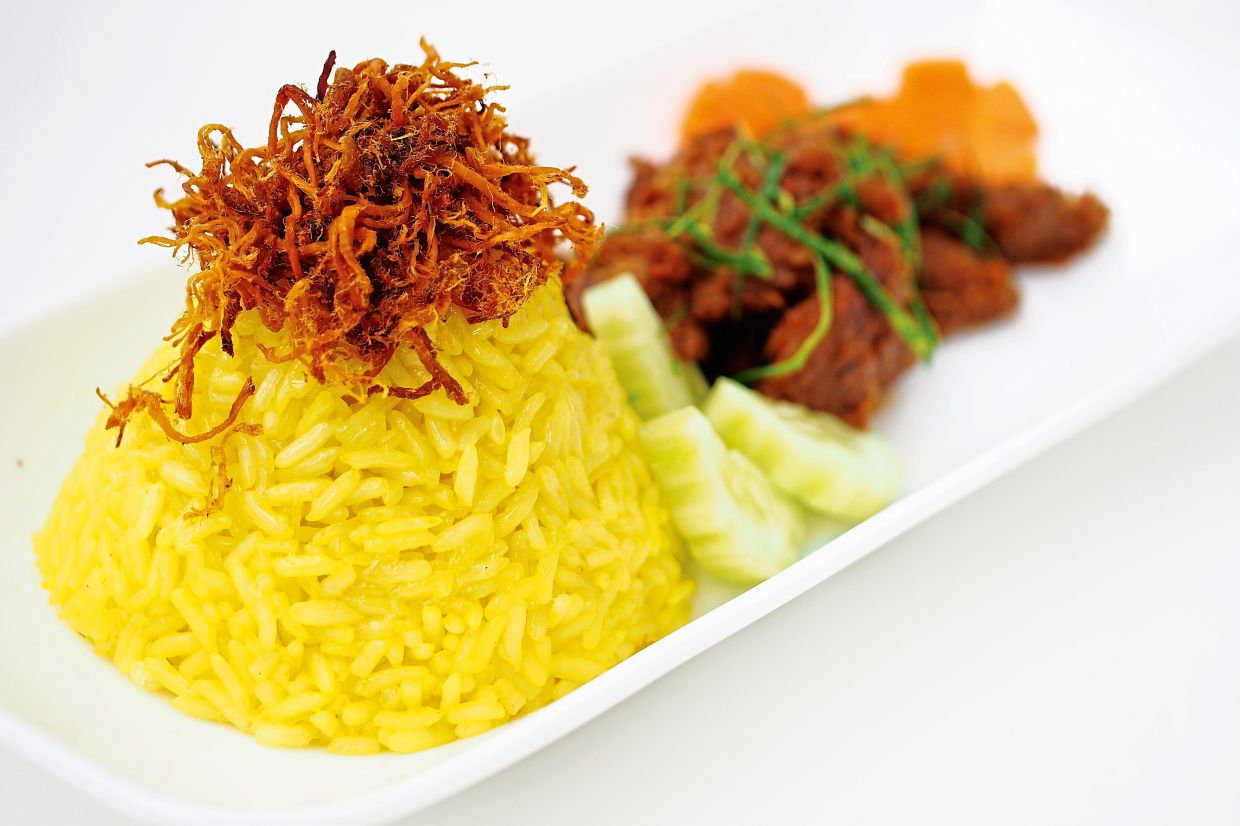
Dating all the way back to the 13th century during the Majapahit empire, nasi kunyit or pulut kunyit is a critical part of Malay culture and is traditionally served at functions like aqiqah, which celebrates the birth of a newborn child as well as at weddings, housewarmings and other auspicious occasions.
The turmeric that is used to tinge the rice yellow is meant to represent gold, which is in turn supposed to symbolise prosperity. Sometimes, nasi kunyit is shaped like a cone to represent a mountain or giant heap of gold and gratitude.
Nasi kunyit is very simple – it is essentially glutinous rice cooked with turmeric powder, turmeric slices and coconut milk.
According to Kalsom in her book Malaysia’s Culinary Heritage, some brides prefer a multi-tiered nasi kunyit cake in lieu of a Western-style cake.
Bubur pedas Sarawak
Throughout the Malay Peninsula, many recipes also make use of rice that is cooked with water into styles of porridge, like the famed bubur lambuk, which plays a significant role during Ramadan, as well as bubur Asyura, which holds meaning to many Muslims.
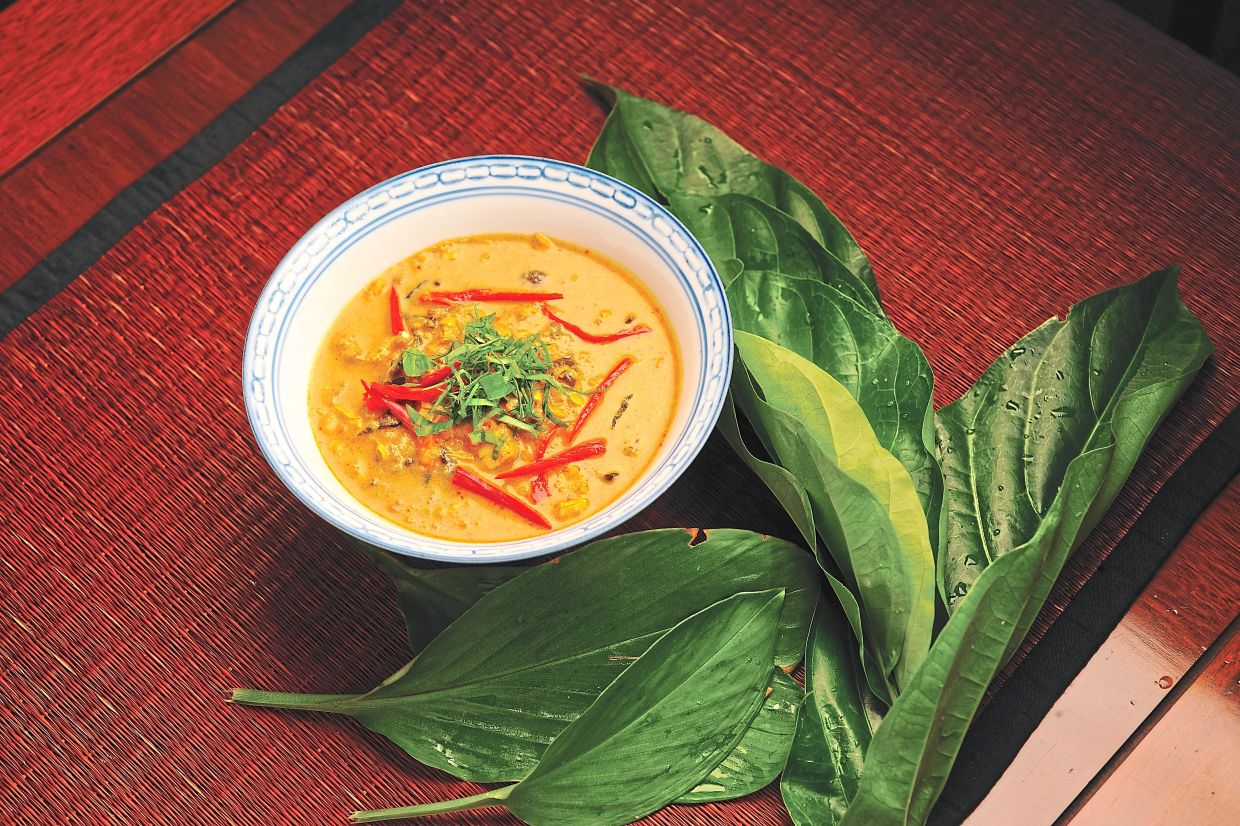
Although significantly lesser known than more popular porridge concoctions in Malay cuisine, bubur pedas Sarawak is exclusive to the Malay community in Sarawak.
In Sarawak, mosques serve this porridge during Ramadan and the cooking of this porridge is often made in gotong-royong (communal cooking) style. This spicy porridge soup is made from bumbu pedas Sarawak (a spicy paste) as well as rice, vegetables like young corn and dry lily buds and coconut milk.
Ketupat
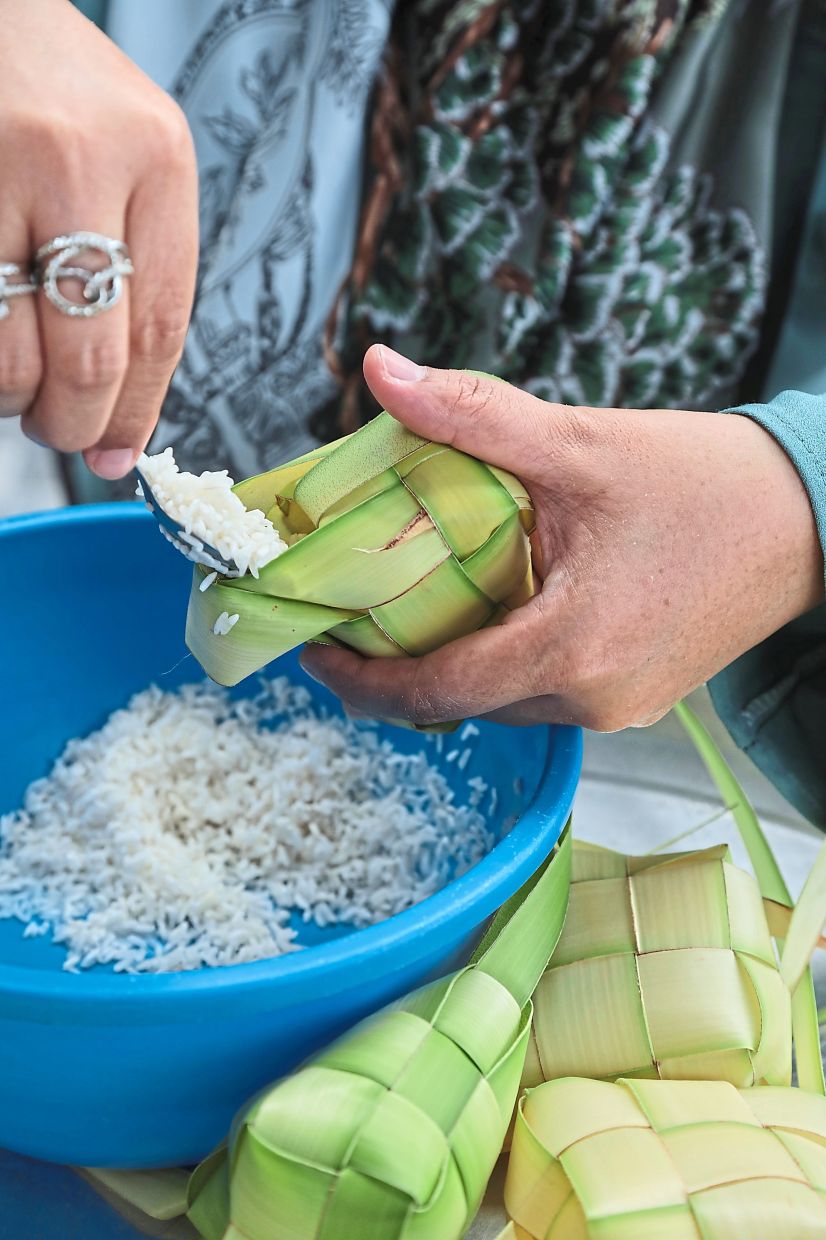
This pressed rice cake placed in intricately woven coconut palm enclosures has roots that trace back to the ancient Java kingdom, with written references dating back to the Melaka Sultanate.
The word “ketupat” means to “admit one’s mistakes” and it is a staple dish during Hari Raya. There are two varieties that are most popular – ketupat nasi (white rice) and ketupat pulut (made with glutinous rice).
The practice of making ketupat and weaving the coconut leaves across the compacted rice is often multi-generational and
typically involves entire families getting together to make it. Ketupat is often eaten during Hari Raya, where it is served alongside rendang and beef serunding.