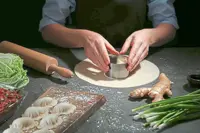
It's actually a really simple thing: some bacon (ideally guanciale made from pork cheek), grated cheese (Parmesan or Pecorino), and a few eggs.
Fry the bacon until crispy, whisk the rest together, and combine everything over cooked pasta. Maybe some pepper and pasta water.
And there you have it. Spaghetti carbonara - one of the most famous dishes in Italian cuisine - and it takes no more than 15 minutes to make.
But you can also make things complicated. Especially if you start asking how Italian spaghetti alla carbonara, literally in the style of coal workers, is really supposed to be.
The most widely accepted theory today is that the dish traces back to US soldiers who arrived in Italy toward the end of World War II bringing with them bacon and powdered eggs — staples of the GI daily ration.
American breakfast with pasta
That stings Italian pride quite a bit - especially when the idea is also championed by Italians themselves. Cultural historian Alberto Grandi, a professor at the University of Parma, argues in his landmark work "Myth of the National Dish" that spaghetti carbonara is "clearly an American dish".
"I would claim it is nothing more than a typical American breakfast — eggs with bacon — to which pasta was added."
Indeed, the first ever written carbonara recipe appears in a Chicago city guide book published in the United States in 1952: "Vittles and Vice: An Extraordinary Guide to What's Cooking on Chicago's Near North Side."
It says the pasta appeared on the menu at a restaurant called Armando's. In Italy, it wasn't until August 1954 that the magazine La Cucina Italiana published a recipe — and even then, it recommended using Swiss Gruyère cheese.
Could a 1939 newspaper article be the saving grace
The story Italians most prefer to believe doesn't hold up: the idea that coal workers had been eating pasta with bacon, egg and grated cheese for centuries to recover from their hard labour is nonsense.
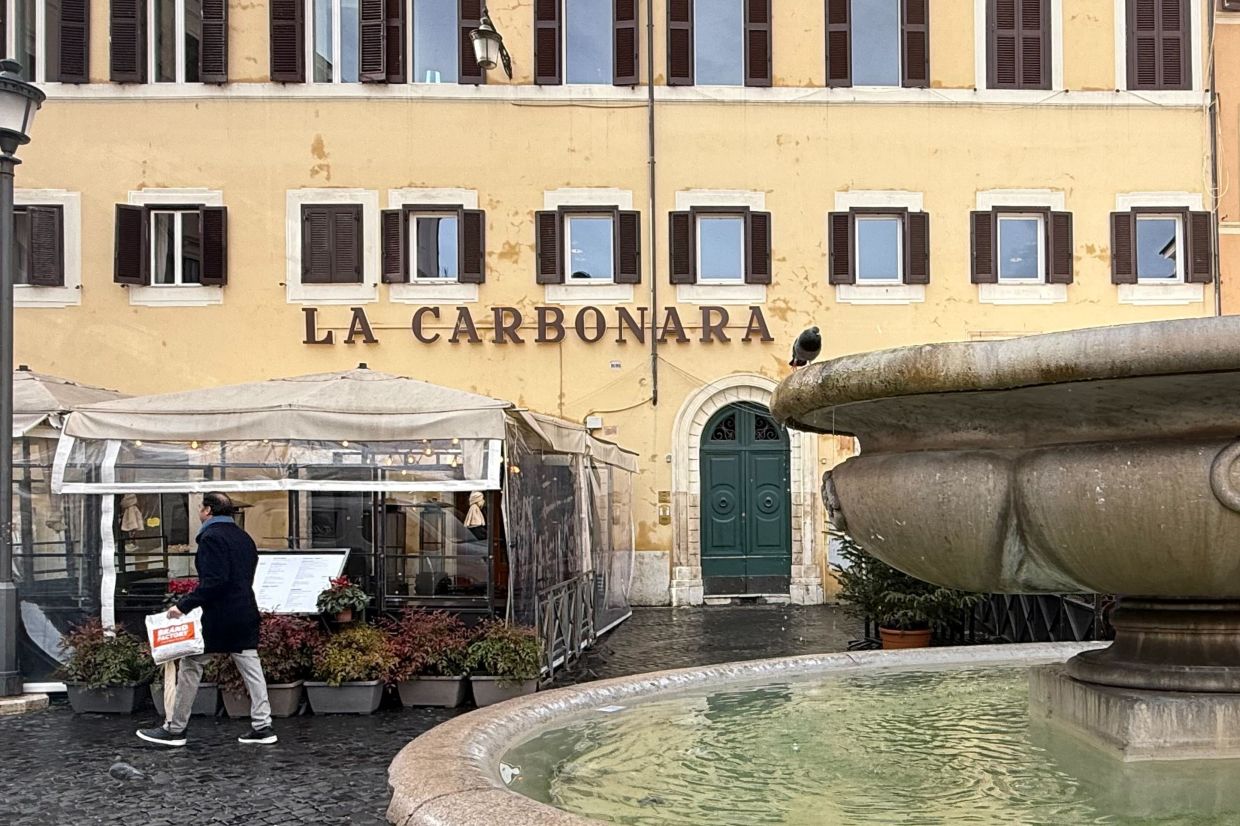
And the fact that a restaurant called La Carbonara has stood near Rome's Campo dei Fiori since 1912 is also no proof that spaghetti carbonara existed before the war — the name came about simply because the first owner's husband was a coal merchant.
But now, just as Italians had nearly resigned themselves to the possibility that carbonara — alongside chewing gum, Coca-Cola, and rock 'n' roll — might also have US origins, salvation has arrived.
And it comes, of all places, from the Netherlands. Cookbook author and journalist Janneke Vreugdenhil stumbled upon an article about pre-war Rome — written at a time when no US soldiers were anywhere to be found — that actually mentions "spaghetti alla carbonara."
Other things were more important than recipes
The newspaper De Koerier published a column on August 23, 1939 — just days before the outbreak of war — with the headline: "People and Things of Rome." It described the friendship between two innkeepers named Umberto and Alfredo in what was then the working-class neighbourhood of Trastevere.
The only difference between the two, it noted, was that one served risotto with shrimp and the other served spaghetti in the coal worker's style. The text was written by Norah Koch Berkhuijsen, who served as Rome correspondent from 1933 to 1948.
The discovery prompted great sighs of relief in Italy. The leading gourmet magazine Gambero Rosso noted: "Carbonara may be older than we always thought." And the decidedly non-nationalist La Repubblica rejoiced: "No, it wasn't the Americans!"
The new interpretation holds that during the war, and in the years immediately before and after it, Italians had more pressing matters on their minds than writing down recipes.
But please, no cream
Cultural historian Grandi, however, remains unconvinced.
"All we know now is that in 1939, someone used this name for a pasta sauce," the professor told dpa. "But that doesn't mean the dish already existed in its current form. The availability of ingredients such as guanciale, eggs in this form, and Parmesan — and above all the complete absence of the recipe in any cookbooks — carry more weight than a single source."
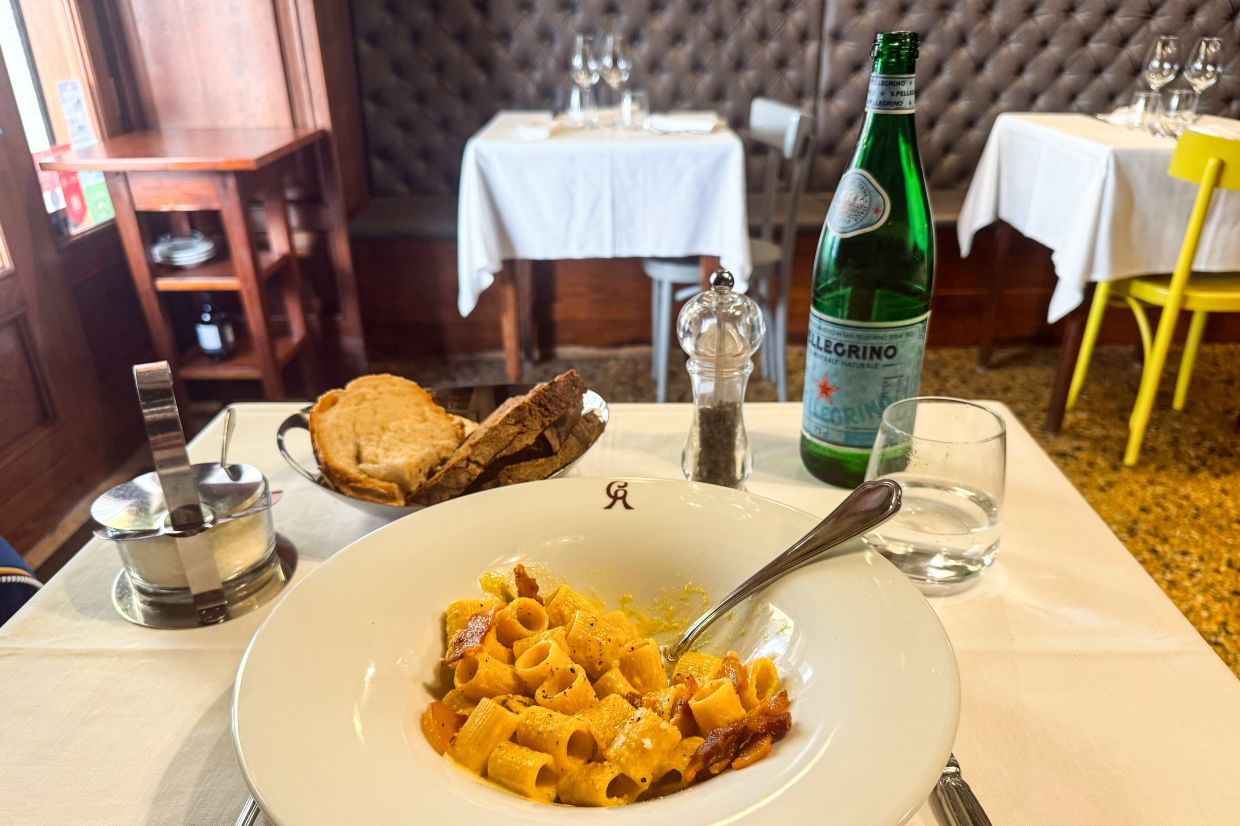
Amid all the debate over carbonara's origins, there is one thing on which almost everyone in Rome agrees: it's better eaten not with long spaghetti, but with short, wide tubular pasta - in Italian mezze maniche or half sleeves. The sauce is rich enough as it is.
And one more thing: using cream as an ingredient — as you can often taste outside of Italy — is completely out of the question. – dpa