Inspired by Dubai and bloated by the outsize ambitions of a disgraced Chinese property developer, Ocean Flower Island – a cluster of artificial islets in the South China Sea – flopped as a business. But it still dazzles as a breathtaking fiesta of fantasy and folly.
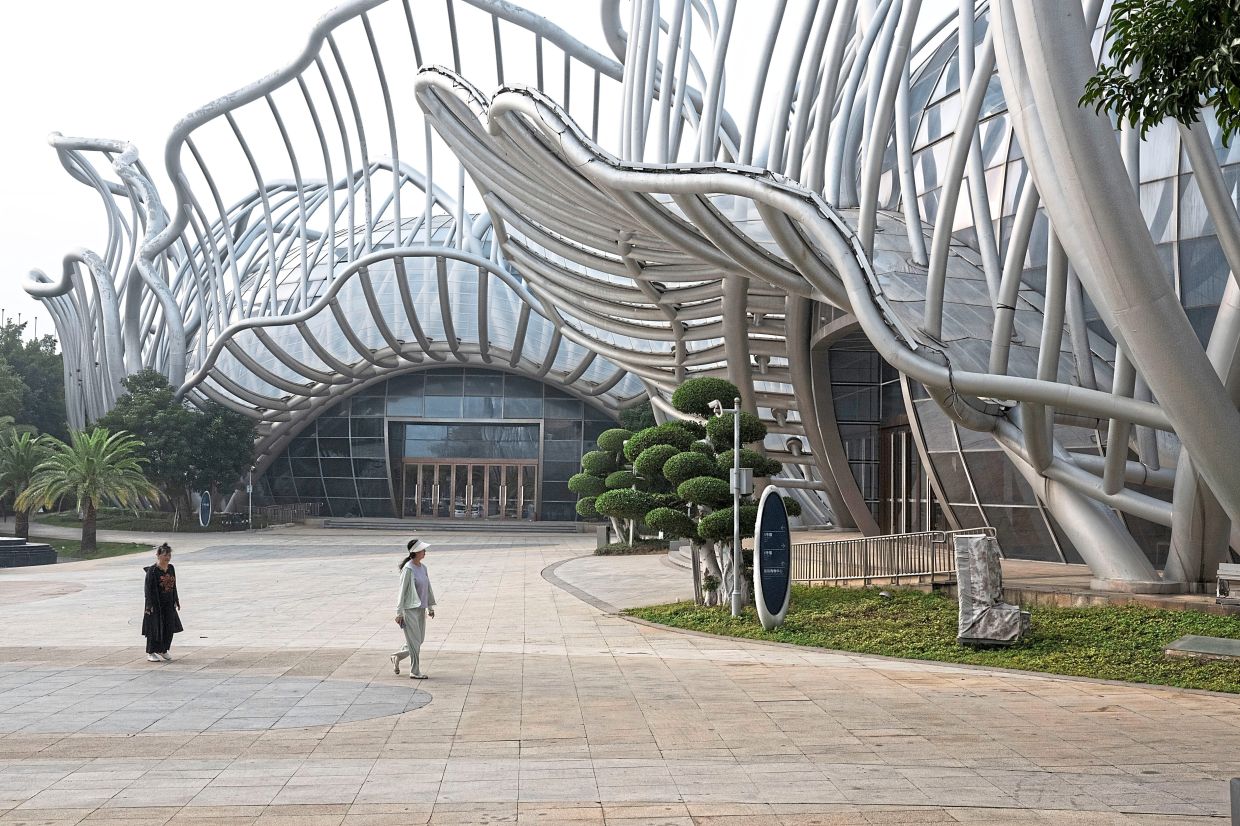
The hugely expensive, partially completed project – a gigantic shopping mall without shops, a theme park without visitors, dozens of abandoned high-rise housing blocks and artificial beaches too dangerous to swim at – helps explain why China’s years-long real estate crisis never really seems to end. There is so much money and so much hope entangled in the wreckage that it is too big to clear away quickly.
"This place is a dead zone,” said Zhou Qingbin, a visitor from the nearby coastal city of Danzhou.
The municipal government of Danzhou now controls much of Ocean Flower Island and is struggling to figure out what to do with it.
It was built by Evergrande, a Chinese real estate developer that collapsed under more than US$300bil (RM1.18 trillion) of debt in 2021. Evergrande’s implosion and the troubles of other big property developers have shattered confidence in real estate, once an important driver of China’s economic growth.
New home sales have dropped to their lowest level in more than 15 years, according to figures released by the statistics bureau in Beijing on Jan 19. The sector has become such a headache that the Chinese authorities recently began censoring pessimistic online posts about the property market.
And yet, the Danzhou government seems to be pressing on with Evergrande’s original concept. It was intended as a Chinese version of Dubai’s Palm Island Jumeirah — only bigger.
Evergrande sank around US$12bil (RM47bil), most of it borrowed, into what was supposed to be China’s biggest built-from-scratch entertainment, conference and shopping destination, with the islets forming the petals of a flower.
That investment, though huge, fell short of the US$23bil (RM91bil) the company said it needed to build apartments to house up to 200,000 people.
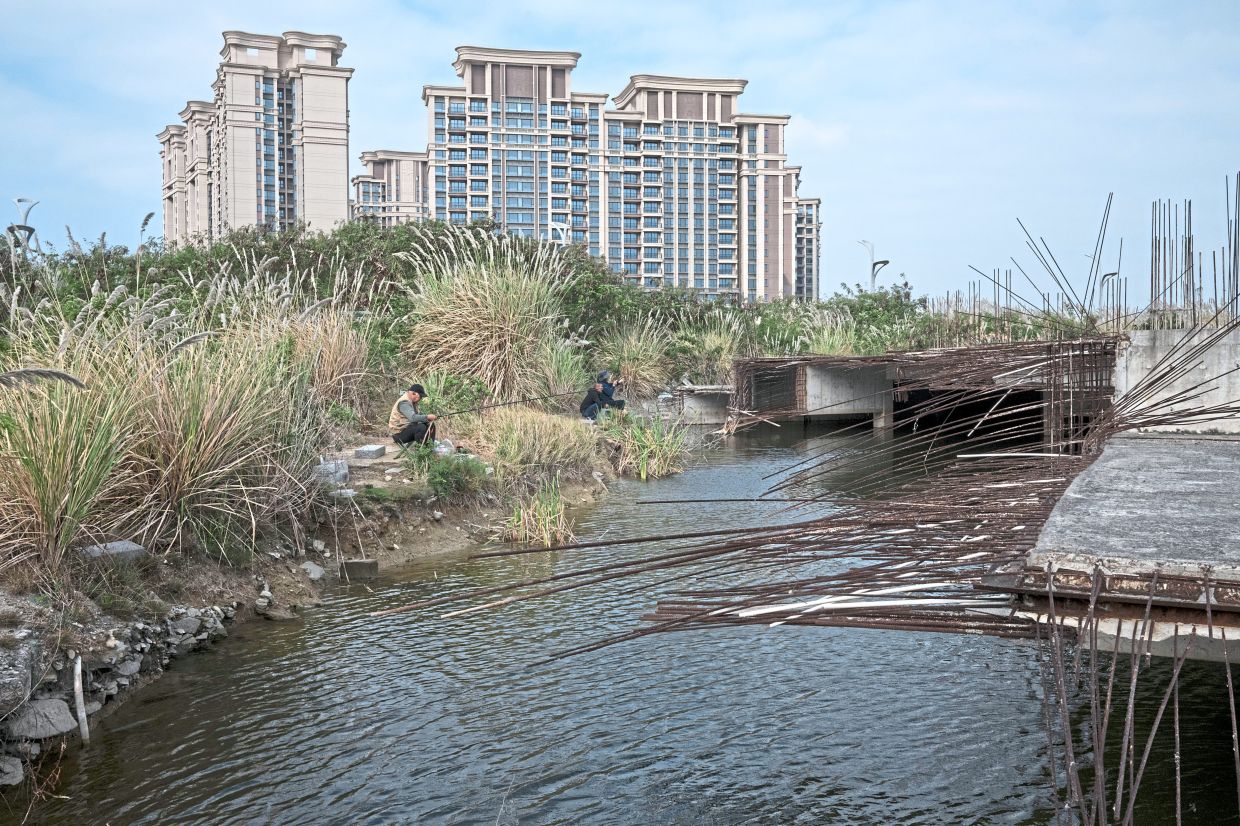
That has left Ocean Flower Island in limbo. Before its collapse, Evergrande said it had completed 60,000 apartments and handed them over to buyers. Other buildings, however, never rose beyond their concrete foundations, which, flooded by rainwater, have become fishing holes. Thirty-nine high-rise apartment blocks that were nearly finished but never sold are marooned on a wasteland of rubble.
The whole project was the brainchild of Xu Jiayin, Evergrande’s founder and former chair, who was once China’s richest man and is now in jail. A gushing account by Evergrande said Xu came up with the idea for Ocean Flower Island during a 2011 vacation in Singapore.
Sequestered in his room, the company said, he sketched out designs for an artificial archipelago in the shape of a bougainvillea and "meticulously oversaw every detail”.
But he did not appear to have nailed down how the project would make enough money to build the fake islands and pay back a growing pile of debt to Chinese and foreign lenders.
Evergrande also needed to persuade officials in China’s southern province of Hainan to sign off on a venture that violated environmental protection and other laws.
Zhang Qi, the former mayor and Communist Party chief of Danzhou, who approved Ocean Flower Island, was convicted of corruption in 2020 and sentenced to life in prison. Other local officials have also been convicted on various corruption charges, including the former governor and party secretary of Hainan, Luo Baoming, who was jailed for 15 years in December for taking around US$16mil (RM63mil) in bribes.
From its inception, Ocean Flower Island was driven by the same idea that drove much of China’s frenzy of construction during a decades-long economic boom: Build it and they will come.
In a country with 1.4 billion people and expectations of ever-rising incomes, this was for years a safe bet, until it wasn’t. In 2021, Beijing, worried by out-of-control lending, issued a directive restricting access to loans by property developers. Credit from banks, the biggest of which are controlled by the state, dried up. Evergrande seized up.
The Danzhou government is trying to keep the project alive. It pitches Ocean Flower Island to Chinese vacationers and would-be homebuyers as a "unique lifestyle concept”. There are no reliable estimates of the current population, beyond the thousands of people who initially purchased properties — a fraction of early projections.
Unlike Palm Island in Dubai, where the grand villas were snapped up by celebrities, soccer stars and foreign officials looking for a sunny sanctuary, Ocean Flower Island drew mostly retirees from northern China looking for a warm place to winter. The main street in the residential area is lined with restaurants offering northern specialties like steamed buns and hot pot, as well as geriatric health care services.
Zhang Qun, 70, a retiree from Heilongjiang province, said that when he bought his apartment five years ago there were crowds of people at the Evergrande office clamouring to buy.
Today, the office is littered with old brochures and property contracts and is staffed with government-supervised clerks responsible for sorting out paperwork for properties purchased years ago.
If Zhang sold his apartment now, he would lose half his investment.
The only other traces of Evergrande are vending machines stocked with dusty bottles of "Evergrande Spring” mineral water. Xu vanished from public view in 2021. A report in March by the Supreme People’s Procuratorate said that he had been prosecuted for crimes including financial fraud and disorderly financial management. It did not say whether he had been convicted or where he was.
"A lot of people lost money because of Evergrande, and are angry,” said Li Yanbo, a real estate agent on Ocean Flower Island.
Those who bought apartments early made big profits, at least on paper, as the price per square yard more than tripled between 2015 and a 2021 peak. Those who arrived late lost their shirts.
But Evergrande, Li added, was not all bad: "Some people think they were cheated, but there are others who would never have had a chance to get an apartment if not for Evergrande.”
Property prices on Ocean Flower Island, he added, have stabilised somewhat.
Nearly every city in China has unfinished tower blocks left stranded by Evergrande’s demise. But probably nowhere has Xu’s hubris left such a high concentration of excess as in Ocean Flower Island.
To help accommodate what was supposed to be a flood of tourists, Evergrande built The Castle, a hotel with 5,100 rooms. Its two outdoor swimming pools have been drained of water, and the hotel has stayed afloat by catering to budget travellers on peak-season package tours. For much of the year, it is largely empty.
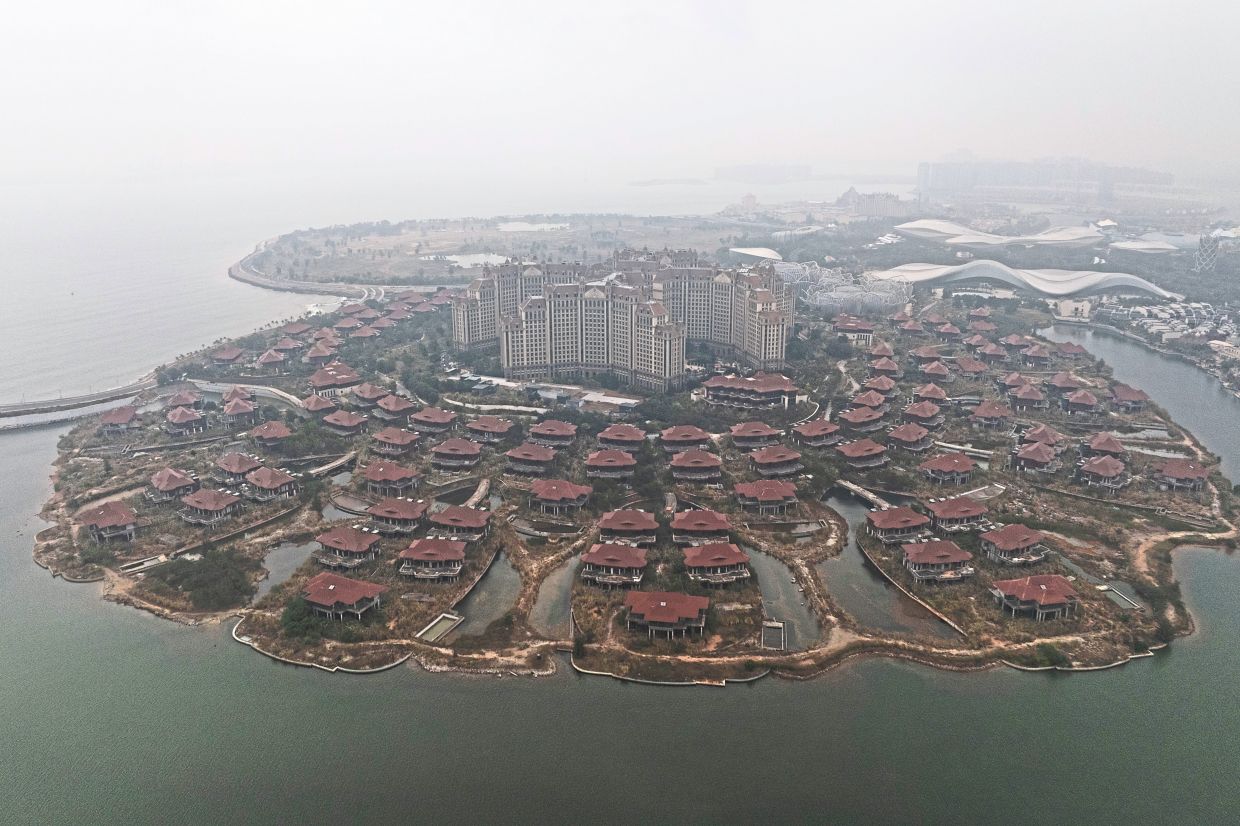
The sound of wind whistles through the broken windows of luxury coastal villas fit for Russian oligarchs. Some have been taken over by labourers who sleep on the floor.
Shopping streets featuring Italian, German, Chinese and other styles of architectures look like deserted movie sets.
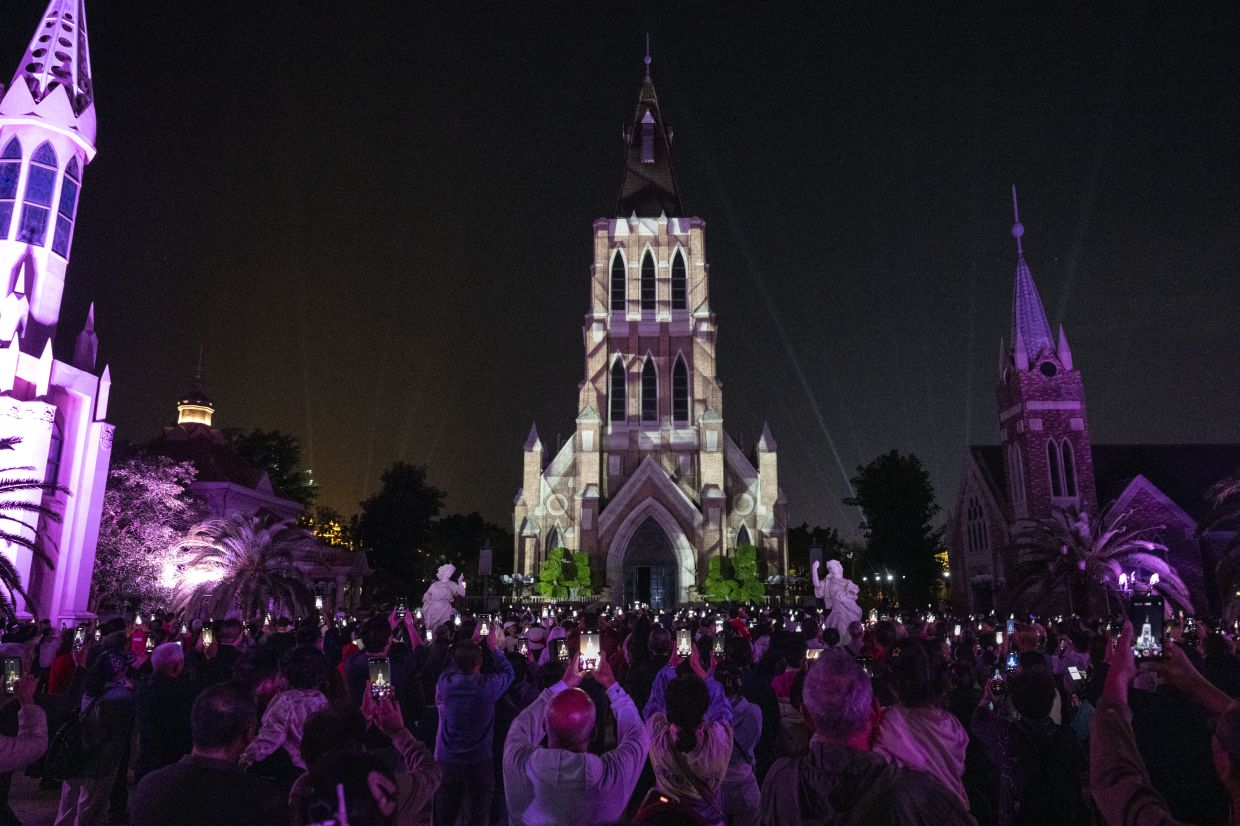
A plaza flanked by eight fake churches, including a red brick structure resembling a cathedral, is meant as an Instagram-able setting for wedding photos. The churches are now used as the backdrop for a sound and light show.
Ocean Flower Island still has believers.
Wang Xian, a retired banker from the northern province of Hebei, acknowledged that Evergrande’s founder "went too far and thought he could do anything”.
But with around 300 million Chinese people retiring over the next decade, he noted, many will want to find a sunny and safe place to live.
"If just 1% come here,” he said, "this place will be a big success.” – ©2026 The New York Times Company