



When people talk about baking, they often focus on the final product. The tender cookies, the domed muffins, the rich brownies. But the real draw of baking starts long before you roll out the pie crust.
Baking can be many things – an act of creation, connection, control. There’s something comforting about the structure of it: the measuring, the stirring, the transformation of a handful of ingredients into something delicious.
Even if life doesn’t always feel orderly, follow the recipe and things should turn out as planned. It’s like therapy, with a present at the end.
"Baking is how I best connect with the world around me – making something wonderful and sharing it with others and seeing how much joy they receive from something I made with my own hands,” says chef Joanne Chang, co-owner of Flour Bakery in Boston, Massachusetts in the United States, and an author of baking cookbooks.
"It’s a way to make the world a bit sweeter one cookie, cake, pie at a time.”
When it’s cold outside, there’s something cosy about a warm kitchen and the aroma of something sweet.
But baking can also be catharsis for more volatile feelings: The term "rage baking” was popularised by writer Tangerine Jones, who turned to flour and sugar to channel her anger at the world’s injustices.
Baking can be about maintaining traditions, or possibly curiosity (what is julekake, anyway?).
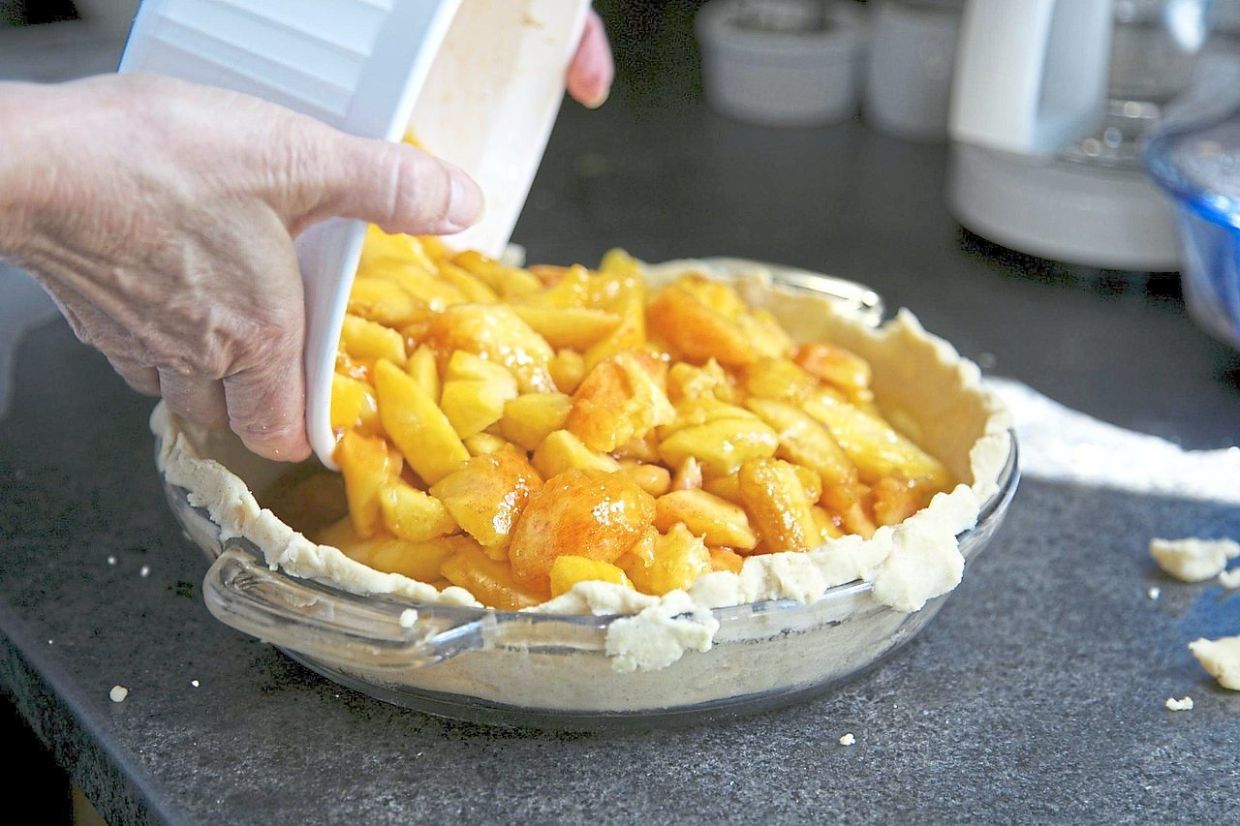
Hannah Skobe, a doctoral student in astrophysics in Pittsburgh, Pennsylvania in the US loves the chemistry aspect of baking – how butter behaves differently at different temperatures, for instance, or why the proteins in egg whites break down when they are over-beaten.
She also finds the process therapeutic, a much-needed break from work.
Ron Ben-Israel, who focuses on elaborate wedding cakes as chef and owner of Ron Ben-Israel Cakes in New York City, was drawn as a child to "watching as ingredients change through technique” in his mother's kitchen.
"Especially the process of whipping egg whites into meringue fascinated me,” he said.
For him and others, there's an element of nostalgia. A parent’s rugelach (a traditional Jewish pastry) recipe, the pie their favourite aunt made every American Thanksgiving, the cookies they helped decorate as kids.
Or, it's a way to mark the calendar: a crunchy, buttery crisp in autumn after an apple picking expedition, Irish soda bread on St Patrick’s Day, a favourite birthday cake that must be made every year.
Trust the process
Alex George of the blog Lily P. Crumbs finds something satisfyingly tactile and tangible about baking. Cracking eggs, creaming butter – there’s a lot of sensory pleasure to be had, especially in a screen-centric world. Kneading dough for bread, spreading the icing on cinnamon rolls.
Her readers, she says, "love the process as much as the payoff".
George loves inventing new kinds of baked goods, seeking inspiration whenever she tries a new food: "Savoury food is my favourite kind of muse. One incredible French onion soup I had recently inspired my caramelised onion biscuits with French onion soup compound butter.”
Bernard Wong, an avid home baker in New York City, also enjoys delving into new techniques. He has experimented with laminated doughs (think croissants and puff pastry), and has recently played with the East Asian technique – known as tangzhong in China and yudane in Japan – of pouring boiling water over flour to partially cook it, resulting in softer, fluffier breads.
Wong takes pleasure in satisfying a craving for something by making it himself. For instance, he couldn’t find an adama bread, a traditional New England yeast bread, but he knows "how to make it".
"It’s economical, I get to control what’s inside of it, and it passes the time when I’m in my apartment and keeps my hands busy,” he said.

He often chooses high-quality ingredients and still saves money compared to buying the finished product. He splurges on expensive chocolate like Callebaut and Valrhona, for instance, and jams as many chips as possible into his cookies.
Even better, confections like these are shareable and can be a way of expressing a sentiment. It might be as simple as "I missed you”, or "I thought you might need something sweet to get through this moment”.
Skobe recently made a banana cake with cream cheese frosting for her co-workers: "I loved seeing all of my friends come to my desk to grab a slice.”
As Chang puts it: "I’m grateful I get to do something that I love so much and that others love so much too."
At its heart, baking feels hopeful. It might be about feeding others, or celebrating, or creating a moment of calm in an otherwise chaotic world, but it’s also about the belief that if you measure the ingredients and follow the steps, something good should come out of it.
Oh, and julekake? It's a Norwegian Christmas cake. – A
