



When Cassie Ridgway held her first clothing swap in Portland, Oregon, the United States 14 years ago, she had a few goals: keep clothes out of landfills, help people find free fashion treasures and build community.
The swap attracted about 150 people, and grew from there.
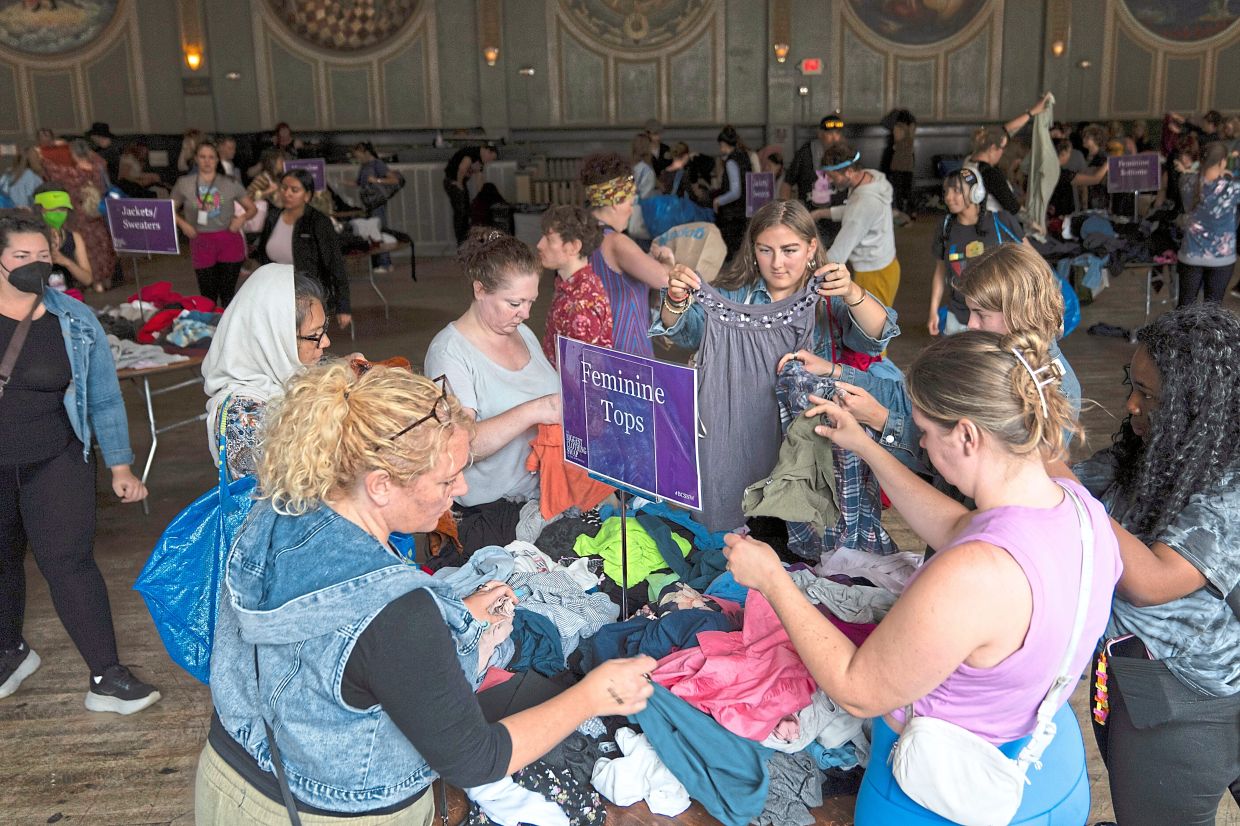
Now, the twice-yearly event, which organisers call The Biggest Swap in the Northwest, draws between 500 and 850 participants to share clothes and accessories in a party-like atmosphere.
“We have a DJ and two full bars, so there’s some singing and dancing. But no one’s getting drunk at 1pm on a Sunday afternoon,” said Ridgway’s co-founder, Elizabeth Mollo.
The swap is part of a larger movement across the country to share resources with neighbours – one shirt, meal or book at a time.
The Portland event asks for a US$10 (RM42) entry fee to cover costs, but the clothes are free and there’s no limit to how much participants can take.
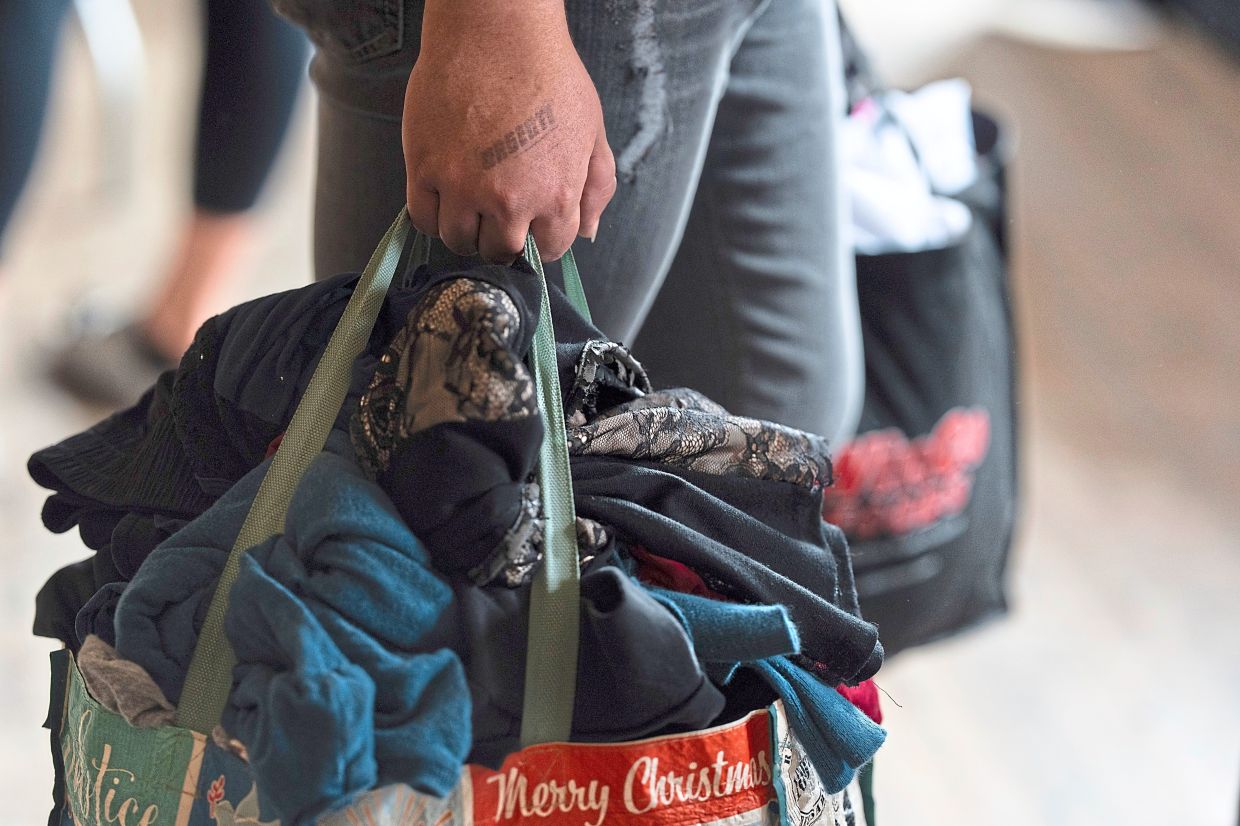
People bring their gently used clothing, shoes and accessories to a sorting station, where volunteers sort it into bins and onto tables.
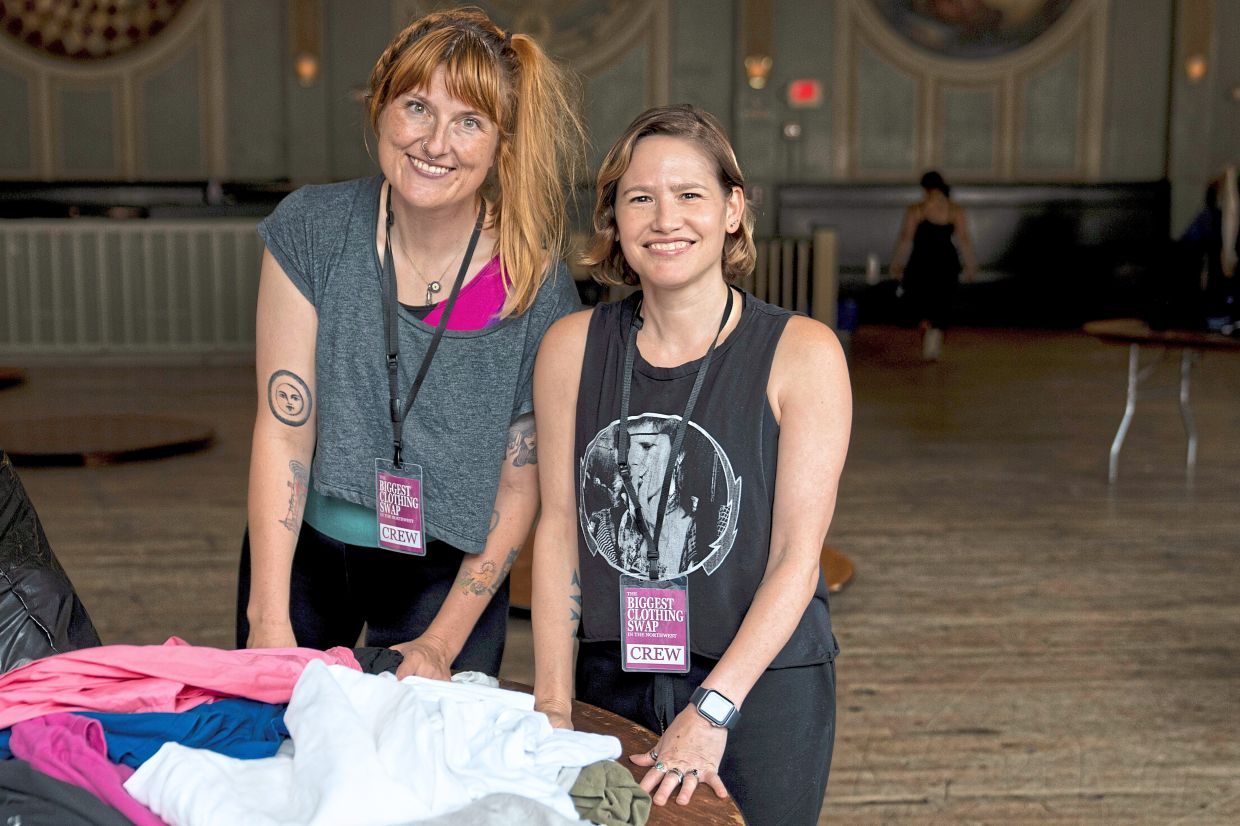
Ridgway, who worked in the apparel industry, sees the process as an answer to throwaway “fast fashion”.
She describes “the ‘peak pile’ moment, when our sorters are summiting a mountain, a literal tonnage of apparel, sorting as quickly as they can. In this moment, we see the true ramifications of consumer culture and waste”.
Leftover clothing is donated to another free neighbourhood swapping event.
Ridgway recalls a single mum telling her she was able to outfit her teenager with Nike shoes and other major brands typically outside her price range.
“These conversations, and so many others, have truly kept me coming back to this event,” she says.
There are no dressing rooms, so participants are encouraged to come in tight-fitting clothes and try things on where they are.
“It does get a little chaotic,” Mollo says, but many people return year after year.
“Where else can you get a whole new wardrobe for US$10?”
As prices climb for many food items, community resource- sharing becomes increasingly important, says Taylor Scott in Richmond, Virginia.
Scott was a recent college graduate when the pandemic put her dream of becoming an FBI agent on hold.
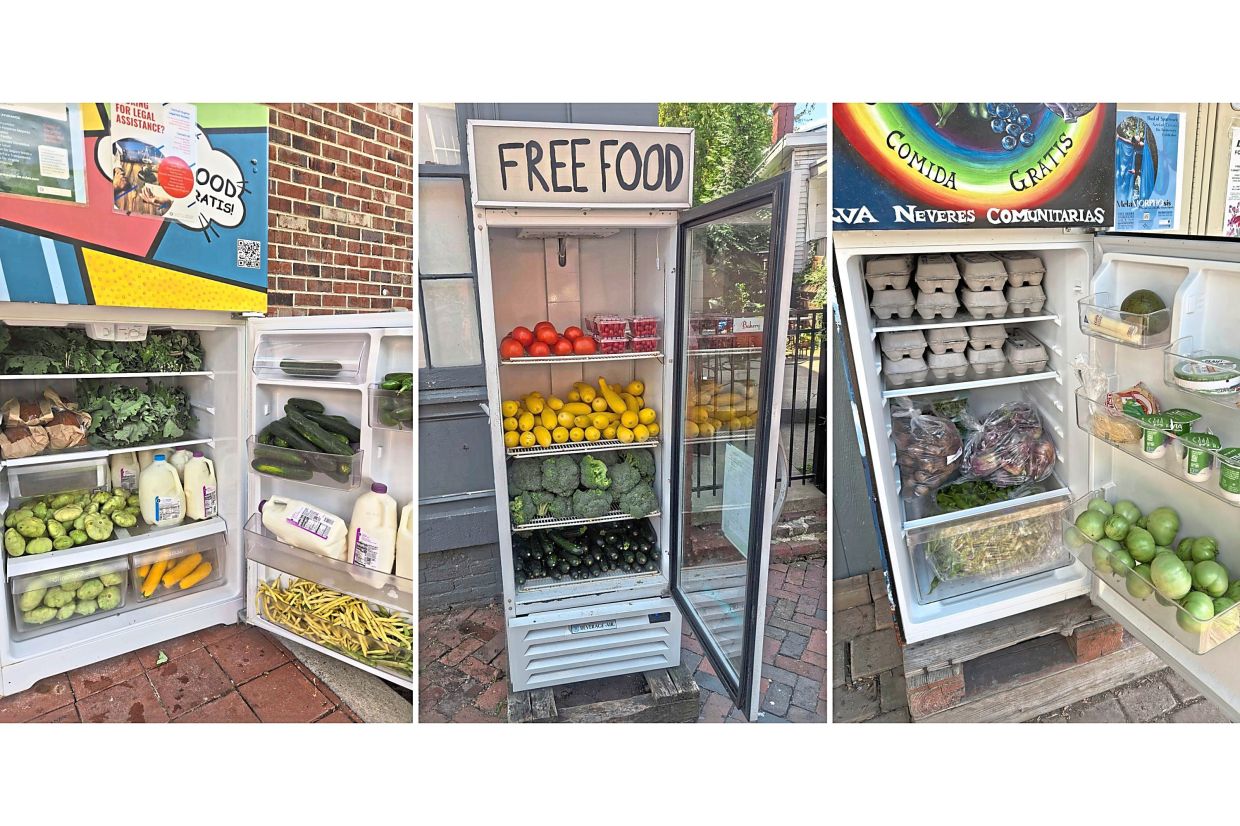
She took up gardening, and quickly found herself with more tomatoes than she could consume. A friend suggested she put the extras into a community refrigerator, like ones they knew of in places like New York City.
But Scott found there was nothing of the sort in Richmond.
“I decided that was what I was going to do for my birthday,” she says.
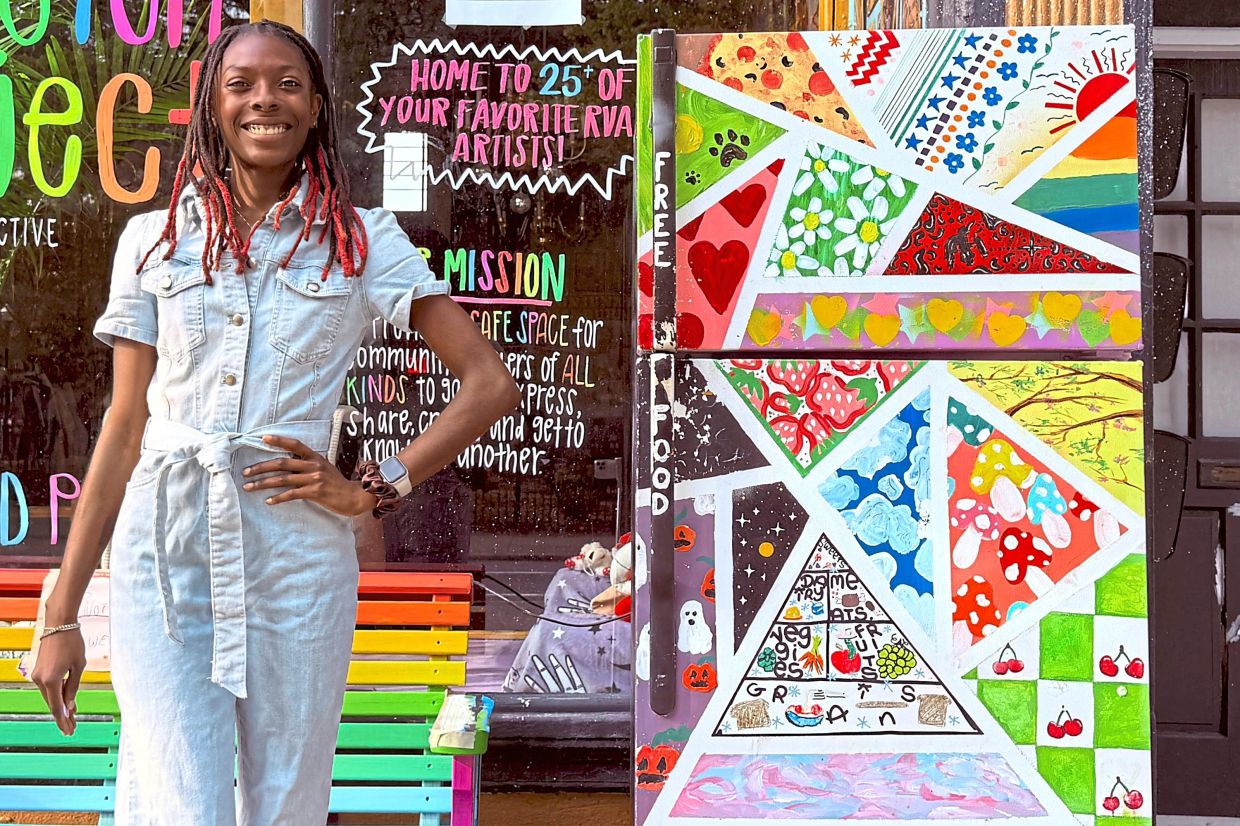
Scott hopped on Instagram to see if her friends wanted to help, and quickly received an offer of a fridge and a promise to paint it.
Several months and planning calls later, she opened her first community fridge outside a cafe, in January 2021.
It was a hit.
“Right away, people asked me when I was going to open more,” Scott says.
She built relationships across the city on “word of mouth and faith” as she added fridges over the next four years. As the project grew and became RVA Community Fridges, food donations expanded from restaurants and farms to include private events and weddings.
“We’ve saved so much food that would have gone to waste,” Scott says.
Today, the 27-year-old president of RVA Community Fridges and her crew of volunteers run 14 fridges, offer “farm to table” education classes and hold community cooking days at a kitchen.
The organisation has given away more than 520,000 pounds (236 tonnes) of food, Scott says.
She also likes that the fridge sites have become neighbourhood gathering spots. She’s seen people who once needed the food share become volunteers when they’re in a better place.
“They started out taking and now they’re giving,” Scott says.
This style of hyper-local sharing is also a hallmark of Little Free Library, the nonprofit behind those cute little book huts that dot communities nationwide. The libraries offer round-the-clock access to free books, and are meant to inspire meaningful interactions.
“People tell me they’ve met more neighbours in one week than they ever had before putting up their library,” says Little Free Library CEO Daniel Gumnit.
Since the organisation’s founding in 2010, book lovers have put up their own creative takes on the libraries, from cactus-shaped structures to miniature replicas of their own homes. There are now over 200,000 Little Free Libraries in 128 countries, Gumnit says.
“Access to books directly correlates to literacy in children,” he notes.
Reyna Macias was looking to expand that access in her neighbourhood of East Los Angeles when she stocked her hand-painted Little Free Library box with books in Spanish and English.
“There’s a great library nearby, but many people in our community work long hours that don’t coincide with what the library offers,” Macias says. “Our little library is open 24 hours and has books in their language.”
Macias says her library is frequented by people walking dogs, kids stopping by after school and one grandfather who brings his granddaughter every day.
“For years, East LA has been looked down upon. But we’re a community that looks out for each other and takes care of each other,” Macias says.
Her library has received so many donations from neighbours that she now takes a cart full of free books to the farmer’s market every Thursday.
“It’s an important time to show a lot of love,” Macias says.
“This is my way of doing that.” – AP
