The secret to healthy plants lies in the soil, says eco-entrepreneur Yap Jing Zong, 25, as he brings StarLifestyle on a tour of a community garden in Taman Setapak Permai, Kuala Lumpur.
“If you grow the soil well, the soil will take care of the plant.”
Yap’s words are simple, but they hold the essence of his mission: Solving Malaysia’s food waste problem by nurturing both soil and community.
As the founder of social enterprise 4Leaf Nursery and the Trash to TrashURE project, he has made it his calling to turn what most people see as waste into wealth – for plants, the people and neighbourhoods.
Malaysians throw away over 8.3 million metric tonnes of food waste every year – more than 30% of total municipal solid waste.
That’s more than plastic and paper waste at 22% and 15% respectively (Solid Waste Management and Public Cleansing Corporation, 2024). Most of it ends up in landfills, releasing methane and worsening environmental degradation.
For Yap, this wasn’t just statistics; it was an opportunity.
“I love planting, but I also realised plants need to eat – fertiliser is their food and it’s not cheap,” he recalls. “So I started researching how to make my own fertiliser. That’s when I discovered food waste could be transformed into something valuable.”
In 2021, as a university student, Yap began going out at dawn to collect food scraps from restaurants and garden waste from Alam Flora depots.
At 3.30am, he would pedal around Wangsa Maju, KL, with a tricycle, baskets piled high with leftovers.
By 7am, he would be at a farm, experimenting with composting before heading to class.
His first trial – turning food waste into compost within three months – was a success.
When he compared his home-made fertiliser with store-bought ones, the results astonished him – his plants thrived better with compost made from food waste.
That was the spark that grew into Trash to TrashURE in 2023.
But Yap is quick to reframe it.
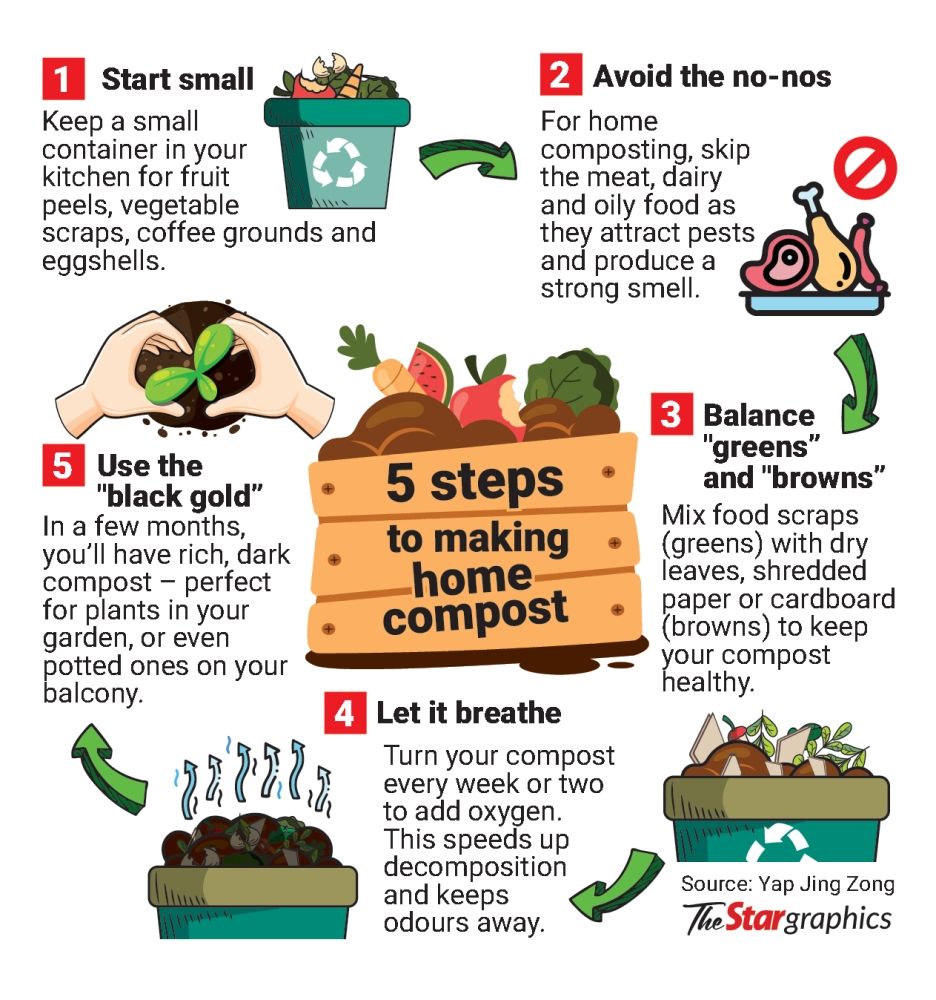
“Composting is the managed, natural decomposition of organic materials like food and garden waste into nutrient-rich soil,” he explains. “It’s carried out by microbes and other organisms – earthworms, pill bugs, fungi – the real workers of nature.”
Different microbes digest different types of waste, he says.
“Kitchen waste (fruit peels, coffee grounds, eggshells) are broken down with the help of earthworms and insects, while cooked food waste (rice, fish, meat) requires bacteria like lactobacillus and fungi such as aspergillus and penicillium.
“Mixing in garden waste like dried leaves or sawdust balances the process, prevents odours and ensures the compost remains rich and aerated.
“If food waste could talk, it would say: 'Why throw me away? I’m valuable!’” Yap laughs.
But composting isn’t just about soil. For Yap, the larger vision lies in creating Urban Recycling Ecosystems (UREs) – community- based hubs where waste is recycled into value, and residents learn to sustain themselves through urban farming.
“The government has been encouraging recycling for over a decade. But most people don’t do it because it’s inconvenient and not profitable,” Yap notes.
“For UREs to succeed, we need five elements – facilities, an operations team, education, discussions with management (like government authorities and stakeholders), and markets.”
Kebun Bandar Lestari Setapak Permai is one such ecosystem. Partnering with the Setapak Permai Residents Association and volunteers from nearby PPR flats, the garden receives 200kg of food waste daily from households, restaurants and Kuala Lumpur Hospital.
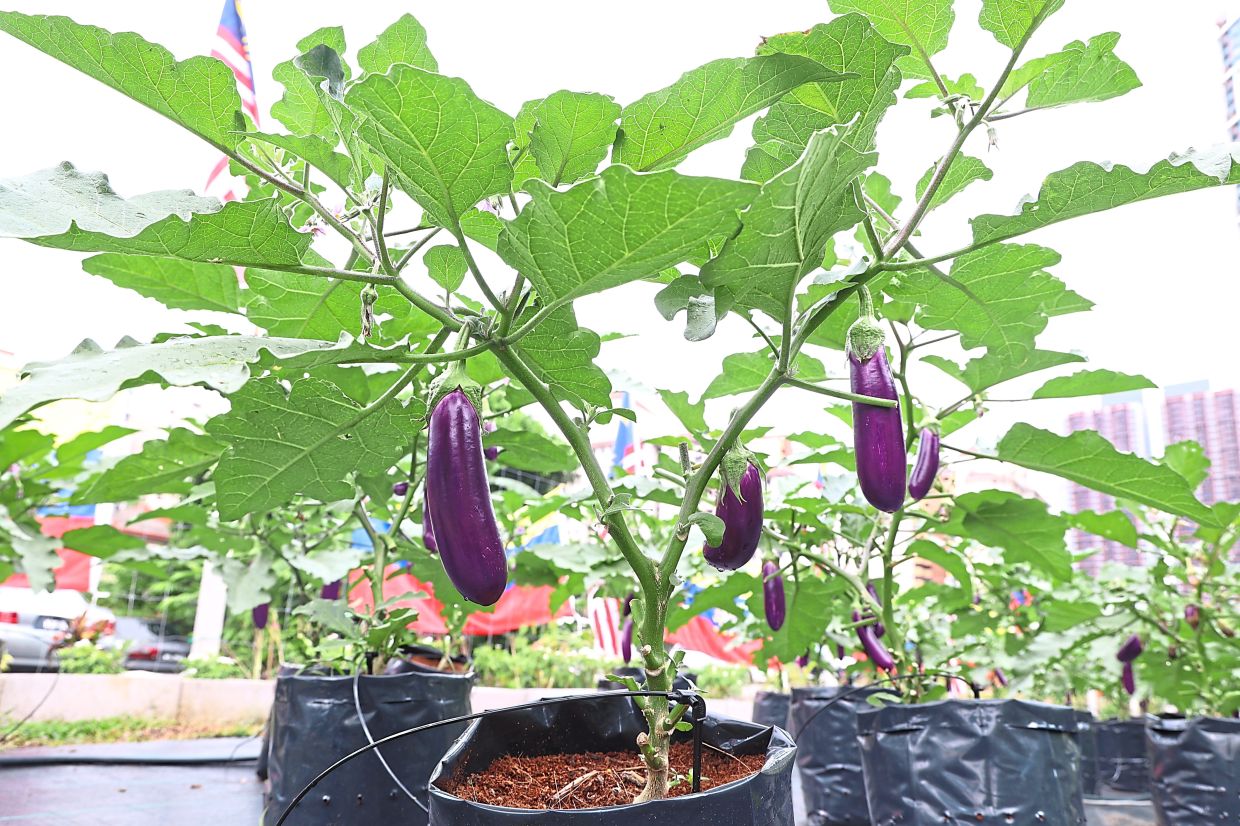
This waste is transformed into compost, which in turn nurtures fruits and vegetables such as passionfruit, sugarcane, banana, lime, calamansi, bilimbi, Brazilian spinach, brinjal, chilli, yam and others. There are even flowers like sunflowers and kampung roses which aid in pollination too.
This effort is Yap’s third community garden project after Sepang and Sungai Long, in Selangor, with plans for a fourth at Tunku Abdul Rahman University of Management and Technology (TAR UMT) in KL.
Housewife Norfaizah Mansor, 54, from PPR Seri Semarak Setapak, comes twice daily to tend to the community garden.
“I come in the morning at 10am, and again in the evening at 5.30pm after my household chores, and often stay till night time,” she says.
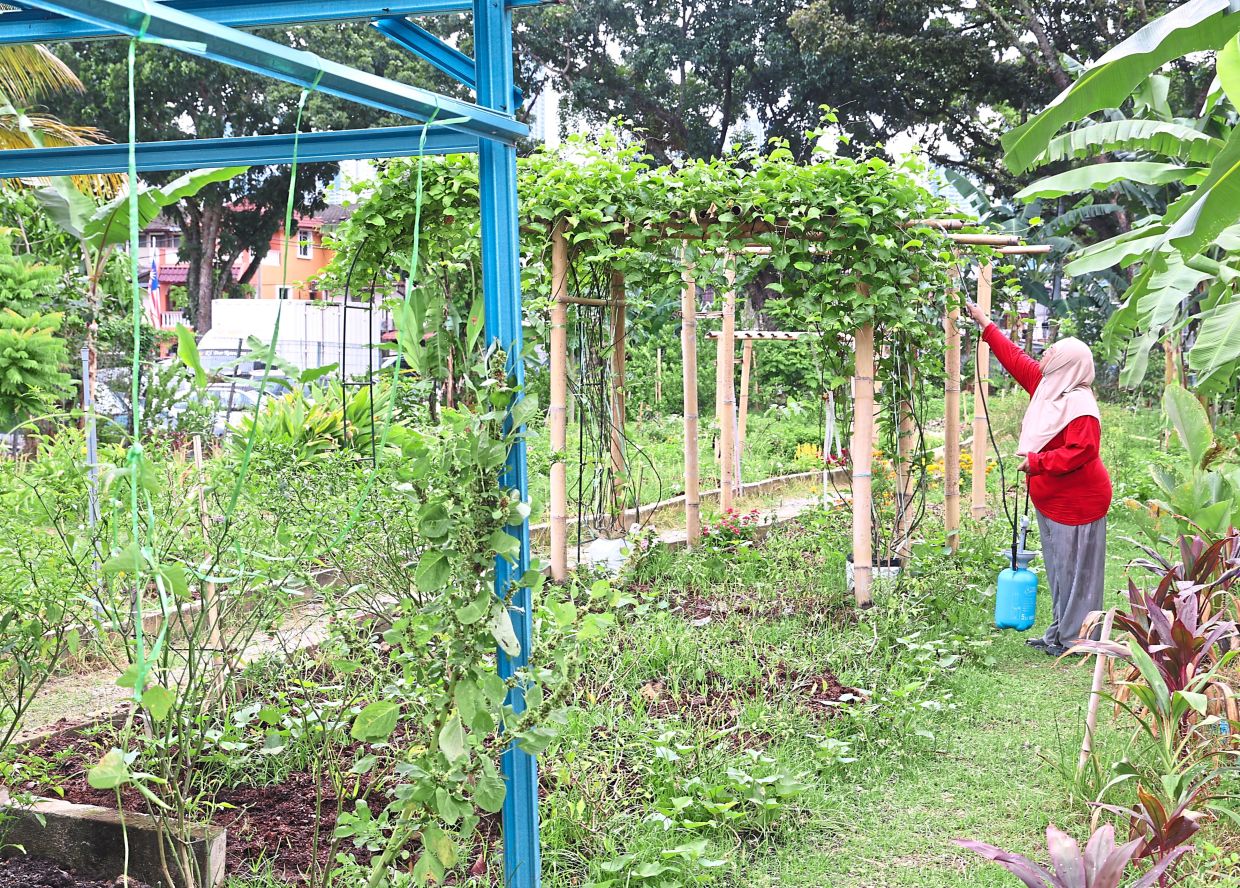
Her focus is on watering the plants, fertilising them and preventing diseases by spraying organic pesticides.
“We’re happy with the results. The fruits and vegetables look fat and juicy,” she laughs.
Norfaizah reveals that most of the produce is sold back to the community. Then if there is excess, it’s sold outside.
“Recently, we sold sugarcane juice made from the sugarcane plants.
“We plant fruits and vegetables while the flowers help with pollination. But some flowers are edible too, like this bunga telang (butterfly pea flower) which is used for nasi kerabu.”
Retiree Asri Termizi, 60, from the Setapak Permai Residents Association, also spends a lot of time at the farm.
“I’m here practically every day. I come to unlock the gate at six in the morning, then return again around 8am or 9am to help.”
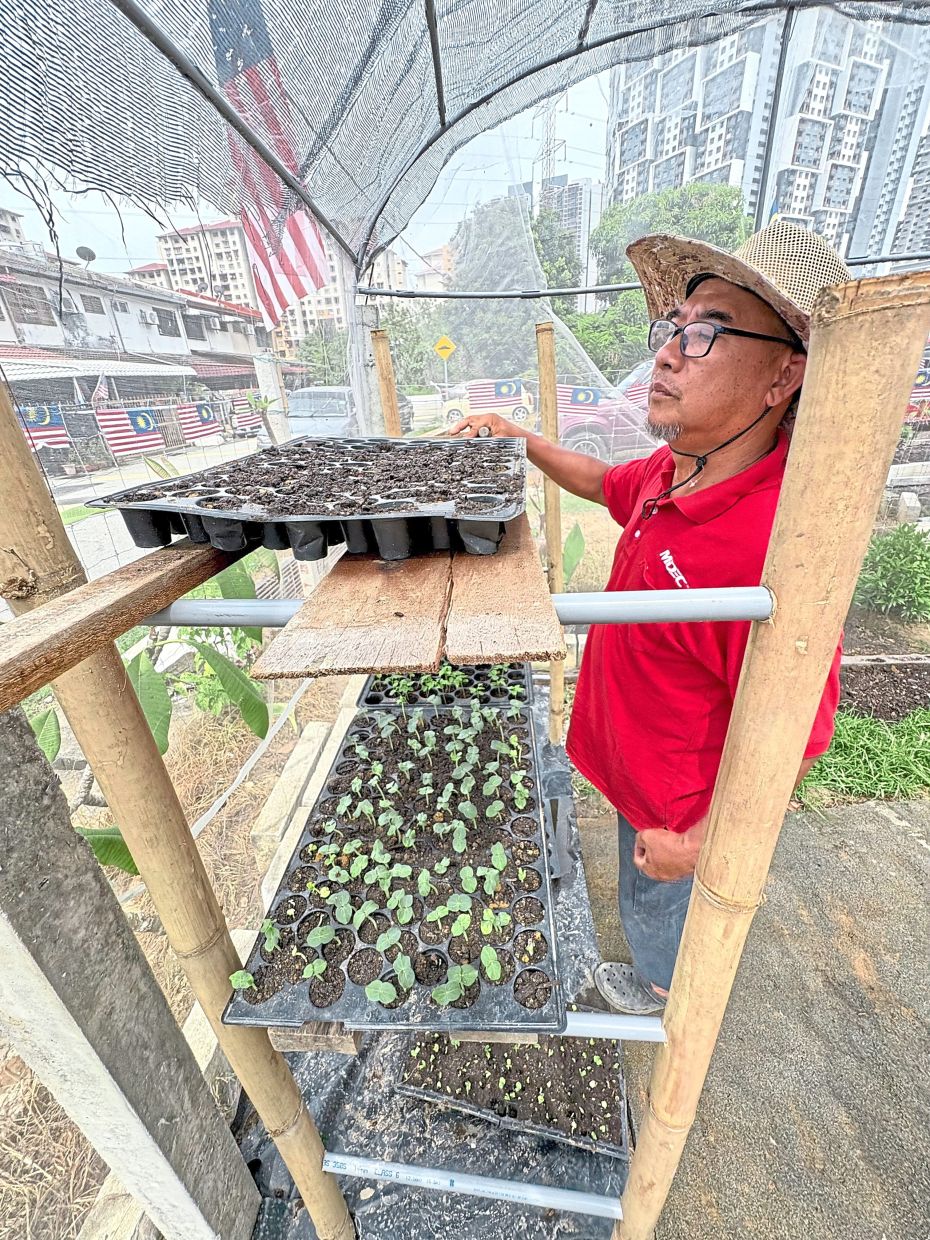
Asri monitors the seedlings in the community garden. The seedlings are housed in a nursery he built using wire mesh, bamboo and wood.
“We check for pests, spray natural pesticides and apply organic fertiliser.
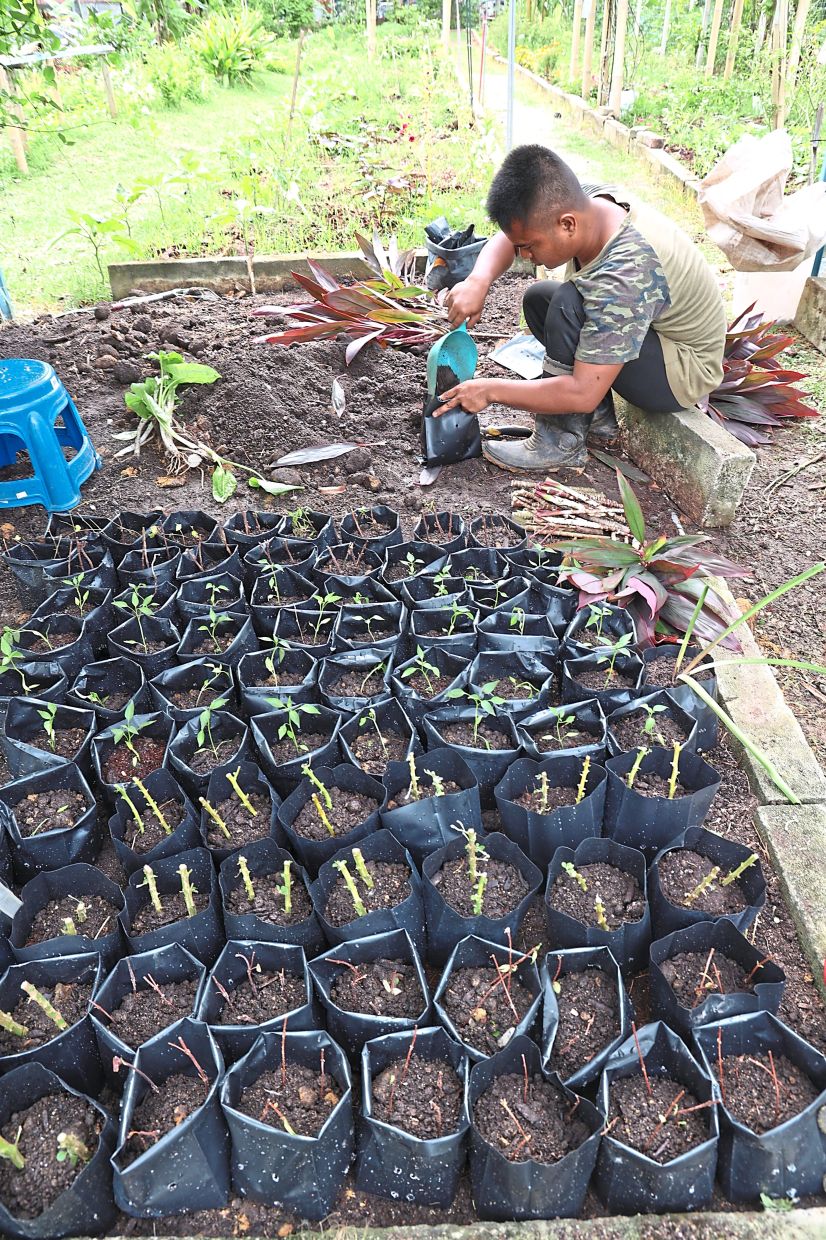
“These are okra,” he adds while pointing to rows of seedlings in the nursery. “They’ve sprouted. Soon we can transfer them to polybags. Yap has helped us to prepare and compost the soil so we can start planting when the seedlings are ready.
“And next to the okra are four-angled beans and daun kesum (Vietnamese coriander) seedlings.
“We have five to six committed helpers here. There are others but they aren’t regular,” he says.
Yap calls his regenerative farming method, “letting nature take its course”.
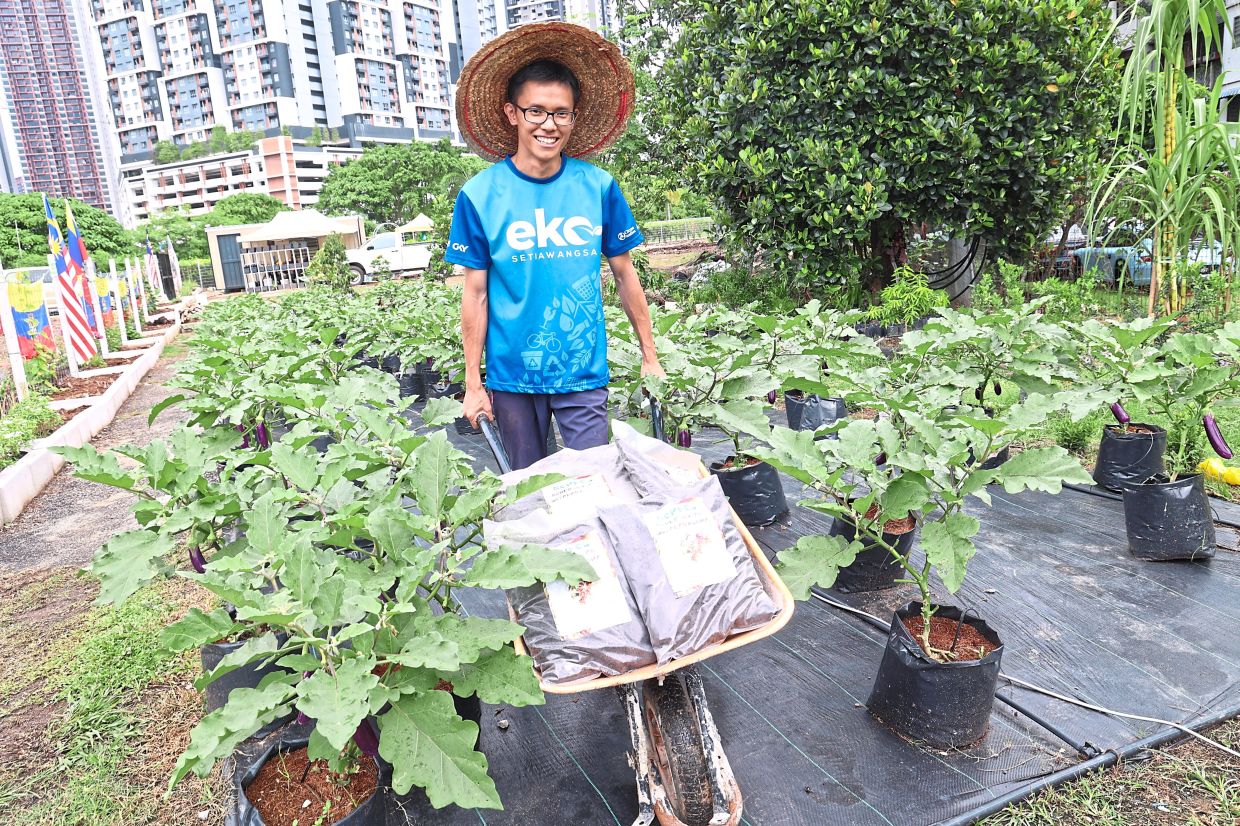
“We’re working with nature, not against it. When we first started, the soil was hard, and there was stagnant water. Nothing grew. After adding compost, the soil became fertile, and the plants grew ‘fat’,” he says with a grin.
Yap also encourages communities not to strip the land of grass or dry leaves. Grass acts as ground cover, keeping the soil moist, shielding microbes from harsh sun, and preventing erosion during heavy rain. Fallen leaves decompose into organic matter which feeds the soil.
He also avoids chemicals, opting instead for organic pesticides such as neem and cuka kayu (wood vinegar), which encourage bees and pollination.
Fertigation – combining fertiliser and water in one system – ensures resource efficiency.
“The two key principles are, we don’t see grass as an enemy and there is no waste on the farm,” Yap emphasises.
“Everything is recycled back into the soil.”
For Yap, community gardens aren’t just about growing food; they’re about growing livelihoods.
“Some community gardens fail because they aren’t sustainable. People need to know how and where to market their produce,” he says. “So besides teaching composting and planting, I also impart business knowledge like how to connect to wider markets.”
Currently, much of the harvest goes back to the local community. But with support, residents could sell their produce, turning gardens into income-generating enterprises that could sustain the community garden.
His approach? Keep it fun.
In Sungai Long, he drew tweens into the garden, organising fun sessions where they played badminton and skateboarded around the community garden area. Once friendships were built, they naturally joined in the planting and composting.
“You don’t need to lecture kids. They learn by doing and observing,” he says. “They see earthworms decomposing organic matter in the soil and understand why they’re important and shouldn’t be killed. When they’re curious and want to know more, they’ll naturally ask.”
At TAR UMT, students in the Green Society have embraced composting as part of their environmental mission. In Klang, Yap’s school lectures have led primary school pupils to compost daily, making sustainability second nature.
“Community-driven initiatives like these are the future of Malaysia. They bring neighbours together. People start talking again, and that’s how communities grow.”
Yap describes himself as a “green entrepreneur” with one “superpower”: persistence. For over two years, he kept his composting experiments a secret, fearing his mother would disapprove of her engineer son collecting “trash”.
“Sometimes, I’d be at the farm at 3.30am, then rush to university by day. I worked part-time jobs to fund my project,” he recalls.
Today, his persistence has paid off. As a TEDx speaker, he advocates food waste recycling to policymakers and businesses, hoping for UREs to be recognised and replicated across Malaysia.
His vision is farsighted: A URE within every 3km radius in urban areas, making food waste recycling convenient and sustainable for all.
“If trash doesn’t have a solution, it’s still trash. But when combined with URE, it becomes trashURE (treasure),” Yap says.
As we walk through the garden, Yap pauses at a rose bush.
“The rose is my favourite plant. It smells good and looks soft, but it also has thorns. It teaches us to admire people for who they are, without trying to change them,” he reflects.
It’s an apt reflection of his work – finding value in what others overlook, nurturing resilience in soil and in people.
Food waste may be Malaysia’s biggest domestic pollutant, but to Yap, it’s also its biggest untapped resource.
“By turning trash into treasure, we’re cultivating not just gardens, but communities, opportunities and hope for the future,” he concludes.
Turning trash to treasure
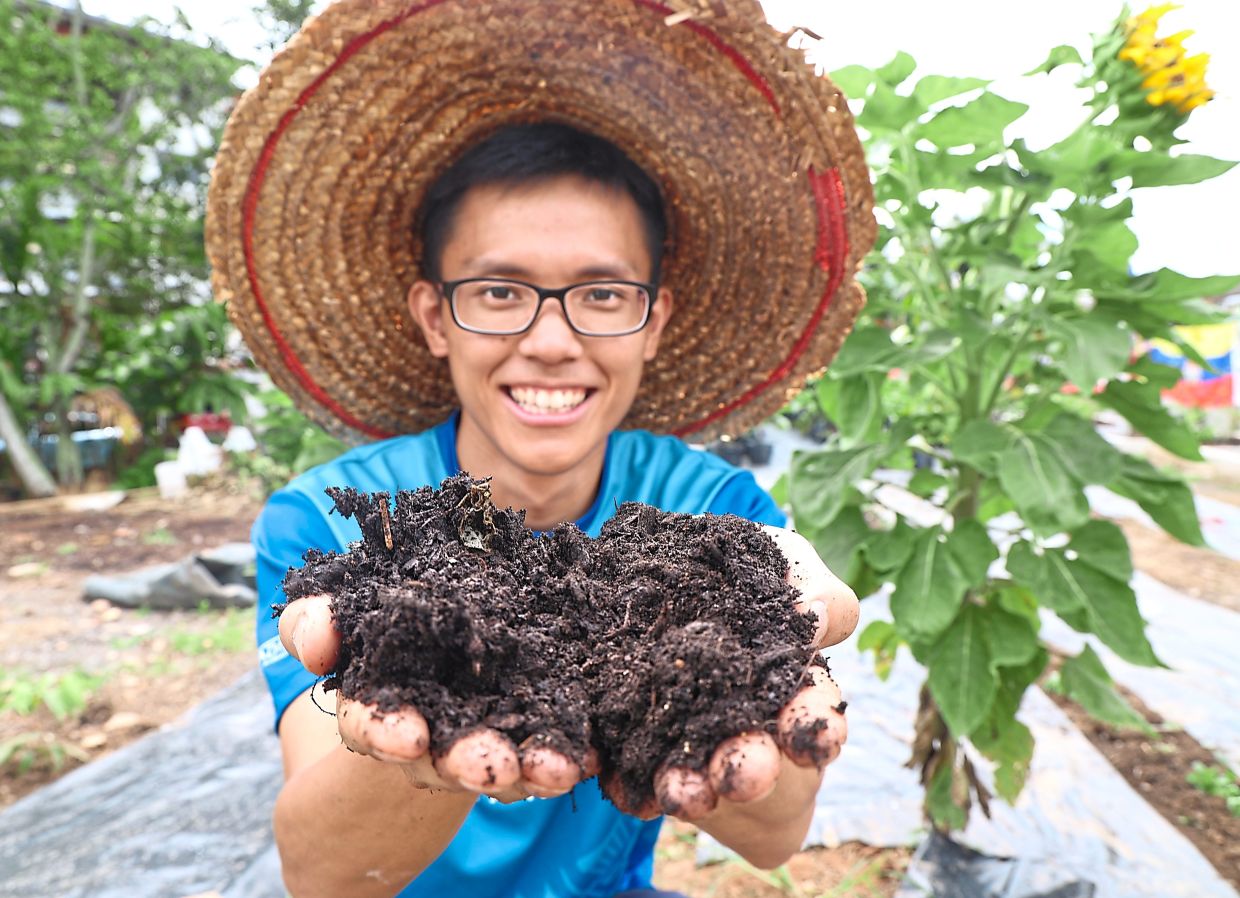
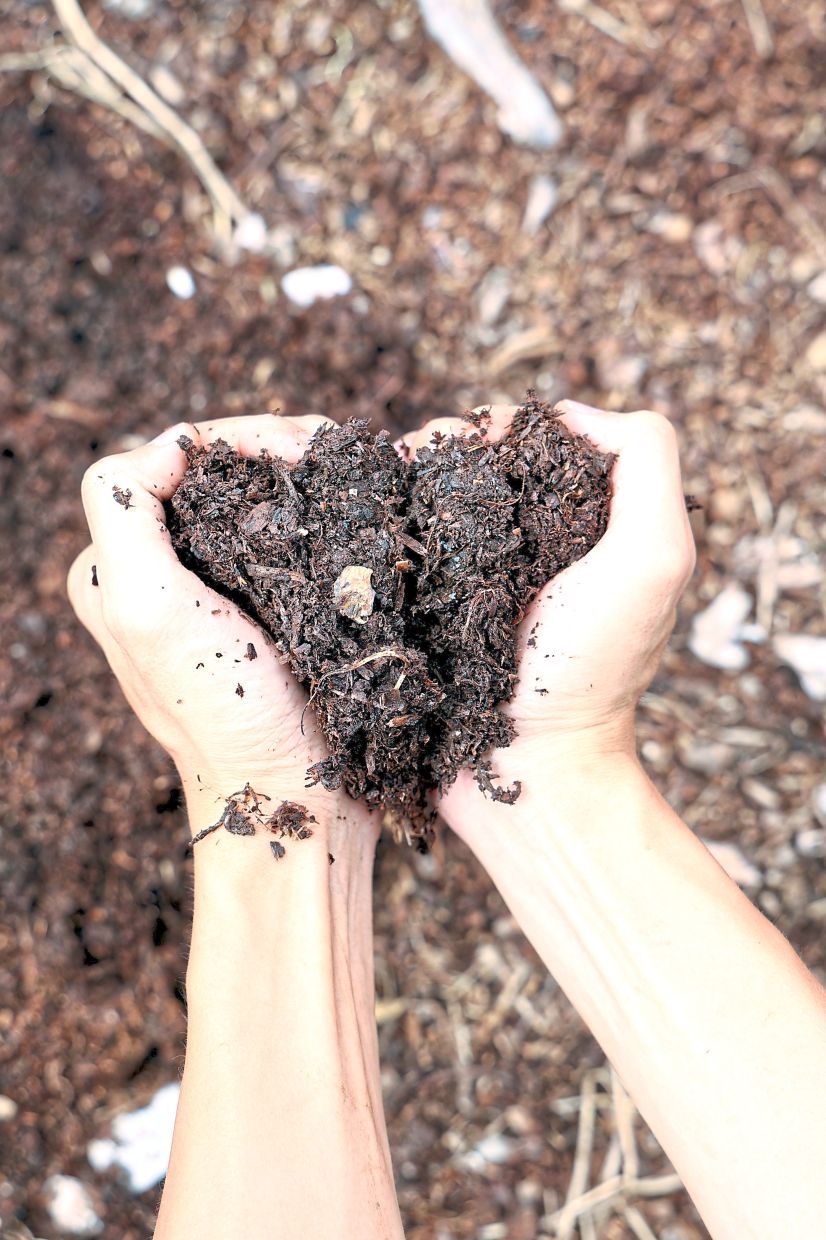
Yap holding the compost that helps the plants grow well in the community garden.
A close-up of the compost.
Norfaizah spraying organic pesticide (wood vinegar and neem) to protect the plants.
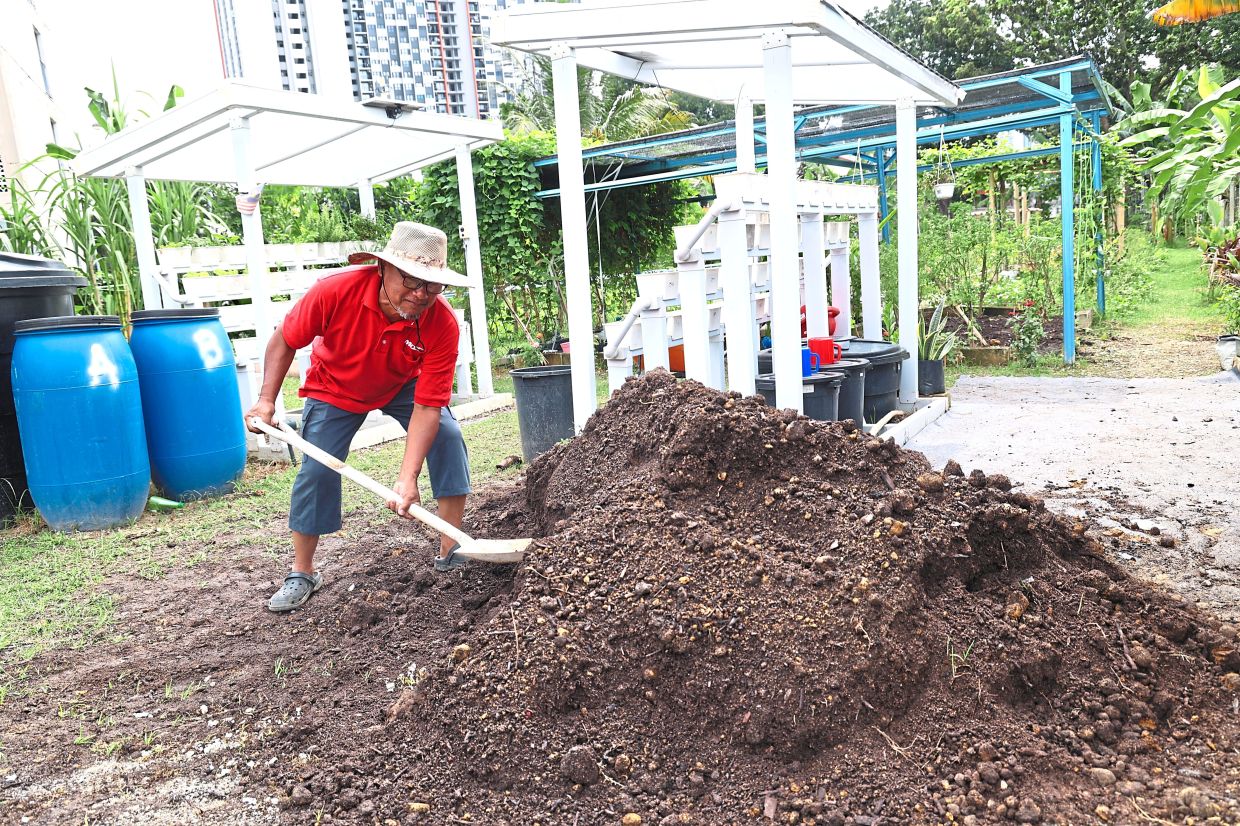
Community volunteer Asri helping to prepare the compost for use by mixing it with soil.
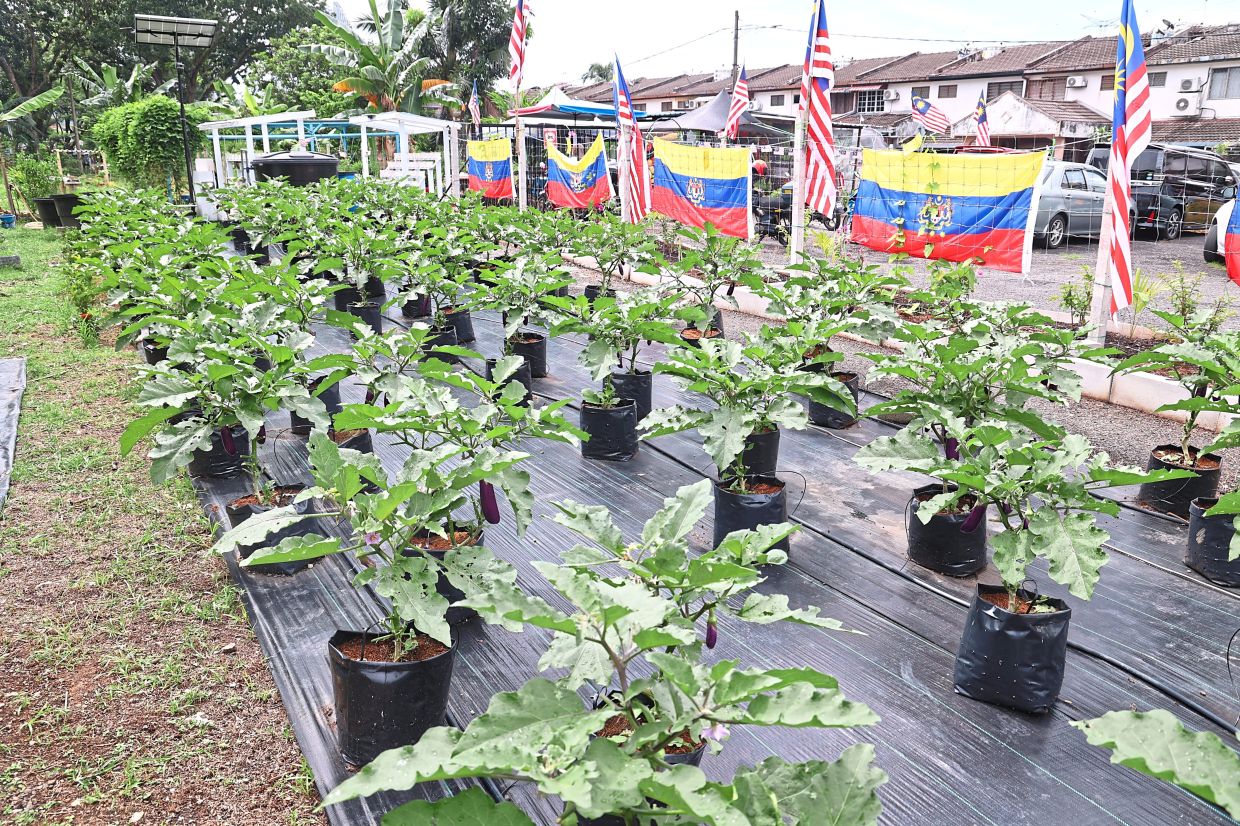
A full harvest of brinjal at the community garden.
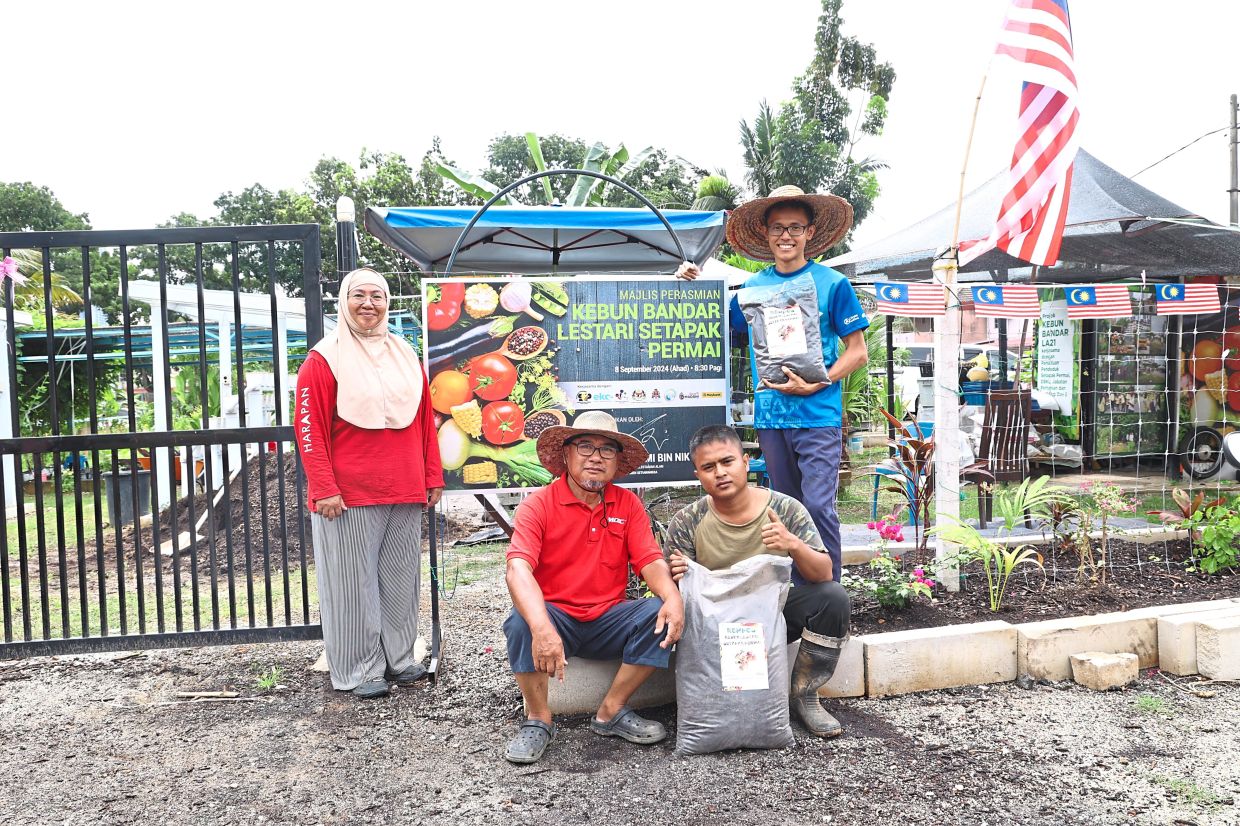
Yap (in blue) with community volunteers Norfaizah (far left) and Asri (second from left).
One of the volunteers helping at the community farm.
Rows of brinjal plants tended by community volunteer Norfaizah.
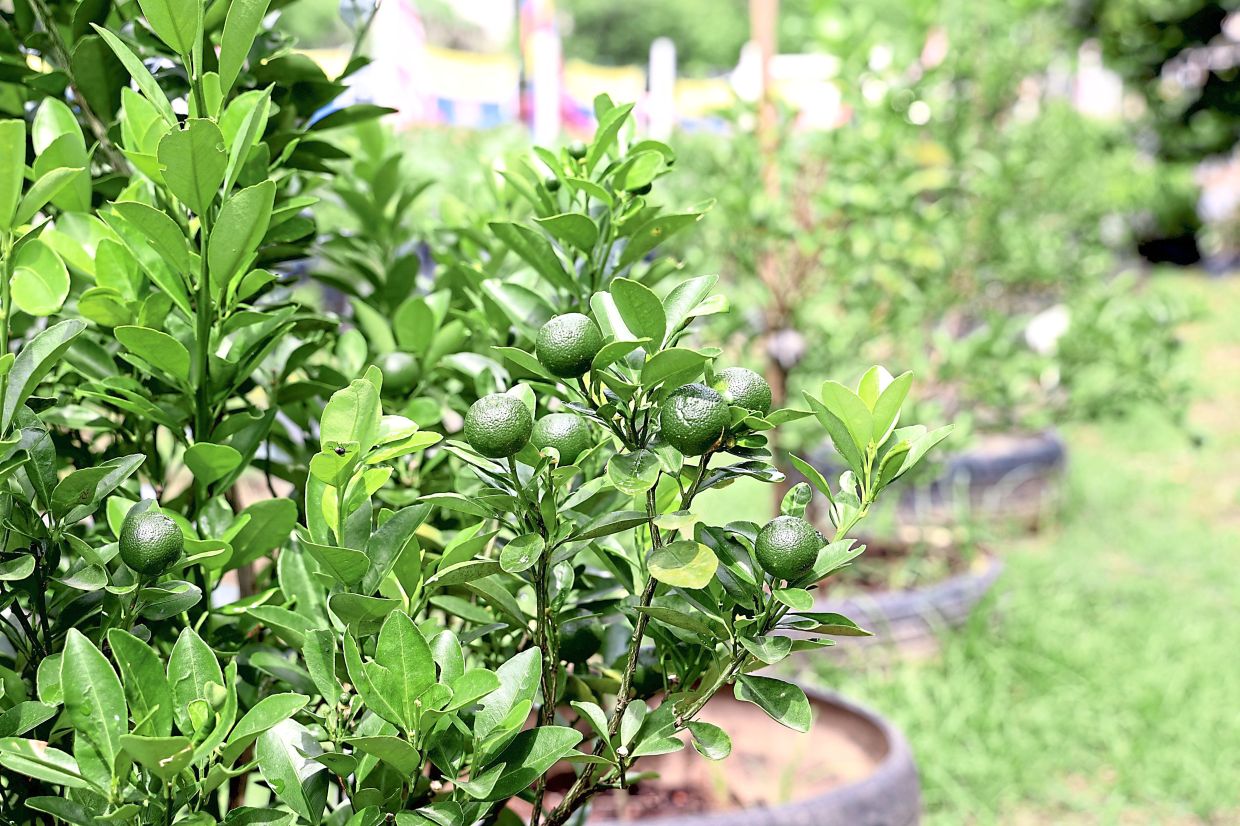
Lime trees at the regenerative farm.
Yap standing amidst brinjal plants, with the compost that makes the crops grow well.
Asri inspecting the seedlings in the nursery he constructed. Photo: The Star/Ming Teoh