Cats with particularly cute or funny appearances due to their head shape have become stars on social media.
Celebrities enjoy showing off their extraordinary felines and videos of such animals receive millions of clicks.
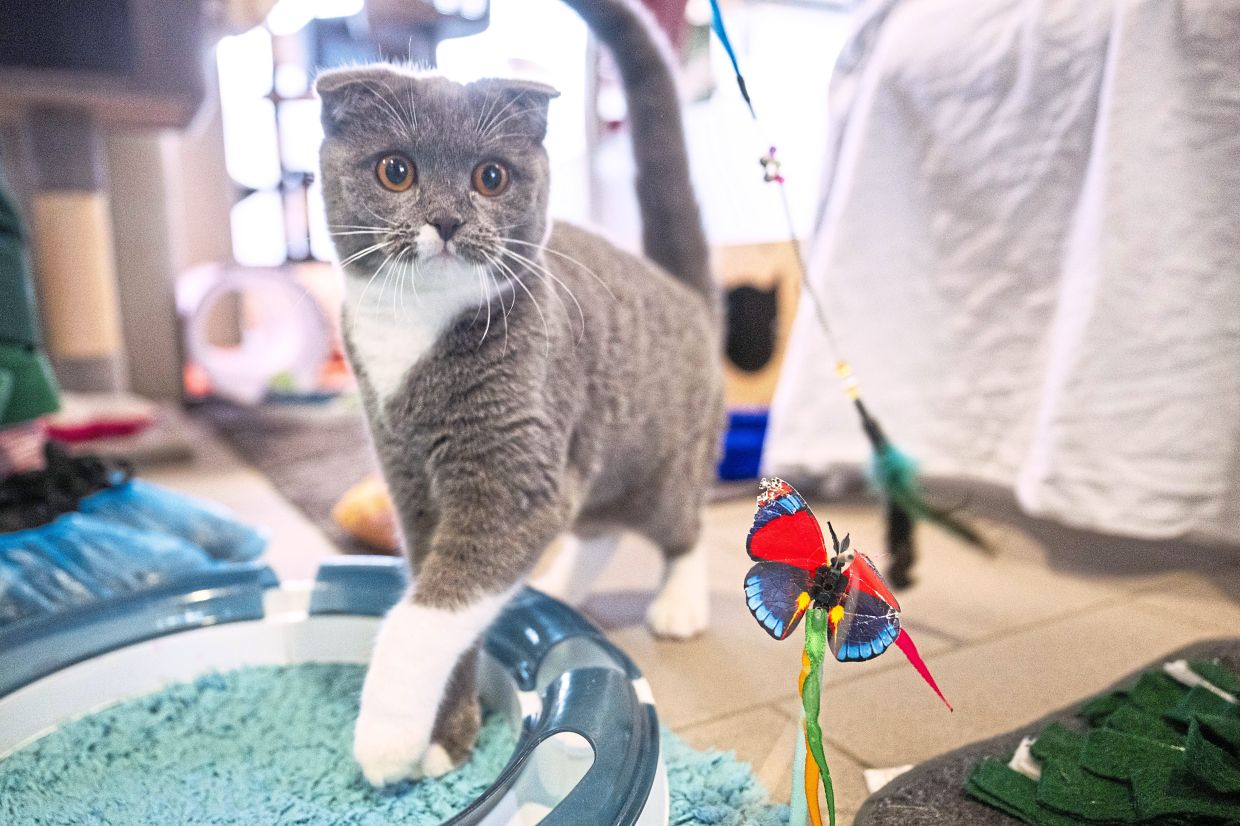
With a round head, big eyes and forward-folded ears, Taylor Swift’s Scottish Fold cat is a celebrity in its own right.
Fashion model Claudia Schiffer even brought her Scottish Fold to the premiere of a film which also featured the feline.
But there is a darker side to this trend that is known to only a few people. Animal welfare advocates say the Scottish Fold cats – known for their folded ears – are considered to be the result of harmful breeding practices.
Animals bred for specific traits, like big eyes, a flat nose or unique coat colours can also struggle with health problems throughout their lives.
Some may have difficulty breathing or the genetic combination responsible for the desired traits may lead to other physical problems.

Berlin-based veterinary pathologist Achim Gruber calls this “defect breeding.” Animals are being deliberately bred with genetic defects to achieve an extravagant or cute appearance, even though the health consequences for the animals have been known – in many cases – for decades, he says.
“The added value for humans is more important to people than the suffering of the animals. This is, of course, a serious ethical problem,” he says.
Many of these “tormented companions,” as Gruber calls them in the title of his book, end up on the autopsy table at his Institute of Veterinary Pathology at the Free University of Berlin after they die.
He now seeks to raise awareness about the consequences of certain breeding practices and offer potential ways forward.
Health problems
Veterinarian Tanja Pollmuller, who runs a practice in Ahlen, North Rhine-Westphalia, often treats trendy cats as patients.
Many are Scottish Folds, the cats whose genetic mutation causes their characteristic small, forward-folded ears. They often suffer from severe joint inflammation.
“They frequently have significant ossifications and pain in their hind legs, to the point where they can no longer walk properly at a very young age,” says Pollmuller.
She can usually only help these animals with pain therapy, as a cure is not possible, she adds.
Pollmuller also frequently treats Persian cats with excessively short noses, which struggle to breathe. Additionally, she once treated a hairless cat suffering from severe skin rashes and an eye infection, which ultimately led to the loss of one eye.
Unaware of issues
Pollmuller often finds that many people are unaware of the health problems associated with certain cat breeds.
“Very few pet owners do enough research before acquiring an animal. Most have never even heard of defect breeding,” she says.
Some owners also ignore their cat’s health issues, Pollmuller adds.
“Most people think that as long as an animal is still walking around, eating and drinking, it must be fine. Unfortunately, they are completely unaware of the animal’s suffering or poor quality of life.”
Pollmuller goes online as Doc Polly to educate pet owners about the needs of animals through social media.
Elke Rauch from the faculty of Veterinary Medicine at Ludwig Maximilian University of Munich sees another major issue in the media’s portrayal of certain cat and dog breeds, such as their use in advertisements or their association with celebrities.
“This creates a sense of normality. No one questions whether the animal might have problems,” she says.
Gruber also sees a psychological factor. Small animals like pugs, French bulldogs, Scottish Fold cats or Persians are often seen as substitutes for babies.
“Everyone finds them cute, and it immediately triggers protective instincts,” he says. In some cases, the dependency and neediness of the animals become the goal.
“It boosts a person’s self-esteem and social recognition when they care for a sick animal.” Gruber says he sees many people repeatedly buying such cats, even though they know better.
Vaguely worded law
In Germany, a law – section 11b of the Animal Welfare Act to be specific – technically prohibits harmful breeding.
However, the law is too vaguely worded, according to the German Animal Welfare Federation.
“The term harmful breeding does not apply to an entire breed but rather to traits that frequently occur in certain breeds,” says spokeswoman Nadia Wattad. These traits vary in severity from animal to animal, she adds.
As a result, veterinary authorities must assess each case individually. Courts can only issue breeding bans on a case-by-case basis, meaning they can only prohibit specific breeders, which does not deter others.
The planned reform of the Animal Welfare Act would have been a step in the right direction, says Rauch.
Section 11b would have been clarified and expanded to include specific harmful breeding traits, such as breathing difficulties, lameness or hairlessness. However, this reform was not implemented due to the collapse of the coalition earlier this year. “What happens next is uncertain,” she says.
Buyers should research first
Experts emphasise the importance of thorough research and avoiding animals from harmful breeding practices. In general, it is problematic to buy animals where breeding prioritises desired physical traits over health, Rauch says.
She also advises against buying animals from online platforms without detailed information about the breeding process and the parent animals.
The German Animal Welfare Federation recommends adopting cats with harmful breeding traits only from animal shelters.
According to spokeswoman Christine Streichan, trendy cats like Scottish Folds or hairless cats regularly end up at the Berlin animal shelter. Some come from illegal breeders.
Veterinary authorities often have the parent animals neutered to prevent further breeding. In most cases, the owners do not want the animals back afterwards.
Interest in such cats is often high among visitors at first, Streichan says. “But we make sure they go to people who know what they are getting into,” she adds, noting that this includes potentially frequent visits to the vet and the associated high costs. – dpa