SINGAPORE: Singapore’s five wildlife parks welcomed about 1,000 animal babies across more than 150 species in 2025.
Among the new additions are the critically endangered red-shanked douc langur and Huulien leopard gecko, said the Mandai Wildlife Group in a statement on Jan 29.
Other first-time milestones include the L’Hoest’s monkey, wattled crane and Chinese fire belly newt.
Across the group’s five parks – Singapore Zoo, Night Safari, River Wonders, Bird Paradise and Rainforest Wild Asia – around 50 species of animal babies are listed as threatened under the International Union for the Conservation of Nature’s Red List of Threatened Species.
Meanwhile, more than 30 species are part of internationally managed breeding programmes aimed at maintaining genetically healthy and sustainable populations of species in human care.
Calling 2025 a “remarkable year” for the Mandai Wildlife Group, deputy chief executive and chief life sciences officer Cheng Wen-Haur said that each new animal arrival is a proud moment for the teams who care for them.
Among the highlights was the birth of the Singapore Zoo’s first serval kittens after 12 years on June 25.
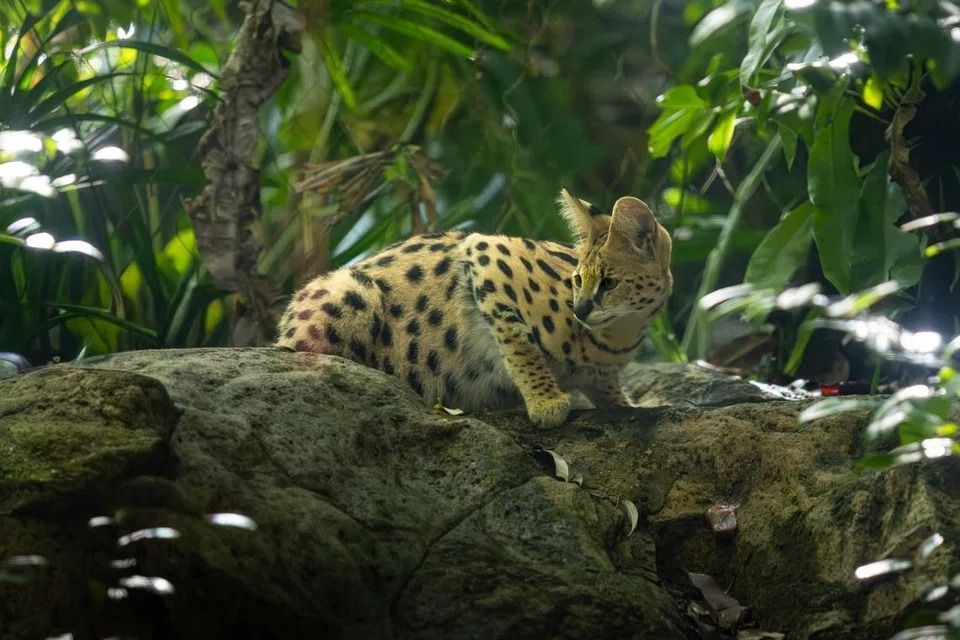
Lyla, a serval cat that arrived from Rotterdam Zoo in 2023, gave birth to a male and female kitten, whose personalities are starting to show, the group said.
The male kitten is often seen staying close to his mother, while his bolder sister ventures further afield.
On New Year’s Day, the zoo’s primate family welcomed a young red‐shanked douc named Nhat, who can be seen darting between its older siblings to steal mulberry leaves, the group said.
About six months later, the zoo’s first L’Hoest’s monkey infant was born on June 28, and capping off the year were twin red-ruffed lemurs, born on Dec 13.
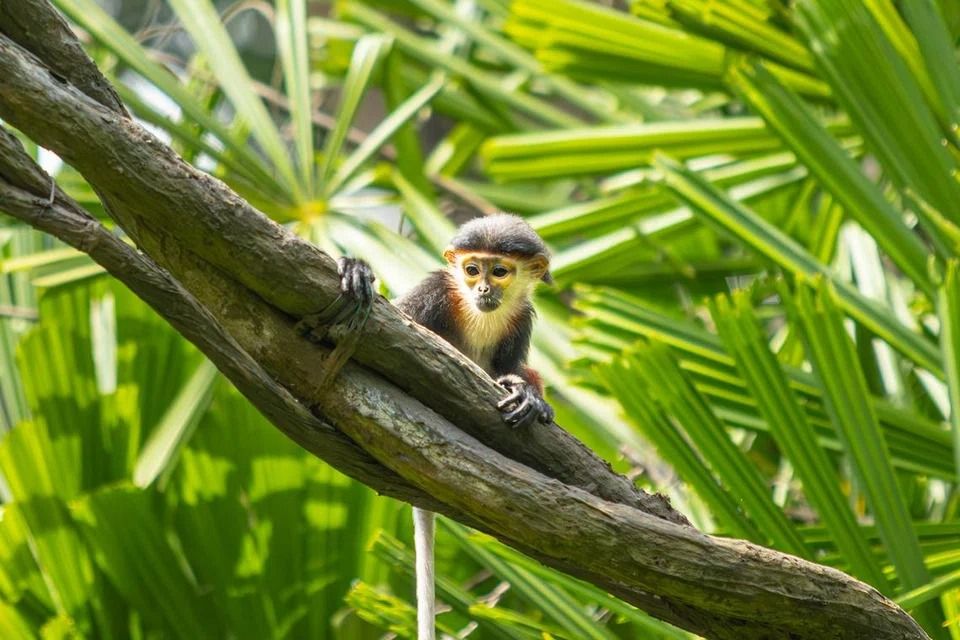
Visitors can catch a glimpse of Nhat and the young L’Hoest’s monkey at Primate Kingdom, while the red-ruffed lemurs will be making their debut soon, the group added.
The zoo’s RepTopia also saw the first hatchings of two New Caledonia giant geckos, two Huulien leopard geckos and four Chinese fire belly newts.
These successes added to other notable babies, including the Philippine crocodile and painted terrapin, the group said.
Nectar was introduced to the diet of the New Caledonia giant geckos, while additional bark provided essential hiding spaces, the group added.
Meanwhile, carefully regulated temperatures, humidity and lighting designed to mimic natural seasonal cycles helped supported the successful breeding of the Huulien leopard gecko and Chinese fire belly newt.
While little is known about the critically endangered Huulien leopard gecko, the hatchlings offer valuable opportunities for research into their reproductive biology, the group added.
Over at the Night Safari, a litter of three red dhole pups was the first to be born in the park in June in almost a decade.
The pups were monitored through CCTV to ensure they developed well.
At River Wonders, two female West Indian manatees were born on Oct 3 and Nov 21.
The first-born calf arrived prematurely and was weak, requiring round-the-clock care from aquarists in a private off-exhibit area, said the group.
But with the team closely monitoring its health and assisting with its breathing, the calf is now able to taste solid food and is exploring the Amazon Flooded Forest exhibit.
The younger calf also received special care from the aquarists as first-time mum, Leandra, faced challenges with nursing.
The baby has recently started suckling and is expected to wean off formula milk soon, the group added.
Bird Paradise celebrated the successful hatching of its first wattled crane chick in November.
It was a pleasant surprise for keepers in the Rwanda Nyungwe Forest Heart of Africa, the group said, as the pair’s first egg just months earlier had been infertile.
Wattled cranes are the second-largest crane species in the world, with adults typically weighing 6kg to 9kg.
The three-month-old chick currently weighs just over 2kg and is closely bonded to its mother, the group said.
In another first, two Socorro dove chicks were born in August and September, marking the park’s first successful hatching of this extinct-in-the-wild species.
There are fewer than 200 Socorro doves in human care in zoos worldwide.
The chicks have fully fledged and now reside in the Winged Sanctuary, a zone dedicated to birds of high conservation value.
The Bird Paradise also welcomed its first kagu chicks, making the group one of only a few institutions in the world to have successfully hatched the species.
The older fledgling, Kiara, has settled into its aviary at the Winged Sanctuary, while the younger chick, which hatched in November, is being raised in the Breeding and Research Centre.
Gentoo penguins Riki and Peach welcomed their third chick in two years at the Ocean Network Express Penguin Cove.
The newest of the parks, Rainforest Wild Asia, saw its first animal birth in February, just a month before the park opened, when a male Philippines spotted deer fawn was born.
Also called the Visayan spotted deer, the Philippine spotted deer is one of the world’s most endangered deer species. The fawn’s parents arrived from Germany in June 2024. - The Straits Times/ANN