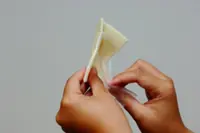
After edible cutlery and trays made from coconut fibers, tomato skins and coffee grounds, now here comes packaging made from whey. This new, more eco-friendly initiative aims to reduce the carbon footprint of cheese production.
Cheese-making typically gives rise to some leftovers, notably a liquid substance known as whey. This can be used in certain recipes, such as pancakes and waffles, for example, giving them a tangy flavor and a softer texture.
However, against all odds, this raw material could also be a solution for reducing waste generated by plastic packaging, particularly for wrapping cheese.
This is the challenge being tackled by an experimental project led by Nestlé and the Ogilvy Colombia agency, which have developed a prototype biodegradable packaging made from organic waste recovered during cheese production.
In practical terms, the process involves mixing whey with microorganisms cultivated in a laboratory to produce tiny pellets. The researchers then inject air to create a thin, film-like material that can be used to wrap cheese.
According to the scientists involved, this biodegradable packaging takes only 300 days to decompose, compared to 900 years for conventional plastic wrappers.
This unique material is being tested with real cheese, in this case Que Rico cheese in Panama. And while it is currently being used to wrap cheese, there's no reason why it couldn't be used to package other perishable foods. — AFP Relaxnews