Malaysian researchers turn pineapple waste into drones, liquid cleansers and more


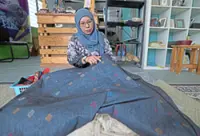
Pineapple leaves can be transformed into products like paper, yarn and vegan leather. Photo: Anis Nabihah Aziz

Malaysia is one of the world’s largest producers of pineapple; the industry brings in over RM600mil to the country’s economy, according to the Malaysian Pineapple Industry Board (MPIB).

But harvesting pineapples results in tonnes of biomass waste such as pineapple leaves, core, peel, crown, and stem. Universiti Malaysia Pahang’s Assoc Prof Dr Aizi Nor Mazila Ramli is doing her part to use improved farming practices aimed at reducing pineapple waste to promote environmental sustainability.

She is among a handful of UMP researchers who turn pineapple waste into reusable items such as baby bottle liquid cleansers, meat-tenderiser and oyster mushroom production blocks.

“In recent years, we have seen a rising demand for pineapple-based products like tinned pineapple, jam and vinegar. However, there is an abundance of pineapple waste which is often left to rot or are burned. In the long run, it can lead to greenhouse gases, which profoundly impacts the environment.

“Therefore, using the pineapple waste and turning it into a value-added products could be the most sustainable way of managing these residues due to their useful properties and compositions,” said Dr Aizi, a senior lecturer from UIMP’s Faculty of Industrial Sciences and Technology.

Dr Aizi, one of UMP’s researchers, turns pineapple waste into reusable items such as baby bottle liquid cleansers. Photo: Assoc Prof Dr Aizi Nor Mazila Ramli
Dr Aizi’s research focuses on using bromelain, a digestive enzyme in pineapples.

“Bromelain is generally found in high quantities in pineapple fruit, stem, core, peel, and leaves. Bromelain is also a proteolytic enzyme with the ability to break down complex protein structures into simple protein structures.”

“UMP has invented several products using bromelain. One of the most talked-about products is PineBaby, our baby bottle liquid cleanser that’s safe to clean baby bottles, feeding accessories, toys, and vegetables.

“Bromelain is also a bioactive element used in other UMP innovations including liquid cleansers for medical fabric and as a meat-tenderising agent,” explained Aizi.

She added that pineapple waste contains phenolic compounds, a good source of antioxidants.

UMP innovations have won several awards, including UMP’s Gold Medal and Best Biotechnology Awards at the Creation, Innovation, Technology and Research Exposition 2021 Exhibition and an invention award at the 2017 International Trade Fair in Nuremberg, Germany.

PineBaby, made from pineapple waste, is safe to clean baby bottles, feeding accessories, toys, and vegetables. Photo: Assoc Prof Dr Aizi Nor Mazila Ramli

In addition, UMP has collaborated with MIPB to determine the suitability of pineapple leaf waste as a substrate – instead of sawdust – for the cultivation of oyster mushrooms.

UMP isn’t the only institution championing pineapple waste as a sustainable means of waste management. Last year, University Putra Malaysia (UPM) researchers developed a method to transform the fibre found in pineapple leaves to build the frames for drones.

Project leader Prof Dr Mohamed Thariq Hameed Sultan created drones as a sustainable method to reuse pineapple waste.

“It all started back in 2018 where pineapple farmers in Telok Panglima Garang, Selangor faced problems with agricultural waste. “The remnants of these leaves are usually disposed of by open burning or they are left at the site. Open burning leads to pollution, while the discarded leaves will be a habitat for snakes, scorpions and rats.

Prof Thariq says it took his team a year to design and conceptualise the drones. Photo: Prof Dr Mohamed Thariq Hameed Sultan
“Another push factor was the drone market size forecast which showed a growing trend for the next six years.

“We also wanted to create a product that’s in line with the United Nations sustainable development goals criteria,” said Prof Thariq, who is with UPM’s Department of Aerospace Engineering.

But are pineapple fibre boards study enough?

“Drones for agricultural purposes do not require high-end materials like carbon fibre. Pineapple bio-composite material is reinforced with polymer, making it suitable for daily operations,” explained Prof Thariq, adding his team had taken a year to design and conceptualise the unmanned drones.

Globally, food and beverage company Dole Sunshine Company is working with vegan pineapple leather brand Pinatex to transform pineapple leaves into a non-woven mesh to form the base of the sustainable Pinatex material.

Hugo Boss have also adopted vegan leather - made from pineapple waste - material as part of their move towards sustainability. Photo: Filepic

Last year, Nike launched its Happy Pineapple sneaker collection using Pinatex. Brands like H&M and Hugo Boss have also adopted the material as part of their move towards sustainability.

Dr Aizi encourages companies to upcycle agricultural waste into eco-friendly alternatives.

“Various studies report that agricultural waste derived from coconut, bamboo, and banana are valuable raw materials for other industries.

“Some of these waste can be used as natural anti-microbials. In addition, these materials also represent a possible medium for mushrooms cultivation and the production of other bio-based products like bio-energy and bio-fertilisers.

“Some of the agricultural residues contain essential components for animal feed too.

“Agro waste material derived from palm oil, rice husk ash and palm oil fibre is also used to produce green concrete, described as concrete made using waste materials from different industries,” he said.

Get 20% OFF The Star Digital Access

Monthly Plan

RM 13.90/month

RM 11.12/month

Billed as RM 11.12 for the 1st month, RM 13.90 thereafter.

Best Value

Annual Plan

RM 12.33/month

RM 9.87/month

Billed as RM 118.40 for the 1st year, RM 148 thereafter.


Follow us on our official WhatsApp channel for breaking news alerts and key updates!

Next In Living

How to still have fun without overspending: Tips from financial experts
Big Smile, No Teeth: Here’s a Faustian deal for you
Tips for adopting frightened dogs
This scampi risotto recipe flies you straight to coastal Croatia
Why do our brains malfunction in high-pressure situations?
Dog Talk: The dog who found her bark
The juiciest grilled chicken breast starts with these 4 tips
40yo Malaysian terrace house transforms into tropical home infused with light and nature
Heart And Soul: The devastating loss of a pet
Fish sleep a lot like us, and they even nap

Others Also Read