Road traffic microplastics flooding world's oceans, study finds


By Agency
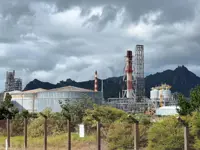
Microplastics have been found atop some of Earth's highest glaciers and at the bottom of its deepest trenches. Photos: AFP

Airborne microplastics from traffic pollution may be entering the world's oceans at a similar rate to that of rivers, according to a new research on July 14 warning that the particles may also speed up Arctic ice melt.

As global plastic production continues to surge, the study is the first attempt at quantifying how much plastic from road vehicle tyres and brake pads is dispersed and deposited by air currents.

Microplastics – tiny particles produced when larger plastic chunks break down as well as microfibres from clothes and other materials – have been found atop some of Earth's highest glaciers and at the bottom of its deepest trenches.

Researchers in Norway and Austria took data on how much microplastic is produced by road transport and combined them with simulations of where they might be transported on wind currents.

They found that around a third of all road microplastic – roughly 50,000 tonnes – end up in the world's oceans every year.

The estimated range of 40,000-100,000 tonnes of aerial microplastic compares with the 65,000 tonnes deposited into the ocean from rivers annually.

"Atmospheric transport – a source that is underestimated or not even considered – has the same impact on microplastic pollution in the ocean as riverine transport," Nikolaos Evangeliou, from the Norwegian Institute for Air Research and lead study author, told AFP.

As global plastic production continues to surge, the study is the first attempt at quantifying how much plastic from road vehicle tyres and brake pads is dispersed and deposited by air currents.

He said that microplastics were already having an impact on human and animal health as they are able to absorb organic compounds and toxic heavy metals, which are then ingested and enter the food chain.

Most road traffic plastic emissions are produced in vehicle-heavy regions such as North America, Northern Europe and South East Asia.

Long-term menace

Evangeliou and his team found that when they simulated where these emissions were transported by global weather patterns, a significant amount was likely ending up in the Arctic.

Given the plastic particles' dark colour, which absorbs more of the Sun's heat, they said the pollution could affect the rate of ice melt there.

"Such small particles may act as light-absorbing impurities when deposited on snow and ice surfaces decreasing surface (heat reflection) and accelerating melting," Evangeliou said.

With several countries promising to end production of petrol and diesel vehicles in the coming decades, the paper published in Nature Communications suggested that road plastic emissions would continue to pose a growing environmental threat as tyres and brakes would likely be the same even on electric models.

"Road microplastics impact the environment as they are derived from materials made from fossil fuels such as ethylene and propylene," said Evangeliou.

"Thus, the larger need for plastics result in larger emissions of greenhouse gases." – AFP Relaxnews

Get 20% OFF The Star Digital Access

Monthly Plan

RM 13.90/month

RM 11.12/month

Billed as RM 11.12 for the 1st month, RM 13.90 thereafter.

Best Value

Annual Plan

RM 12.33/month

RM 9.87/month

Billed as RM 118.40 for the 1st year, RM 148 thereafter.

Follow us on our official WhatsApp channel for breaking news alerts and key updates!

Next In Living

De-extinction company hatches live chicks from an artificial eggshell
Food vendors across Asia struggle over rising costs of plastic
Solar-powered charging station in central Cuba brings life to a darkened island
'Wiped out': Ukraine's bird lovers long for peaceful skies
Are rapeseed oils safe? Scientists and nutritionists say they are
Large-scale restoration effort of California's giant sequoias launched
Contradictheory: When science goes to the cats and dogs
Sucker fish are hiding in manta rays' rear ends, new study reveals
Those World Cup tourists loving American food? They’re not all what they seem
Vast areas of coral reef could resist climate change: study

Others Also Read