
Much water has flowed under the bridge since the World Health Organization (WHO) characterised Covid-19 as a pandemic on March 11, 2020, after having declared it a Public Health Emergency of International Concern (PHEIC) on Jan 30, 2020, following the first case reported in China in December 2019.
When WHO declared on May 5, 2023, the end of Covid-19 as a PHEIC, the data on its coronavirus dashboard, which had collated key statistics since early in the pandemic, stood at more than 765 million cumulative cases and just under seven million deaths globally.
The WHO director-general noted then that Covid-19 was here to stay and that: “It is still killing and it is still changing.”
He added that: “The risk remains of new variants emerging that cause new surges in cases and deaths.”
On the pandemic’s fifth anniversary, it is appropriate to ponder on some significant facts surrounding Malaysia’s experience with this infectious disease.
Worst public health disaster
The first case in Malaysia was detected on Jan 25, 2020, in a tourist from China.
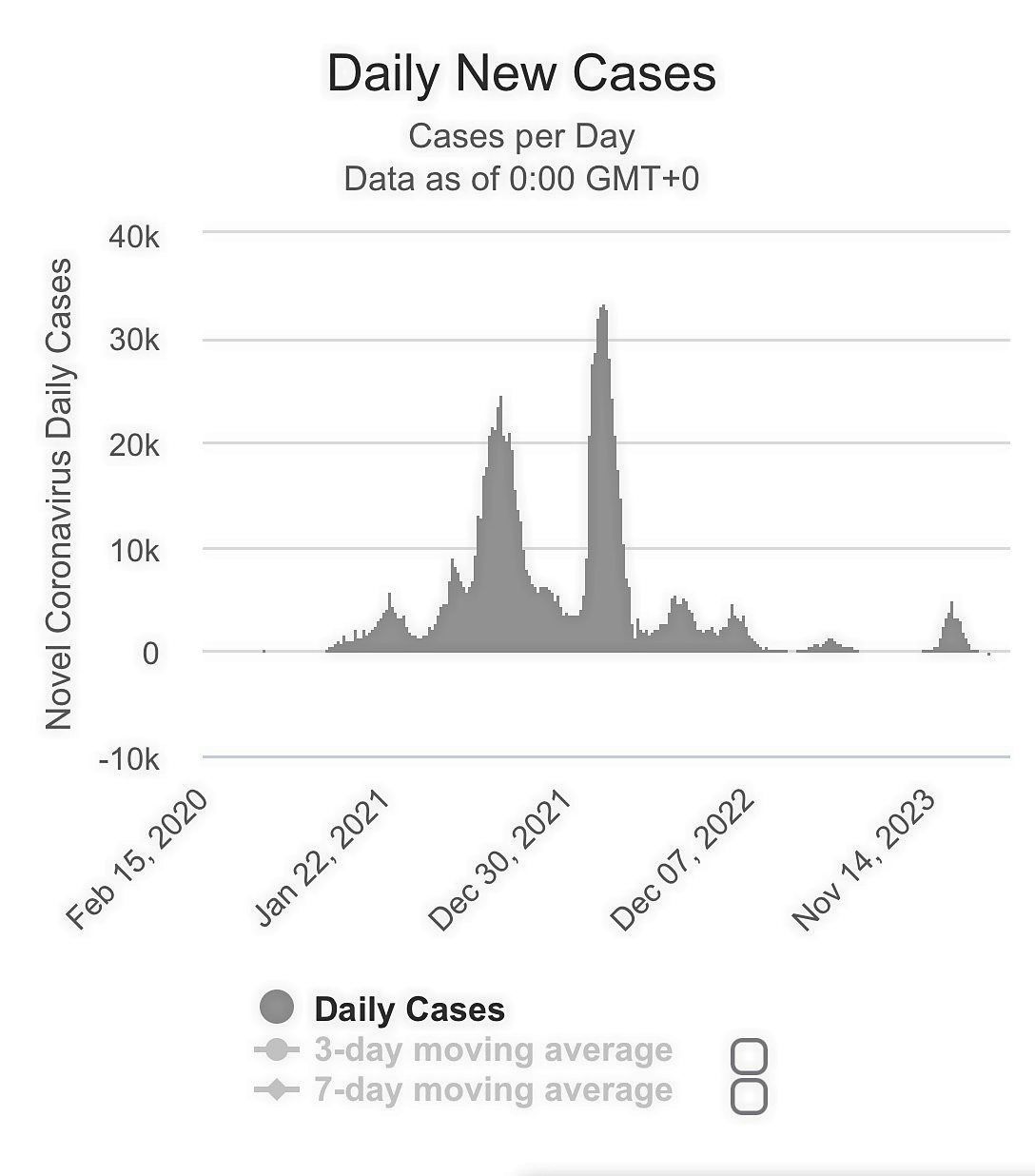
Following that, there were waves of Covid-19 due to different variants of the virus (see graphic below).
The Worldometer website provided real-time Covid-19 data at the outset of the pandemic.
It stopped doing so on April 13, 2023, because the majority of countries had stopped reporting the data.
As of April 13, 2023, Malaysia had 5,278,406 cases, with 37,348 reported deaths.
We also had the highest per capita death rate in Asean and the second highest in Asia (1,126 per million population), next to Hong Kong (1,963 per million population).
The maternal mortality rate (MMR) has always been a widely-accepted key indicator of a country’s health and social economic development, and by extension, its health system.
Malaysia’s MMR in 2021, soared to 68.2 maternal (mother) deaths per 100,000 live births, compared to 23.5 in 2018, 21.1 in 2019, and 24.9 in 2020.
The last time Malaysia’s MMR was at this level was in the mid-1980s.
Decades of gain were wiped out by Covid-19.
In short, Covid-19 was Malaysia’s worst public health disaster.
Political crises
During the Covid-19 pandemic, Malaysia experienced political cataclysms the likes of which had never happened before.
There were general elections on May 9, 2018, and Nov 19, 2022.
However, there were four governments since 2020 with four different prime ministers and health ministers.
The resignation of then Prime Minster Tun Dr Mahathir Mohammad in February 2020 started the ball rolling.
This was followed by the Sabah elections in September 2020.
Although concerns were expressed about the rising Covid-19 cases and its likely spread during electioneering, instincts for political power got the better of prudence.
At the end of July 2020, when an attempted political coup led to the dissolution of the Sabah state assembly, there were only 397 active cases in Sabah from the second Covid-19 wave.
By election day on Sept 26, 2020, this had increased to 1,547 active cases.
It was only then that a swab test was required for returnees from Sabah to Peninsular Malaysia.
Those who tested negative were only recommended to do home quarantine.
Many politicians were reported travelling all over the country upon returning from Sabah.
By the end of October 2020, there were 30,889 cumulative cases in Malaysia, with 14,519 in Sabah alone.
Initially, illegal migrants in Sabah were blamed for the third Covid-19 wave, but on Nov 18, 2020, then Prime Minister Tan Sri Muhyiddin Yassin finally admitted that the Sabah elections were the cause.
A multinational research team reported on the spatial and temporal impacts of the Sabah election on Covid-19 spread.
They estimated that 70% of Covid-19 cases within Sabah after its state elections were attributable to the election’s direct effect and 64.4% of Covid-19 cases in the rest of Malaysia after Sabah’s state elections were attributable to the election’s spillover effects.
The political machinations continued on and only abated after the general election on Nov 19, 2022.
Leadership and trust are sine qua non when there is a national emergency.
Media reports of some politicians, including ministers, flouting the quarantines mandated by the movement control order did not generate trust nor demonstrate proper leadership.
The country got through the pandemic because of civil society and the professional leadership of the healthcare workforce at all levels.
Healthcare professionals had almost daily dilemmas trying to balance their professional obligations and the safety of their families at a time when there was uncertainty, unpredictability and limited knowledge of the causative virus.
Some of them died while providing care.
For some doctors, this was compounded by delays in their salary payments because of administrative glitches.
RCI needed
Since then, many governments globally have held public inquiries into their management of the Covid-19 pandemic.
Some like the United States, Australia, New Zealand and Singapore have published their reports.
Some public inquiries in other countries, like Britain, are ongoing.
All the reports have focused on the lessons learnt and how to plan better for the next outbreak, epidemic or pandemic.
The chasms in Malaysia’s public healthcare system were laid bare by Covid-19.
The years of underfunding extracted, and is still extracting, a heavy price from the rakyat.
As such, there is a strong case for the establishment of a Royal Commission of Inquiry (RCI) to inquire into, and report on, the management of the Covid-19 pandemic, as well as to make recommendations on strategies and solutions to strengthen the healthcare system so that it can be better prepared for the next public health emergency.
The RCI would have to determine what measures worked and what did not.
The objective is to learn from the errors made and recommend solutions.
Such an RCI should be chaired by a senior retired judge, with membership to include stakeholders like civil society and professionals.
To ensure public trust and to obviate politicisation, no current or retired politicians should be appointed to the RCI.
The commission is an urgent imperative and is also critical to plan for the next outbreak, epidemic or pandemic.
The Madani government has established RCIs, but none in relation to Covid-19 management.
Neither has Parliament’s Public Accounts Committee and Special Select Committee on Health addressed Covid-19 management.
The WHO has warned of the global need to prepare for disease X, an unknown pathogen with the potential to trigger a severe global epidemic or pandemic.
It is not a question of if, but when, disease X will strike.
If one does not learn from Covid-19 management, how is Malaysia going to prepare for disease X?
Will the government take the lead or will civil society and/or healthcare professionals have to fend for themselves?
Dr Milton Lum is a past president of the Federation of Private Medical Practitioners Associations and the Malaysian Medical Association. For more information, email starhealth@thestar.com.my. The views expressed do not represent that of organisations that the writer is associated with. The information provided is for educational and communication purposes only, and it should not be construed as personal medical advice. Information published in this article is not intended to replace, supplant or augment a consultation with a health professional regarding the reader’s own medical care. The Star disclaims all responsibility for any losses, damage to property or personal injury suffered directly or indirectly from reliance on such information.
Already a subscriber? Log in
Get 20% OFF The Star Digital Access
Cancel anytime. Ad-free. Unlimited access with perks.