It all started with a small WhatsApp chat group during the Covid-19 pandemic.
General practitioners (GPs) were expressing their grouses over multiple issues with regards to their profession, how their voices were barely heard by the authorities and how the rakyat needed more support in tackling health challenges.
So, three GPs and former university mates – Dr Siva Kumar Kumarasamy, Dr Mahendraganesha Maraiah and Dr Benjamin Sinappan Arulanandhu – decided to do something about it.
“We noticed this segment was fragmented and GPs never really had a strong voice of our own.
“There was nothing to protect us, and if we suffer economically, we have no choice but to transfer some of it to our patients,” says Dr Siva Kumar.
A single platform
The trio’s intention was to bring GPs together under a unified platform to connect, collaborate and grow together, while serving the people.
All student leaders in university three decades ago, they spent days and nights brainstorming before establishing the Merpati Alliance Group (MAG).
This is a coalition and collective network that connects independent GP clinic owners and person-in-charge (PIC) doctors across Malaysia for peer support, clinical collaboration, continuous medical education, expertise-sharing and standardising consultation or procedural fees.
A month later, they set up Merpati Healthservices Bhd (MHSB), a corporate entity that allows independent clinic owners to come together as partners, stakeholders and shareholders.
The company aims to improve their bargaining power, tackle third-party administrator (TPA) challenges and streamline claims.
In short, MAG is a free-to-join professional coalition of doctors focusing on clinical collaboration, while MHSB is its business arm, which handles collective financial and supply negotiations.
Together, they unite over 1,500 independent clinics, about 300 of which are in Sabah and Sara-wak, to overcome common primary care hurdles.
And their numbers are increasing every day.
Business aside, MHSB has been quietly working on the ground to improve the plight of the underprivileged and enhance the knowledge of GPs.
Health checks at kiosks
As part of their mission to create a healthier rakyat, the group has partnered with the Centre of Excellence for Extended Reality Technology Sdn Bhd (Coexrt AI) in the latter’s Sihat AI Smart Health Kiosk project.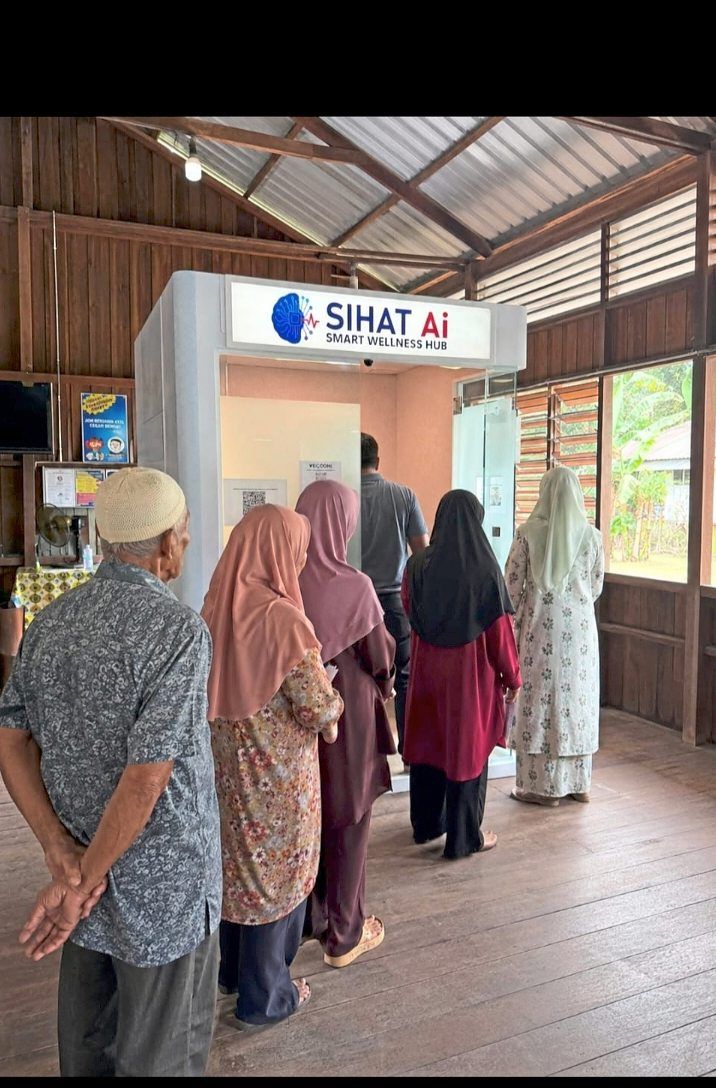
This is an artificial intelligence-enabled preventive healthcare platform that brings health screening, monitoring and access to doctors closer to communities, particularly in rural and remote areas.
Dr Siva Kumar says: “As GPs, we wanted to do something for people with limited or poor access to clinics.
“This free platform helps users screen and monitor major non-communicable diseases [NCDs] such as hypertension [high blood pressure], diabetes, obesity and cardiovascular risk, while also supporting ongoing health monitoring for different groups, including pregnant women, elderly patients and individuals living with chronic conditions.
“Users can perform essential health checks through a simple guided experience.
“AI helps analyse health data, identify risk patterns, track changes over time and flag cases that may require further attention.”
The first kiosk was launched in Perak in July (2026) in collaboration with the state government via Digital Perak Corporation Holdings.
The aim is to have more such kiosks in sites throughout the country.
Among the kiosk’s main features are checks for blood pressure, heart rate, blood oxygen level, body temperature, blood glucose, cholesterol, uric acid, body weight and body mass index (BMI), as well as body composition analysis.
The kiosk is also equipped with AI-based facial scanning for early health risk analysis, digital health record books, mental wellness support via virtual reality (VR) applications, telemedicine facilities and clinical-grade equipment approved by the authorities.
A staff member is available to help users, but MAG doctors remain at the centre of care, providing telemedicine consultations, clinical assessment and follow-up when needed.
“This allows people in underserved locations to access medical support without having to travel long distances for every consultation,” says Dr Siva Kumar.
Furthermore, to raise awareness about organ donation, MHSB has collaborated with the National Transplant Resource Centre so that the public can now sign up as donors at MHSB affiliate clinics.
He says: “A lot of people are not aware they can sign up as donors via the MySejahtera app.
“A lot of GPs also don’t understand organ donation and are in the dark about what organs can be donated.
“First, we need to educate them, only then can they encourage the public to sign up.
“After all, we are community clinics and our reach is constant, so we can function as an information centre.”
Free webinars
Prior to setting up MAG and MHSB, Dr Siva Kumar had initially started an academic WhatsApp group comprising 800-odd senior doctors, including family medicine and other specialists, who were eager to impart their knowledge to juniors.
He says: “We put up case discussions and anyone is free to post cases or ask something they are unsure of.
“This transfer of knowledge was sorely lacking with GPs, but it’s so important, because when doctors leave the government service or their contract is not renewed, a lot of them end up opening private clinics in their hometowns.
“They treat with the best of their knowledge, which may not always be adequate.
“I’ve also noticed there isn’t a platform that connects a large number of doctors who can offer free teaching on a daily basis.”
So, he started organising free webinars to share his knowledge.
Slowly, more GPs followed suit.
“For example, we come up with provisional diagnosis for certain conditions and this can only come from years of experience and knowledge.
“The response was very good and we have now opened it to other doctor groups.
“Eventually, it became a platform to start Merpati,” says Dr Siva Kumar.
Empowering the rakyat
Recently, MHSB has also started offering free podcasts on YouTube that addresses issues for both GPs and the public.
Topics discussed include everyday health myths, navigating the healthcare system, preventive health for working adults, family health across generations, mental health stigma, trending diseases such as dengue, etc.
When the public is more empowered with the right knowledge, they are able to make better health decisions, which then creates a healthier society.
“A lot of my fellow GPs and I don’t charge fees for some patients because they can no longer afford to pay.
“Some of us also run free medical camps for the poor, Orang Asli and stateless children.
“Next, MHSB is thinking of going to retirement homes, nursing homes, orphanages and centres for the disabled to provide free health checks,” shares Dr Siva Kumar who has been operating his clinic for the past 20 years.
As for the name Merpati, he says: “We wanted no conflicts or drama, hence the dove – it symbolises the gentle and peaceful nature of how we approach things.
“Every group has its own struggle – people forget that GPs are also part of the rakyat and an important component because everyone is a potential recipient of our services tomorrow.”