
When a child isn’t able to see well, it is often assumed that the problem lies with the eyes.
Concerned parents then take them to see an optician or ophthalmologist for an eye check.
The children frequently pass these routine paediatric tests as their physical eyes focus correctly with no issues.
Yet, they continue to struggle in school, avoid eye contact or have difficulty recognising familiar faces.
What many parents may not realise is that while the eyesight is fine, the brain is unable to make sense of visual information, i.e. the parts of the brain that process vision are damaged.
This condition, known as cerebral or cortical visual impairment (CVI), remains widely overlooked and misunderstood, despite being the leading cause of visual impairment among Malaysian children.
In fact, symptoms are routinely mistaken for learning disabilities, attention-deficit disorder (ADD), autism or behavioural stubbornness.
Failure in interpretation

According to a 2024 Technology Review by the Health Ministry’s Malaysian Health Technology Assessment Section (Mahtas), CVI accounts for 24.2% of child vision loss cases, surpassing congenital cataract (16.6%) and retinoblastoma (6.2%).
Because standard eye exams appear normal, the underlying visual-processing issue frequently goes undetected
“The eye is like a printer. It prints whatever we see and the printed copy goes to the brain to be processed.
“When you have CVI, the brain’s visual-processing pathways fail to interpret what the eyes see,” explains consultant paediatric ophthalmologist and strabismus surgeon Dr Norazah Abdul Rahman.
The brain stores what it sees through a three-step cycle: encoding, storage and retrieval.
Information travels from the eyes to the visual cortex, gets organised in the hippocampus and is permanently stored across interconnected networks of neurons.
With CVI, children see a kaleidoscope of things, but they don’t know what to make of the images and cannot understand their meaning.
Patients tend to demonstrate unusual behaviour that includes delayed or slow visual response, and difficulties in identifying the visual complexity that may come in the form of an object, the environment or human faces.
A child with CVI also struggles with distance viewing and is often attracted to primary sources of light, which helps them in viewing the target object.
Dr Norazah says: “For example, some cannot even recognise their parents’ faces despite looking at them daily – this frustrates the parents.
“We have problems in optimising their visual potential because we don’t understand how they see, so we keep telling ourselves that we need to retrain their brain.
“However, CVI is something new to our medical community, or maybe it’s not being recognised, so it’s often missed.
“Patients may sometimes be referred to us by a paediatric neurologist who suspects CVI.”
How it happens
The most common causes of CVI involve events that disrupt the brain’s oxygen supply, structural development or physical integrity.
In babies and children, these include:
- Lack of oxygen (hypoxia): Conditions like hypoxic-ischaemic encephalopathy before or during birth are the leading causes of CVI
- Prematurity: Babies born very early are prone to periventricular leukomalacia (PVL), an injury to the brain’s white matter
- Trauma: Head injuries or trauma can severely disrupt visual-processing centres
- Neurological conditions: Hydrocephalus (fluid build-up in the brain), epilepsy or infantile spasms, and brain malformations can cause CVI
- Brain infections: Infections reaching the brain, like meningitis or encephalitis, can damage brain tissue.
Early identification is crucial so that the right treatment can be offered to the child to maximise their visual capabilities.
A long road ahead
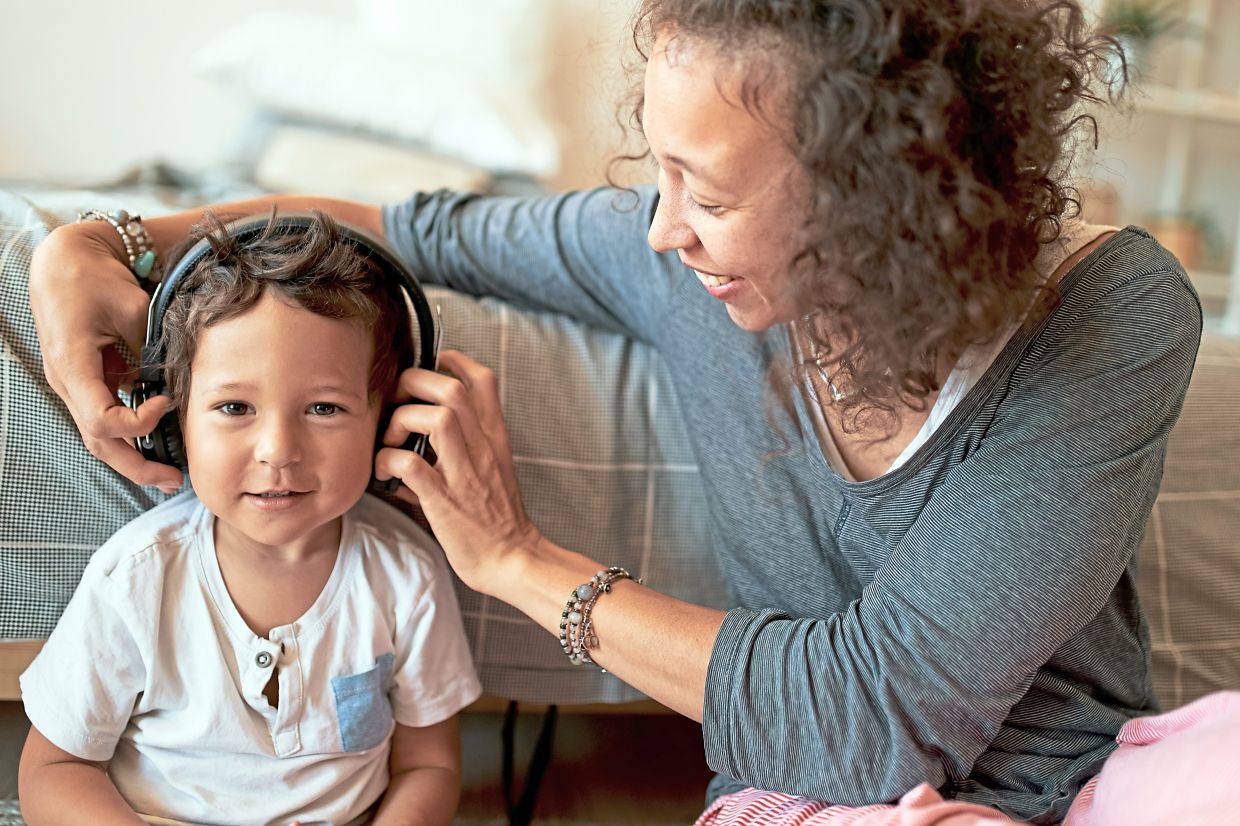
CVI diagnosis and rehabilitation typically involve multiple specialities and expertise.
Screening for CVI with an ophthalmologist can take two hours or more.
“Patients have to come with the main person looking after their child, which may not be the parents.
“It can be a babysitter or caregiver who can tell about the child’s visual behaviour at home.
“What I do with a suspected CVI patient is to first run a test to check their vision as they sometimes have refractive errors and need glasses.
“Once this is settled, we move on to rehabilitation, depending on the severity of the condition,” says Dr Norazah.
She adds: “We slowly introduce the children to colours, shapes and sizes, so they can understand what they see and keep it in their brain as visual memory – they learn, remember and store the information.”
For a child with low-vision CVI, i.e. he’s not looking at anything, what the doctor initially does is to put him in a dark environment with light and introduce one object.
She explains: “This is how we catch the brain to start focusing and to start processing.
“Then we start to introduce something shiny so that the brain can see.
“Afterwards, we show one colour, then two, and bit by bit, we increase the complexity of the object.
“Even the toys that we show them is in monochromatic colour to attract the vision.
“We also show them facial expressions, e.g happy, angry, smiling, sad, etc, so they understand what these visual images mean.”
Rehabilitation doesn’t only involve therapists as parents have to be committed to continue doing the exercises at home daily to train their child’s brain.
These children can go to normal schools once their vision is optimally stimulated.
“Parents must understand that their child has a learning disability and adjust their expectations.
“I had one CVI patient who has cerebral palsy and is now a working adult because the mother was so determined that her child be independent,” shares Dr Norazah.
CVI requires a lifetime of follow-ups with multiple specialists.
The cost of raising these children, who are classified as persons with disabilities (OKU), is high, and because they have so many appointments, they might miss some assessments, causing slower progress.
It can happen to adults too
CVI can also occur in adults due to various causes.
These can include traumatic brain injuries, strokes or other neurological conditions.
Unlike congenital CVI, which is present from birth, acquired CVI develops later in life.
Adults with acquired CVI often face unique challenges, but they can learn and adapt to their condition.
“Adults already have visual memories, so when we introduce them to objects, they already know what it is.
“For example, if we give them an orange, they know the colour, shape and size – they know what they are seeing.
“But someone born with CVI has zero memories, so they don’t understand what unfolds around them,” says Dr Norazah.
With increasing awareness, paediatric ophthalmologists are becoming more familiar with CVI, but she believes that not all adult ophthalmologists are well-versed with the condition.
“Sadly, most parents tell me that when they go to the hospital, doctors tell them ‘your child is blind and nothing can be done’.
“We know that CVI might not resolve, but we try to adapt with whatever level of visual impairment they have.
“As a healthcare provider, we have to remain positive and motivate the parents and the child to achieve the best outcome.
“We do not compare them with other kids, and I tell the parents that a slight improvement is actually a plus point as we want to progress, not regress,” she concludes.