
The World Health Organization (WHO) declared the Ebola disease outbreak in Congo and Uganda a public health emergency of international concern last Sunday (May 17, 2026).
Africa’s top public health body first confirmed a new Ebola outbreak in Congo’s Ituri province on May 15 (2026).
By the next day, it had reported 336 suspected cases and 88 deaths.
All the cases are in Congo, except for two recorded in neighbouring Uganda.
Health authorities say the current outbreak is caused by the Bundibugyo virus – a rare variant of the Ebola disease that has no approved therapeutics or vaccines, making it much harder to fight.
Although more than 20 Ebola outbreaks have taken place in Congo and Uganda, including 17 in Congo since the disease first emerged in the country in 1976, this is only the third time the Bundibugyo virus has been reported.
Here’s what to know about the health crisis:
Not a pandemic
The WHO says the latest Ebola outbreak does not meet the criteria for a pandemic emergency, such as Covid-19, and advises against closing international borders.
Its emergency declaration is meant to spur donor agencies and countries into action.
However, the global response to previous declarations has been mixed.
In 2024, when the WHO declared mpox outbreaks in Congo and elsewhere in Africa a global emergency, experts at the time said it did little to get supplies like diagnostic tests, medicines and vaccines to affected countries quickly.
Started in a remote area
The Africa Centres for Disease Control and Prevention (CDC) said the first cases were reported in the Mongwalu health zone, a high-traffic mining area in the Ituri province.
Cases there subsequently migrated to the Rwampara and Bunia health zones as patients sought medical care, the Africa CDC said, “enabling spread across three health zones”.
Ituri is in a remote eastern part of Congo, with poor road networks, and is more than 1,000km from the nation’s capital Kinshasa.
One major concern, the Africa CDC said, is the proximity of affected areas to Uganda and South Sudan.
Bunia, the capital and main city of Ituri, is near the border with Uganda.
The agency said there’s also a risk of further spread due to intense population movement and attacks by armed groups that have killed dozens and displaced thousands in parts of Ituri in the past year.
There are also gaps in contact tracing, according to the Africa CDC, as local authorities race to find those who might have been exposed to the virus.
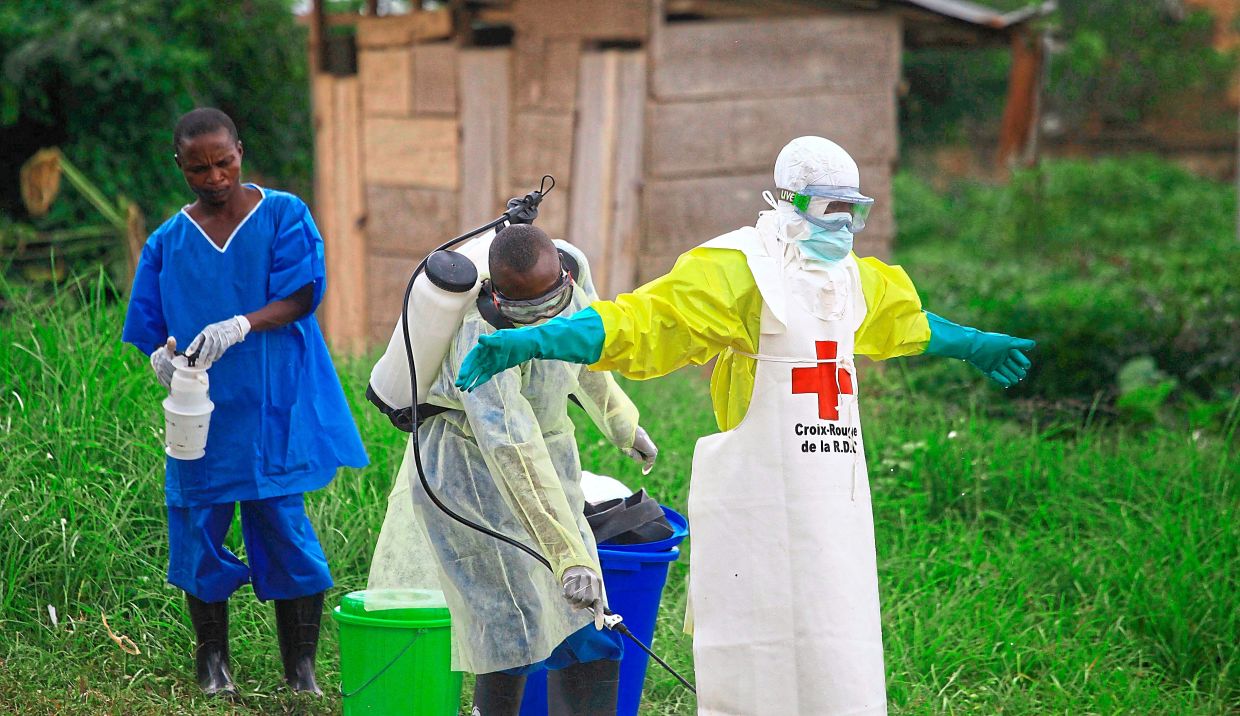
An unusual strain
The Bundibugyo virus, which health authorities say is responsible for the outbreak, is rare and different from the Ebola Zaire strain that has been dominant in all of Congo’s past 17 outbreaks except one.
The virus was first detected in Uganda’s Bundibugyo district during a 2007-2008 outbreak that killed 37 people out of 149 cases.
The second time was in 2012 in an outbreak in Isiro, Congo, where 57 cases and 29 deaths were reported.
According to the WHO, the Ebola disease is caused by a group of viruses, with three of them known to cause large outbreaks: Ebola virus, Sudan virus and Bundibugyo virus.
Dr Gabriel Nsakala, a professor of public health who has been involved in past Ebola outbreak responses in Congo, said treatments for viral infections like Ebola are often directed at symptoms.
He said Congo has extensive experience managing Ebola outbreaks, but response efforts could be complicated by the unusual strain.
Immediate containment efforts
When the outbreak was confirmed on May 15 (2026), the Africa CDC convened an urgent high-level coordination meeting with health authorities from Congo, Uganda and South Sudan, together with key partners like United Nation agencies and other countries.
The meeting, the agency said, focused on immediate response priorities, cross-border coordination, surveillance, safe and dignified burials, and resource mobilisation, among other areas.
On May 16 (2026), Africa CDC director-general Dr Jean Kaseya said several key response measures had been put in place to address the outbreak, including mobilisation of resources from partners, deployment of multidisciplinary teams at official and non-official border crossing points, isolation of high-risk contacts, enhancement of surveillance, and contact listing and follow-up.
Logistic challenges
Congo is Africa’s second largest country by land area and often faces logistical challenges in responding to disease outbreaks due to bad roads and long distances.
During last year’s (2025) three-month outbreak, the WHO initially faced significant challenges in providing vaccines, with delivery taking a week after the outbreak was confirmed.
Funding has also been problematic.
The WHO said on May 15 (2026) that it has released US$500,000 (RM198,630) to support the response to the Ebola outbreak.
The Africa CDC also said on May 16 (2026) that it has mobilised US$2mil (RM7.94mil), but added that it’s only a small fraction of the urgently needed funds.
During last year’s (2025) outbreak, health officials were concerned about the impact of American funding cuts by the Trump administration.
The United States had supported responses to Congo’s past Ebola outbreaks, including in 2021, when the US Agency for International Development (USAID) provided up to US$11.5mil (RM45.68mil) to support efforts across Africa.
How it’s transmitted
The Ebola virus is highly contagious and can be transmitted to people from wild animals.
It then spreads in the human population through contact with bodily fluids such as vomit, blood or semen, and with surfaces and materials such as bedding and clothing contaminated with these fluids.
The disease it causes is a rare, but severe and often fatal, illness in people.
Symptoms include fever, vomiting, diarrhoea, muscle pain, and at times, internal and external bleeding.
The virus was first discovered in 1976, near the Ebola River in what is now Congo.
The first outbreaks occurred in remote villages in Central Africa, near tropical rainforests. – By Chinedu Asadu/AP