Millions of years ago, our ancestors lost the ability to make vitamin C.
It’s long been unclear why, but Dallas researchers in Texas, United States, may have uncovered an explanation, and it involves parasitic infections.
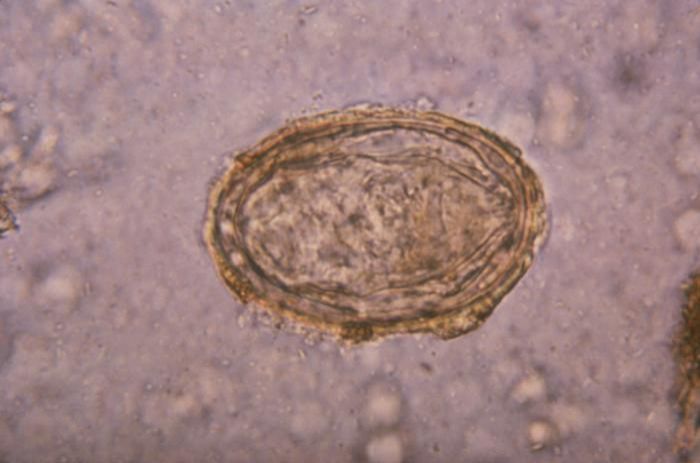
At the Children’s Medical Center Research Institute at UT Southwestern, researchers infected mice that couldn’t make vitamin C with schistosomes – parasitic worms that cause a disease called schistosomiasis.
In those vitamin C-deficient mice, the worms struggled to produce eggs and the mice were spared the disease, which is triggered by the eggs.
These findings, published in the journal Proceedings of the National Academy of Sciences, offer clues about how a host’s biology may have evolved to protect itself against the worms and potentially other parasites, said University of Florida College of Medicine associate professor of medicine Dr Norman Beatty, who was not involved in the study.
The study also sheds light on schistosomiasis, a neglected tropical disease infecting over 200 million people worldwide, with nearly 800 million people at risk for infection.
“This is just the tip of the iceberg for this infection,” Assoc Prof Beatty said.
“Probably there’s still more to look at.
“There may be other essential biological processes or molecules that schistosomes need as well.”
Lost to evolution
Vitamin C is a micronutrient essential for many human bodily functions.
It helps produce collagen, the protein that supports healthy skin, tendons and blood vessels.
It also supports the immune system, helps neutralise cell-damaging molecules called free radicals, and plays a role in making neurotransmitters that allow nerves to communicate.
Most animals can make their own vitamin C.
But in mammals and primates that lost that ability, scientists have viewed it as an evolutionary change that didn’t significantly affect survival.
Some theories suggest vitamin C-rich fruits and other plants being abundant meant that biological production of the nutrient became unnecessary.
Others propose that a virus may have disabled the gene for the vitamin C-producing enzyme.
UT Southwestern Children’s Medical Center Research Institute assistant professor Dr Michalis Agathocleous became interested in vitamin C nearly a decade ago while studying how it affects stem cells.
In 2017, he and his colleagues reported that vitamin C inside blood-forming stem cells helps keep them from turning cancerous, thereby protecting against leukaemia, a cancer of the blood.
If vitamin C stops cancer in its tracks, and being deficient in it can cause scurvy – the disease long associated with sailors – the idea that our ancestors simply lost the ability to make it seemed strange.
Assist Prof Agathocleous kept coming back to the same question: Why would human evolution abandon this important nutrient?
Stop the eggs
He got a clue in a neighbouring lab at UT Southwestern.
When that lab’s researchers added vitamin C to petri dishes containing female schistosomes, the worms laid eggs normally.
Without it, egg production faltered.
That finding echoed a 1944 experiment in guinea pigs, which can’t make vitamin C.
When the guinea pigs were infected with schistosomes and fed a diet lacking vitamin C, the females produced malformed eggs, Assist Prof Agathocleous said.
Seeing his colleagues’ results, Assist Prof Agathocleous set out to test how vitamin C deficiency might shape schistosomiasis.
People become infected when the parasites’ larvae penetrate the skin, typically after contact with contaminated fresh water.
Inside the body, the larvae migrate to the liver, mature into adults and eventually begin laying eggs.
“The key thing here is that the eggs are the cause of the pathology,” he said.
“The schistosomes live in the circulation.
“In humans, they live for decades, they keep laying eggs, and of course, the eggs are shed, causing transmission.”
Because mice can make their own vitamin C, Assist Prof Agathocleous and his colleagues used engineered mice that couldn’t do so.
They infected both engineered and normal mice with schistosomes.
The normal mice developed signs of schistosomiasis, including enlarged livers and spleens, and granulomas – clusters of immune cells that form in organs such as the liver as the body tries to wall off the eggs.
The vitamin C-deprived mice, however, showed far less of that disease damage, although they did develop scurvy.
To see whether they could separate the benefit from the harm, the researchers tested whether administering small, intermittent doses of vitamin C offered protection.
It did.
When the engineered mice received vitamin C before infection and for the first few weeks afterward, their livers were not enlarged and their spleens grew far less than those of normal mice.
Better still, they didn’t develop scurvy.
So what was driving the effect?
The researchers found that vitamin C appears to be crucial for the development of the female schistosome’s vitellarium – a reproductive organ that works alongside the ovaries to produce eggs.
Without vitamin C, the vitellarium didn’t develop properly, eggs were malformed and the vitamin C-deficient mice shed few to no eggs in their faeces, cutting off a key route for the parasite’s transmission.
Further research questions
Assist Prof Agathocleous said the findings suggest a benefit to vitamin C deficiency, explaining why the vitamin C-making gene was lost.
But he cautioned that the research doesn’t prove that it evolved specifically as a defence against schistosomes.
Since that genetic change happened millions of years ago, the evolutionary pressures behind it can’t be tested directly.
But if vitamin C deficiency can blunt schistosomiasis, Assist Prof Agathocleous and his colleagues want to know whether it can do the same for other parasitic infections.
“It could turn out to be that this is very specific to schistosomes, or it could turn out to be that multiple parasites need vitamin C from their host,” he said.
“We just don’t know at this stage, but it’s a great question and what we’re really interested in addressing.”
Limiting vitamin C in the diet of someone infected with schistosomes wouldn’t be the best or safest treatment, said Assoc Prof Beatty.
But the findings point to new clinical avenues to explore, such as therapies that block the parasite’s ability to take up vitamin C from its host.
Schistosomiasis is typically treated with the antiparasitic drug praziquantel, but some people don’t tolerate it well, Assoc Prof Beatty said.
“We always need to have multiple approaches to treatments for infections, because not everyone responds like we would like them to.” – By Miriam Fauzia/tca/dpa