
Have you ever wondered what it feels like to lie in a coffin?
Would it be terrifying, suffocating or strangely peaceful?
Recently, at the Life Celebration Festival in Putrajaya, participants had the chance to find out for themselves through a guided “coffin-lying” experience.
They could choose to do it on their own with the instructions onsite, or attend a workshop that went more in-depth into the concepts behind the experience.
For Xiao En Memorial Park Bhd senior counsellor and workshop facilitator Lai Fui Yee, helping people face mortality is a way of teaching them how to live more fully.
The concept is simple, but profound.
Before entering the coffin, participants write farewell messages.
The lid is then closed for two minutes – long enough to provoke reflection, but not so long as to overwhelm.
“Closing the lid symbolises death,” she explains.
“The darkness brings different reactions: some describe peace and calm, while others find it terrifying.
“But when the lid is lifted, it represents rebirth.
“Participants emerge as a ‘new self’, encouraged to live more meaningfully and without regrets.”
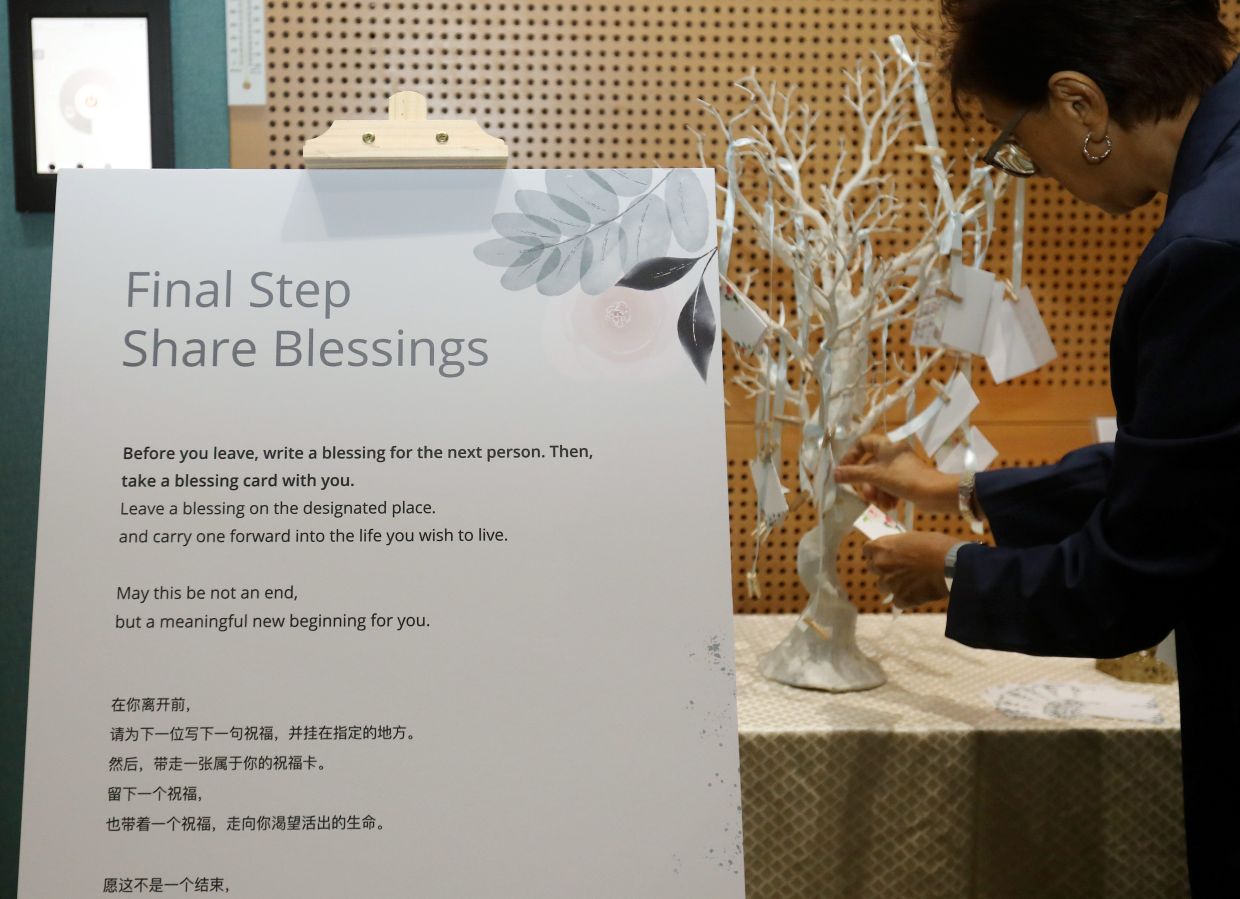
The session concludes with blessings and personal reflections written on cards, which can be shared with others.
Despite the sensitive subject, interest was high.
Many participants see it as a rare opportunity to confront death in a safe, symbolic setting.
Lai notes, however, that there are important safeguards.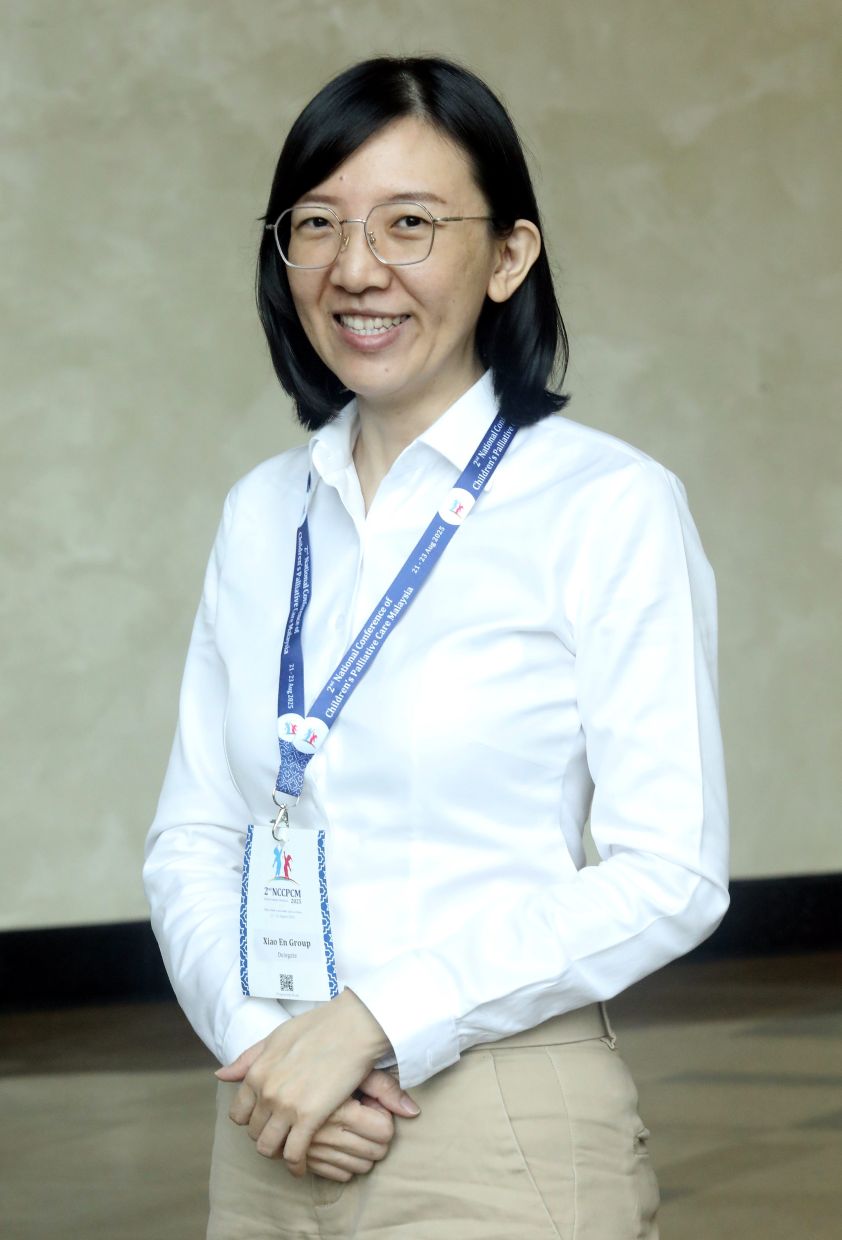
While the self-guided sessions were open to all, the workshops involved strict screening to ensure the participants were emotionally ready.
“If someone struggling with suicidal thoughts experiences only calmness inside the coffin, they could wrongly associate death with peace, which is dangerous.
“That’s why we are very strict with screening,” she explains.
For the self-guided sessions, counsellors were on standby nearby and a directory of resources was provided for anyone seeking professional help.
Working in the funeral services industry, Lai sees firsthand how poorly equipped many are to talk about death.
“In many Asian cultures, death remains taboo.
“Families often tell children that Grandpa is ‘sleeping’ or has gone to heaven.
“These are comforting, but they’re not accurate ways to teach about the life cycle.
“We need better death literacy so we can talk openly and honestly.”
By directly confronting mortality, participants are encouraged to reflect on life.
For many, the experience highlights unspoken love, unfinished dreams or forgiveness left unasked.
“None of us knows whether death or tomorrow will come first,” Lai says.
“When we truly face death, that’s when we learn how to live well.”
The Festival was organised by the Malaysian Association of Paediatric Palliative Care (Mappac) and Xiao En Group during the 2nd National Conference on Children’s Palliative Care at the Putrajaya International Convention Centre on Aug 21-23 (2025).
Some of those who went through the coffin-lying experience share their thoughts below:
For this 60-year-old retiree, it was more than just lying down.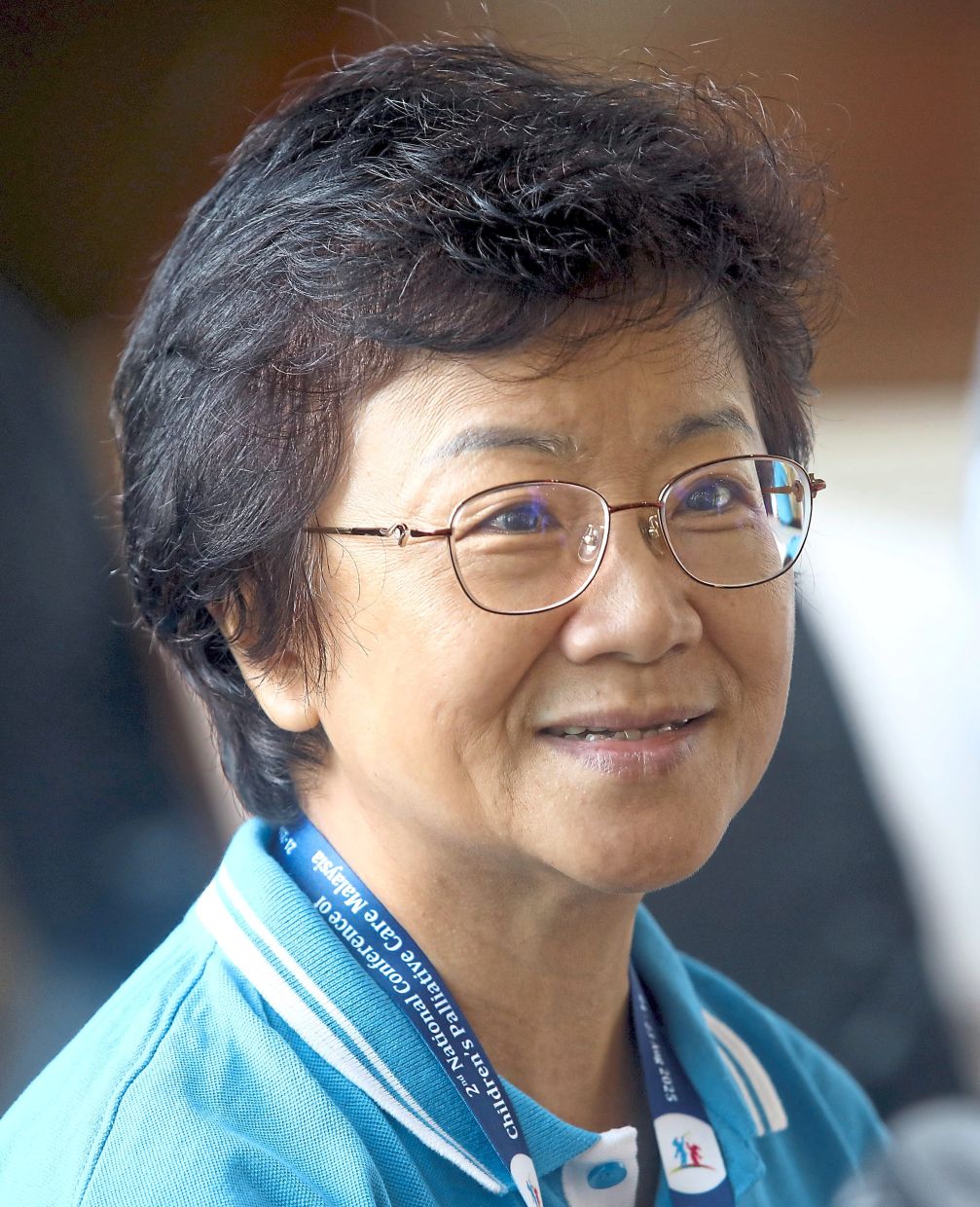
It was an emotional journey that made her reflect on life, death and what truly matters.
“When I first entered, it was completely dark and silent.
“The atmosphere felt real, almost overwhelming,” she recalls.
Before stepping into the coffin, participants were asked to write farewell messages – words of thanks, apologies, goodbyes and “I love you’s” they would want to leave behind if that day were their last.
“Normally, we don’t stop to reflect on these things,” See says.
“But this process made me pause and think deeply.
“I realised I had taken things for granted, or become too busy to say what really mattered.”
The notes were placed in a box near the coffin, symbolising a final farewell – once given, they could not be taken back.
Then came the choice: to lie in the coffin with the lid open or to have it closed.
“At first I was scared and thought about leaving it open,” she admits.
“But then I asked myself: if I don’t close the lid, am I really experiencing it?
“Real death means the coffin is closed.
“So, even though I was afraid, I asked them to close it briefly.”
Volunteers reassured her that she could knock if she wanted to exit.
That small assurance gave her the courage to face her fear.
And then, something remarkable happened.
“When the lid closed, all my fear disappeared.
“Before, I had been imagining death and feeling afraid of letting go.
“But once I lay inside, I felt an unexpected calm. Accepting death brought peace.”
For two minutes, she lay in the coffin, in darkness, with no fear left, only acceptance.
“When they opened the lid, they told me, ‘You are reborn’.
“And that’s how it felt.
“Afterwards, we wrote down what the experience meant to us.
“For me, it was clear: to live properly. All the fear I had before was gone.”
See compared to the same feeling to people who survive near-death experiences, whose perspective on life changes completely.
“Death wasn’t as scary as I imagined.
“The scariest part is before, when you’re only thinking about it.
“But when it happens, and you’re willing to let go, it becomes peaceful.
“This experience gave me a new appreciation for life. It’s like being given a second chance.”
This 39-year-old medical officer described the session as an extraordinary experience.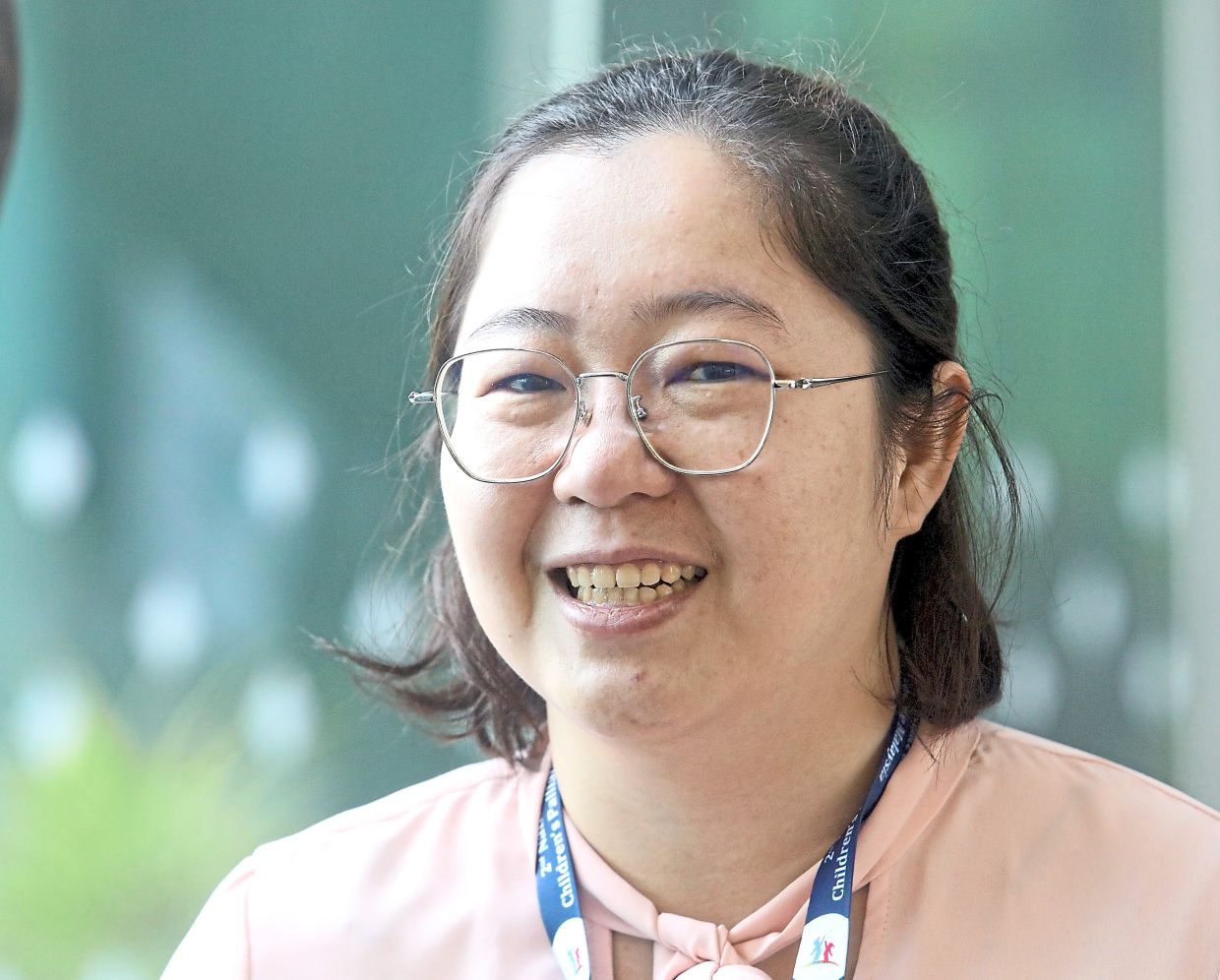
Although she was initially unsure about it, curiosity led her to participate.
“I felt a bit sceptical at first because it’s not something people would normally think of doing.
“But once I decided to try, the experience turned out to be very different from what I expected.”
She shares: “It began with writing letters to myself, my family or loved ones, expressing gratitude, apologies or unfinished thoughts.
“I reflected on my 39 years of life and felt thankful for the journey, despite its ups and downs.
“Writing the letters brought out emotions, even tears, but it also created a sense of pride and acceptance, rather than regret.”
When it came time to lie inside the coffin, she initially felt nervous.
“My heart was racing and questions filled my mind: Did I do anything wrong? Did I hurt anyone?
“In that moment, I felt the need to seek forgiveness.
“But after a short while, a calmness set in, a feeling of relief.
“I realised it was only a symbolic two minutes, but it carried weight,” she says.
Interestingly, fear did not play a major role during the experience for Dr Ng.
“Instead of worrying about death itself, I reflected on the importance of focusing on the present and not being distracted by what others might think.”
She considered whether she had regrets and concluded that although some of her decisions may have been unwise, each one had shaped who she is today.
During, the “rebirth” step marking a new beginning, she chose to focus on being content with who she is now, trusting that she can continue to grow while leaving the future in God’s hands, rather than setting too many hopes.
The session closed with blessings: participants were asked to write a blessing for others, then take one in return.
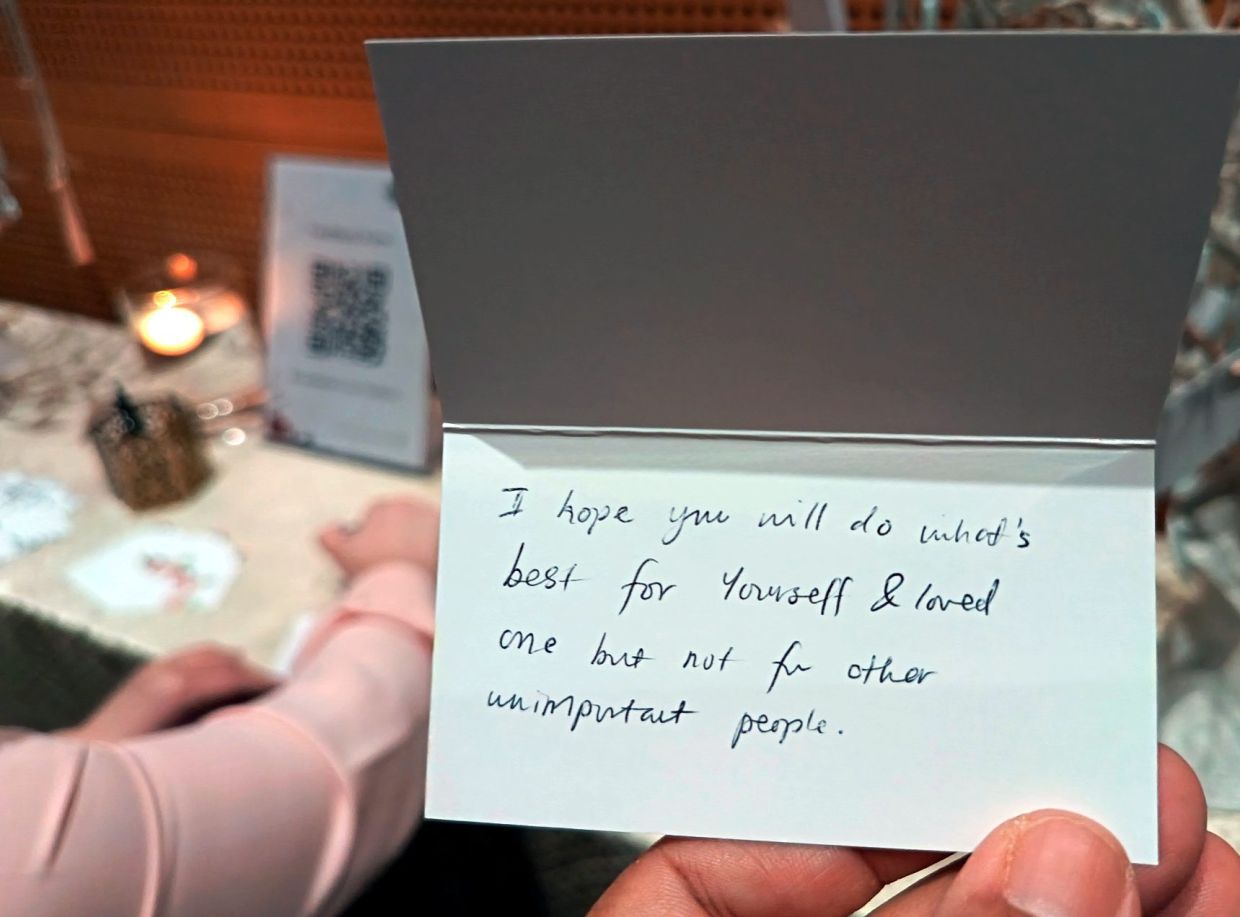
The message Ng received read: “You are great.”
This 55-year-old housewife actually came back to volunteer at the coffin-lying experience after having experienced it herself the day before.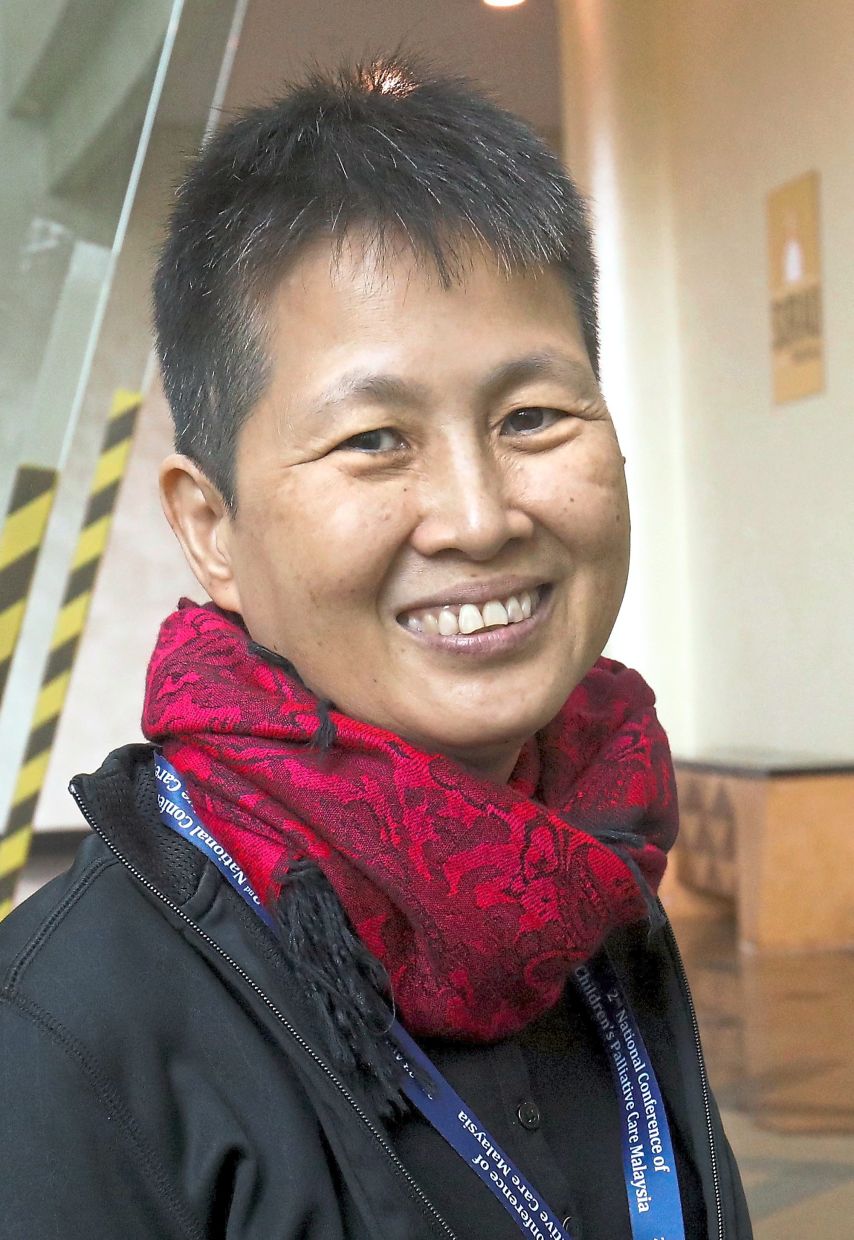
“I wanted to learn how to better support people in these kinds of experiences.
“I’ve volunteered before, mostly before the Covid-19 pandemic.
“This is my first time volunteering since the MCO [movement control order], and I specifically chose palliative care because I wanted to explore what more I could do, especially beyond my current volunteer work at the hospital.
“Joining this session really made me reflect; a lot of memories and thoughts came rushing back.
“I asked myself: If I were to die at this moment, what would I regret not doing?
“I thought about the things I haven’t yet completed.
“But I also felt grateful – truly grateful – because I’ve tried many things I wanted to do in life.
“Looking back, I realised I don’t have many regrets.”
She recalled one particular moment during the experience: “When I lay down, even just for a short while, it brought me back to the present.
“It reminded me I was still alive, still breathing.
“The coffin used here is designed for living participants, so it’s ventilated.
“Of course, it’s a confined space – you can’t move much, and some might feel claustrophobic.
“But for me, prayer helped calm that initial fear.”
When asked if she was afraid of death, she admitted: “I think everyone is, to some extent.
“Death is a natural part of life, but the idea of saying goodbye to loved ones – that’s what scares me the most.
“I’m close to many people, and I’ve had many beautiful moments.
“The thought of leaving that behind is difficult.”
Now, she hopes to live fully and pursue what matters to her.
“It reminded me that life is fragile, and we shouldn’t wait to go after what’s important.
“The lesson from this coffin-like experience is not about dying well because death is beyond our control, but about living well.
“It compels you to reflect on what you want to do here and now.”
Already a subscriber? Log in
Get 20% OFF The Star Digital Access
Cancel anytime. Ad-free. Unlimited access with perks.
The coffin-lying experience: Step-by-step
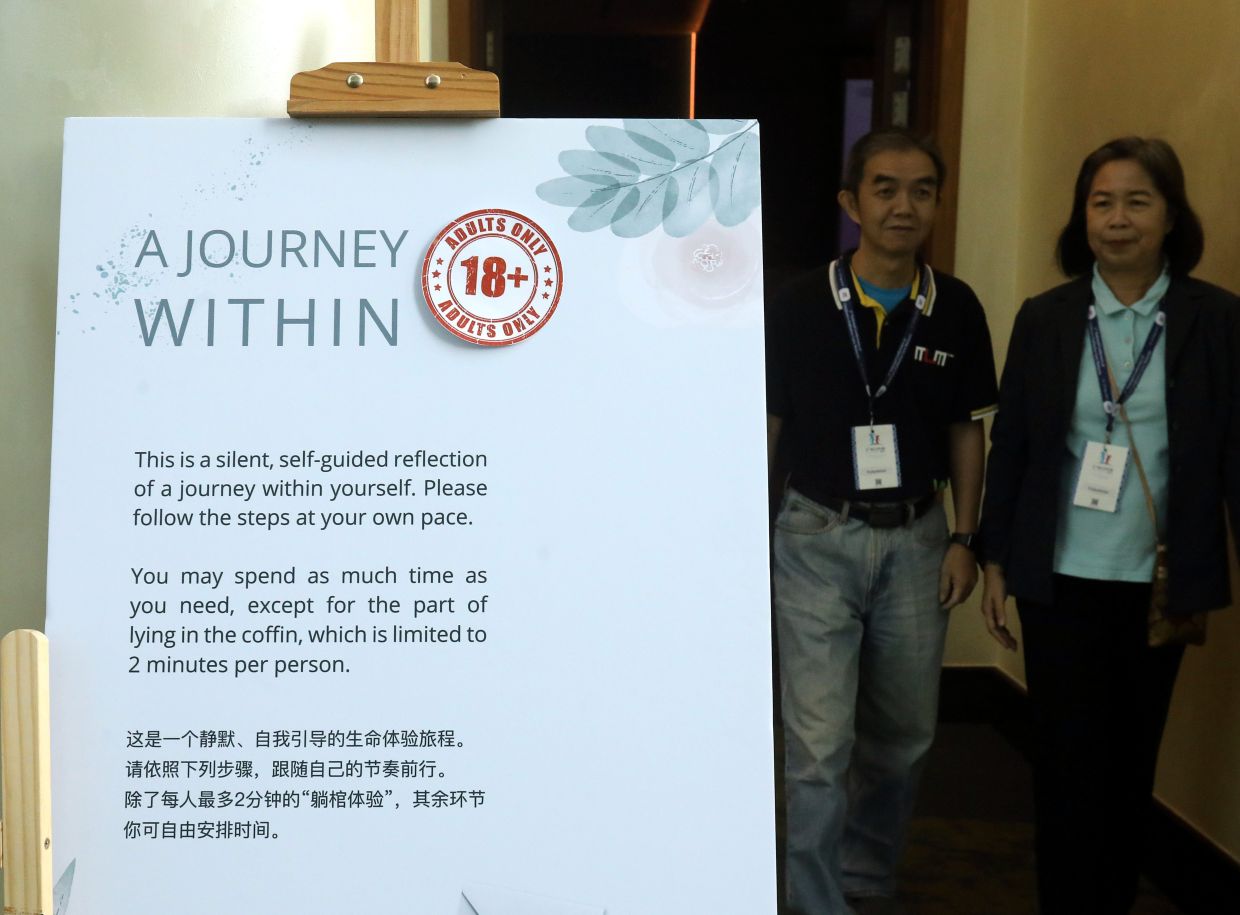
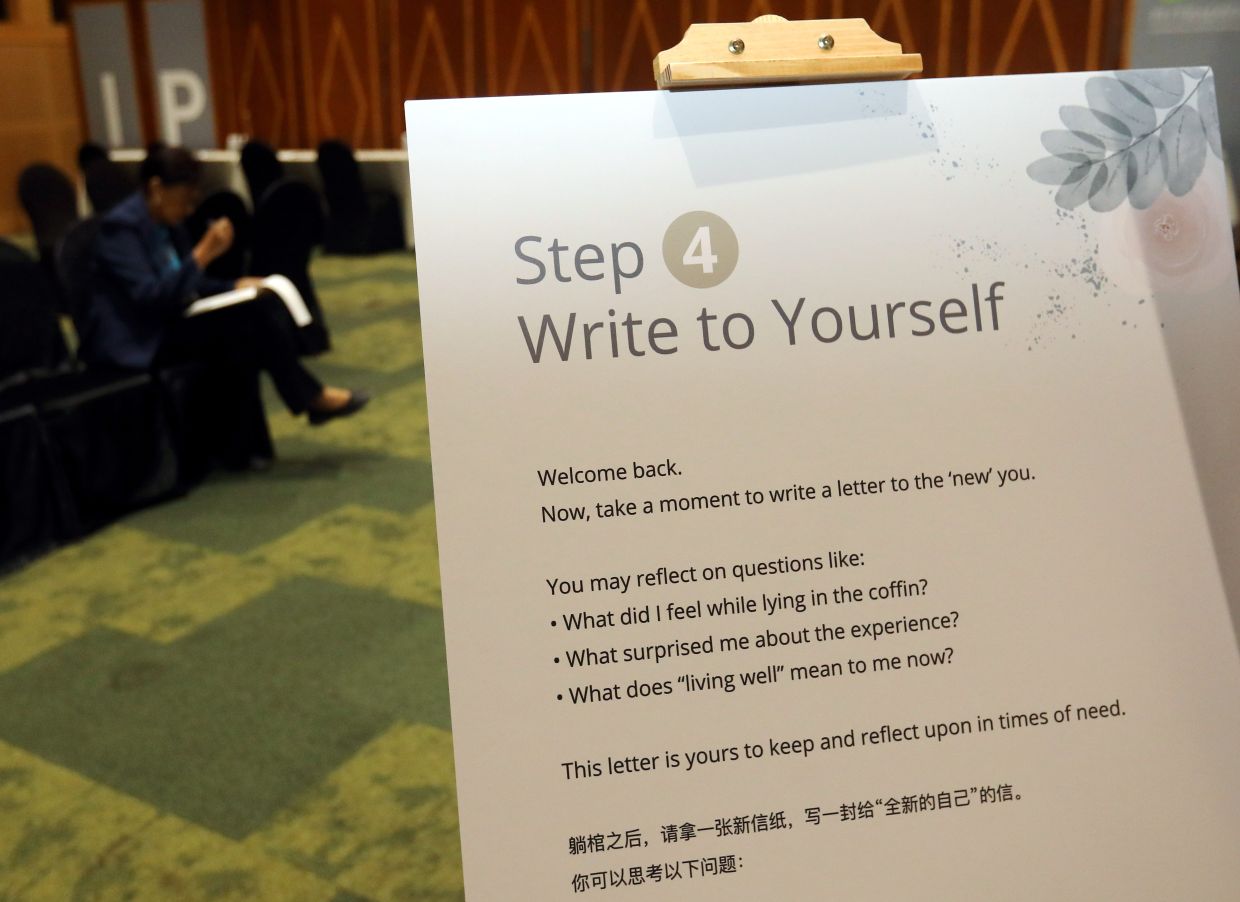
Introduction to the experience. — Photos: AZLINA ABDULLAH and EMALIN ZALANI/The Star
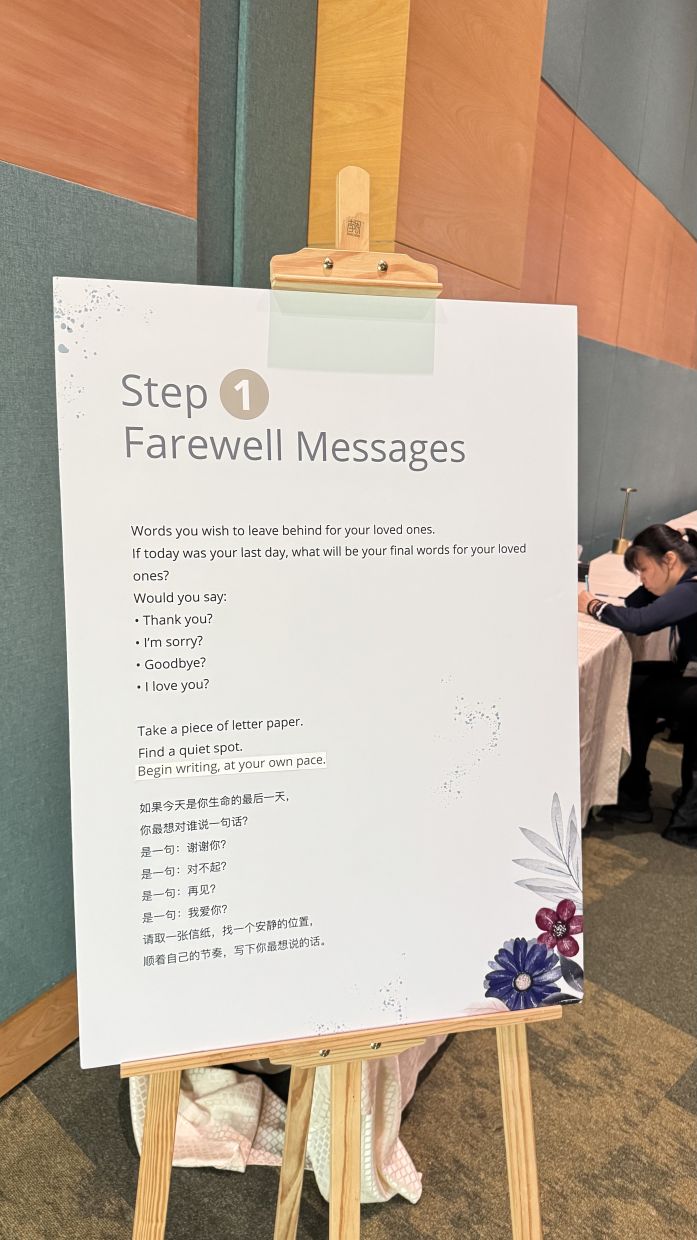
Step 1: Write the words you would like to leave behind for your loved ones if today were your last day. What would your final words be?
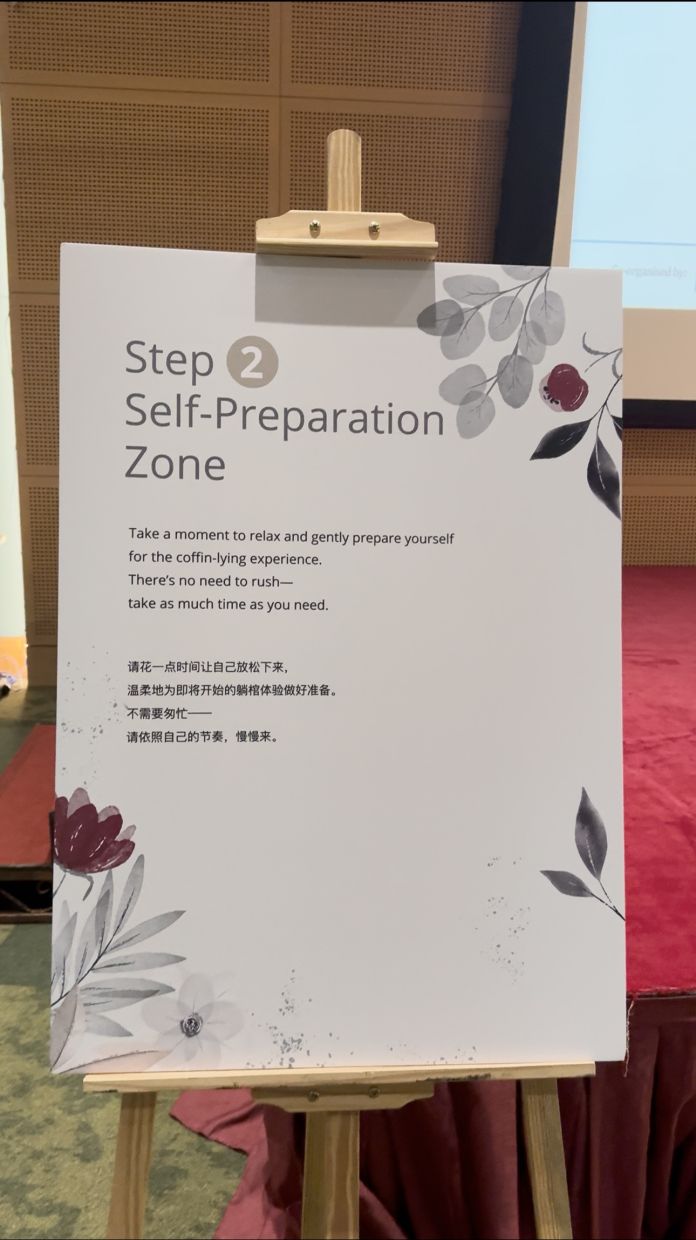
Step 2: Take a moment to relax and prepare yourself to lie in the coffin. There’s no need to rush; take as much time as you need.
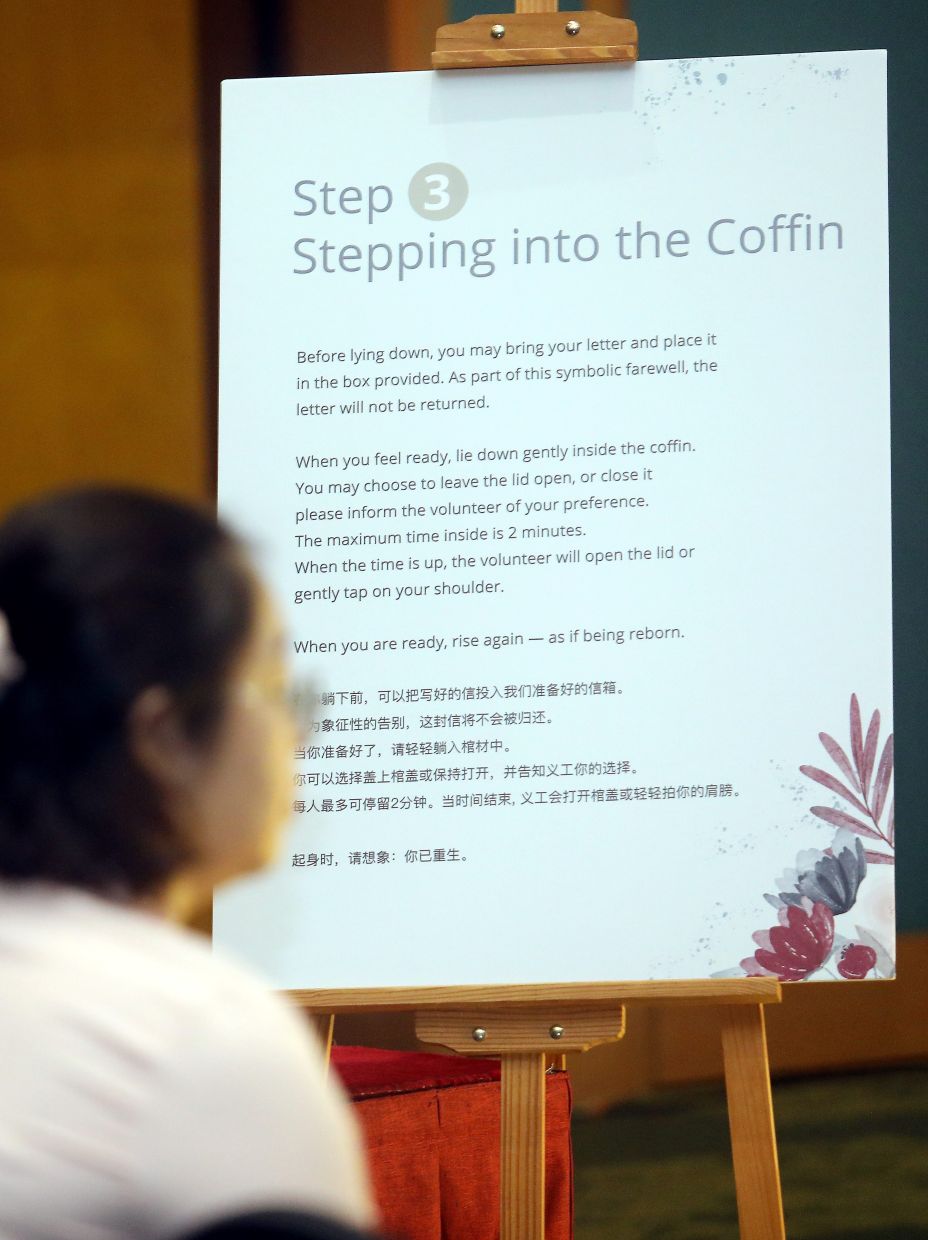
Step 3: Put your 'final' letter into the box and prepare to step into the coffin. Don't worry, it will only last for two minutes!
Step 4: You are now reborn! Take a moment to write a letter to the 'new' you.
Step 5: Write a blessing for the next person, and take one for yourself.
An example of a blessing from someone who underwent the coffin-lying experience.