Almost all of us are familiar with the term cholesterol.
It’s a waxy substance that’s made by the liver and obtained through the diet, and is essential for building healthy cells.
When you have high cholesterol, that means you have high levels of low-density lipoprotein (LDL or “bad”) cholesterol, and perhaps not enough of high-density lipoprotein (HDL or “good”) cholesterol, which picks up excess cholesterol and takes it back to the liver.
High cholesterol is commonly associated with eating too much saturated fat or trans fat, lack of exercise, being overweight or obese, smoking, and drinking alcohol.
However, high cholesterol can also be an inherited, rare condition present at birth.
Called familial hypercholesterolaemia (FH), the disease is caused by a change in a gene that makes it harder for the body to remove LDL cholesterol from the bloodstream.
With age, most people will see an increase in LDL levels, but those with FH are born with high LDL levels that get higher over time.
Left untreated, excess cholesterol will accumulate in the bloodstream and can eventually build up in the walls of the arteries (a phenomenon known as atherosclerosis).
Early atherosclerosis, due to lifelong exposure to elevated levels of cholesterol caused by LH, can lead to heart attacks in young adults, and even children.
It is estimated that one in 250 people around the world have FH.
“FH is very difficult to pick up and is underdiagnosed because it doesn’t usually cause any symptoms.
“Even if a child goes for a health check-up, a lipid profile is not part of the investigation, unless there is a strong family history of coronary heart disease.
“We usually pick up FH by incidental findings,” says Hospital Kuala Lumpur (HKL) Genetics Department head Dr Ngu Lock Hock.
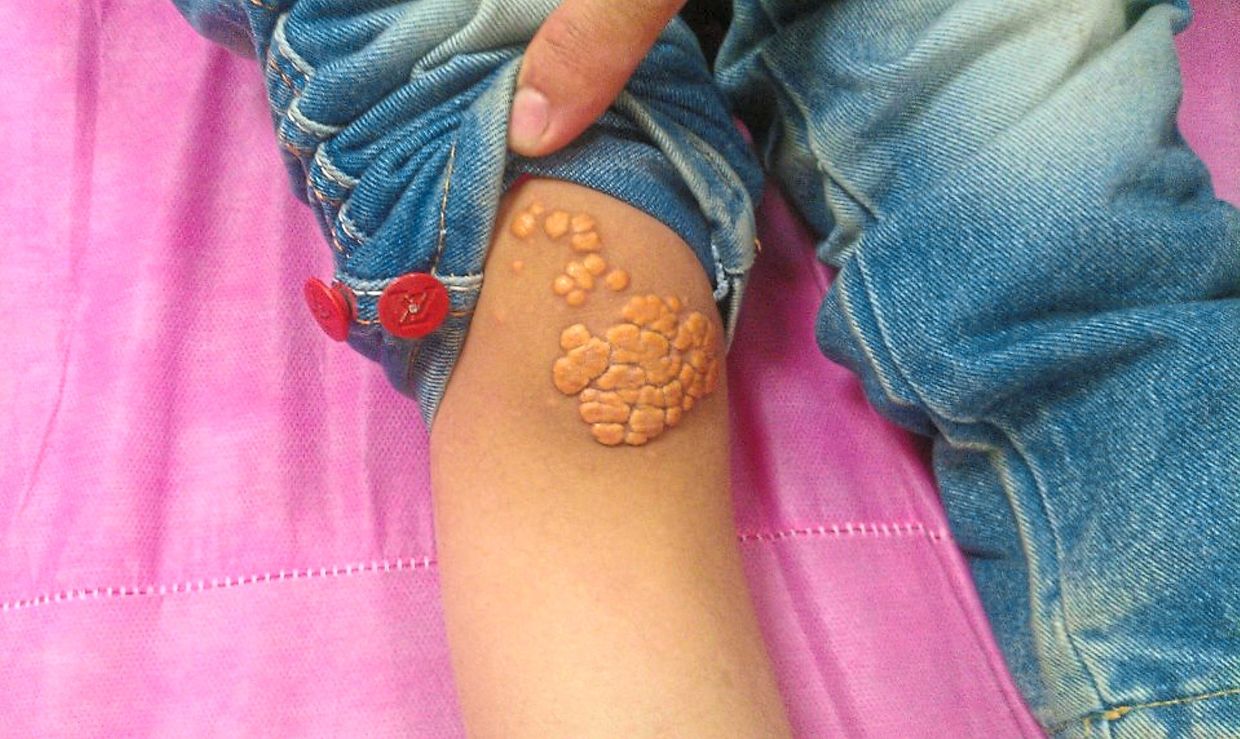
If FH is severe, the child will have certain signs such as fatty bumps known as xanthomas (i.e. cholesterol deposits on the skin), yellow areas around the eyes, or a white ring around the iris.
Challenging to diagnose
According to The landscape for rare diseases in 2024 article published in the Lancet Global Health journal:
- Around 80% of rare diseases have a genetic cause
- Almost 70% of rare diseases present in childhood
- About 95% lack approved treatments
- Four to eight years is the average time for an accurate diagnosis, and
- About 30% of children with a rare disease die before the age of five years.
Diagnosis can be difficult, partly because of different symptoms and signs, and partly because few clinicians have direct experience or knowledge of individual rare disorders.
As of March 2023, our Health Ministry (MOH) has listed 502 rare diseases in Malaysia.
The top two categories are inherited metabolic diseases (123 diseases) and neurological/neuromuscular conditions (88 diseases).
FH falls under rare endocrine diseases, which is the fourth highest category out of 17.
This registry is periodically updated and represents rare diseases that have treatments available from MOH (rare diseases that have no treatment are not listed).
Globally, it is estimated that rare diseases affect one in every 4,000 people, which aligns with Malaysia’s estimate of between 5,000 and 10,000 affected individuals.
Our inherently small population of rare disease patients also makes conducting clinical trials here difficult.
More than one gene
Ever since whole exome sequencing has become more accessible, more patients are being asked if they want to do the test.
It is a type of genetic sequencing performed from a blood or saliva sample to understand what may be causing a person’s symptoms or disease.
Dr Ngu explains: “In the past, we only analysed a single gene, i.e. if we suspect the patient has a certain disease caused by gene A, we study gene A, and if that is not the answer, we study gene B.
“But with whole exome sequencing, we can analyse 20,000 genes from one sample, so we can quickly diagnose what the disease is.”
As the service is limited in Malaysia, the samples are often sent overseas.
Prior to that, parents or patients will be asked if they want to include any incidental findings in the report.
Most will agree.
“In the past four or five years, we have sent almost 5,000 samples for whole exome sequencing and we were quite surprised to discover that at least 30 had FH as a secondary finding.
“That means FH is not so rare in Malaysia!
“Of course, we only see a selected population [at HKL] so we don’t know about the incidences in the general population,” says the consultant clinical geneticist.
That opened up an opportunity for Malaysia to participate in a global clinical trial run by a pharmaceutical company.
“They had already completed the adult study, and the drug, inclisiran, has been approved for adult FH usage for those not responding well to statins.
“They now want to extend it to children and approached us; we agreed, screened a few patients and found a subject willing to participate.
“Globally, we were the first to be recruited for the study and the company hopes to recruit 50 subjects worldwide.
“Since HKL is the national referral centre for genetic and rare diseases, we have a large clinic database of 15,000 families, so a lot of pharmaceutical companies reach out to us to check if we have a certain rare disease population that they can recruit into their clinical trials,” says a delighted Dr Ngu.
Double-blind trial
The randomised clinical trial will be run in two parts, with the first year seeing patients either receiving two different doses of inclisiran or a placebo, and the second year with everyone on inclisiran, but at different doses.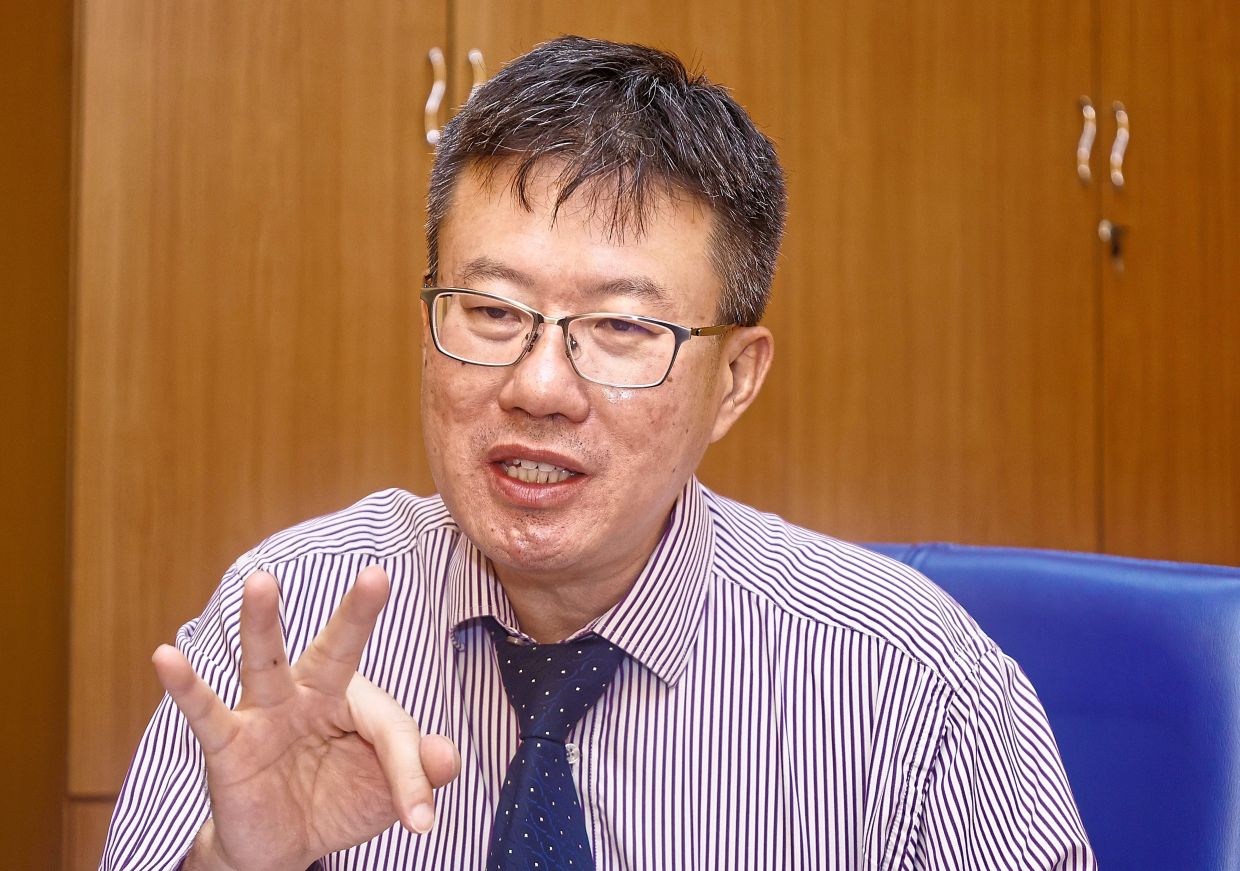
As a double-blind study, neither the doctor nor the patient will know which substance they are receiving until the end of the study.
The trial aims to evaluate the safety, tolerability and efficacy of the drug in children ages six to less than 12 years, who have heterozygous FH and elevated LDL-cholesterol.
Heterozygous means that a person has two different copies of the same gene, one inherited from their mother and the other from their father.
Each copy may have a different mutation, or one may be mutated while the other is normal.
In contrast, if both parents have FH and their child inherits the FH gene from both of them, that makes it homozygous FH as the child has two of the same mutated genes.
Having two FH genes makes the disorder much more severe.
It is estimated that approximately one in a million people worldwide have homozygous FH.
Says Dr Ngu: “Our patient actually has developmental delay and when we did the whole exome sequencing, we found FH.
“He is already on early intervention treatment, but from the incidental findings, we called the family to screen the child for high cholesterol.
“Imagine, a six-year-old can have a reading of 7-8mmol/L (normal is up to 5mmol/L)!
“We discussed with the parents and put the child on statin treatment immediately.
“There was not much improvement so he is now in the clinical trial, which started in January [2025].”
In this case, the patient’s father is also being treated for high cholesterol and is awaiting results to see if he carries the FH gene.
In the clinical trial, the drug is administered via a subcutaneous (under the skin) injection once every six months.
The patient is monitored for side effects and drug efficacy.
“With this trial, our patients have the opportunity to get early access to new treatments, and usually, they are receptive.
“I already have a few families asking if they can also be included in the study.
“We’re discussing with the sponsor to see if they can offer us more spots,” he says.
At present, the Genetic Department has three active clinical trials, while two more are in the approval stage.
Dr Ngu says: “It’s not a big number, but we want Malaysia to be part of this global medical advancement – it’s like soft power for the country.
“Ten years ago, we had no opportunity, but now, pharmaceutical companies don’t only want to focus on Caucasians, they want more diversity.
“As Asians, we have an advantage as our genetic diagnosis is quite structured and systematic.
“The majority of our patients are from the Klang Valley, but we do have visiting clinics and outreach programmes in other states.”
Read StarHealth on March 9 (2025) to find out about a rare disease where muscles and connective tissues gradually transform into bone.
Already a subscriber? Log in
Get 20% OFF The Star Digital Access
Cancel anytime. Ad-free. Unlimited access with perks.