
Whether it’s searching for “sketchy” things at the back of the computer lab or picking up clues from friends or movies, curiosity has always driven us to explore and learn about sex and its mysteries.
However, many men struggle with misunderstandings and confusion regarding this topic due to a lack of reliable information and open discussion.
In a society where talking about sex remains shrouded in embarrassment and euphemisms, Malaysian boys may often find themselves navigating their sexual development with misconceptions and misinformation.
Consultant clinical andrologist Dr Mohd Ismail Mohd Tambi notes that: “Men don’t talk about it because it’s very private, which leads to them not knowing what is really happening.”
According to a online poll conducted by StarHealth in May (2024) to find out how men first learn about sex:
- 37.7% first learnt about sex through friends
- 32.8% through pornography
- 12.7% through school lessons
- 1.6% through their father, and
- 15.3% through other ways.
Some of the alternative methods included through books, magazines, TV shows, the Internet, other family members and self-exploration.
Indeed, college student Claarence Christopher shares that his early knowledge of sex was primarily influenced by his peers and online exploration during his childhood years.
“For me, I learned about sex when I was around 10 or 11 years old.
“And it was mostly from friends, because I don’t think the sexual education system here in Malaysia is actually that extensive.
“From what I remember, when I was still studying in secondary school, all we had was a chapter on sex,” says the 23-year-old.
However, he opined that the approach to the lesson was lacking, with a focus on the anatomical aspects and a reluctance to address the emotional and relational aspects of sex.
Unsurprising then that many men have an unrealistic perception of what is deemed sexually normal, with their knowledge gleaned from unreliable internet sources, friends who may themselves have the wrong ideas about sex, or the exaggerated portrayals seen in pornography.
These misconceptions about sex not only create confusion, but may also have a serious negative impact on their self-confidence, relationships, and even efforts at conception.
Unrealistic endurance
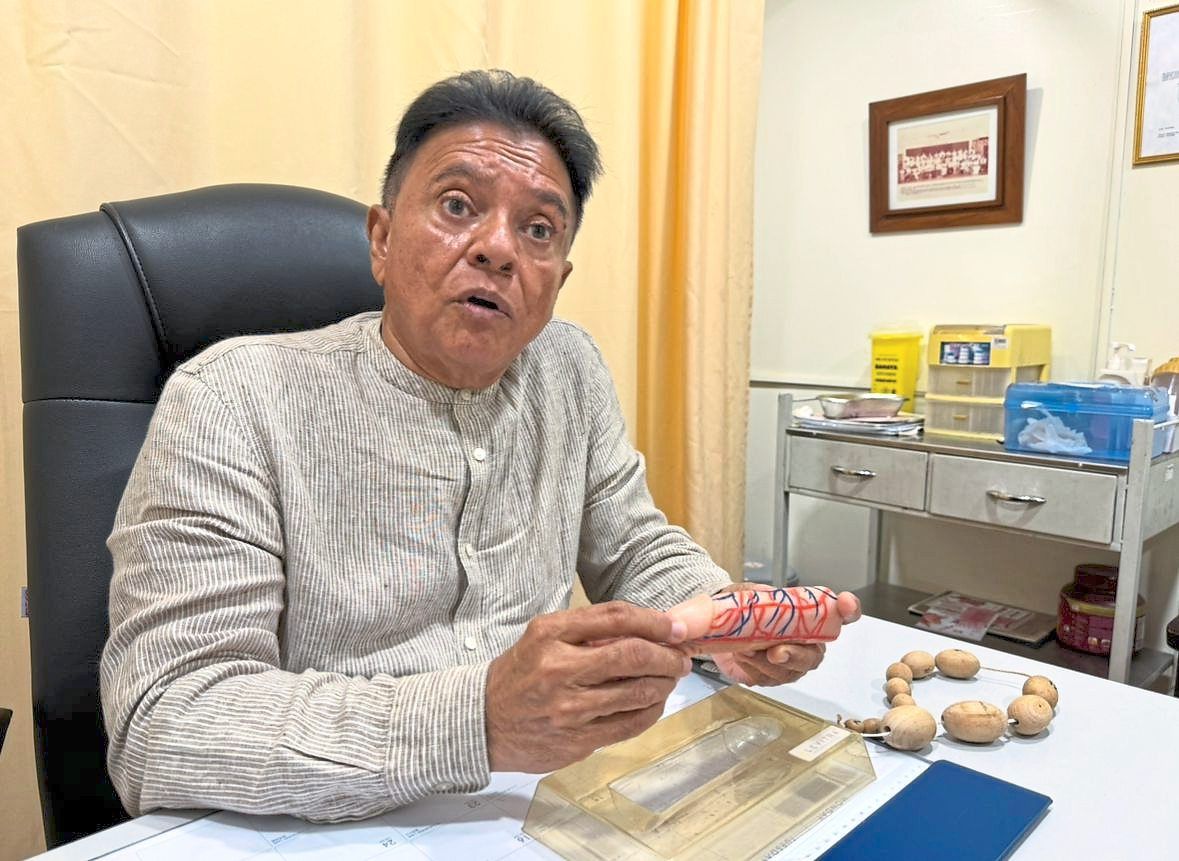
According to Dr Mohd Ismail, one major misunderstanding among men is the expected duration of sexual activity.
Some men believe that prolonged intercourse, sometimes lasting hours, is normal and sexually desirable.
Dr Mohd Ismail debunks this myth by explaining the practical and physical implications of such prolonged activity.
“Your partner will definitely have very severe pain in the vagina.
“Her vagina will not secrete any lubrication – it will be painful,” he explains.
Many men mistakenly believe that women are always ready for penetrative sex and that they will naturally produce enough lubrication to facilitate comfortable intercourse.
However, the vagina only produces sufficient lubricant as a natural sexual reflex when the woman is aroused.
In addition, factors such as hormonal fluctuations, stress, medications and age can affect a woman’s natural lubrication levels.
Without lubrication, sex can be uncomfortable, painful, and even result in injury for the woman.
Claarence, who is often a point of reference for sexual matters among his friends, recalls how a friend confided in him about the distressing ordeal she faced during sexual intercourse.
“She went through a lot of pain, and even when she asked to stop, this guy did not want to stop.
“Guys assume that you can just put it in and be done with it – I feel that that is wrong.
“Just because their partners are moaning, doesn’t mean that they are enjoying it.
“You need to be respectful of your partner’s feelings and how they receive it as well,” he says.
Dr Mohd Ismail agrees, stressing that sex is intended to be a mutually-pleasurable experience, not one that causes pain.
“Isn’t it supposed to be pleasant for both of you?
“Lovemaking is not supposed to be painful,” he points out.
He notes that misconceptions about the duration of sexual performance contribute to unrealistic expectations, which can also lead to issues like pain, difficulty ejaculating and distress among men.
Size and stimulation
Many men also tend to believe that they need to have a larger penis in order to be sexually adequate – a perception often influenced by friends, pornographic depictions and digital manipulation.
Misconceptions around penis sizes can lead to significant psychological distress, causing men to feel inadequate and insecure.
This can lead them to trying out unproven methods for penile enhancement.
Dr Mohd Ismail shares that: “I’m getting all kinds of patients coming to see me, who say ‘I bought the stuff, I applied it, but nothing happened.’”
He points out that the average erect penis size for Asian men is around 12.5 centimetres.
“Penis size is determined by your genes, your chromosomes, your ethnicity – and this comes from your parents,” he says.
Another misconception relates to ejaculation difficulties.
He shares that a patient came to see him because he was unable to ejaculate during intercourse, despite being able to do so through masturbation.
“He was so tuned to visually enjoying masturbation in his own style of stimulation that he could ejaculate only with that specific type of stimulation.”
As such, Dr Mohd Ismail emphasises the importance of understanding penile sensitivity.
“Men need to understand the sensitivity of their penis: which part is sensitive, and how to tune it to get the proper sensitivity to be able to ejaculate in their partner.”
Simple ways to help fix ejaculation difficulties and respond to gentler stimulation can include loosening your grip during masturbation, alternating sex positions during intercourse, and using lubricant, he says.

Learning the right way
Dr Mohd Ismail explains that the process of understanding one’s sexual orientation begins early in life.
“The process of sexual orientation, knowing about oneself, what we’re feeling, our needs, our fear and our delights – all this starts from childhood itself,” he says.
This developmental journey is encapsulated in what is known as the Freudian cycle.
The Freudian cycle outlines the stages of psychosexual development that shape an individual’s understanding of sexuality from a young age.
“During this stage, children start to recognise what gives them pleasure and satisfaction,” Dr Mohd Ismail explains.
“This knowledge is intertwined with their developing sense of self and their emerging sexual identity and knowledge.
“Knowing oneself and particular things that give you pleasure and satisfaction is crucial.”
However, Claarrence notes that the taboo nature of sex education in Malaysia often hinders the natural sexual development of many young people.
“I feel that the way we approach sexual education itself is already something of a red flag for me.
“Even if it’s not about pleasure or general education, it should be in a way where they educate you for your own safety,” he says.
He believes that sexual education should encompass more than just the mechanics of sex, extending to crucial topics like consent, respect and understanding one’s body.
“I’m pretty sure my teacher never talked about these topics,” he says.
Claarence also emphasises the importance of men having an open mind and being willing to challenge notions, particularly those derived from sources like pornography.
“What you see in pornography – given that that is where most people get their know-ledge from – is not always real.”
Dr Mohd Ismail stresses that men should “look for a source where you know you can get proper information”.
“Make sure the website is a medical website,” he says.
And if you have doubts that go beyond what available reliable sources can answer, do seek advice from an appropriate healthcare professional.
Already a subscriber? Log in
Get 20% OFF The Star Digital Access
Cancel anytime. Ad-free. Unlimited access with perks.