Fibroids are benign growths of muscular and fibrous tissues that usually occur in or around the uterus.
It is a fairly common finding in women of reproductive age.
Although fibroids are not cancerous, they may affect a woman’s chances of getting pregnant and completing a successful pregnancy.
Therefore, one common question asked about fibroids is: “Should I remove my fibroid if I am trying to get pregnant?”
This can sometimes be a difficult question to answer.
I see many patients with fibroids who get pregnant and deliver a healthy, full-term baby.
I also see many patients who have difficulty in conceiving and they have fibroids.
In certain situations, surgery to remove the fibroid is absolutely necessary, whereas in other cases, doctors may not be sure whether removing the fibroid will actually improve the chances of pregnancy.
There are a number of different types of fibroids that can occur.
They are basically divided into three common types:
- Submucous fibroids
- Intramural fibroids, and
- Subserous fibroids.
Other rare types are pedunculated and cervical fibroids.
To cut or not to cut
All doctors will agree that submucous fibroids, however small, must be removed.
If the fibroid is protruding out into the endometrial cavity (the space within the uterus where a fetus develops), it will affect fertility, and may also cause a miscarriage.
Usually, patients with submucous fibroids will experience heavy menses.
Most doctors will agree that we do not need to remove subserous fibroids.
These fibroids are the ones that are found at the surface of the uterus and usually do not affect fertility unless they are too big.
How big is big is a difficult question to answer.
I have seen women with subserous fibroids bigger than 5cm conceiving and delivering a baby easily.
However, generally speaking, if the fibroid is larger than 5cm and you are having difficulty conceiving, than you may want to consider surgery.
Similarly, pedunculated subserous fibroids can be left alone.
The only worry is that sometimes, a pedunculated fibroid can twist, causing pain.
This may require surgery to remove the twisted fibroid and relieve the pain.
Deciding on surgery for intramural fibroids is more difficult.
If the fibroid is more than 5cm and you are not getting pregnant, then it is sensible to do surgery to remove these fibroids.
However, research does show that fibroids as small as 2cm can affect fertility.
Even in-vitro fertilisation (IVF) results are lower in women with such small fibroids.
But many doctors will be reluctant to suggest surgery for such small fibroids.
An alternative method of treatment is to shrink these fibroids.
There was a drug called ulipristal acetate that was prescribed to shrink fibroids, but it has been withdrawn because of its potential to cause liver failure.
Another method of shrinking these small fibroids is to use high-intensity focused ultrasound (Hifu).
In this method, sound waves are brought to a tight focus on the fibroid, heating up the tissues and causing them to die, thus, leading to the eventual destruction and shrinkage of the fibroid.
The fibroid will take a few months to shrink sufficiently, then the patient can attempt to conceive.
Pregnant with a fibroid
Many patients who have fibroids get pregnant.
If you are pregnant with a fibroid, it is highly unlikely that you have a submucous fibroid or a large intramural fibroid.
The chances are you have small intramural fibroids or subserous fibroids.
Most of the time, nothing untoward will happen.
Your pregnancy will progress well and you will deliver your baby normally.
However, some patients with fibroids may encounter these problems:
There are basically two different types of miscarriages.
The first is where the fetus dies in the gestational sac.
This is known as a missed abortion.
It is usually due to an abnormality in the fetus.
The second is when you start bleeding while your fetus is still alive.
This is known as a threatened abortion.
Women with fibroids have a higher chance of developing a threatened abortion, where the fetus may be expelled.
The reason is that fibroids may cause the uterus to become irritable, thus causing contractions that lead to a threatened abortion.
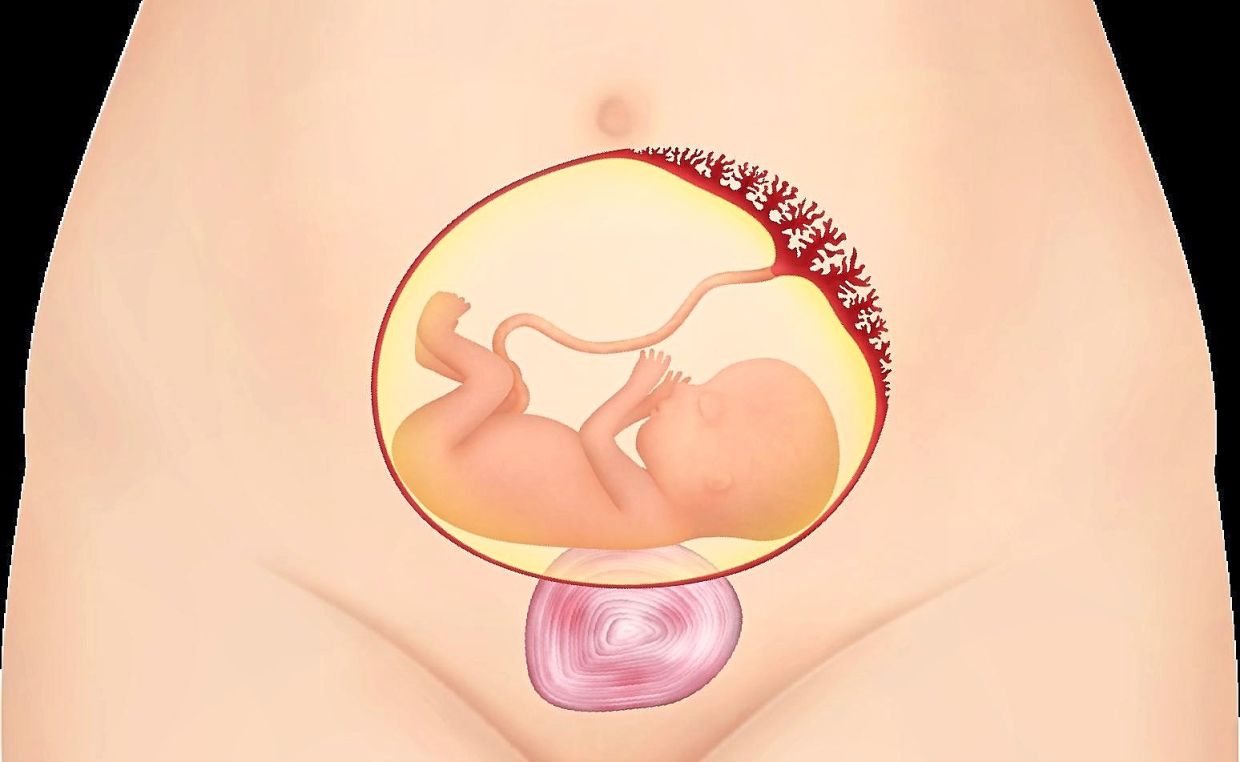
In a normal pregnancy, the head of the fetus is located in the pelvis as this is the largest part of the uterus.
When a fibroid is located in the lower part of the uterus just above the cervix, the fetus will not be able to lie in the usual position.
As a result, the fetus may adopt a transverse position, where the back occupies the lower part of the uterus, or the breech position, where the buttocks are in the lower part of the uterus.
When this occurs, the chances of needing an emergency caesarean section are higher.
As the fetus grows, the uterus enlarges.
The presence of a fibroid will cause the uterus to be even larger.
Once the uterus reaches a certain size, the uterine muscles may assume that the foetus has reached maturity – even though it hasn’t yet – and start to contract, leading to preterm labour.
When this occurs, the woman may need to rest in bed for a long period of time and be given medication to suppress the contractions, so that she does not deliver early.
Despite such medications however, preterm labour may still occur, resulting in the baby being born prematurely.
Preterm premature rupture of membranes occurs when the water bag burst before you go into labour.
There is a higher chance of this happening in pregnant women with fibroids.
During pregnancy, fibroids can undergo changes called degeneration.
Degeneration may be a result of a decrease in blood supply to the fibroid.
This can result in pain at the site of the fibroid.
Doctors may can prescribe mild painkillers to help manage the pain.
However, if the painkillers are not sufficient to manage the pain, the woman will have to live with it until delivery, as it is not possible to remove fibroids during pregnancy.
Abruptio placenta means that the placenta tears away from the wall of the uterus before the baby is delivered.
It is a very serious condition because the baby won’t get enough oxygen and the woman may bleed heavily.
The woman could even go into shock.
Ongoing studies seem to show that pregnant women with fibroids have a much greater chance of placental abruption than women without fibroids.
Going into labour with a fibroid causes a higher chance of an obstructed labour.
This means that the fibroid my block the smooth passage of the baby through the cervix and out of the vagina.
Therefore, the chances of undergoing an emergency caesarean section are higher.
Following a normal delivery, patients with fibroids have a higher chance of developing heavy bleeding called postpartum haemorrhage.
The fibroid may cause the uterus not to contract properly, resulting in this heavy bleeding.
The usual way of performing a caesarean section is to make a transverse, or horizontal, incision on the lower part of the uterus.
However, if the fibroid is blocking that area, the doctor might choose to do a midline incision on the uterus.
This is called a classical caesarean section.
It is easy to perform to deliver the baby; however, the disadvantage of this incision is that there is a higher risk of uterine rupture during the next pregnancy, compared to the normal transverse incision at the lower part of the uterus.
Two in one surgery?
Another common question asked by my patients is whether their fibroid can be removed at the time of a caesarean section.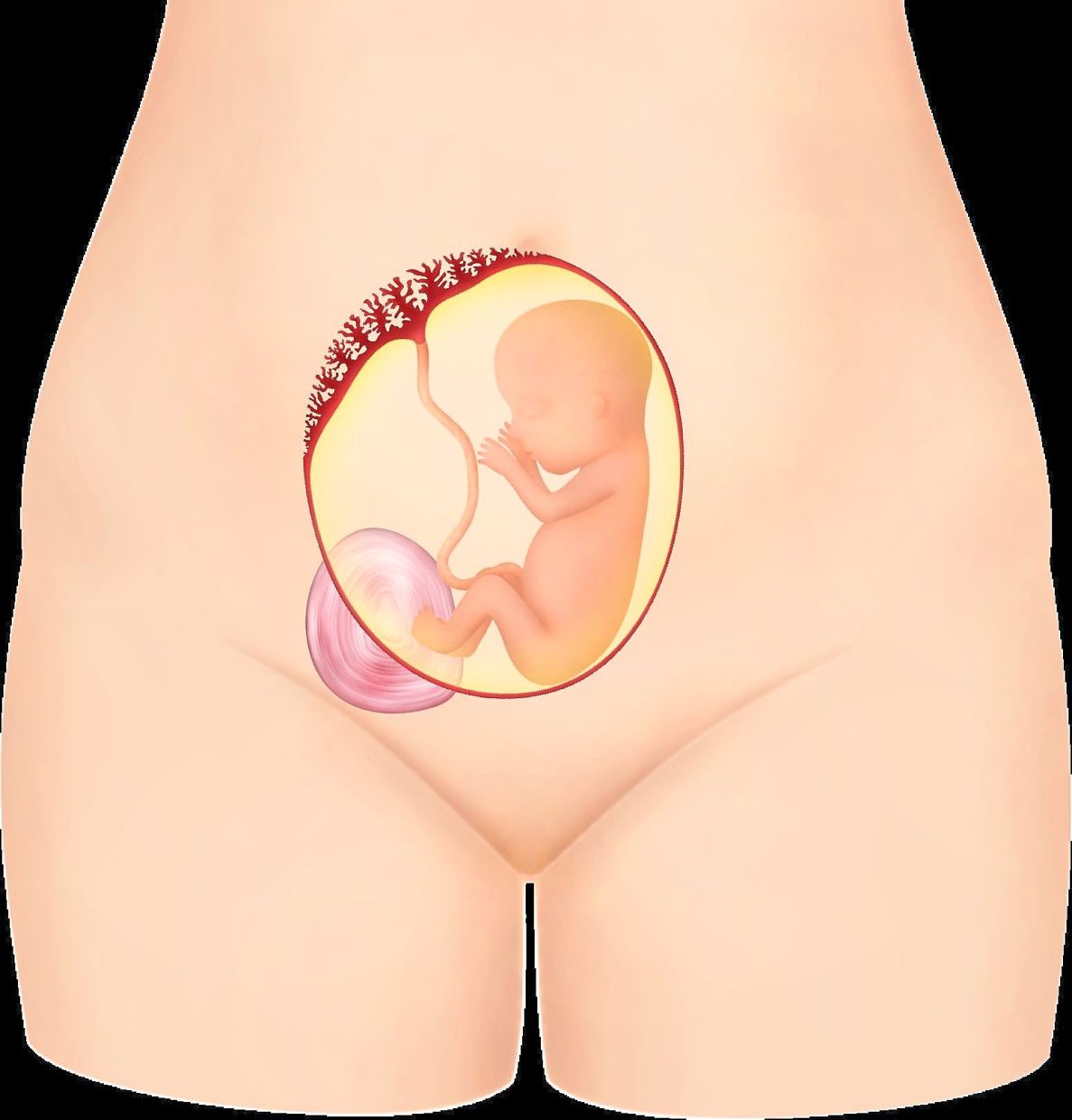
Generally, we do not remove fibroids during a caesarean section.
The reason is that during pregnancy, the uterus is enlarged and very vascular (i.e. full of blood vessels).
Performing a myomectomy (removal of a fibroid) at this time can be dangerous, as it can cause heavy bleeding, which may lead to a hysterectomy (removal of the uterus).
Our advice is to deliver the baby first, then wait for about three months so that the uterus reverts to normal size before undergoing the myomectomy.
Only in exceptional cases where either the fibroid is blocking the area where the incision is being made during a caesarean section, or if the fibroid is pedunculated, will the fibroid be removed during a caesarean section.
Options available
If you have fibroids and are having difficulty conceiving, you should consult your doctor to determine where the fibroid is located and its size.
You will then have to make a decision as to whether or not that fibroid needs to be removed.
If you do not want to undergo surgery or the fibroid is too small for surgery, another option is Hifu.
If you are pregnant with a fibroid, generally, nothing bad will happen and you may have a smooth pregnancy and delivery.
However, you do need to keep an eye out for the problems listed above as a precaution.
Dr S. Selva is a consultant obstetrician and gynaecologist, and fertility specialist. For more information, email starhealth@thestar.com.my. The information provided is for educational purposes only and should not be considered as medical advice. The Star does not give any warranty on accuracy, completeness, functionality, usefulness or other assurances as to the content appearing in this column. The Star disclaims all responsibility for any losses, damage to property or personal injury suffered directly or indirectly from reliance on such information.
Already a subscriber? Log in
Get 20% OFF The Star Digital Access
Cancel anytime. Ad-free. Unlimited access with perks.