Has the world given up on eradicating polio?


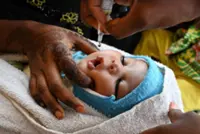
A police officer stands guard while a healthcare worker administers a polio vaccine to a child in Peshawar, Pakistan – one of two countries in the world where the infectious disease is still endemic. — AP

The polio juggernaut, which has skidded past eradication deadline after deadline, seems to have finally run out of fuel, suggests an investigation published by The BMJ journal on July 28 (2021).

Journalist Robert Fortner reveals that the World Health Organization (WHO) has already fired 500 staff on the polio programme, “perhaps ending a decades-long, multibillion dollar crusade engineered by some of the most powerful actors in global health”.

According to Fortner, not even the Bill & Melinda Gates Foundation – the top funder of polio initiatives and behind only the United States government as the largest funder of WHO – knew about these plans.

Since the effort to eradicate polio began in 1988, the Global Polio Eradication Initiative (GPEI) has pushed polio to near annihilation, reducing cases by 99.99%.

Yet the GPEI has been perched – exhaustingly and expensively – at the cusp of success for years, writes Fortner.

In 2017, for example, Bill Gates predicted that “humanity will see its last case of polio this year”.

Instead, cases surged.

The Covid-19 pandemic put polio efforts on hiatus for several months in 2020.

Then in December (2020), WHO decided to speed up integration of the polio programme into existing immunisation services – something that for decades has been considered anathema.

This was followed by WHO’s regional office for Africa firing some 500 polio programme staff, surprising GPEI’s partner groups and donor nations, including the United Kingdom’s Foreign, Commonwealth & Development Office and the US Agency for International Development (USAID).

The GPEI explicitly separated polio from routine immunisation because eradication requires very high coverage rates – 90% or more.

Yet some argue that the money lavished on polio has left millions of children vulnerable to other, often deadly, vaccine-preventable diseases, such as measles.

Polio funds from abroad have also led to local brain drains – into polio eradication and away from local and locally-funded health priorities.

Aidan O’Leary, who took over as director for polio eradication at WHO after the December transition decision had been taken, describes GPEI partners’ commitment to eradication as “pretty unequivocal”.

But Fortner notes that the once indomitable tone now seems muted, and he points to funding cuts and challenges in Afghanistan and Pakistan (the two remaining countries where polio remains endemic) as factors that could sink eradication.

Even if we bravely assume adequate funding, would integrated health service delivery also deliver eradication, he asks.

Integrated delivery has “not ever really been tested for an eradication programme,” says Dr Nicholas Grassly, an epidemiologist at Imperial College London in the UK and an independent adviser to GPEI.

Meanwhile, a paper published in The Lancet journal earlier this year (2021), titled “Polio eradication at the crossroads”, suggests that eradication of all poliovirus from the planet has never actually been possible.

The reasons include the likelihood of containment breaches of the virus kept in scientific facilities and the ability to synthesise polio.

The problems aren’t new, but the authors use them as the basis for a new policy direction, notes Fortner, quoting them as saying: “The objective of our efforts should be to eliminate the disease, not the virus.”

We can still “eradicate polio” because in lay terms, both the disease and the virus go by the same name.

The means proposed, much as envisaged in the new polio strategic plan, are “global immunisation programmes”.

Dr Zulfiqar Bhutta, a paediatrician at Aga Khan University in Pakistan, says that GPEI “may need to call the new reality the new eradication”.

Get 20% OFF The Star Digital Access

Monthly Plan

RM 13.90/month

RM 11.12/month

Billed as RM 11.12 for the 1st month, RM 13.90 thereafter.

Best Value

Annual Plan

RM 12.33/month

RM 9.87/month

Billed as RM 118.40 for the 1st year, RM 148 thereafter.

Follow us on our official WhatsApp channel for breaking news alerts and key updates!
Polio , infectious diseases

Next In Health

Can our bodies adapt to heatwaves?�
When water takes lives�
What is a head spa?
How elections can affect our emotions
Nutrition during the golden years�
When you're trapped by an earthquake
No, creatine won't make you go bald
Doctors, please treat the woman, not just her cancer
Rabies reemerges in Europe due to disruptions in wildlife vaccinations
Pack these essentials when you're working out outdoors

Others Also Read