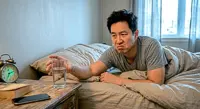
Are you a mouth or nose breather? Mouth breathing could impact your health


The nose is vital for breathing but is often missed out in health articles about respiratory and lung health.

It's time to highlight the role of the nose, especially at this time of a respiratory virus outbreak.

We know that noses are for breathing. Yet, some of us, consciously or unconsciously, also breathe using our mouths.

Many out there breathe through their mouths unknowingly while asleep (with or without snoring). Mouth breathing is a concern because it impairs the delivery of oxygen to our brains and other organs.

There are common misconceptions that certain breathing methods can increase the oxygen amount we breathe in.

Unless you have anaemia, or a severe respiratory or heart condition – your blood oxygen saturation (the amount of oxygen in your red blood cells or RBCs) will always be between 95-99%, no matter how you breathe.

You can easily test this on yourself by using a pulse oximeter found in hospitals.

To ensure oxygen is effectively transported to our brains, muscles and other organs, we need two other gases – nitric oxide and carbon dioxide, as well.

Carbon dioxide is not a waste gas as commonly perceived, for it plays various vital roles to optimise oxygen delivery.

To help illustrate how proper breathing works, let's use Hong Kong movie star, Donnie Yen (of Ip Man fame), who always keeps his mouth closed while fighting.

You won't catch him panting with his mouth open, even after bashing up wave after wave of baddies!

Closed mouth breathing

When Donnie breathes in (through his nose, of course), the airflow is:

  • filtered by his nose hairs
  • slowed down, warmed and humidified, by the nasal turbinates
  • disinfected by the mucus secretions, and
  • further purified by the nitric oxide gas (a potent antimicrobial) released from the paranasal sinuses.

After passing through his nose, the air curves down towards his trachea. The airway prior to the trachea is the pharynx, which faces the back of the tongue.

Donnie's lips are sealed, so his tongue is kept in front and up on his palate. Doing this allows more room for the airflow to pass behind his tongue.Once the air enters the bronchi and bronchioles in the lungs, the nitric oxide in the airflow will widen these air passageways and the blood vessels, allowing greater air and blood flow.

RBCs in the blood vessels passing through Donnie's lungs scoop up the oxygen in his lungs until it is 95-99% saturated with oxygen. The oxygenated blood is then pumped to Donnie's entire body.

Even when he's fighting, you will never catch Donnie Yen (right) breathing through his mouth.

Donnie's closed mouth prevents the excessive escape of carbon dioxide. The retained carbon dioxide in his system:

  • produces bicarbonate and carbonic acid. This alkali and acid balance maintain optimal cellular pH
  • widens his airway passages and blood vessels for optimum air and blood flow
  • stimulates his breathing centre for the optimum rate of inhalations
  • prompts the RBCs upon reaching his brain, muscles, and other organs – to quickly and fully release oxygen into them. This will fuel Donnie's righteous smacking of more baddies.

Higher concentrations of carbon dioxide induce the RBCs to rapidly release oxygen to the organs it reaches. Conversely, lower levels of carbon dioxide make the RBCs reluctant to release oxygen. This is known as the Bohr Effect.

Open mouth breathing

Contrast Donnie with a person who habitually breathes through his or her mouth (consciously or unconsciously, awake or asleep).

Entering through the mouth, the air is not filtered, disinfected, warmed, nor humidified as it travels to the lungs.

Due to the open mouth, the tongue will be lying low and back towards the pharynx.

Thus, the back of the tongue will partially obstruct the airway behind it, leading to lesser airflow. This reduced airflow forces the diaphragm and chest to work harder to cope.

The fast, dirty, cold and dry air, which is an irritant to the lungs, will cause the bronchi and bronchioles to react by squeezing tighter to restrict airflow.

However, the RBCs passing through the lungs will still be able to collect sufficient oxygen (95-99% capacity) from the inhaled air.

Meanwhile, the open mouth results in excessive carbon dioxide escaping.

The decreased carbon dioxide in this person's system then:
  • impairs the production of bicarbonate and carbonic acid, causing an inadequate buffering of cellular pH
  • constricts airway passages and blood vessels, reducing air and blood flow throughout the body
  • insufficiently stimulates the breathing centre, causing faster but shallower inhalations, and
  • makes the RBCs resistant in releasing oxygen to the brain, muscles and other organs.

Therefore, mouth breathing loses the benefits of both nitric oxide and carbon dioxide. As a consequence, the brain and other organs receive less than optimal oxygenation.

All this helps explain why mouth breathing is associated with dry mouth, tooth decay, gum disease, nasal congestion, allergies, asthma, poor sleep, chronic inflammation, high blood pressure, heart disease, diabetes and many other conditions.

Breathing and our jaws

It may sound strange for a dentist to be talking about breathing.

The fact is, the amount of inhaled air that flows through the nose and pharynx before it enters the trachea, is very much related to the width, size and relative positions of our upper and lower jaws.

This is because the roof of our mouths is also the floor of our nose's internal space.

Mouth breathing is associated with dry mouth, tooth decay and gum disease, among other conditions. — AFP
The wider our upper jaws, the broader our nose's interior space, and therefore the bigger the air passage will be. Conversely, people with high narrow palates have narrower spaces inside their nose, and this limits nasal air intake.

Flatter mid-faces and/or smaller chins (usually also having crowded/crooked teeth) mean that the jaws are too small for their tongues.

Since it is less spacious inside these smaller narrower jaws, the tongue will be pushed back into pharynx, leaving less room for airflow.

When we sleep, our tongue relaxes.

For the above folks with smaller airways (that is, less room for airflow), their tongues drop back into the pharynx during deep sleep, either partially or completely blocking the airflow.

This blocked airflow during sleep results in sleep arousals, reducing sleep quality and impacting overall health. This condition is known as a"sleep-related breathing disorder", the most advanced of which is obstructive sleep apnoea.

Trained dentists can help children and adults with these conditions to improve their breathing, sleep, and overall health, by widening or re-positioning their jaws, via non-surgical and surgical methods.

In parting, let me say: keep calm (and your physical/social distance) while breathing (with or without a face mask) with your mouth closed!


Dr Larry Au-Yong is a dentist based in Kuala Lumpur. For more information, email starhealth@thestar.com.my. The information provided is for educational and communication purposes only and it should not be construed as personal medical advice. Information published in this article is not intended to replace, supplant or augment a consultation with a health professional regarding the reader’s own medical care. The Star disclaims all responsibility for any losses, damage to property or personal injury suffered directly or indirectly from reliance on such information.

Get 20% OFF The Star Digital Access

Monthly Plan

RM 13.90/month

RM 11.12/month

Billed as RM 11.12 for the 1st month, RM 13.90 thereafter.

Best Value

Annual Plan

RM 12.33/month

RM 9.87/month

Billed as RM 118.40 for the 1st year, RM 148 thereafter.

Follow us on our official WhatsApp channel for breaking news alerts and key updates!

Next In Health

Can our bodies adapt to heatwaves?�
When water takes lives�
What is a head spa?
How elections can affect our emotions
Nutrition during the golden years�
When you're trapped by an earthquake
No, creatine won't make you go bald
Doctors, please treat the woman, not just her cancer
Rabies reemerges in Europe due to disruptions in wildlife vaccinations
Pack these essentials when you're working out outdoors

Others Also Read