5 pancakes that are totally Malaysian


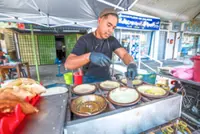
A fresh batch of lempengs being fried up at D Cengkih, which serves up delicious lempeng kelapa and lempeng pisang. - D Cengkih

A pancake is different things to different people. In America, pancakes are thick and fluffy discs made with flour, butter, eggs, milk and sugar, eaten drizzled with maple syrup or honey and a smear of butter or cream. The French equivalent is a paper-thin crepe, made with more or less the same ingredients, and enjoyed with orange sauce.

In Malaysia, the pancake foodscape is much more interesting. What can be termed a “pancake” comes in all shapes, sizes, textures, colours and flavours, both sweet and savoury. Some are infused with pandan, others are similar to crepes and some look a little more like bread – think roti canai and murtabak. Truly, we live in pancake paradise. Pancake Day, generally considered to be Feb 28, should be a national holiday! Let’s fete our totally uniquely, local pancakes; featured here are five of our most iconic.

Apam balik

The delicious apam balik sold in Menglembu.
A crispy appam balik or ban chien kuih.

The most popular (and ubiquitous) pancake on the list, apam balik (also known as ban chien kuih) is made from flour, eggs, sugar, baking soda, coconut milk and water. The pancake is cooked on a hot frying pan with lots of margarine or butter. Then a filling of crushed peanuts and sugar is added (sometimes sweetcorn is a feature too) and the pancake is folded over – hence its name – and cut into pieces. There are two variants of this pancake – one is a thick, dense version that is rich and fluffy and the other is a thin offering that is crispy and crusty. Both varieties offer mouthfuls of crunchy nuts and a buttery taste. Apam balik is so integral to the fabric of Malaysian cuisine, it has been added to Jabatan Warisan Negara’s list of heritage foods. One of the most popular apam balik stalls in Kuala Lumpur is Apam Balik Nusantara in Kampung Baru, which is run by Indonesian Edrian Edward. Edward regularly whips up all sorts of funky-flavoured apam balik, including his famous durian cheese apam balik and banana chocolate apam balik.

Appam

Gula Melaka desiccated coconut poached in coconut milk appam.

Hoppers features an array of innovative appams, including this nasi lemak inspired one. Photo: The Star/Darran Tan
Hoppers features an array of innovative appams, including this nasi lemak inspired one.

An Indian delight made from fermented rice batter and coconut milk, also known as hoppers. Cooked in a tiny wok called an appam chatti, it takes the shape of the pan. The batter pools at the bottom of the pan to form a moist and spongy centre and wispy thin, lace-like fringes. Traditionally, appam is made by soaking rice overnight and grinding it into a smooth batter with other ingredients like cooked rice and coconut milk. The age-old way of fermenting it is with the use of toddy (a fermented palm alcohol), but this can be substituted with yeast. For a taste of modern Indian appam, try Hoppers in Pudu, a colonial-style eatery run by sisters Nishalni and Sugania Naidu, who serve up all sorts of appams, including a nasi-lemak inspired one!

Roti jala

Velvety soft and delicious, roti jala or lace pancakes are best served with chicken curry on the side.

Roti jala is usually served with a chicken curry and constitutes a savoury food. With its rich taste and bright yellow colour derived from turmeric, roti jala is sumptuous enough for the festive table. It can be a snack or a meal unto its own. The lacy, net-like pancake gets its look by the way batter is applied on the hot pan – dribbled down using a receptacle with spouts. Think of a watering can. Traditionally, the whole hand is dipped in batter and then allowed to drip over the pan while making circular movements. The delicate net can be folded or rolled. Texture-wise, roti jala is deliciously velvety and soft. Limapulo: Baba Can Cook in Jalan Doraisamy serves up a mean rendition of roti jala and chicken curry, based on septuagenarian Uncle John’s recipe. As it is made fresh every day, the eatery only serves between 12 to 20 sets of roti jala daily, so it’s best to get there early.

Kuih dadar/ketayap

Infused with pandan, kuih ketayap is a long green crepe filled with grated coconut and palm sugar.

This popular tea-time snack seduces with its heady scent of coconut, palm sugar and pandan perfume. It’s basically a crepe rolled up with a filling of palm sugar and grated coconut. A thin crepe is made by stirring flour together with egg, coconut milk and pandan juice – adding a pinch of salt gives it that desirable salty contrast with the sweet filling. For a taste of authentic kuih ketayap, head to Tasty Kuih Nyonya in Klang, a family-run enterprise that has been around since 1979 and makes delicious kuih. Go early (the place opens at noon), as queues sometimes form and the kuih ketayap can run out quickly.

Lempeng

Lempeng is a traditional Malay pancake that can include coconut, bananas or palm sugar.

A simple Malay pancake made from wheat flour, water, eggs, sugar and salt. The ingredients are mixed and pan-fried. Modern incarnations of lempeng include versions like lempeng pisang (with banana), lempeng gula Melaka (with palm sugar) and lempeng kelapa (with coconut). Lempengs are probably the closest local relatives of Western pancakes, in terms of shape and flavour. D’ Cengkih, a Malay restaurant in Taman Tun Dr Ismail in Kuala Lumpur, does a great rendition of lempeng kelapa and lempeng pisang, based on owner Kak Tipah’s own recipe.

Looking to order your favourite cake online and have it delivered to your door step?

If you are, check out www.eatcaketoday.com

Get 20% OFF The Star Digital Access

Monthly Plan

RM 13.90/month

RM 11.12/month

Billed as RM 11.12 for the 1st month, RM 13.90 thereafter.

Best Value

Annual Plan

RM 12.33/month

RM 9.87/month

Billed as RM 118.40 for the 1st year, RM 148 thereafter.

Follow us on our official WhatsApp channel for breaking news alerts and key updates!

Others Also Read