He came in search of support for his radical ideas and left a legacy that resonates to this day.
AMONG the enormous portraits of revered leaders that hang in Tiananmen Square in Beijing is one of Dr Sun Yat-sen. Even the Communist Party that eventually put paid to his vision of a republic acknowledges him as the Father of Modern China. This is, after all, the man who sparked events that led to the overthrow of the Manchurian-led Qing Dynasty and the eventual creation of the China we know today.
He’s a huge figure in China’s history – and his shadow touches Malaysian history, too.
In fact, a teacher who eventually settled down in Malaya could have started a young Sun on his revolutionary journey when he became Dr Sun’s tutor and befriended him.
An educationist named Too Nam (1853-1939) living in Shunde, Guangdong Province, had been teaching Westerners Cantonese and working on romanising Cantonese pronunciation. In 1878, he left China and moved to Honolulu to teach Cantonese there. A year later, a 12-year-old Sun arrived on the island to live with elder brother Sun Mei and study English. The studious young man wanted to further improve his language skills and was introduced to Too for private tuition at night. Their teacher-student relationship lasted from 1879 to 1883.
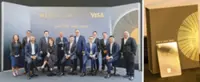
This intriguing bit of history came to light during a dialogue and sharing session held at the Selangor Assembly Hall on July 27 that brought together local descendants of overseas Chinese who had assisted Dr Sun in his endeavours.
Among the session’s participants was 87-year-old retired physician Dr Too Chi Cheong, Too’s grandson. He explained that the family didn’t know about his grandfather’s links to China’s revolution until a book written by peers was launched at a memorial service a year after he died; inside, there was a chapter on his grandfather’s early days of revolutionary contributions and his friendship with Dr Sun.
“My grandfather, who was in his mid 20s then, had revolution on his mind, and he joined a secret society called Tongmenghui in Honolulu that wanted to overthrow the Manchurian government in China. We believe my grandfather inadvertently planted some revolutionary seeds in the young Sun,” says Dr Too.
(Tongmenghui, or the United Allegiance Society, also known as the Chinese Revolutionary Alliance, was a secret society organised by Dr Sun in 1905.)
“They kept in touch after leaving Honolulu. They were already more than just teacher and student, as both shared the same ideas on revolution and establishing a new China. And both of them happened to be on the Manchurian government’s wanted list!”
In 1889, Too left China permanently, and lived in Vietnam for a short while before settling down in Kuala Lumpur.
In 1905, when Sun came to Malaya, his former tutor Too helped to arrange a large recruitment and fund-raising drive for the revolution that was looming. Crucially, Too also got permission from the colonial government’s Chinese Affairs Officer for Dr Sun to hold a public talk.
The historic talk was held was at an old theatre named Da Zhong Hua on Jalan Sultan in Kuala Lumpur (it was torn down during World War II and, later, Rex Cinema was built on the site).
Too took along his two sons (the youngest of whom became Dr Too’s father) to the talk that resonated among many Malayan Chinese. Being the deputy chairman of the Selangor Youth Association, Too also helped to shelter Dr Sun by accommodating him in the library of the association’s premises.
“While my grandfather came to Nanyang, Dr Sun went to many countries overseas to garner support for his revolution,” adds Dr Too. (Nanyang is, literally, “southern ocean”, and generally refers to the geographical region south of China, particularly South-East Asia where many Chinese settled.)
Historical roots
Indeed, Dr Sun had supporters far beyond mainland China at the turn of the last century, and many donated money to his cause. In fact, the support from the Chinese in South-East Asia was so important to his efforts that Dr Sun himself famously paid tribute by calling the Chinese diaspora here “the mother of the revolution”.
With the support of this group, Dr Sun funded the Huanghuagang Uprising on April 27, 1911, in Guangzhou province. While that attempt failed to overthrow the government, it was a precursor to the Xinhai Revolution – also known as the 1911 Revolution – which began with the Wuchang Uprising on Oct 10, 1911, in the city of that name in Hubei province. That was the incident that snowballed into a general revolution that ended with the creation of the Republic of China in 1912.
Dr Sun actually met with other leading revolutionaries from China in Malaya to begin planning that April incident.
He had first come to Malaya in 1905 on a mission to propagate his revolutionary ideals and, thus, was familiar with the country and the large overseas Chinese population here. And it was here that, on Nov 13, 1910, he held the Penang Conference that launched the 1911 Huanghuagang Uprising, which in turn persuaded many people to throw their weight behind the revolutionaries, thus helping to enable the later successful Wuchang Uprising.
Following that crucial conference, Dr Sun moved his overseas revolutionary base to Penang.
He had already been travelling in the region for several years by that time, spreading his revolutionary message and urging overseas Chinese living in Indonesia, Malaya and Singapore to set up local chapters of the Tongmenghui.
Many Malayan Chinese joined the secret society and, by 1910, there were over 20 branches in Malaya (and more than 3,000 around the rest of the world).
“Without Dr Sun Yat-sen and the efforts of our forefathers, the present generation might not be enjoying the life they have today. Therefore, it’s very important to remember them. But sadly, many youngsters do not know much about Dr Sun and the history of the revolution,” says Lim Chiew Ah, president of the Sun Yat-sen Society Malaysia.
To commemorate the centenary anniversary of the April 27 Huanghuagang Uprising, the Penang branch of the society had organised an international symposium there on the island in March this year. Subsequently, in June, the society conducted a dialogue with local scholars on the topic of “Sun’s Impact on Straits Malaya” in Johor Baru, Kuala Lumpur and Penang.
Among those impacts is the beginnings of the education of the Chinese in Malaya. As Lim points out, while Dr Sun’s presence here may been solely for political reasons and his creation of the Kwong Wah Yit Poh newspaper in Penang was for propaganda purposes, he did in fact create the first reading material that most of the Chinese community could access. And after his time here, many vernacular schools were established throughout Malaya.
Participants at the talks recognised the significance of Dr Sun’s impact on Malaysian Chinese but they also unanimously shared the view that that impact is still not recorded well, and that there isn’t enough information on the contributions of the Malayan Chinese revolutionaries and the roles they played – “Much remains to be re-examined and researched,” says Lim.
As this year is also the 100th anniversary of the successful Wuchang Uprising (on Oct 10, 1911), the most important turning point in China’s history, a group of scholars, media representatives and students from Guangdong have embarked on a “revolutionary journey” to retrace the paths of Dr Sun and their forefathers.
Under the theme “Travelling The Road Of The Xinhai Revolution To Inherit The Legendary Spirit”, a series of trips, activities and dialogues was co-organised by the Guangdong Sun Yat-sen Foundation, Guangzhou Television Station, and the Yangcheng Evening News newspaper.
After travelling Dr Sun’s revolutionary roads in China, Taiwan and Hong Kong, a group comprising researchers, lecturers and students from five universities in Guangzhou embarked on the Nanyang route to Malaysia and Singapore.
Lim and the Sun Yat-sen Society Malaysia helped to coordinate their five-day trip here visiting Penang, Kuala Lumpur, Malacca and Johor.
In Kuala Lumpur, a dialogue and sharing session was held at the Selangor Assembly Hall on July 27 that gave the participants the chance to meet some of the local descendants of Dr Sun’s comrades in revolution.
Grandfather’s stories
It was at this session that we heard Dr Too’s fascinating story about his grandfather, Too Nam, and his connection with Dr Sun.
Another “revolutionary forefather” from KL, Chan Chim Mooi (1875-1944) was also a recognised leader and ardent supporter of Dr Sun, both in ideological and monetary terms. Chim Mooi also hailed from Shunde in Guangdong and settled in KL at the age of 17. Eight years later, he ventured into the tin mining business and became a successful and wealthy businessman.
His granddaughter, Chan Sook Ching, 76, recalls that her grandfather had very patriotic feelings about China then, and never hesitated to volunteer his services or make financial donations for the cause of the revolution.
In fact, Chim Mooi had been following in the footsteps of his ancestors, who had also been revolutionaries; he never left the nationalist Kuomintang party established in China after the 1911 Revolution, and was an ardent follower of Dr Sun till the day he died.
Chan says, “When I was young, I remember grandpa always talked about the revolution and about Sun Yat-Sen and his revolutionary spirit and ideology.”
Chim Mooi had 10 children and Chan was the only daughter of the eldest boy.
“My grandfather always held dear the ideal of a better China that was not under Qing Dynasty rule, so he was very generous in donating money towards the revolution,” she says.
After the government in China was successfully overthrown, many Chinese in Malaya and Singapore cut off their queues (the braided hairstyle that the Manchurians imposed on all Chinese men under their rule); being among Dr Sun’s most ardent supporters, Chim Mooi was the first in KL to cut his off.
Chan says she remembers that her grandfather taught all the children in the family to sing patriotic songs. “He also made sure that we all studied Chinese and made Chinese our mother tongue,” she says.
Inspired by Dr Sun, Chim Mooi also made significant contributions to Chinese education in Malaya, being one of the founders of the long-standing Kuan Cheng Chinese Primary School in KL.
Another speaker at the session, Woo Min Fong, says she had been surprised to discover only a month ago that her grandfather, Woo Hui Tang (1877-1956), had been a revolutionary who knew and had supported Dr Sun.
“It was really a surprise when my sister read in a Chinese newspapers that my grandfather was one of the supporters of the Chinese revolution. He had never talked about that part of his life to his children and grandchildren,” says Woo, 65; her father was Hui Tang’s youngest son.
Hui Tang came from Guangdong to Malaya when he was 18 and learnt traditional Chinese medicine. In his 30s, he went to Johor Baru and set up as a Chinese physician. It is believed that Hui Tang joined the Tongmenghui when he had been in Penang for a short time.
“I think he kept everything low key and did not tell us about it because he wanted to protect us,” says Woo.
Loke Wai Yoong’s grandfather was also involved in Dr Sun’s secret society and helped begin the chapter in KL. Loke Chow Thye (1871-1931) – the younger brother of tycoon Loke Chow Kit – was born in Penang; he learned English in Penang Free School and was a life member of the London National Liberal Club.
Loke, 74, says that Chow Thye died before he was born but that he was informed of his grandfather’s life by an aunt. One thing the family is certain of is that Chow Thye was a founding member of the Tongmenghui chapter in KL and was very active in supporting revolutionary work.
The delegates from China also travelled to Malacca to visit the descendant of an important revolutionary figure: Sim Hong Peck was the president of Tongmenghui Malacca and knew Dr Sun quite well, having met him several times.
“My grandfather came from Guangdong to Malaya when he was 20 and, after working with a relative on a plantation, he established his own business in Malacca,” says Sim Beck Ghee, 73, a retired journalist.
Although he had made a new life in Malaya, Hong Peck had always been unhappy that corruption was rife in the Qing government and causing much hardship and poverty among the Chinese people in his motherland. Even before he met Dr Sun, he had already formed his own group of 17 like-minded workers who shared his ideas about a revolution.
When Dr Sun came to establish a chapter of the Tongmenghui in Singapore, he took the time to travel to Malacca to meet with Hong Peck, who he had heard of. A branch of the secret society was set up in Malacca with Hong Peck as president. Hong Peck was one of the Malayans who travelled to China to attend Dr Sun’s funeral in 1925.
According to Sim, as fund-raising was Dr Sun’s priority on his journeys to the Nanyang, his grandfather put his whole heart and soul into helping the man collect the money.
“Although he was not rich himself, my grandfather contributed so much before and after 1911. In fact, he ended up broke because he spent all his money to help some revolutionaries escape from China to Malacca.
“He did not leave us money but I’m very proud of him,” says Sim of his grandfather, who was also a passionate educationist who co-founded three Chinese schools in Malacca.
To Prof Song De Hua from the South China Agricultural University, Dr Sun’s impact in South-East Asia is undeniable. It was the revolutionary doctor’s loyal and altruistic characteristics that had, to a certain extent, moulded the cultural and educational patterns of Malaysia’s Chinese community that endures till today.
“We hope the younger generation today will continue to spread the spirit and legacy of the altruistic Sun Yat-Sen to benefit Malaysia,” he says.
The Sun Yat-Sen Society Malaysia is compiling a book entitled The Centennial Celebration Of The Penang Conference And 100th Anniversary Of The 1911 Chinese Revolution In Malaysia. The society hopes to include information from the descendants of Dr Sun’s revolutionary comrades in Malaya. If you have any such information, e-mail kkenny888@gmail.com or pgsyss@gmail.com.
Already a subscriber? Log in
Get 20% OFF The Star Digital Access
Cancel anytime. Ad-free. Unlimited access with perks.