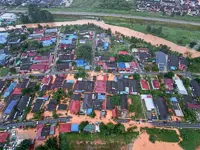
In the past two weeks, there have been many heroic stories shared online: Abang Viva, a young man who drove up to Selangor from Melaka with a boat strapped on top of his Perodua Viva to help evacuate victims; convoys of drivers from the North of the peninsula who drove south, with boats or rafts, to repay the kindness of Malaysians who helped when Kedah was flooded earlier this year as well as countless other Malaysians who’ve braved the floods to help.
In the midst of this devastating crisis, the Malaysian spirit of “kita jaga kita”, once again, emerged in full force with Malaysians coming out in droves to help each other.
In the immediate response to the floods there were Malaysians and NGOs helping to evacuate families, rescue stranded animals and bring food to those who were stranded and waiting to be rescued. Some had to wait for two days or more to be evacuated and taken to a safe place.
In the aftermath, thousands more Malaysians have come forward to lend a hand, either by helping NGOs in their relief efforts, donating cash or kind and even going into the flood-hit areas to help the victims with their clean-up.
There are also teams of mental health professionals who have been going into the affected areas to help the victims cope with the devastation they have faced.
“It is simply amazing how so many Malaysians of all races and religions have come forward to help those in need,” says president of the Gurdwara Sahib Petaling Jaya, Awtar Singh Terry.
The Gurdwara’s members were among the first respondents on the ground after floodwaters started to rise in Selangor last Saturday evening.
“We got a distress call from one of the Gurdwara’s members in a flood-hit area at around 10pm on Saturday, saying that the waters were rising and that they required help to get holy scriptures to safety. So we dispatched a team there just before midnight on Saturday. “The group of youngsters who responded to the call then decided, since the waters were still rising, to mobilise the next morning and start preparing food for those who may be affected by the floods.

“Most Gurdwaras worldwide have the capacity to prepare food in large quantities... for up to 40,000 to 50,000 pax per day. So, since we had the infrastructure it was not a problem for us to do it. So, early Sunday morning, we started preparing simple (vegetarian) food that would be palatable to everyone – fried rice and also rice with sambal.
“In the beginning, it was just our Sikh youngsters who were volunteering. But, after we put our efforts out on social media and called for volunteers, we received a really overwhelming response from the public. On the first day itself, we prepared more than 15,000 packs of meals.
“People with trucks and 4WD kept on coming every day subsequently... it was amazing to see people of all religions and races coming into the Gurdwara, helping to cut the vegetables and prepare the meals. Some people cancelled their holidays, some came after work, some took half-day leave from their work and others were already on annual leave but spent their time volunteering.
“There were easily thousands of volunteers, from all walks of life, each day,” he shares, thanking everyone who volunteered their time or donated to the cause.
Apart from preparing food, the Gurdawa also started collecting and distributing dry rations to the flood victims in affected areas not just in Selangor but also in Pahang.
“In the next phase, we will identify families in need and maybe distribute monetary aid and provide household items which they would need,” says Awtar Singh.
Much more to be done
Over in Mentakab, Pahang, Mokham Singh from United Sikhs Malaysia has been busy helping to co-ordinate relief efforts for flood victims in the state.
He drove up about a week ago, after many areas in Pahang were badly hit by the floods. In Mentakab, waters rose to almost nine or 10 feet high leaving many displaced and much destruction. Many other areas were also submerged and hit hard.
“We have trucks coming from KL every day and teams of volunteers coming up to help with the clean-up and distribution of rations.
“The people of Mentakab and surrounding areas have also been coming to help and it has been a good team effort.
“Today (Tuesday) we are heading to Bera to distribute aid to the Orang Asli communities who have also been badly hit,” he says, adding that Malaysians have, once again, shown that they are ready to come forward and help others in need.
“We noticed this also when we helped during the White Flag movement and also when Covid-19 cases were high and people donated oxygen concentrators to patients who were really sick. People from all walks of live, of all races, just came out to help,” he says.
But more than just aid and help in the post-flood clean-up, there needs to be medical aid at the flood-hit areas too, says Gurpreet Singh, president of youth NGO Gerakan Belia Punjabi Malaysia (GBSM). He says that many volunteers have been down with diarrhea after going out to the flood-stricken areas.
“Some are even showing symptoms of leptospirosis and we are getting that looked at. The flood-hit areas are a breeding ground for a lot of diseases and I suggest that the Health Ministry takes serious note of this and sets up a health post in these places.
“I think they should be giving out vaccines for leptospirosis and even tetanus. The situation isn’t good,” he says, adding that GBSM has been working with the Malaysian Youth Council as well as Gurdwaras in their relief efforts first in Taman Sri Muda and then in Hulu Langat.
“Because the Youth Council already had a plan, we could join in and get things done. We are also working with the Gurdwara in Shah Alam and we have received help from many groups.
“We are just a cog in the wheel but GBSM has been lucky to get volunteers of all races, not just Punjabis and Sikhs, by reaching out on social media,” he says.
Even though it’s been about a week since floods hit Pahang, the situation is still dire, he notes.
“The situation here is very, very bad. We saw fridges on top of kitchen cabinets, homes destroyed, and about one foot of mud in many of the houses.
“There was a couple I met, a lorry driver and his wife, who were just sitting outside their home. He had a look of total dismay and he couldn’t even string a sentence together because he was just so devastated. Then there was another man who’d sent his wife and kids away to safety and was cleaning the mess in his house all on his own.
“The whole area is a mess. The already narrow roads are now filled with mountains of things and possessions that had to be thrown away.
“It is a massive task and we can only do it one house at a time. At the most, we can clean only about five houses a day because the work is tiring, we are carrying things, big items that are water-soaked and really heavy,” he shares.
Never again
For those who have been hit by the floods and even those who have seen the carnage of the floods, the one thing that’s clear is that a tragedy like this must never happen again.
“Why did this happen?” asks volunteer Nor Ashikin Ahmad, who mobilised her friends and family to contribute dry goods and food to flood victims in a few areas in Selangor.
“Floods are not a new phenomenon in Malaysia. So how can something so bad like this happen. I think it’s time we have a proper SOP for flood prevention and flood response so that a tragedy like this doesn’t ever happen in this magnitude,” she says.
Gurmeet too wants “the hard questions asked and answered”.
“Who is going to be accountable for this? We’ve not seen anyone ask the big questions: Why did it happen? Why was it so bad? How could we have prevented it from happening. I think the rakyat need to get the answers to these questions,” he concludes.
Already a subscriber? Log in
Get 20% OFF The Star Digital Access
Cancel anytime. Ad-free. Unlimited access with perks.