Is video chat causing a 'Zoom boom' in facial cosmetic surgery?


By AGENCY
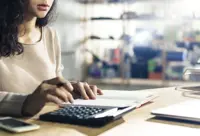
Unlike in real-world conversations, where we don't see our faces, let alone compare them to those of others, in Zoom we are constantly shown what we look like. Photo: Unsplash/CHRIS MONTHOMERY

Never before have we spent this much time looking at our faces. Video conferencing platforms used during the pandemic have left millions examining their wrinkles, leading many to consider surgery.

But what is it about Zoom that's different to mirrors or selfies?

Since the first lockdowns of March 2020, cosmetic surgery specialists have been reporting a dramatic rise in requests for minor facial procedures in the wake of the global shift to remote working.

The way we perceive our own face in video chat programmes like Zoom is typically more negative than our the mirror image, says Joerg Blesse, who heads the annual conference of the German Society for Aesthetic Plastic Surgery (DGAePC).

He's one of many surgeons around the world who linked a surge in demand for facial procedures this year and last to the rise of Zoom and other video conferencing tools as millions were asked to work from home during lockdown.

In Britain, in the weeks after the first lockdowns of 2020, the British Association of Aesthetic Plastic Surgeons (BAAPS) was already forecasting a "Zoom Boom" during the pandemic and noting a 33% rise in men and 66% rise in younger women seeking virtual consultations about plastic surgery.

In the US, 64% of plastic surgeries were reporting an increase in their telemedicine consultations by June 2020.

The trend appears to be continuing and according to a 2021 survey of DGAePC patients in Germany, procedures to beautify the face without major incisions - like operations to have the eyelids tightened - are much more in demand in 2021 than in previous years.

This is also evident in the statistics of the country's largest professional society, the Association of German Aesthetic Plastic Surgeons (VDAePC).

So what it is about Zoom that's makes people all over the planet want to change their faces?

"Many then think to themselves: 'Oh, that's me there'," says Blesse and then focus on their face during much of a meeting.

But the way we look at our faces in Zoom is also different to the way we see ourselves in the mirror or take selfies with our phones, researchers say.

"Unlike the still and filtered selfies of social media, Zoom displays an unedited version of oneself in motion, a self-depiction very few people are used to seeing on a daily basis," write the authors of a November 2020 study on the impact of Zoom on self-perception.

Unlike in real-world conversations, where we don't see our faces, let alone compare them to those of others, in Zoom we are constantly shown what we look like.

"This may have drastic effects on body dissatisfaction and desire to seek cosmetic procedures," say the authors of the paper, published in Facial Plastic Surgery & Aesthetic Medicine.

"In addition, cameras can distort video quality and create an inaccurate representation of true appearance," authors Shauna M. Rice, Emmy Graber and Arianne Shadi Kourosh write, noting that the size of a nose can be distorted by different lenses and their distance from the subject.

"Webcams, inevitably recording at shorter focal lengths, tend to produce an overall more rounded face, wider set eyes and broader nose."

 What you might see as wrinkly or tired-looking eyes can lead you to perceive yourself as sad or tired as a result, researchers say. Photo: Unsplash/PERI STOJNIC
What you might see as wrinkly or tired-looking eyes can lead you to perceive yourself as sad or tired as a result, researchers say. Photo: Unsplash/PERI STOJNIC
Not only that, but the person confronted with their own face at length during online meetings can also be emotionally impacted by what they see in themselves. What you might see as wrinkly or tired-looking eyes can lead you to perceive yourself as sad or tired as a result, the researchers write.

We shouldn't attribute the rise in cosmetic surgery entirely to video chat however, and Blesse notes that the obligation to wear a mask has also drawn more attention towards the eyes.

In any case, the rise in minor facial procedures due to a more intensive preoccupation with self-image is also worrying many specialists in Germany.

For more and more people, the threshold for such minimally invasive procedures is much lower than for more complex operations, says Harald Kaisers, president of surgeon association DGAePC.

"We are particularly critical of the presentation of such aesthetic plastic treatments on social media. There is a lot of information, but not explanation."

Influencers on platforms such as Instagram, who present such treatments as a lifestyle product and not as a medical intervention, also contribute to this.

Those who want to have Botox or hyaluronic acid injected do not necessarily have to consult a specialist. Such "filler materials" against wrinkles are medical products, VDAePC President Steffen Handstein says.

"Anyone can purchase them. It's quite a bizarre situation. There are many places that can do it legally, although they could not treat possible complications."

On platforms like YouTube, there are even video instructions to inject yourself with hyaluronic acid, says Kaisers. "You can go blind if you inject it incorrectly."

The two associations are therefore calling for greater restrictions on the business of such treatments. "This belongs in the hands of specialists," Kaisers said, stressing that the trend towards such minor interventions is likely to continue even after the pandemic. - dpa

Get 20% OFF The Star Digital Access

Monthly Plan

RM 13.90/month

RM 11.12/month

Billed as RM 11.12 for the 1st month, RM 13.90 thereafter.

Best Value

Annual Plan

RM 12.33/month

RM 9.87/month

Billed as RM 118.40 for the 1st year, RM 148 thereafter.

Follow us on our official WhatsApp channel for breaking news alerts and key updates!
pandemic , zoom , beauty , face

Next In Family

Report: In the US, more families now have both parents working full-time
If your baby has a hard time breastfeeding, it might be because of tongue-tie
How this retired Malaysian transformed his grief into an adventure for good
These dads are experiencing a shift in fatherhood as new norms take place
Study suggests women who do strength training will live a longer, healthier life
Are we failing neglected seniors in Malaysia?
It's time for parents to adopt these Japanese child upbringing approaches
Families in Sri Lanka are bearing the cost of the Middle East conflict
Why parents should step back and allow kids learn on their own
Helping single mothers get back on their feet

Others Also Read