



Nearly 50 years ago, a prima donna pig made her first appearance on The Muppet Show and quickly became its breakout star. Within a few years, she was a sought-after Hollywood celebrity, a pinup model and the author of a bestselling book.
Well, Miss Piggy is ready for her close-up once again. Jennifer Lawrence, Emma Stone and Cole Escola are developing a movie for the character. And a new Muppet Show special is available on Disney+. Piggy is front and centre in that special, making snidely aristocratic remarks in a Regency-era sketch, hijacking Kermit’s duet with Sabrina Carpenter and “giving the people what they truly want: moi”.
For Eric Jacobson, playing a glamorous pig has been the role of a lifetime. In recent decades, he has become the lead voice and puppeteer behind several instantly recognisable Muppets, among them Bert, Grover and Oscar the Grouch on Sesame Street and Fozzie Bear. But when it comes to aura and cultural significance, he said in a recent phone interview, “Miss Piggy’s on another magnitude, as she would tell you herself.”
It wasn’t always the case. An early version of Piggy appeared as a minor player in one of Jim Henson’s failed Muppet television pilots, which aired in March 1975. The puppet was designed and constructed by Bonnie Erickson, who had fond childhood memories of chasing piglets for her pig farmer uncle.
“Jim knew that story,” Erickson said. “It must have been why he chose me to do it.”
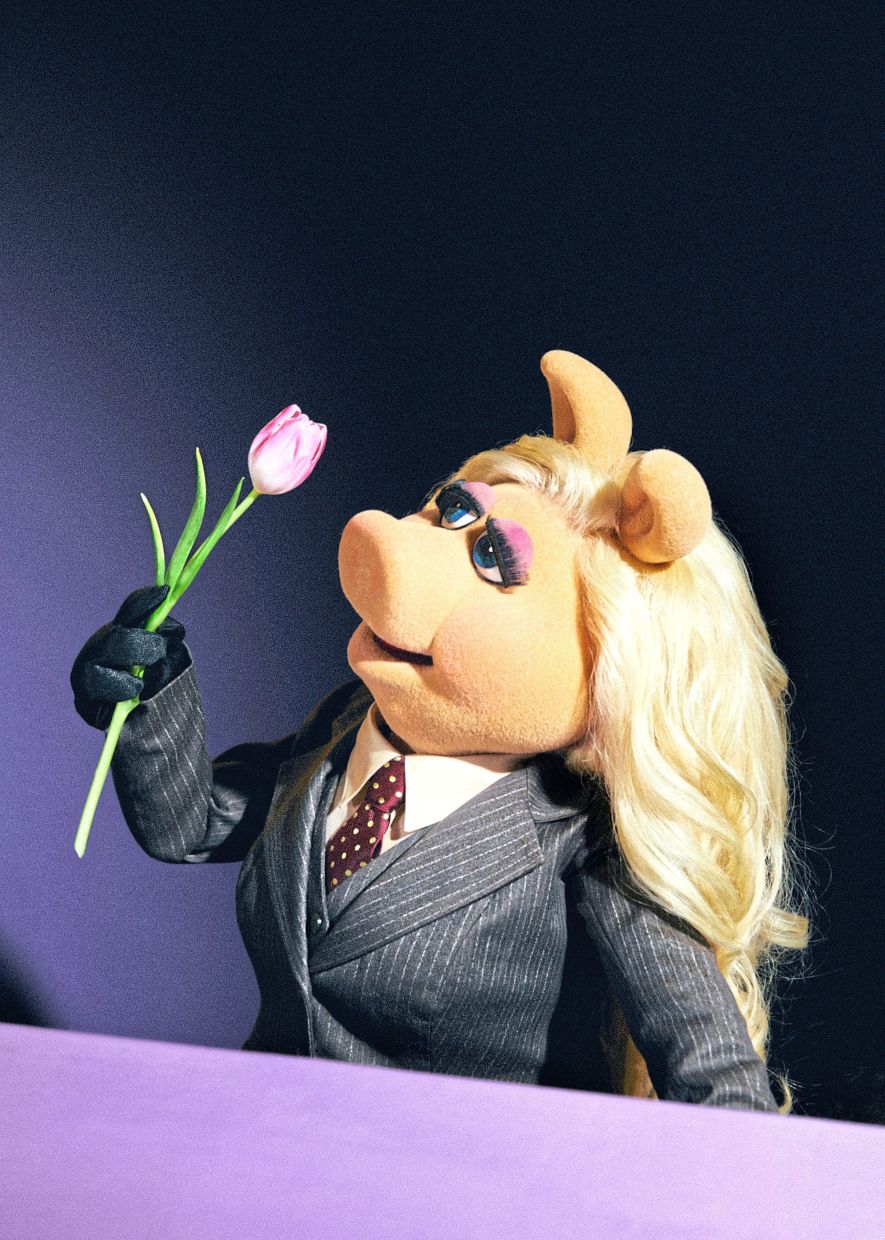
Over a few weeks, Erickson carved the pig out of a 1-foot cube of soft foam using nail scissors, then used a belt sander to smooth the contours and curves. Crucially, by the time The Muppet Show premiered in September 1976, she had infused her creation with something extra: Piggy became the only major Muppet to get eyes with irises. The pupils even have highlights.
“I wanted her to have eyes that were expressive, that looked real,” Erickson said.
A sow in opera gloves would have been a decent gag in itself, but it soon became clear that the character was destined for greater things. In rehearsal, a script specified that she deliver a mere slap, but puppeteer Frank Oz instead had Piggy execute a swift karate chop — preceded by a full-torso windup and accompanied by a “Hiii-yah!” — that sent Kermit flying. Miss Piggy was born. (She was named Piggy Lee in honour of Peggy Lee, Erickson said, until an attorney advised a name change.)
Oz went on to devise an elaborate backstory for the character involving the loss of her father in a tragic tractor accident and a fraught mother-daughter relationship. His voice for Piggy alternated between a dainty coo and a withering growl that recalled Bette Davis in All About Eve.
Piggy was deeply insecure yet utterly convinced of her own star quality, girlish and refined but occasionally compelled to, say, maul Florence Henderson in a jealous rage. She was desperately in love with a frog who didn’t feel the same way.
With the critical and commercial success of The Muppet Movie (1979), the Muppets ascended to a new level of cultural prominence. And Piggy’s dreams of superstardom became reality.
In 1980, dubbed “The Year of the Piggy” by TV Guide, there were cover stories, crackling with porcine wordplay, in Life magazine (A Sweet Sow For All Seasons) and People (“the acme of porkitude”). That year brought the first in a series of Piggy calendars too.
Then there was the 1981 bestseller Miss Piggy’s Guide To Life, written by Henry Beard. There was a Miss Piggy television special and an aerobic workout album.
The new Muppet Show special has Kermit, Miss Piggy and the whole furry, felted company return to the variety show format of the original, with an array of cheerfully bonkers acts, that irresistible theme tune and chaos behind the scenes.
There’s a lot of responsibility in helping bring Miss Piggy to the screen,” director Alex Timbers said. “She has impacted generations of fans, writers and comedians. People love and adore her.” - ©2026 The New York Times Company
