

"Storytelling is magic,” Jason Isaacs said. “It’s sleight of hand, it’s delivering a surprise ending that people don’t see coming.”
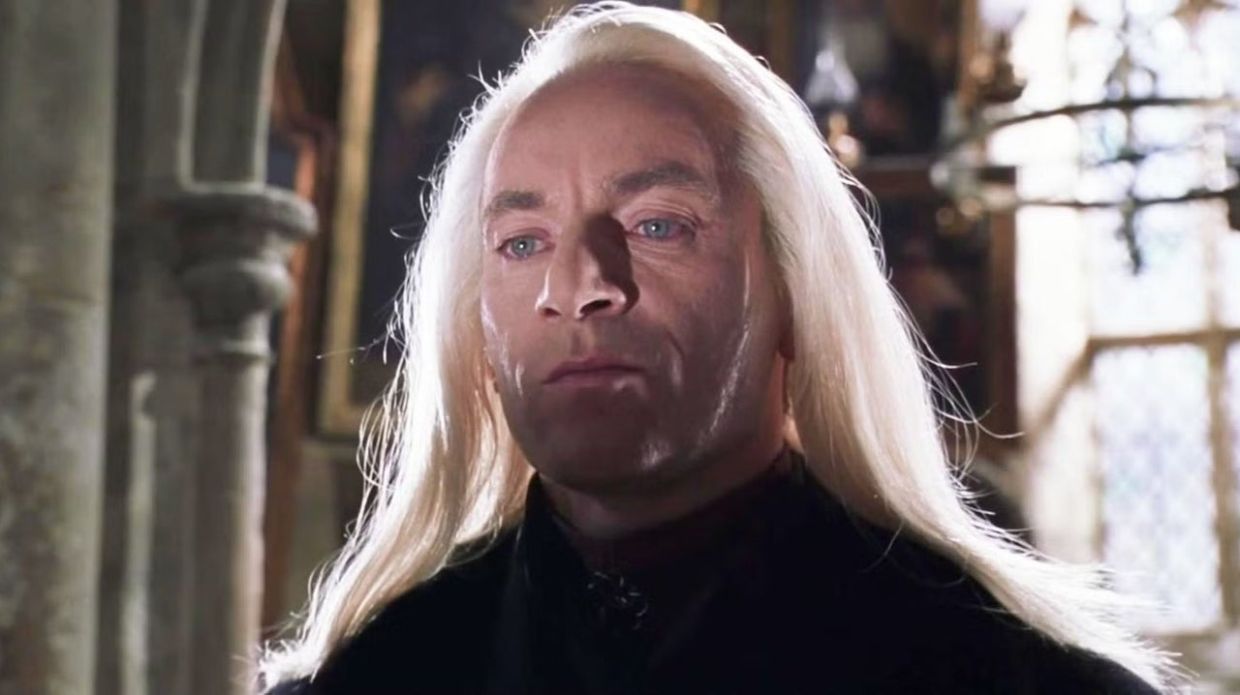
Isaacs, 61, best known for playing villains in The Patriot, Peter Pan and the Harry Potter films, was speaking via video call a few days before The White Lotus Season Three finale. A keen amateur magician, he had already performed a couple of onscreen card tricks. His work on The White Lotus is also a kind of conjuration.
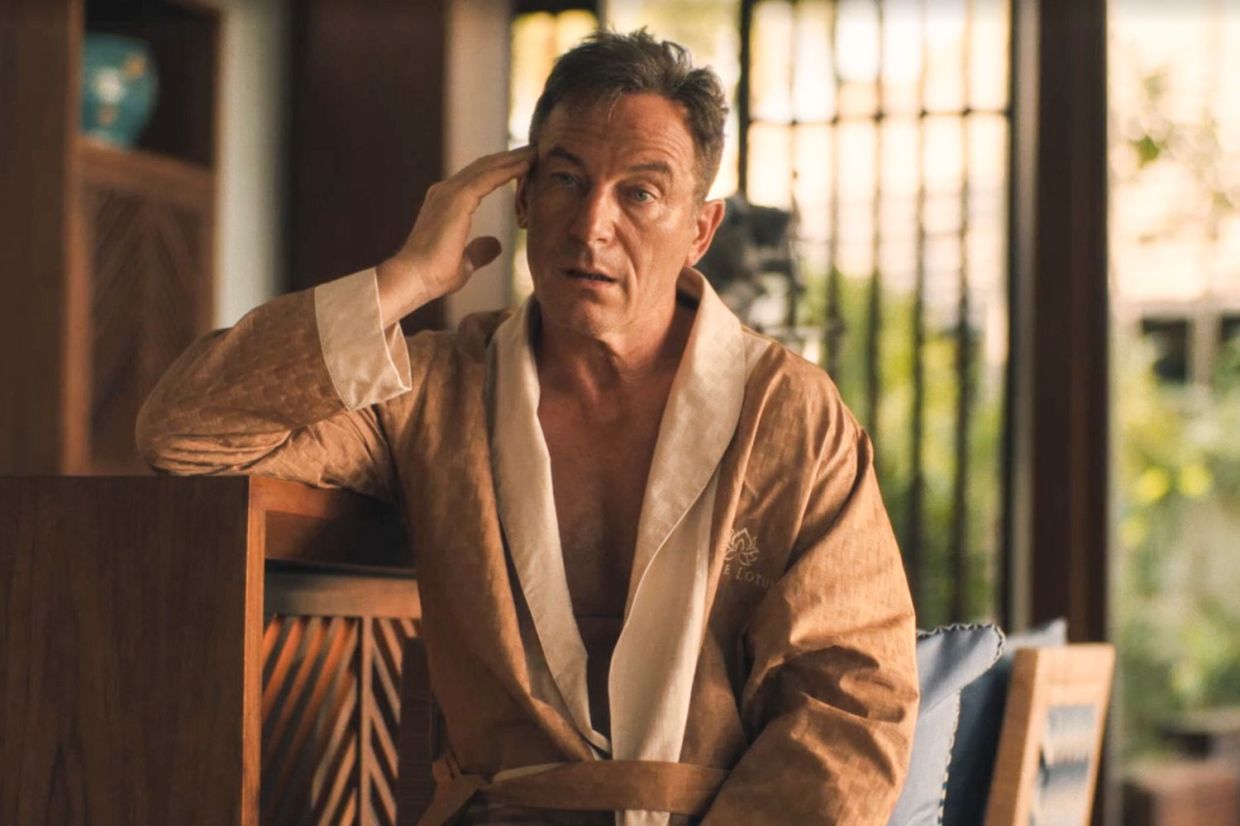
He plays Tim Ratliff, a Durham, North Carolina, financier. Tim’s blood runs blue, as do the letters on his Duke T-shirt. (Duke is reportedly upset at the association.) Confronted with past malfeasance and facing the loss of all he has inherited and worked for, Tim spends his Thai vacation overdosing on his wife’s benzos and contemplating murder-suicide. That he can make Tim engaging even in the sweaty maelstrom of an entirely internal crisis speaks to his actorly gifts.
Not least among them is a way with misdirection. (Spoilers start now.) In the season finale, Tim sets out to poison his family with a fatal batch of piña coladas only to change his mind a sip or two in. (Even his youngest son, Lochlan, played by Sam Nivola, who later took a dose via a protein shake, was spared.) Though Tim had spent the whole of the season running from his fate, he ultimately accepted it and trusted that his family would accept it, too. So that’s a nice surprise.
Isaacs, of course, knew this from the start. “I read all the scripts,” he said. But watching the finale with his castmates recently, he felt strangely moved. “We were all of us holding each other’s hands and watching and crying our eyes out in a rather embarrassing way,” he said.
In a lengthy chat before the finale and a rushed one just after it had aired, with Isaacs still wiping away tears, he discussed villainy, accents and the awkwardness of onscreen nudity. These are edited excerpts from the conversation.
Why does Tim ultimately decide not to poison his family?
Because he looks at them and he realises how much he loves them. The actuality of it breaks through the fog of the drugs and terror and catastrophe that had been filling his head for so long. In that moment, he loves them more than he wants them to die.
The title of the finale, Amor Fati, references the Nietzschean concept of accepting your fate, which is maybe not so different from certain Buddhist teachings. How does that resonate with Tim?
I think he accepts it completely. Ironically, of all the characters who arrive in Thailand, he’s the one that becomes closest to those Buddhist principles. He gets massive spiritual enlightenment.
Is Tim a villain for most of the season?
What’s a villain? Tim is Tim. He did a deal that went wrong. It was technically illegal. Many people do illegal things all around him, I’m sure. It wasn’t even a big deal to him. Is he a villain when he fantasises about killing his family because he thinks that’s an easier way out for them, because of the shame that he knows he’s going to face? I think any talk of villains around Mike White’s writing is to misunderstand how humanist he is as a writer.
Did you see that Duke is upset that Tim wears Duke gear?
I thought that was rather hilarious. If you wanted to bring the university in disrepute, there are real-life alumni from who do far worse than Tim Ratliff. But there goes my honorary degree from Duke.
Why can’t Tim confide in his family as he is falling apart inside?
Because what are you going to confide? Our life is over, as we know it. We are all going to be broke and poor. We won’t have a house, a car, a phone. I will be in prison. Our family name will be in tatters. I mean, it’s unimaginable to him.
This is a man who’s always been able to fix every problem, because no problem was so big that money and power couldn’t crush it. But there is no way out of this. He just is trying to obliterate his brain. He’s trying to get himself as close to a coma with the pills and the alcohol as he can. Those drugs, for most people, they make you relaxed. For Tim, these drugs are not working. He gets no peace.
How do you act that?
Because we shot completely out of order, that was my particular job, to work out how out of his head he is at any point. I needed to have my head exploding with terror and yet layer on top of it a drug that was trying to blur things. I do whatever prep I can, research, accents. Then I just try and be that person. I don’t know what acting is, and I don’t know how I do it. It’s an animal instinct.
You described this shoot recently as Lord Of The Flies in a gilded cage? Did you turn feral?
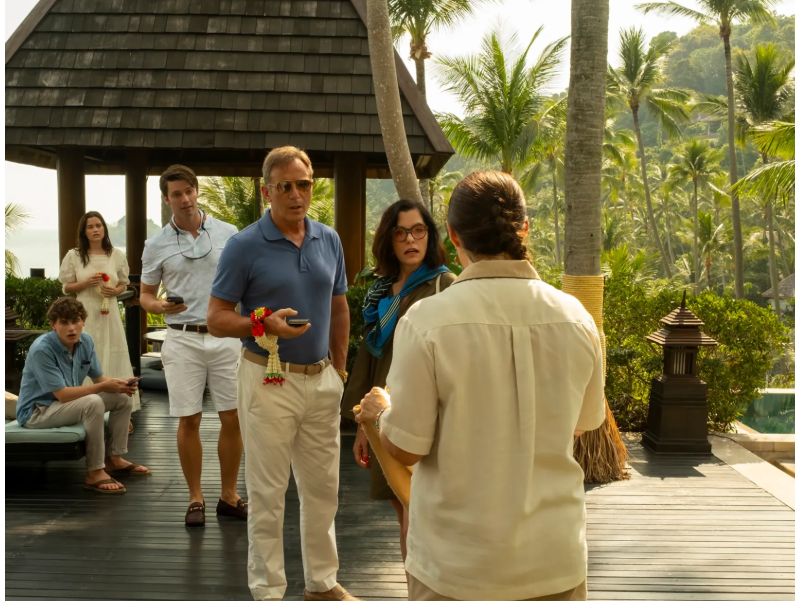
We were sticking pigs every day. No, but it wasn’t entirely blissful. Obviously people formed friendships, but we weren’t one great big homogenous happy family. It was a large group of people away from home, unanchored from their normal lives. I’m not going to break ranks and say who did what to whom, but it certainly wasn’t a holiday.
How did it feel to do nudity at 61?
Oh, I have no idea. I can’t even think about it, let alone talk about it. Sex is embarrassing; nakedness is embarrassing. It’s embarrassing at any age. But it’s harder to be heartbroken, terrified, homicidal, suicidal — to be at the edge of life and think that I would be better not existing.
Taking my clothes off is just a physical thing. I mean, it’s as horrible and awkward as someone asking me to get naked in the street. But it’s all part of the job. – © 2025 The New York Times Company
