British artist Antony Gormley made his name designing sculptures that fit seamlessly into their surroundings.
He installed dozens of life-size figures on a beach, where some are swallowed by the surf every few hours. Others stand in farm fields or on city rooftops, staring mutely back at us as abstract meditations on how we relate to our environment.
But Gormley, 75, took a different approach for his latest big installation. Instead of designing sculptures for an existing landscape, he worked with an award-winning architect to create a new home for them: an underground art cave inspired by a 2,000-year-old Roman dome.
“It was a bit cheeky, in a way,” Gormley said of his ambitious proposal for the installation at Museum San, a campus of minimalist concrete buildings set among pine forests in Wonju, South Korea.
The installation, Ground, opened at Museum San in June. It’s the first collaboration between Gormley and Tadao Ando, a Pritzker Prize-winning Japanese architect who built the museum’s other structures, and the latest major installation in South Korea, a country with a booming contemporary art scene.
Beams of sunlight
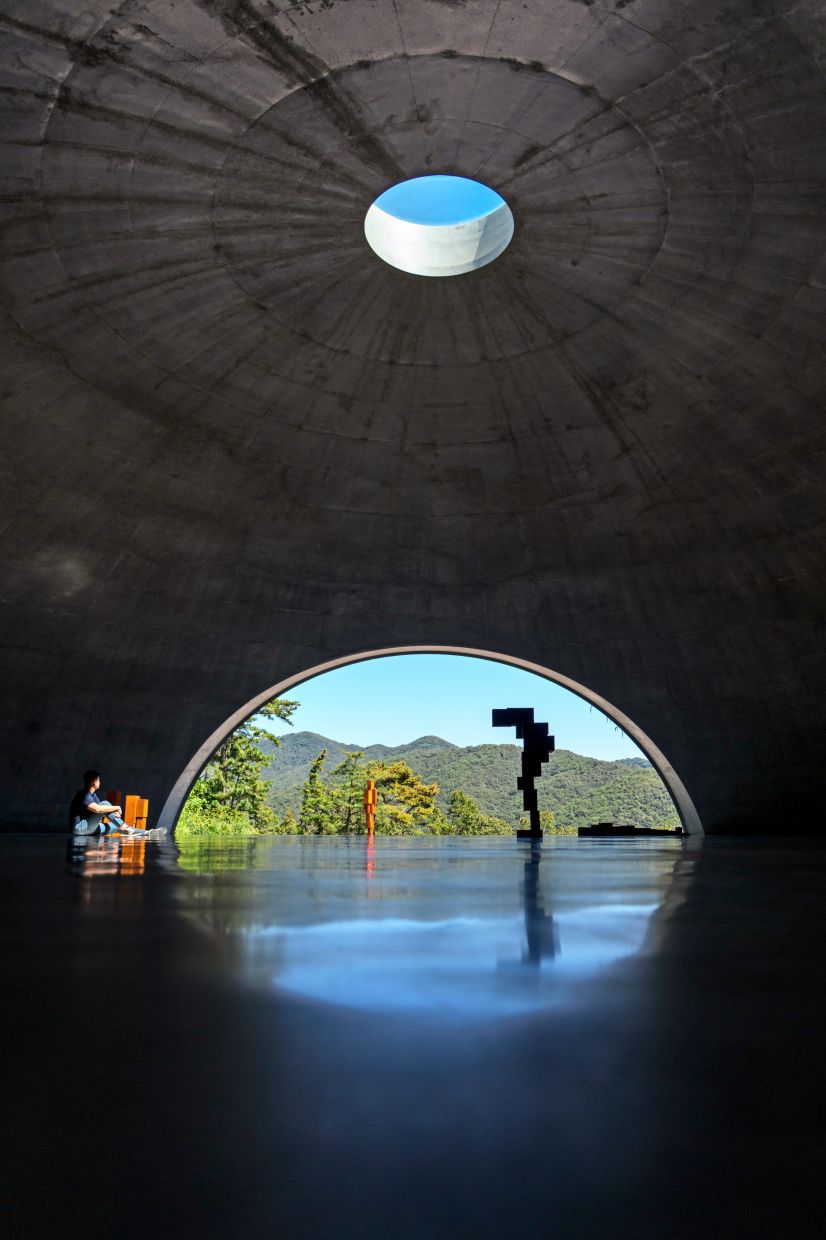
The art cave, which has a diameter of 25m, was heavily inspired by the Pantheon, a marvel of ancient engineering that is nearly twice the diameter and includes tombs for Italian kings.
Like the Roman structure, the cave has a dome-like structure and an “oculus” – a hole in its ceiling that allows beams of sunlight to slowly rove through its interior like a sundial.
The cave’s view of a nearby mountain range was designed to mimic the one from a temple rock garden in Japan that Gormley admires. His six faceless cast-iron sculptures inside, plus another outside that stands exposed to the elements, were meant to evoke different human states of mind.
Gormley calls the cave a “concentrated place of witness,” a phrase that evokes a house of worship. The allusion makes sense.
Like the Pantheon – built as a pagan temple and later consecrated as a church – it has the solemn vibes, dim lighting and echoey acoustics of a religious structure.
That atmosphere reflects decisions that Gormley and Ando, who share a love for the Pantheon, made during video calls, emails and a face-to-face meeting in Osaka, Japan.
The cave mouth faces north, ensuring that most of the incoming light stays indirect and moody, for instance, and the dome’s grey concrete floors are polished to accentuate reflections.
Visitor experience
Gormley and Ando, 84, also thought a lot about the visitor experience.
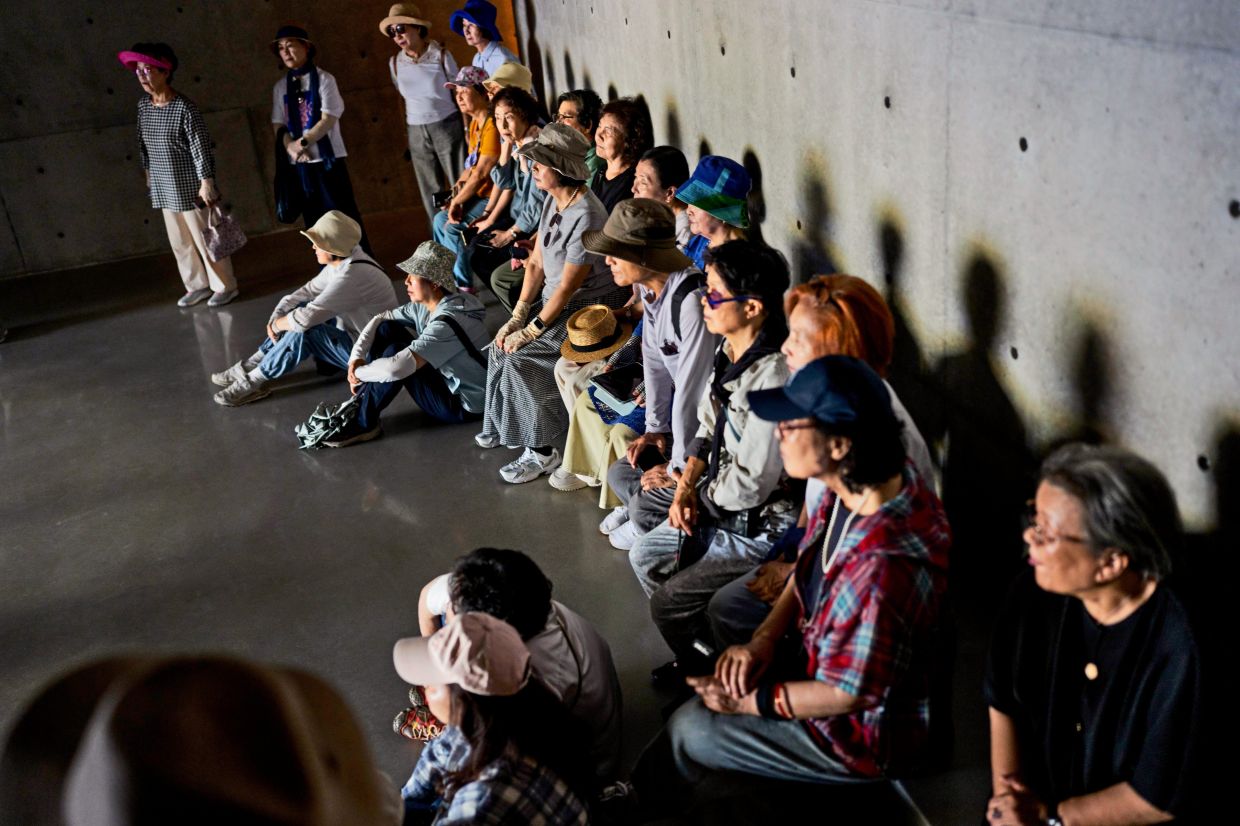
People enter the installation by descending to an “observation room” separated from the main dome by a large, aquarium-style window. Through the glass they see other people walking among faceless sculptures from Gormley’s “blockworks” series.
Anyone walking into the dome becomes an object, alongside the sculptures, for the next group of visitors to observe. Gormley said the interplay of people, sculptures and the horizon beyond creates a visitor experience that blends life, art and nature.
“That’s the mix that makes it so extraordinary,” he said during a recent interview in Seoul.
Gormley has other shows in South Korea this fall, including one in Seoul and another at Museum San that features giant aluminium rings. Some of his “blockworks” are also on display through Jan 4 at the Nasher Sculpture Center in Dallas as part of his first solo show in the United States.
The Museum San collaboration makes sense because Gormley and Ando have similar sensibilities, said Pauline Yao, who curated a 2021 Gormley show in Hong Kong. Gormley has a long-standing interest in industrial spaces and in creating artworks that interact with nature and architectural features, she said, while Ando likes to work with concrete and to create buildings that harmonise with landscapes.
But turning their art cave idea into reality created a lot of obstacles.
A range of emotions
Gormley and Ando initially wanted the dome’s oculus to be open to the sky like the Pantheon’s. But the museum, concerned about safety risks, said the oculus had to be covered in glass or protected by a railing. They chose the first option.
After construction workers dug up a hillside to make room for the dome, they had to create custom moulds for its circular panels and finish the concrete to a high standard while maintaining its raw look.
Then came the question of whether the museum needed to install fire sprinklers in the dome.
Wonju’s fire department eventually determined that sprinklers were not necessary because the dome qualified as an open-air “corridor”.
Ando said building the art cave involved so many structural and aesthetic challenges that it was “closer to civil engineering.”
“To be honest, I expected it would be nearly impossible to realise exactly as envisioned,” he said in an email.
“And yet, to my astonishment, it was realised just as in our original conception.”
The museum says the installation was designed as a subterranean sanctuary where visitors can “ground themselves firmly in the lived moment”.
What that moment looks like varies a lot from person to person.
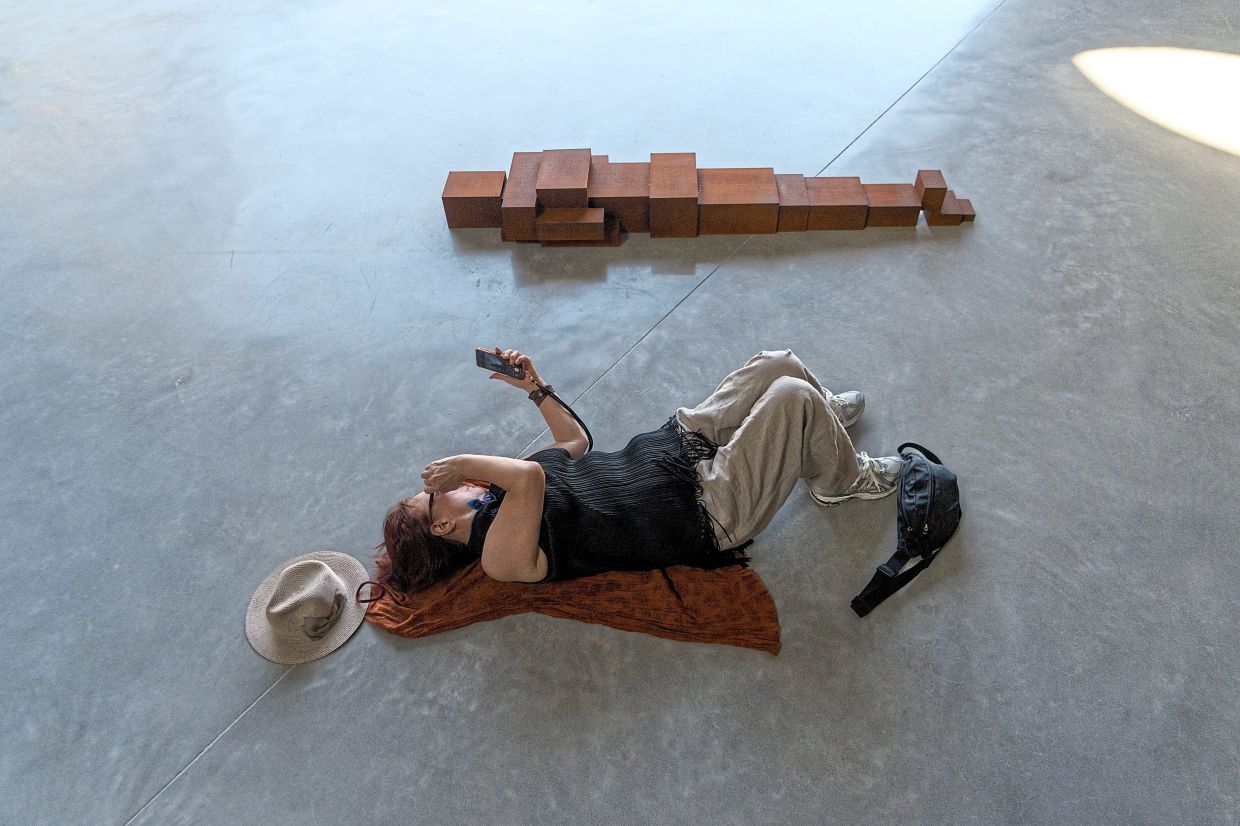
Some visitors take selfies or marvel at the sundial, the mountain view or the squeak of their sneakers on polished concrete. Others try to find meaning in the cave’s shape or in Gormley’s cast-iron forms.
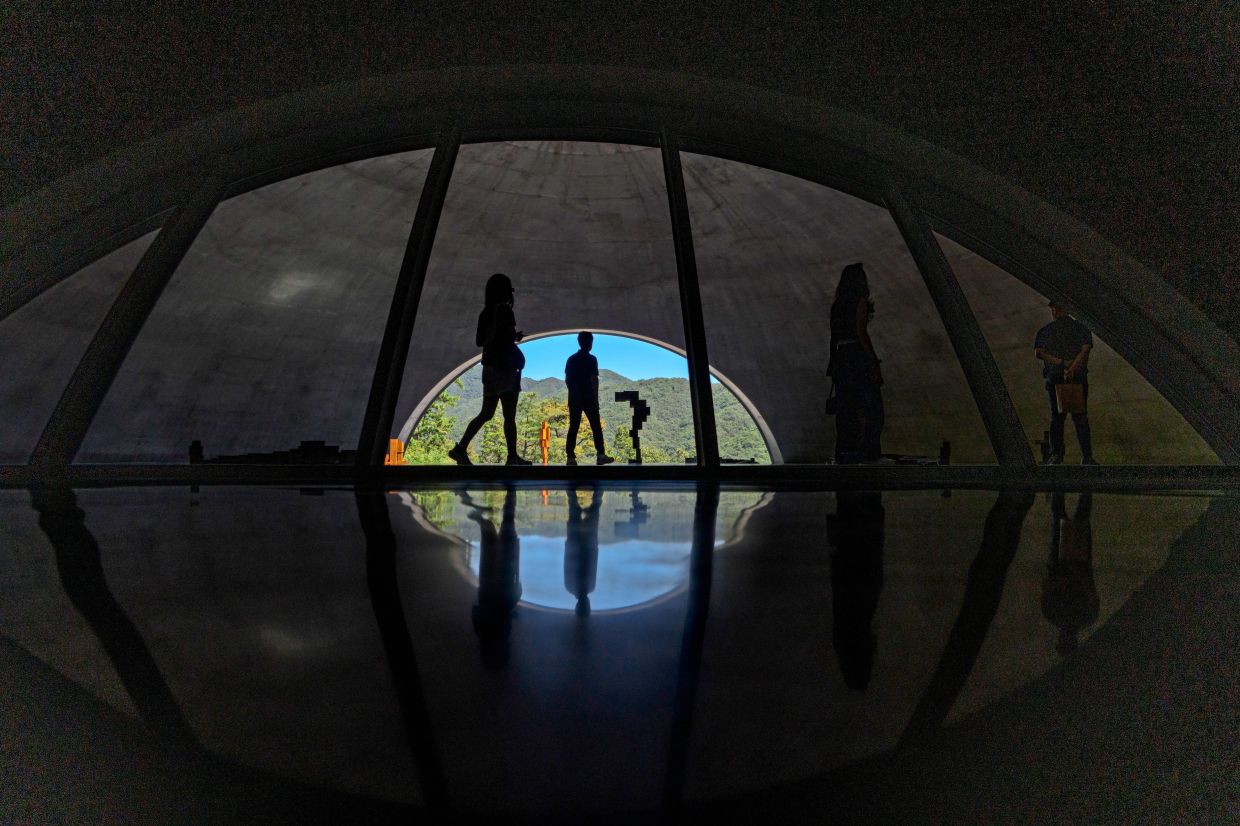
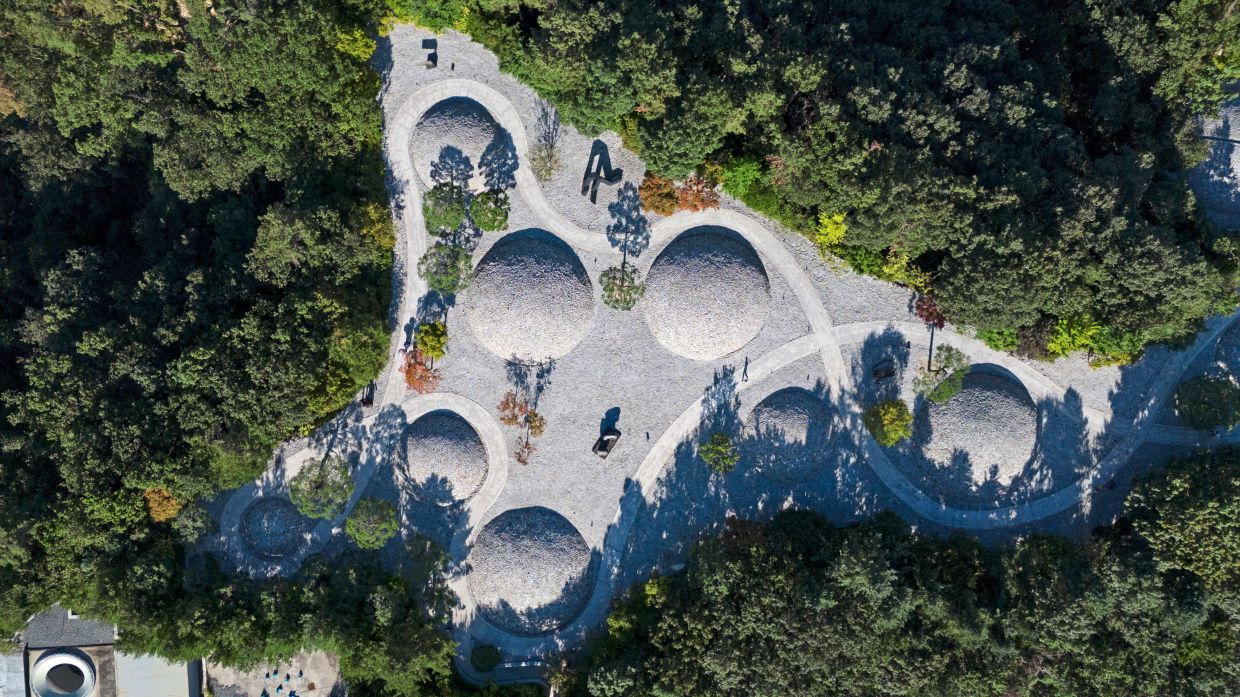
Many Korean visitors see the cave as a tomb because it is shaped like a traditional Korean burial mound, said Won Geun-you, a museum educator who guides visitors through the installation.
One woman, after laying next to a supine sculpture for a while, told Won that it reminded her of her late father.
On a recent weekday afternoon, visitors were debating what emotions they felt Gormley’s seven sculptures conveyed.
Joyce Liu, who works at a New York City art gallery, said she sensed a warmth and a playfulness, as if the sculptures belonged to a family.
But her friend YJ Kim, an entrepreneur in Seoul, said the distance between the works and the variation in their poses seemed to reinforce the idea that humans are lonely creatures.
“That’s art,” Kim said. “Everyone has a different perspective.” – ©2025 The New York Times Company
This article originally appeared in The New York Times.