A cosy nook overlooking the historic Weld Quay in Penang.
A reading room connected to a coffee cafe in the artistic hub of the Hin Bus Depot.
A library, up a narrow set of stairs, hidden in plain sight for anyone to discover.
In the run-up to the George Town Literary Festival (GTLF) 2025 scheduled for Nov 28-30, a small group of reading spaces are coming together to cheer on the art of reading.
Calling themselves A Baca Collective, these free, public alternative spaces are opening their doors – and their books – to readers everywhere.
As part of GTLF 2025’s satellite programme, the A Baca Collective fringe events will take place at community-based venues including Books R&R, Nui Kopi, and Ruang Kongsi.
Books R&R
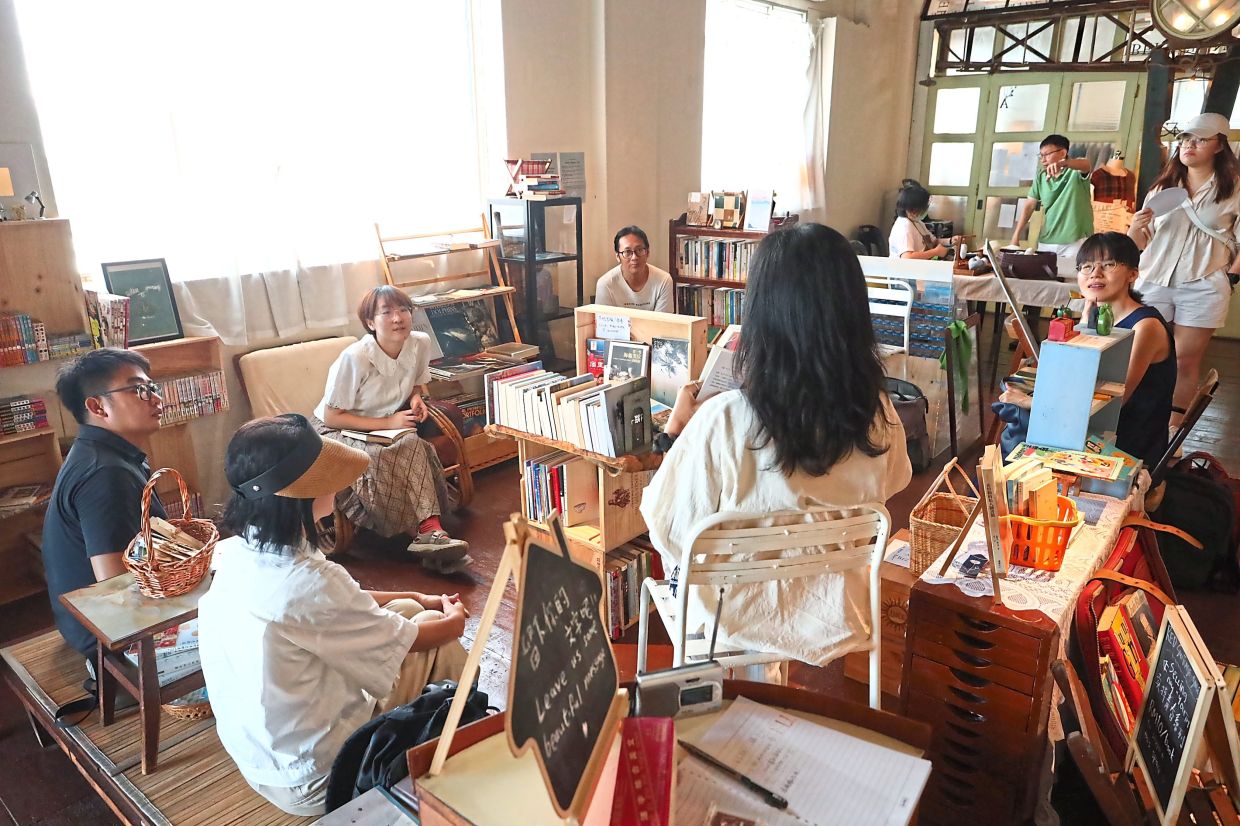
On the upper floor of Jetty 35, a godown-turned-event-space facing the old Clan Jetties of George Town, a rattan armchair sits beside the door to a tiny balcony.
Around it, books are neatly stacked in wooden crates and small, mismatched cupboards and shelves.
Handwritten notes are found here and there, some bearing memorable quotes, others with simple instructions or reminders.
Board games are scattered in corners, small trinkets perch on ledges and rolled-up bamboo mats are available, as well as some simple metal chairs for weary travellers.
Two calendars grace the space – one just a day late while the other, two months off.
One could surmise that if Books R&R was a snapshot of the mind of its owner, Eunice Tan would be a sunny, quirky and slightly haphazard book lover.
“The idea for the space came from a comic book shop I used to visit as a kid, while waiting for my dad to finish his work as a lorry driver. That small shop was a place where I could rest, imagine and feel at peace. And I wanted to create something that carries that same feeling,” says Tan, 27.
Originally from Taiping, Perak, Tan moved to Penang to attend college and has stayed ever since.
Looking for a place to store her healthy collection of books and magazines, Tan – a wedding photographer by profession – was receptive when a friend approached her to rent a small space in the city.
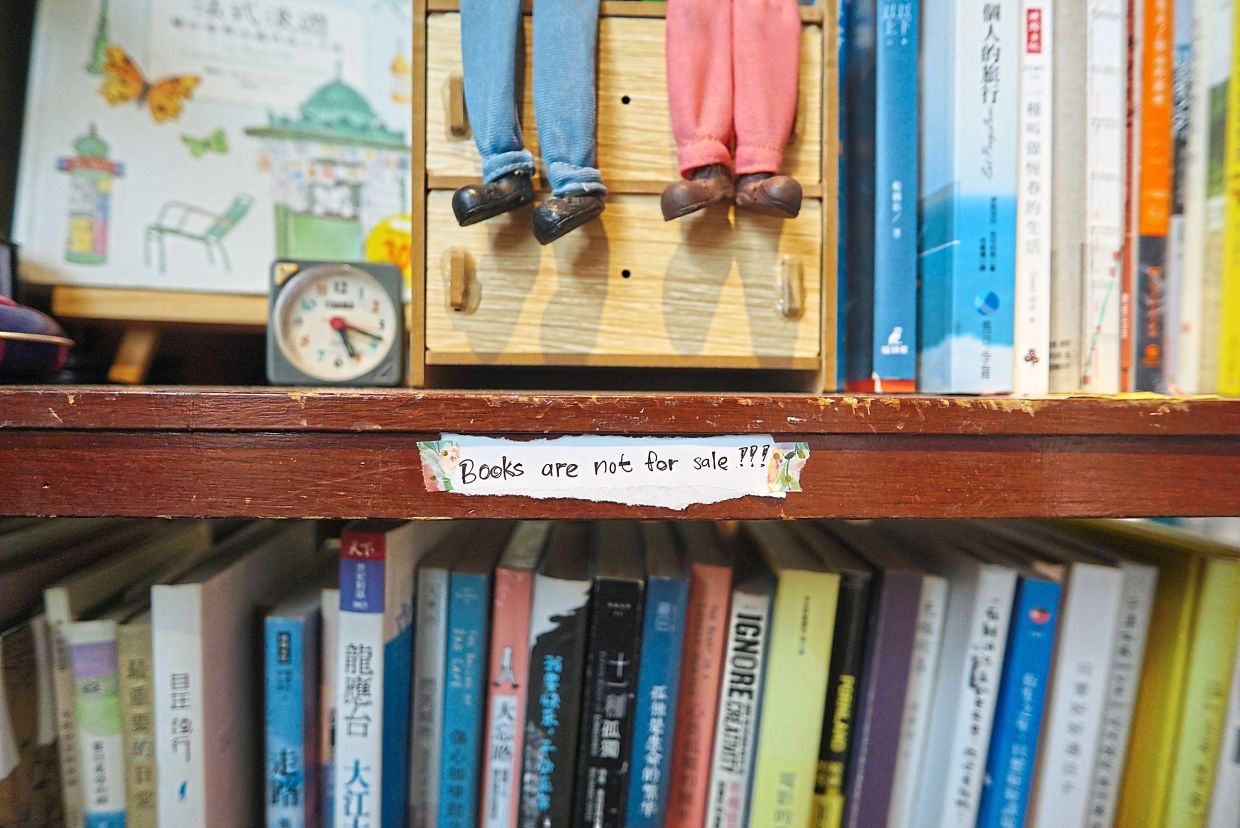
“It’s part of an open space called 29 Pillar and I took it up in May this year. Books R&R is an unmanned space and a zero-profit initiative. R&R can mean many things here: Rest & Read, Read & Rent or even Rest & Recharge.
“It’s a space where anyone can slow down, flip through a book and find a bit of calm,” she explains.
In the bustling Unesco-certified heritage city where the rising prices of food, goods and services have driven many locals out over the decades, the idea of an individual crafting out a money-losing public space can be considered novel.
“The books are not for sale, they are here to be shared. People often ask how this place can survive without selling books or charging fees. The truth is, it wasn’t created for business. It exists simply because I want to share the peace and joy that books can bring and the comfort of just being here.
"Of course (with it being unmanned), I have had some of my books stolen. But my hope is to spread the love of reading and offer a quiet space for people to take a break from their busy days,” she says.
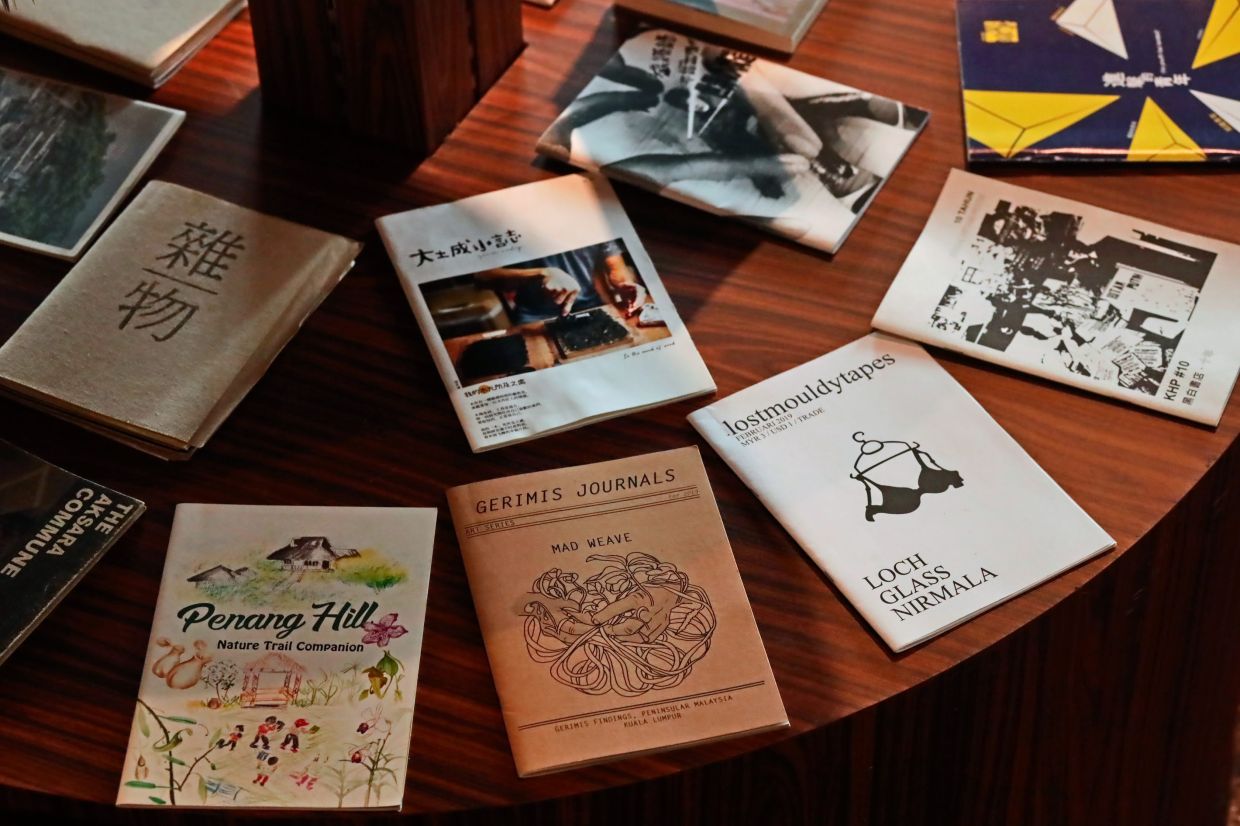
In support of GTLF 2025, Books R&R is holding an event focusing on zines – small, individually-created, self-published magazines.
“There isn’t a big zine community in Penang, unlike in Ipoh or KL. But as I’m involved in photography, I have a few friends who do their own zines so I thought to use this opportunity since I have a space.
"Zines can be poetry, photos or articles ... it uses mixed media so you can fold it or bind it yourself; it can take on a lot of forms. Everyone can do it. It’s not for commercial value. The purpose is for the creator or artist to express their emotion and art,” says Tan.
A mini exhibition entitled Table Of Zines – featuring 150 zines – is currently showing at Books R&R until Nov 30.
“We hope to build our own zine community in Penang and show people that they can publish their own creations in the easiest way,” says Tan.
Ruang Kongsi
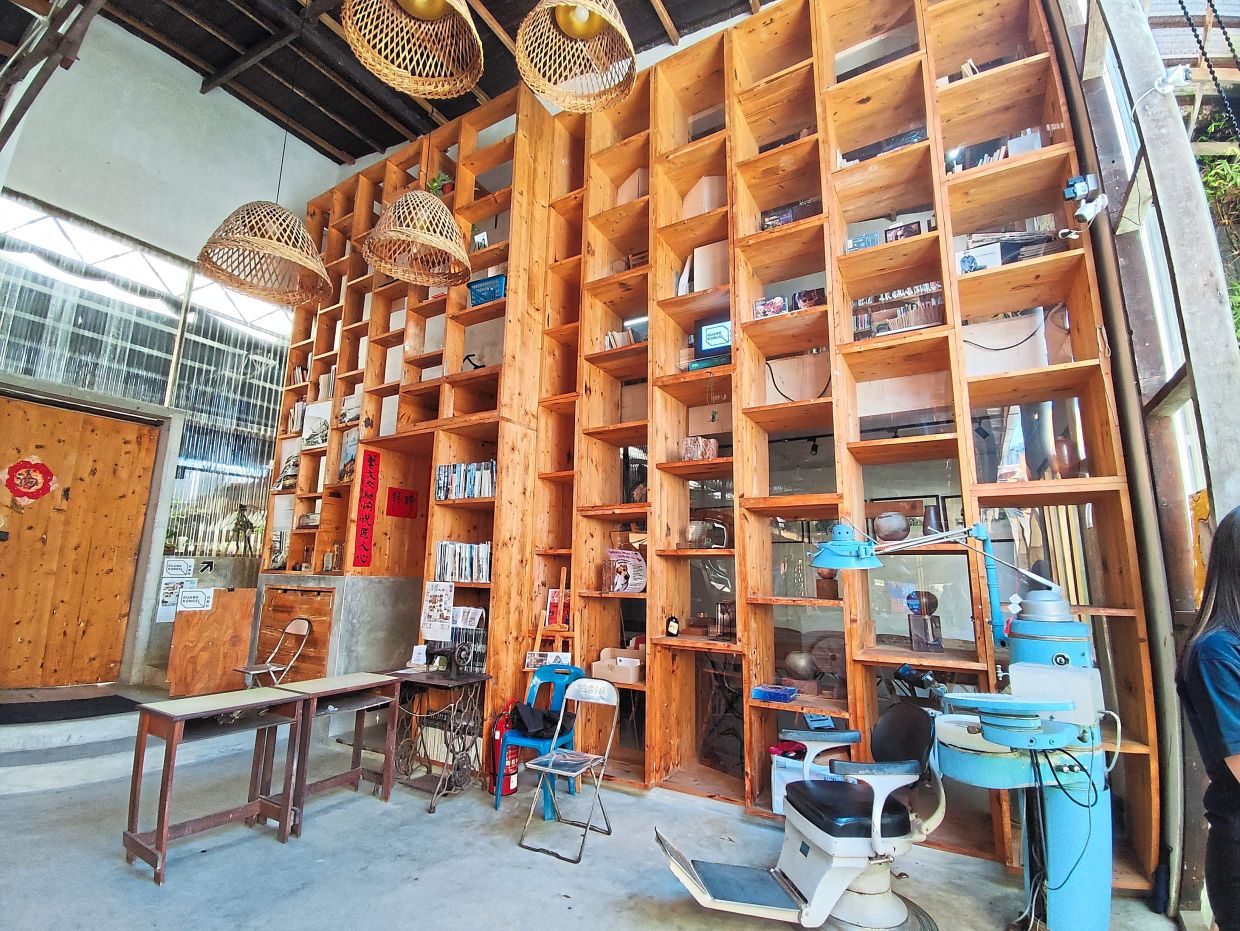
A stone’s throw away at COEX, a community hub located within the Hin Bus Depot, lies a hidden, narrow wooden staircase.
Passers-by without prior knowledge of the space would likely not venture up (or even notice the entrance) but to those in the know, a wealth of knowledge and inquiry waits beyond.
Welcome to the new home of Ruang Kongsi.
Established by a group of nine acquaintances back in 2018 with an objective of heightening social engagement and awareness, Ruang Kongsi previously occupied a space in a commercial building just opposite Universiti Sains Malaysia (USM).
“It’s true that when we first chose the location near USM, we did so with (the university’s) students in mind as our target participants.
"After the (Covid-19) pandemic, however, our activities became increasingly sporadic and our funds were nearly depleted,” says Ruang Kongsi member Low Chia Ming.
“Despite several attempts to sustain operations, we eventually had to accept the reality that we could no longer afford the rent and so, we decided to move entirely to the new space that is much more affordable and accessible,” he adds.
Coincidentally, COEX founder Mei Chee Seong had expressed interest in making room for the group from the beginning, so in 2023, they took him up on his offer.
“By 2019 and after the pandemic, most of those who attended our activities – film screenings, general education classes and workshops – were not students, but members of the wider public interested in the topics covered,” says Low.
The new environment at Coex has opened up more possibilities and opportunities. The hub is occupied by several partners including an independent bookstore, a cafe, a gallery, Chinese glove puppet troupe Ombak Potehi and aLM Architects, that manages the whole space.
Ruang Kongsi occupies the upstairs area of one side of the COEX rectangle.
The interior is neat, bright and organised, though it has a relaxed feel with visitors welcome to pull out a rattan chair at the long, heavy wooden table or sit at the small desk that overlooks the vibrant community hub.
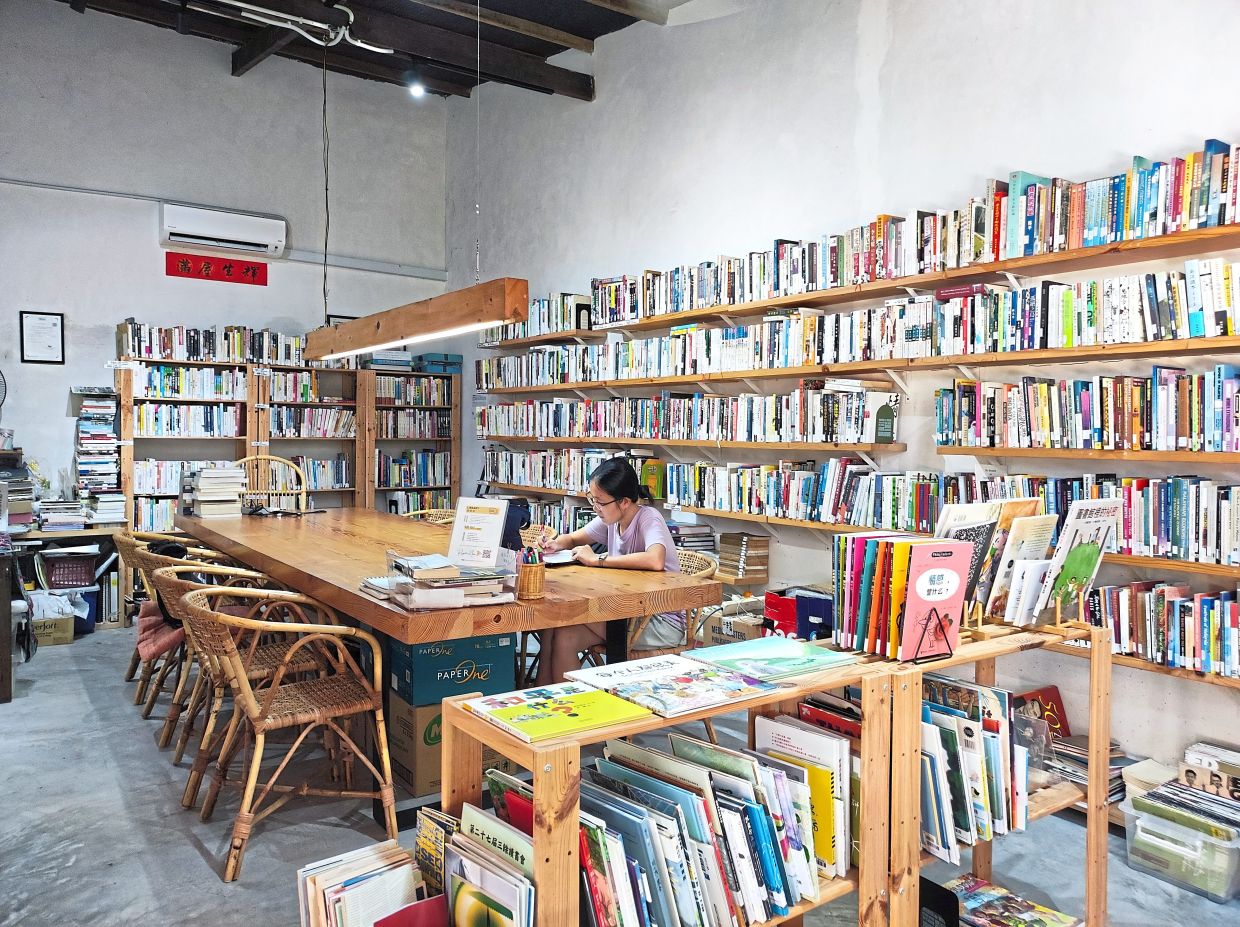
The one-room space is neither vast nor cramped and just nice to house the 1,500 books that make up the Ruang Kongsi library.
“From the beginning, we’ve focused more on social sciences and literature, selecting titles carefully rather than stocking mainly popular reads,” says Low.
“We also deliberately purchase books about Penang and Malaysia, hoping readers can gain a deeper understanding of this land through its many dimensions, from history and culture to the stories that shape its identity.”
Ruang Kongsi also collects magazines on design and the arts, as well as zines – the “kind of materials rarely found in public libraries,” says Low.
In true community spirit, some 20 of the library’s zines have been loaned to Books R&R for the Table Of Zines exhibition.
Ruang Kongsi’s library runs on an annual membership subscription but the space is open to the public on weekends.
The books available for loan are predominantly in Chinese, though the library also has good offerings in English as well as Bahasa Malaysia.
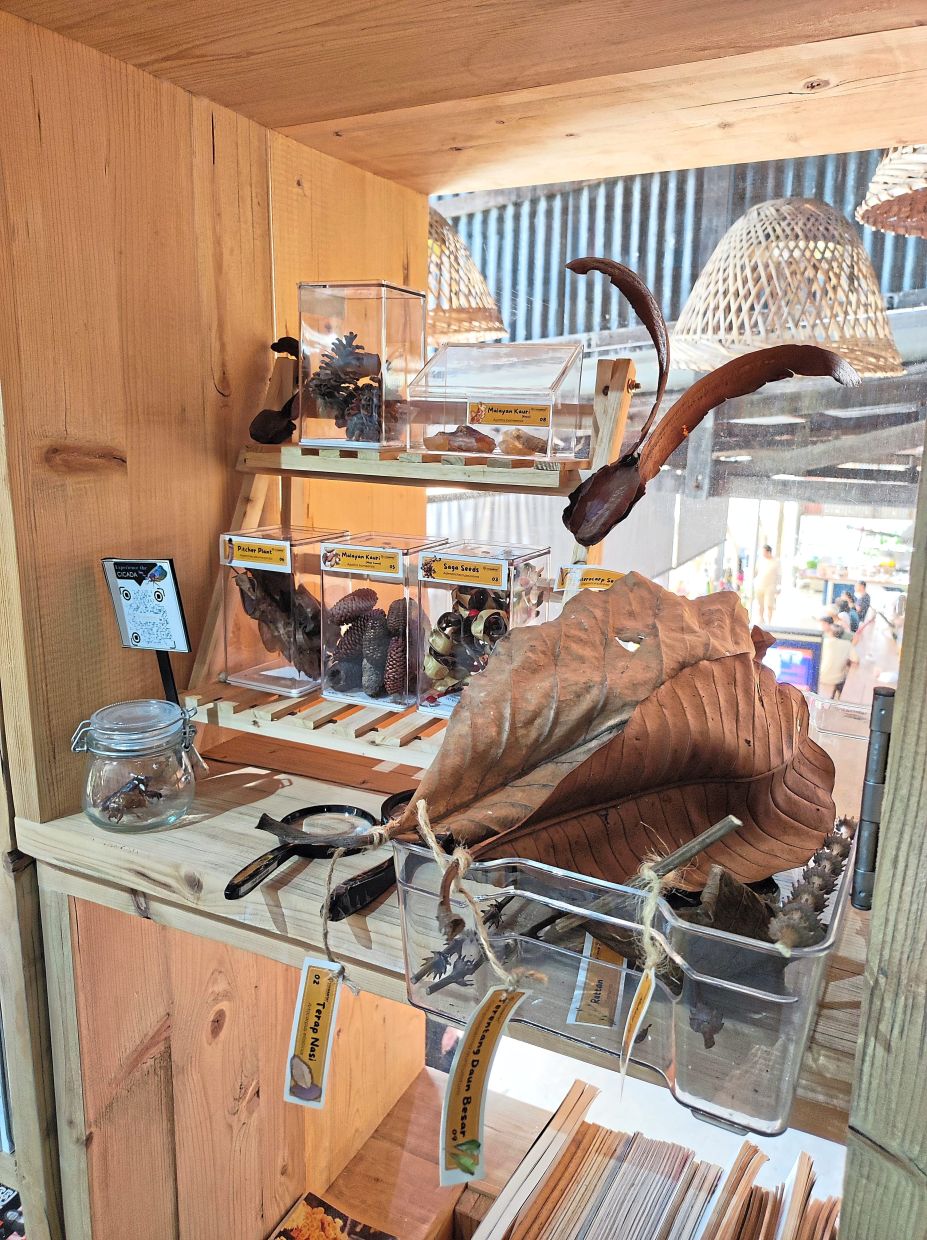
They also have a cabinet dedicated to the “Penang Speak Hokkien Campaign” and as of this year, houses the Habitat Foundation’s second Penang Hill Biosphere Reserve (PHBR) Nook, the first situated in the Batu Ferringhi Community Library (BFCL).
For GTLF 2025, Ruang Kongsi has launched a mapping project to collect information on reading spaces in the state and is hosting a specially curated book selection called “The Third Space”.
“The concept, proposed by American sociologist Ray Oldenburg, refers to social environments other than home and the workplace – spaces where people can relax, think and connect,” says Low.
“Libraries are one such example. Through this, we hope to highlight the importance and presence of these spaces, including their role as essential social infrastructure.”
With the reading space mapping project, Low hopes it will encourage people to explore and make use of other reading spaces.
“Compiling information about these spaces into a single map is probably the most feasible first step. In the future, the project could expand to include more elements, such as literary events, book clubs, publishers, bookstores and other reading-related elements,” he says.
Alternative reading spaces aren’t unique to George Town. Low notes that across the country, people are finding inventive ways to bring books and reading back into the public eye.
“Every effort needs a starting point, so why not start with our respective spaces?” he says.
Nui Kopi
While Books R&R largely resembles a quintessential reading corner and Ruang Kongsi leans more towards a traditional albeit relaxed library, The Reading Room at Nui Kopi is in a category that is unapologetically its own.
Located within the Hin Bus Depot at the back end of a cafe that specialises in Vietnamese egg coffee (‘nui’ is Hokkien for egg), the room is open to customers and whoever else owner Oh Chin Eng feels like admitting.
“We moved into this space in 2023 and our intention from the very start was to have a reading space or library at the back. The library idea didn’t really work out because the borrowing and lending mechanism was mahfan (Hokkien for troublesome) but from day one, the books have been there and we also organise events like film screenings in the space,” says Oh, 37.
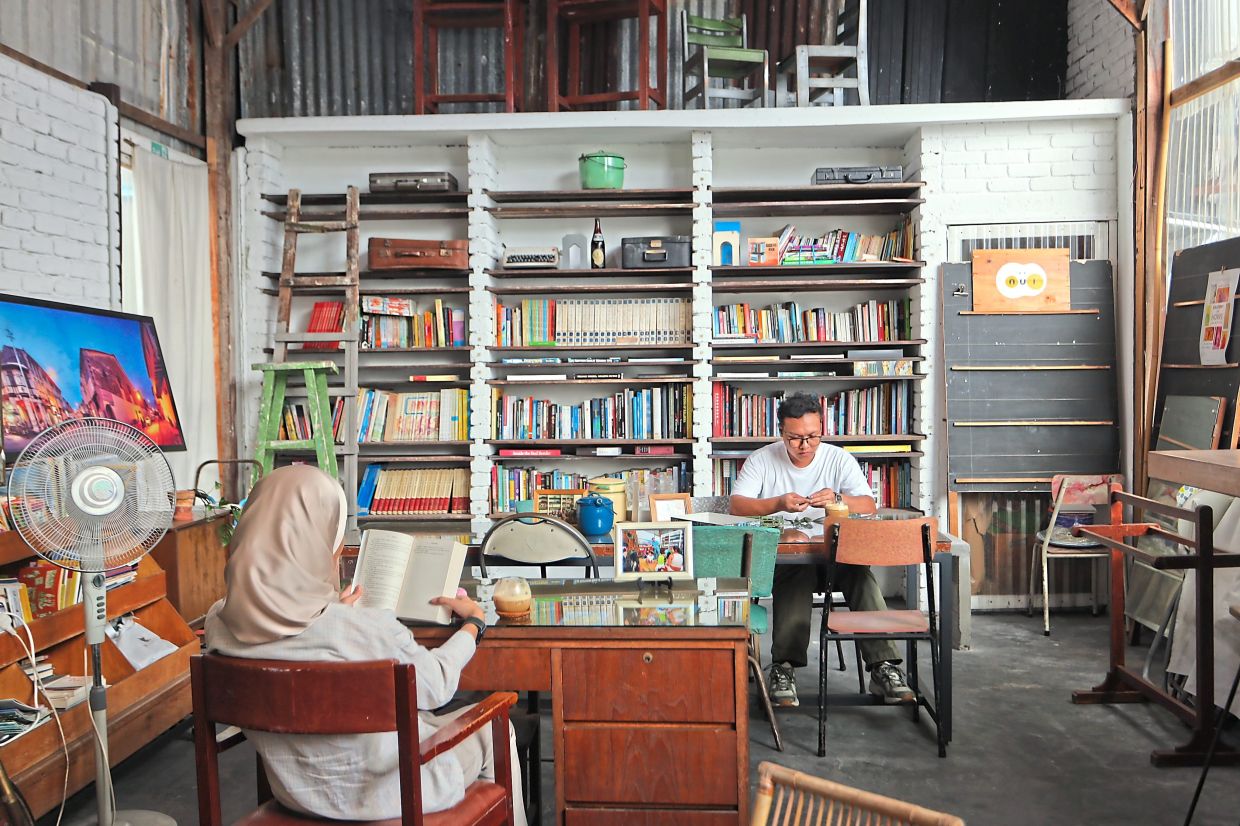
Both the cafe and reading area share the same vintage decor, evoking the nostalgic feeling of stepping into your grandparents’ kampung home.
An old cupboard with sliding glass panels at the side of the cafe entrance houses a collection of old beer and whiskey glasses while dated leather briefcases and suitcases are piled at odd corners around the low tables and high, wooden bar.
Behind a swinging door, odds and ends are found everywhere in the sunny, curtainless reading room – from old tricycles to dated photos and even a set of rusty metal lockers that look at home with the old wooden chairs that could have come straight out of your old, primary school classroom. (In fact, they probably did.)
It is haphazard, to say the least, but not without nostalgic charm.
And while almost all the deco has a feeling of randomness to it, obvious care has been put into the organisation of books that almost entirely covers the high, back wall of the space.
From self-help books to autobiographies, Harry Potter to Robert Langdon and Han Kang to Tunku Halim, almost no genre or topic is untouched in the collection.
One shelf is dedicated to photography – a nod to the passion of cafe owner Oh who is a former journalist – while another displays local Penang books.
Yet another shelf houses political literature without bias, where a book on Vision 2020 sits contently beside a publication detailing regime change.
“I started collecting these books during my schooling days. To produce a book, the researchers or writer must have spent so much time to gather this information – information that I don’t have. That is the thing I’m so fascinated with,” says Oh.
“Many of the books here also come from secondhand stores and charity shops. Later on, I was able to source some books from my previous job as a government servant,” he adds.
The reading room is geared to be a public space but Oh has set his own requirements for entry.
“Unfortunately, we get a lot of people who just want to come in and take photos for their Instagram; they are not interested in the menu or the books. We don’t allow these people in.
“As much as I want to promote reading and this place as a place to read, I also appreciate true readers. On the other hand, there are some visitors who come in and are genuinely interested in books.
“They don’t order but I’m happy to let them in. So, entrance is basically based on your attitude,” says Oh.
Noticing traditional libraries losing popularity, Oh partnered with Tan and Low to leverage GTLF 2025’s reach in promoting alternative reading spaces through A Baca Collective.
“While GTLF offers a space where literature matters, reading spaces offer a place where readers matter. More than just books, these spaces celebrate the act of reading itself; the atmosphere, the pace and the community that forms around it,” outlines a statement from A Baca Collective.
As fringe events for the upcoming literary festival, Nui Kopi is organising a free film screening of Emilio Estevez’s The Public on Nov 27, which tells the tale of a group of homeless readers who take shelter in a library during an icy night in Cincinnati, US, much to the disapproval of authorities.
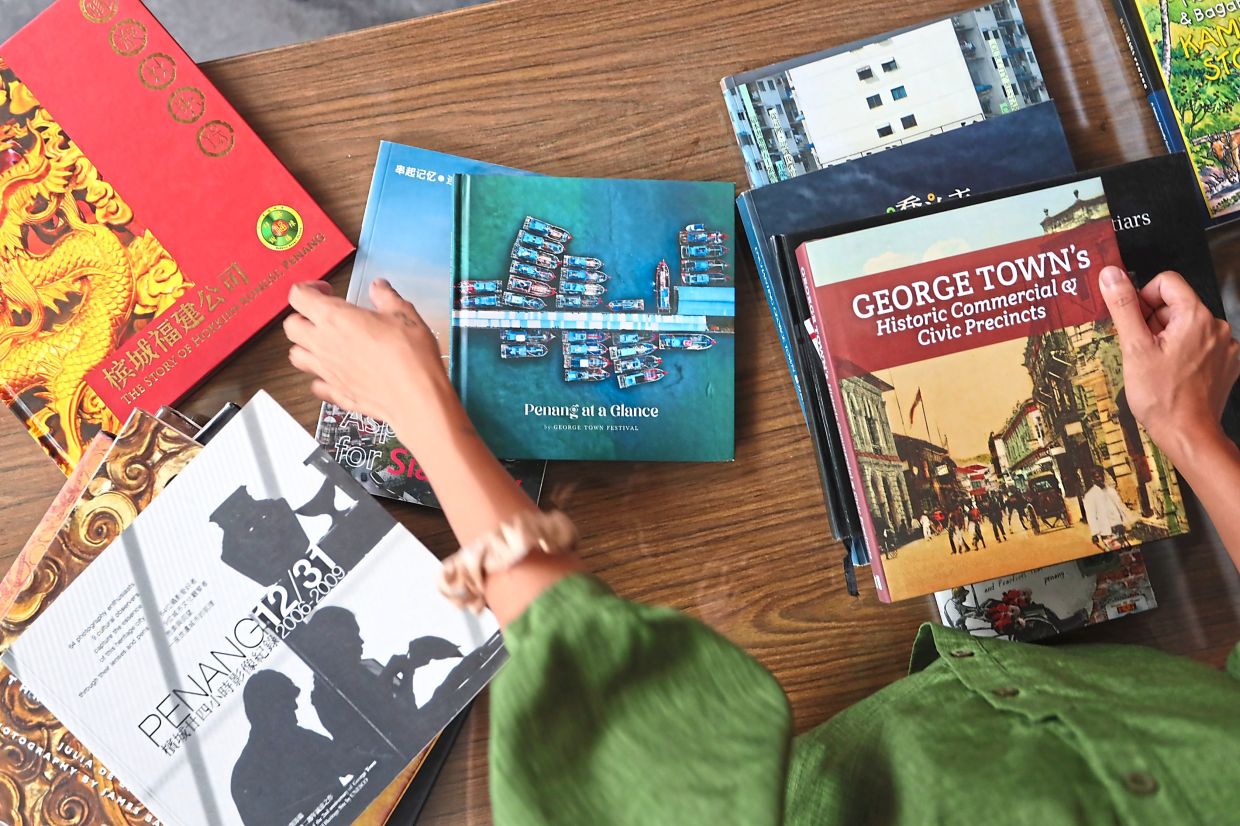
The cafe is also holding the Penang Pictorial Books Showcase in its reading room until Nov 30 where visitors can come and browse books that celebrate the variegated images of the diverse and vibrant state.
Ruang Kongsi is open Saturdays (11am-6pm) and Sundays (11am - 2pm). Books R&R is open Wednesdays to Mondays (11am - 6pm), and Nui Kopi is open Thursdays to Sundays (12pm - 8pm).