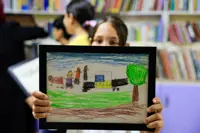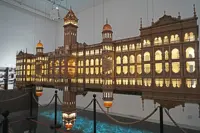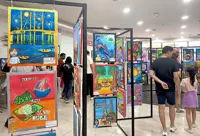
From the stately posters of the early years to today’s playful mashups, the storyboard of Merdeka has steadily evolved. In the 1960s and 1970s, artists and designers relied on unmistakable national symbols – Tunku Abdul Rahman’s raised arm, the Jalur Gemilang, the National Monument – to anchor a young nation’s identity and set a template for future generations.
Exhibited in galleries and official halls, these images gave independence a sense of permanence, tangible reminders of a hard-won freedom.
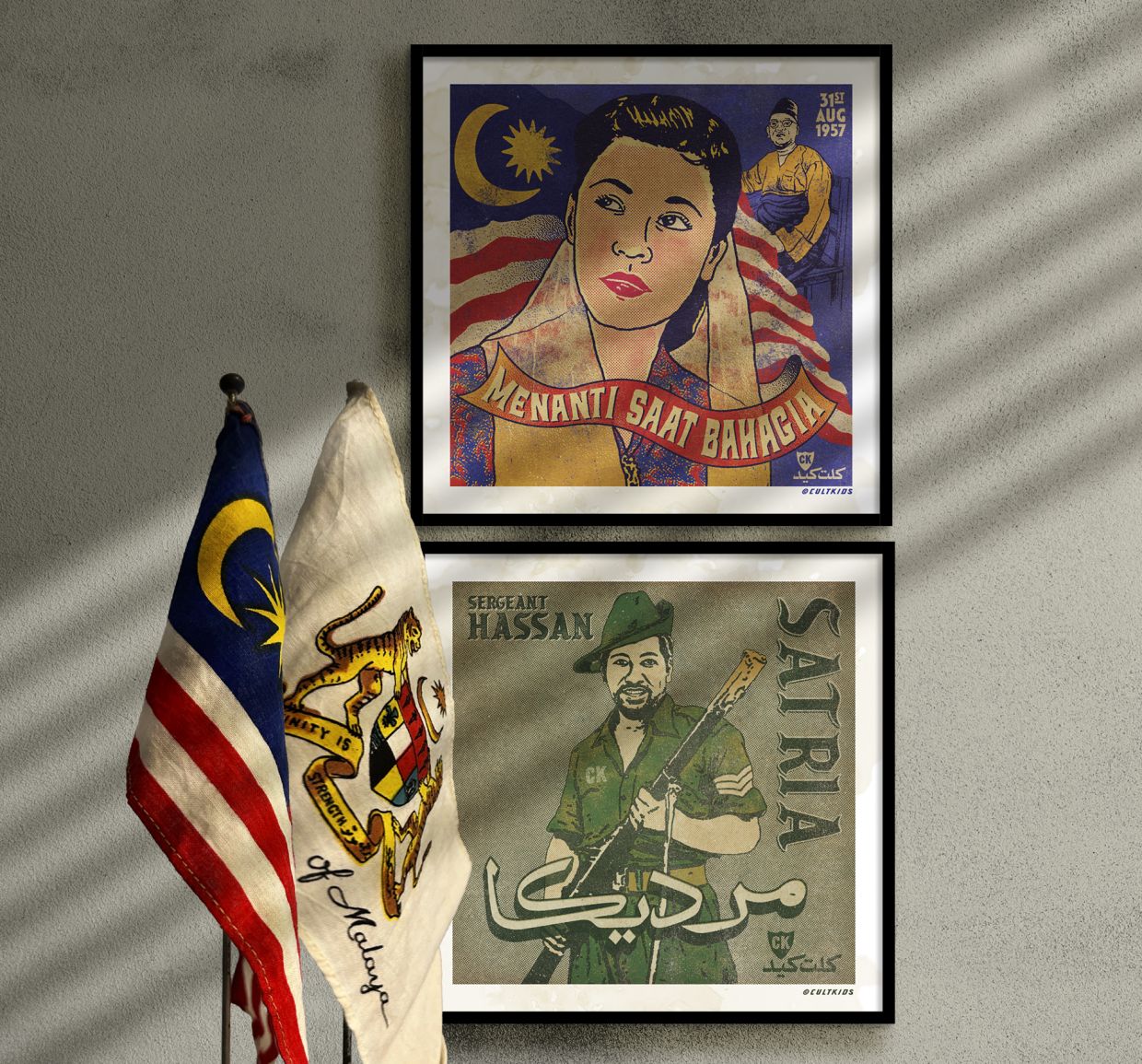
Portraits of everyday Malaysians by the late Datuk Hoessein Enas remain iconic, but the nostalgia of the 1950s and 1960s has since been reimagined by illustrator Cultkids, who draws on Shaw Brothers films and pop culture to reinvent symbols of pride for a new generation.
Step into a gallery today, and the mood is different.
Younger artists still reference shared history, but they infuse it with irony, wit, and pop sensibilities. Where Merdeka posters once carried ceremonial gravitas, Tunku now reappears in mixed-media works, archival photographs collide with street art graphics, and food becomes shorthand for unity. Independence has shifted from a fixed icon to a flexible idea, open to interpretation across media.
In recent years, Malaysia’s visual art culture has also levelled out.
Merdeka has become one of the few common areas where the public can see galleries follow the lead of designers and illustrators.
While the aim is to draw more people in, the trade-off is clear: more reflective or provocative interpretations of independence often give way to safer, mainstream forms.
Beyond galleries, Merdeka’s visual culture thrives in everyday spaces. Postcards in stationery shops, tote bags in bookshops, and doodled stickers on social media carry the spirit of independence in personal, informal ways.
Even the “30 sen Harimau” stamp, once a proud emblem in the postal system, resurfaces as a collectible reprint or digital graphic – proof that Merdeka imagery keeps adapting, shifting from the official to the intimate, from history to reinvention.
Flavours of freedom
At G13 Gallery in Petaling Jaya, 26 artists have come together in Celebrating Diversity: Consuming Culture, Constructing Identity, an exhibition that unites them through the theme of food.
Running through Aug 30, it brings together paintings, installations, sculptures and mixed media that explore Malaysia’s relationship with food and the culture surrounding it.
“This has been one of the year’s most exciting highlights at G13 – we had about 200 people at the opening. It’s a fun, relatable show for Malaysians, and if art can lift the spirit as Merdeka approaches, then it’s all the more meaningful,” said Kenny Teng, director of G13 Gallery.
With changing times and new audiences, even art gallery shows are starting to feel like pop culture events, echoing the vibe of art book and design festivals that are a hit in Kuala Lumpur.
Merdeka might take on a colourful, Instagram-ready twist at this G13 show, but each artist has poured in their own depth and perspective.
“Food in Malaysia is never just food. It is diplomacy, it is resistance, it is survival, and it is memory. We gather, negotiate, and imagine together over food,” outline Teng’s exhibition notes.
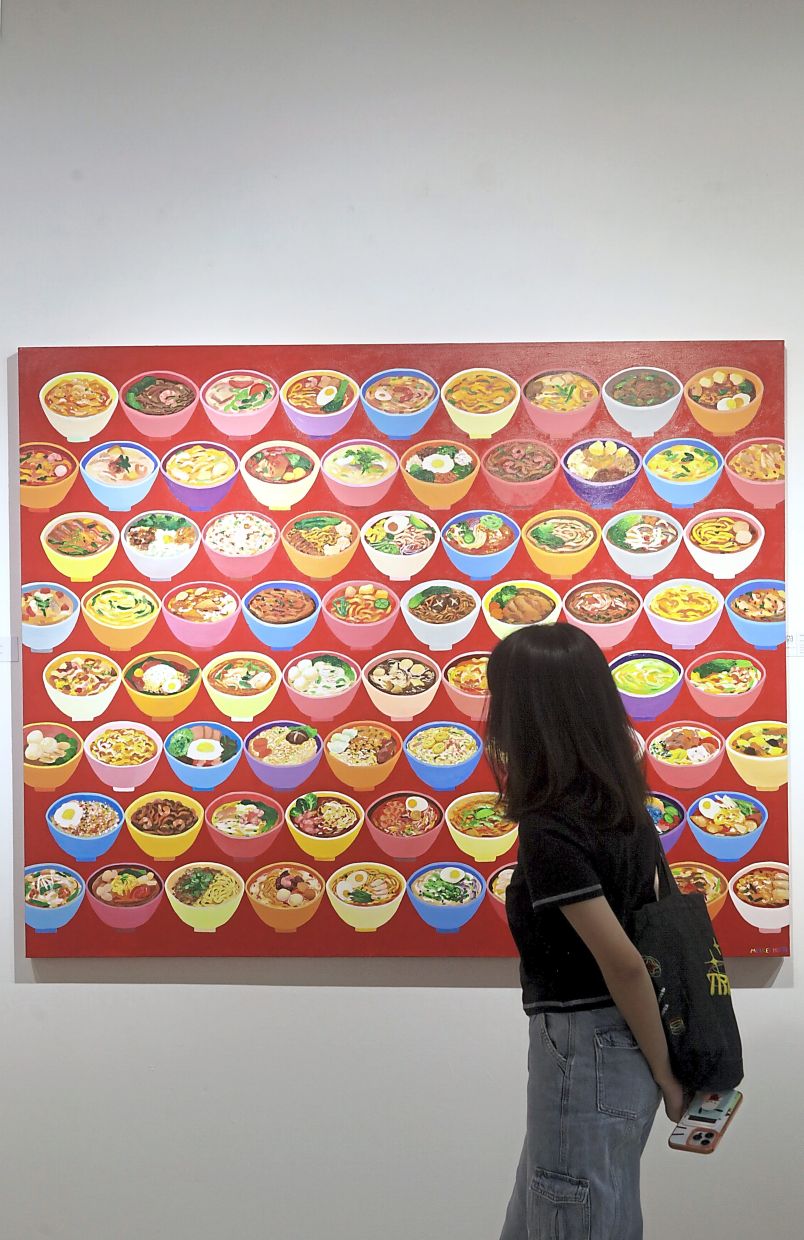
Highlights include Ho Mei Kei’s Bowls Of Malaysia on the nation’s diverse noodle heritage, Amy Nazira’s Cerita Rasa recalling childhood snacks, and Wong Ming Hao’s No Photo, No Makan on the habit of photographing food before eating.
“I think most artists are more concerned about our own identity as Malaysians. We are allowed to express our point of view by creating artwork that tackles issues like racial unity, political memory and pushing boundaries in ways that early independence-era art may not have,” said Ho.
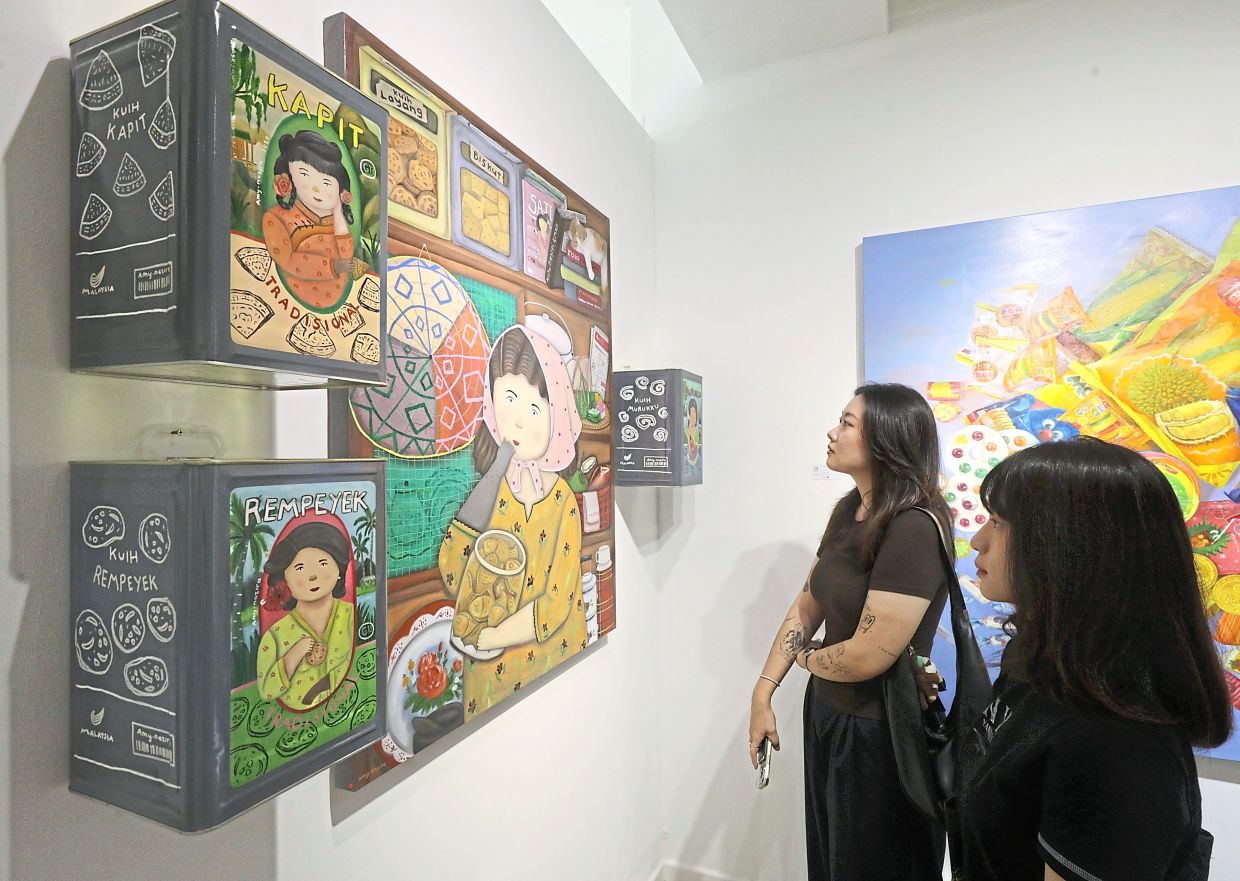
Narratives tend to change over generations, and Wong sees Merdeka’s timeless story as something that goes beyond the textbooks, where artists can find ways to reinterpret and keep it alive.
“For me, Merdeka is about freedom of expression, the ability to tell our stories in our own voices. The growing presence of Merdeka-inspired art shows how Malaysian identity is constantly evolving, shaped by reflection on the past and imagination for the future,” said Wong, who is also an art educator.
Inspiring deeper thought
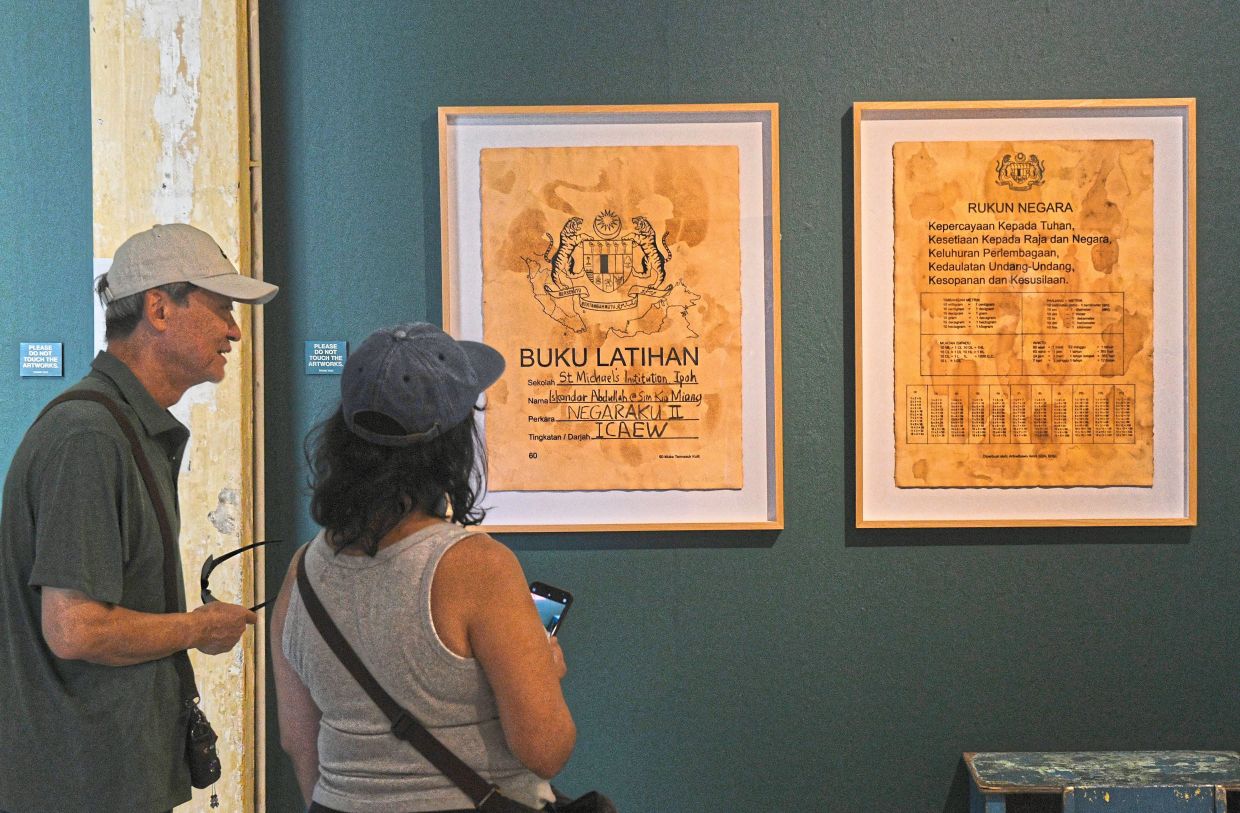
In George Town, Penang, independent curator Ivan Gabriel, who helmed both Negaraku shows – a collectors’ series by Bingley Sim and Ima Norbinsha – has seen how Malaysians embrace nationalistic themes.
This year’s Negaraku II, featuring 35 local artworks, is showing at Hin Bus Depot in George Town until Aug 31.
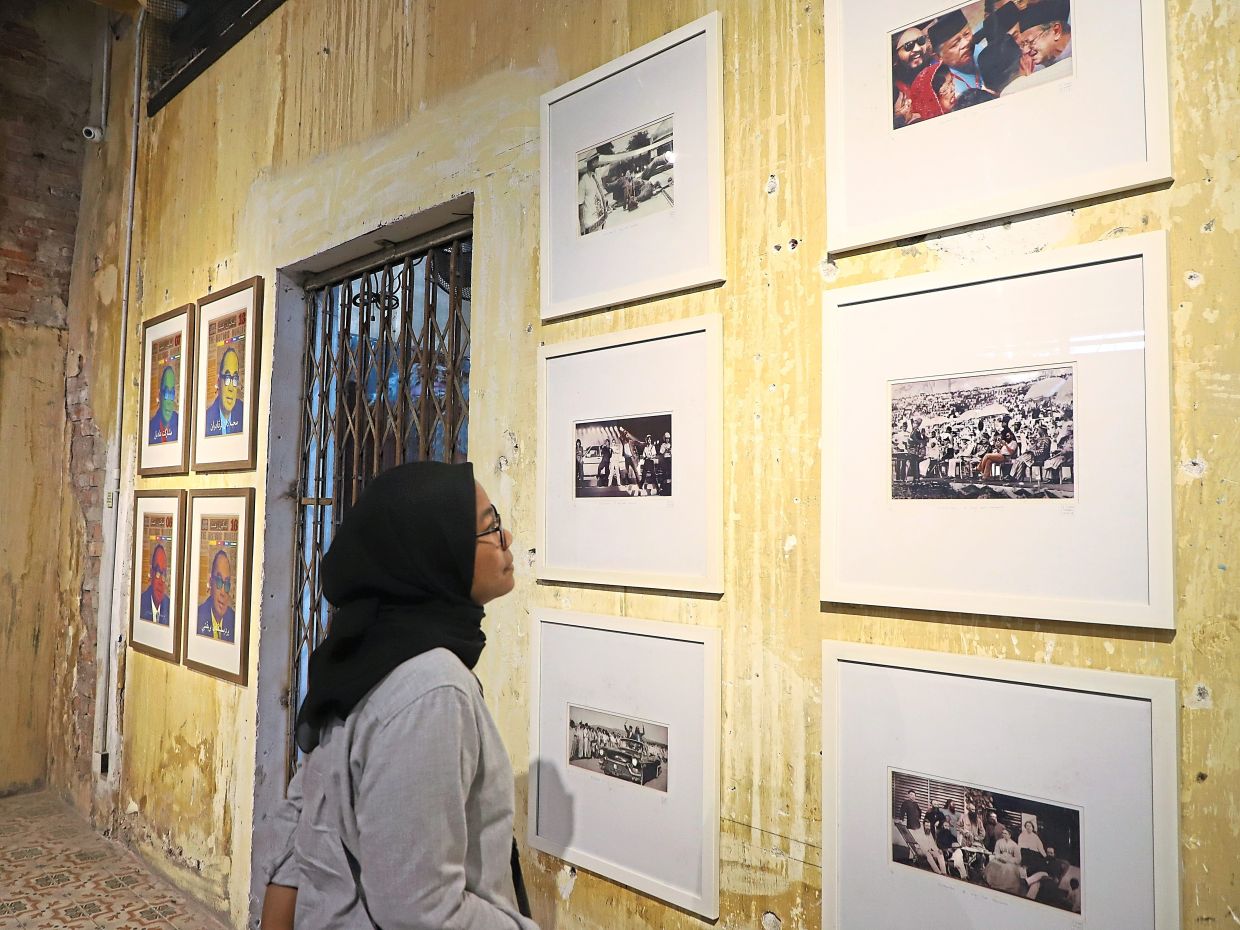
In Negaraku II, Ahmad Fuad Osman’s Recollections Of Long Lost Memories (2007–2008) has drawn and delighted visitors by presenting archival photographs and historic scenes through the eyes of a “bohemian time traveller”, foreshadowing contemporary hipster art with its playful, comical, digitally altered elements.
There is much more depth to this series than its humour suggests, yet it remains a Merdeka cult favourite that has stood the test of time, offering newcomers a gateway into Malaysian art.
“Merdeka, as a historical marker, cannot be confined to (just) the conventional repertoire of symbols such as Tunku Abdul Rahman, flags, or patriotic motifs. While these remain significant as foundational signifiers, contemporary artistic practices often seek to interrogate and reframe them in ways that resonate with present-day social, political, and cultural realities,” says Gabriel.
“Increasingly, artists are employing alternative strategies, be it through personal archives, performative interventions, material experimentation, or even irony and satire, to expand the discourse around independence beyond the nationalistic canon. And, I reckon, in doing so, they bring to the surface questions of belonging, marginalisation, memory, and futurity,” he adds.
Even as some Merdeka art pushes boundaries, Gabriel observes that audiences are growing increasingly receptive to this broader vocabulary of symbols and approaches.
“Rather than passively consuming familiar images, they are engaging with works that encourage critical reflection and reveal new possibilities for identification and meaning-making,” says Gabriel.
Art will find a way
At Galeri Puteh in Kuala Lumpur, the TanahAirKu exhibition – drawn from the spirit of Malaysia’s national anthem Negaraku – opens on Aug 28.
Featuring more than 25 artists, the show goes beyond the lyrics to offer an enduring expression of unity and belonging.
Mohd Nizam Rahmat, director of Galeri Puteh, has given the artists full freedom of expression, including several flag-themed works that invite the public to reflect on their deeper layers.
“Merdeka is a time when artists take pride in showcasing works that reflect their relationship with the nation. Each brings a different perspective, and that is where art becomes a platform for conversation,” says Nizam.
“At Galeri Puteh, we’ve seen an overwhelming response to this year’s (Merdeka) exhibition, even against the backdrop of political noise. Judging by the works submitted, it’s clear we share far more in common on canvas than we might assume – and if art imitates life, perhaps the same can quietly be true beyond it,” he adds.
At Exchange 106 (TRX) in Kuala Lumpur, the “Rasa” Merdeka! exhibition at the new gallery Ruang Teduh – a collaboration between arts portal Senimalaya and Galeri Puteh – brings Merdeka art to an upmarket setting.
It features 31 artists, including Ahmad Shukri Mohamed, Bayu Utomo Radjikin, Azizan Paiman, Hamir Shoib, Azzaha Ibrahim, Kide Baharudin, Long Thien Shih and Lina Tan.
It’s the kind of show where you see artists – many of them established names in the local scene – taking on Merdeka themes with layered meanings, satirical bite, and deeper insights.
At a time when conventional galleries are losing audiences, a strong line-up of thoughtful works is a welcome boost.
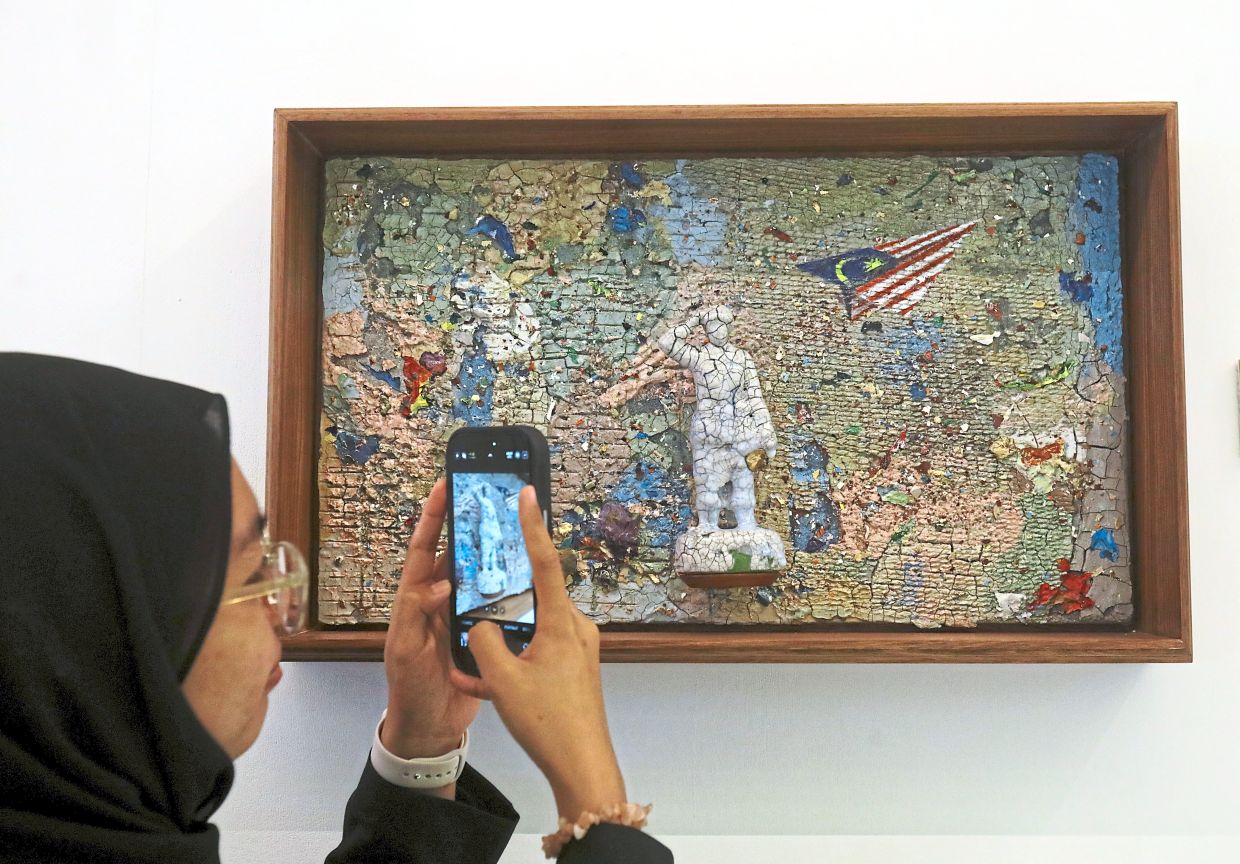
Umibaizurah Mahir Ismail’s Tabik, Tanah Tumpah Darah – a new Merdeka work – is a labour of love that takes her back to her youth.
Her ceramic practice, playful, ironic, and rich in symbolism, has also grown from strength to strength, with more European exhibitions and a recent residency at Cité Internationale des Arts, Paris.
“My inspiration for exploring independence often comes from childhood memories, where the imagination of the past intersects with the present. The paper plane in the piece, simple yet patterned with the Malaysian flag, embodies hope, perseverance and achievement, a reminder that freedom carries both responsibility and possibility,” says Umibaizurah.
Tabik, Tanah Tumpah Darah, made with local materials including actual soil, celebrates Malaysian roots, heritage, and identity.
“For me, ‘rasa Merdeka’ is not only about commemorating history, it is about living it,” she adds.
Another highlight is Kide Baharuddin’s Time Kutbah Kau Buek Apo?, in which he sketches scenes from his travels across the country, capturing the people and places he encounters.
“What I aim to convey in this work is my spontaneous response to society and my surroundings throughout my journey in Malaysia. Every trip reveals, especially through human behaviour, the ongoing search for identity and meaning,” says Kide.
Beyond the galleries
Graphic designers and illustrators are fuelling the Merdeka spirit with irreverence and creativity, using the season to connect directly with their audience.
Step into Ilham Gallery’s gift shop or a Central Market stationery shop, and you’ll find Merdeka celebrated through everyday art, with playful nods to pop culture.
In his home studio in Kuala Lumpur, Cultkids (Syazri Zamrod) has created a colourful new world of vintage-inspired designs, drawing inspiration from Malaysia’s film and music history.
“How do I prepare? Honestly, it’s just my own initiative to look at what’s special about Merdeka beyond the Aug 31 celebration and waving the flag,” says Cultkids.
“Instead of only focusing on the usual patriotic symbols, I like to dig into lesser-highlighted elements of Merdeka – whether from movies, songs, Pestabola Merdeka, or old advertisements. These often carry a lot of nostalgia and cultural weight, yet they’re not commonly brought forward in artworks today,” he adds.
His merchandise – a variety of posters, keychains, and tote bags – is sold at Books Kinokuniya Malaysia, Ilham Gift Shop, and Mari! Ke Kedai.
As Malaysia marks another Merdeka, one-man-show illustrators, fanzine designers, sticker-pack creatives, and printmakers enjoy far greater exposure today, bringing their work to the wider public.
“I see a lot more potential for this to grow, especially with opportunities to sell in bigger stores like Kinokuniya. I also believe more talents will come forward, opening up different audiences and markets for art. At the same time, it helps to keep the Merdeka spirit alive and nurture a stronger sense of national pride,” says Cultkids.
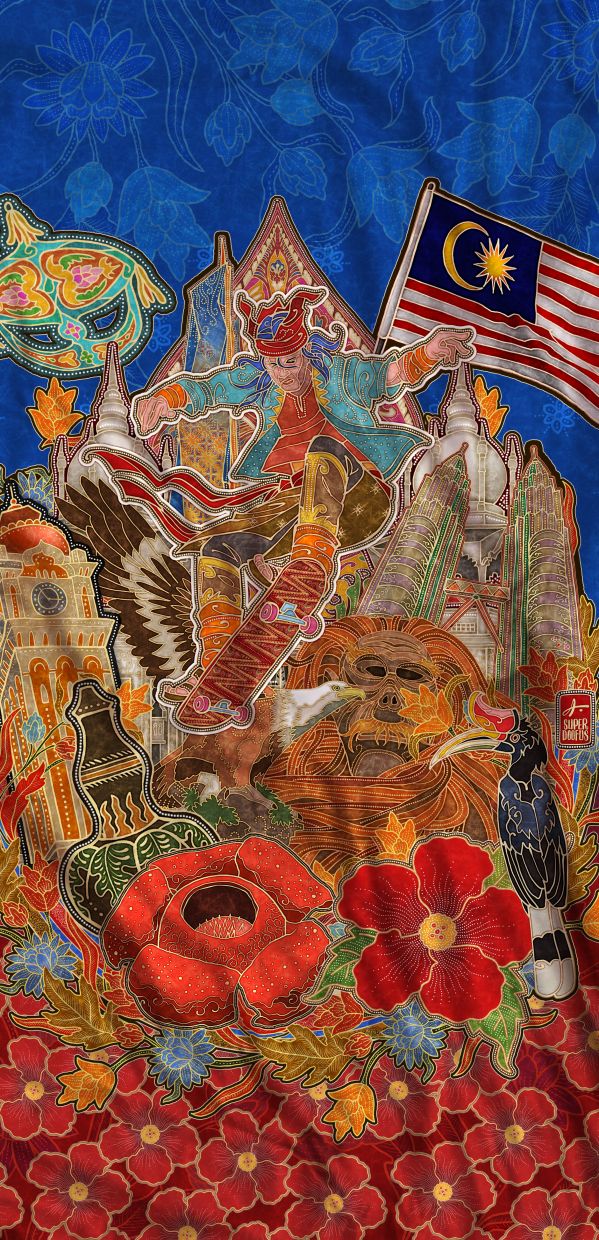
Illustrator Arif Rafhan, better known as Superdoofus, blends his batik-inspired style with Malaysian motifs like Tunku Abdul Rahman, the bunga raya and the hornbill, transforming them into wearable merchandise and limited-edition prints.
“Months before Merdeka, I spend time sourcing suppliers and deciding on the type of artwork I want to propose. By the end of August, I start hyping up my followers by sharing the designs before opening for orders. Like most sales, there are ups and downs, so as an artist, I need to diversify my merchandise to keep potential buyers excited each time I introduce new items and designs,” says Arif.
“This year, I’ve tried to keep things much more santai – not too serious. That’s why you’ll see fruit, beachwear ... and even Hang Tuah catching air on a skateboard!” he concludes.