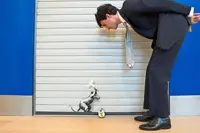
Iron Gang Puppet Theatre’s debut production at Petaling Jaya Performing Arts Centre (PJPac) this weekend is one that celebrates a classic folk tale from the region and the values we hold close to our hearts. In this contemporary iron-rod puppetry performance, titled Ibu, the story of Si Tanggang is given a contemporary interpretation.
The original story: After leaving his village and becoming rich and successful, Si Tanggang is ashamed of his humble origins and on a trip back home, refuses to recognise his elderly mother. Heartbroken, she curses him and when he sets sail, he and his ship turn to stone.
“One of the themes of this story is filial piety, which is also at the core of Chinese tradition. Many of us were raised with a parenting style that has no shortage of ‘threats’. I have a lot of struggles with my culture, but at the same time, I find it impossible to deny my identity,” says theatre director Ling Tang, who wrote the script and directs this production.
“This is why Si Tanggang stands out to me, it evokes a complex feeling and I have so much to express and maybe even challenge. I can’t imagine a mother cursing her son out of anger. For me, this story is scary and cruel, but the imagination behind this tale is beautiful, not unlike an ancient Greek tragedy.”
In Iron Gang Puppet Theatre’s take on this tale, Si Tanggang is given more of a voice than in the original version. We are offered a glimpse into the experiences that shape him, his motivations and the conflicts within.
“We want to retell the story from a macro view and invite the audience to reflect on our values, culture and identity. I always strive to present a work not only to people with similar thoughts, but to reach out to those with different backgrounds and ideologies. After such a long and fruitful journey with Ibu, we can’t wait to share what we have discovered with the audience and look forward to their feedback,” she adds.
A new perspective
Ibu is a creative endeavour that took the team two-and-a-half years to see to completion. This production is led by Penang’s renowned fourth-generation Teochew iron-rod master puppeteer Ling Goh, the founder of Iron Gang Puppet Theatre, with Stephen Teoh as art director and dramaturg.
In Ibu, the two main iron-rod puppets are Tanggang and his mother, plus a puppet ensemble comprising a crow and a flock of birds, a dying fish, a snake and a durian. There is also a fish that appears as an illusion, representing a young soul with dreams.

Living performers will make an appearance too, including Goh (as herself).
While a traditional Teochew iron-rod puppetry show is presented on a stage with a frame, the troupe has decided to do away with this for this weekend’s show in Petaling Jaya.
“The interaction between living performers and puppets is powerful and beautiful. By removing the frame, it miraculously draws fantasy and reality closer to each other,” says Tang.
The basic mechanics of animating a traditional iron-rod puppet via the three iron rods attached is retained, but the appearance of the puppet has been tweaked for this show.
In place of the traditional Chinese carving and colouring style is a more realistic face, hands and feet. The puppet is 20-30% larger than the traditional version, to make it easier for the audience to see the details. The puppet’s neck is set up with a mechanism to make the head movements more flexible and lively.
The Ibu puppet is made by puppetry artist Liang Mong-Han from Taiwan, while Tanggang and the other puppets and props are handmade by the Malaysian troupe.

The production has multimedia stage projection mapping by multidisciplinary digital artist Abdul Shakir and live music by five-piece band FAZZ, comprising Yonlynn (vocals), Aabid (woodwind), Grace (keyboard), Ayam Sorga (drum) and RFB (bass). FAZZ will be performing original pieces written for Ibu.
“For the past 10 years, FAZZ has constantly been exploring unique approaches in its musical expression. This includes our take on electro swing and alternative pop, using traditional jazz rhythm section, with electro beats and clarinet for a smoother touch.
“In Ibu, the audience can expect a fresh take on South-East Asian traditional elements merging with FAZZ’s musical expression. This ranges from emotionally-driven ballads to an intense hybrid of chaotic tensions. Also, dark humour.
“FAZZ will fuse the performance with Teochew drums, incorporating the influence of Teochew puppetry and opera in the show,” says RFB.
As is the norm for a traditional iron-rod puppetry performance, Ibu will kick off with a ritual session where troupe members present a series of auspicious scenes symbolising fortune, prosperity and longevity, before the performance proper.
Traditional art form
The origins of Teochew iron-rod puppetry can be traced back to two-dimensional shadow puppets made of dried leather strips and controlled with three long iron-rods attached to the arms and torso.
In the Qing dynasty, the screen separating the audience and the puppets were removed and three-dimensional puppets came on the scene, first fashioned out of tight bundles of hay, then wood and clay. The unique feature of the iron-rods were retained as the method of control, hence their classification as iron-rod puppets.

“The manipulation of iron-rod puppetry is challenging and the relationship between the iron-rod and puppet presents a delicate beauty. As the first-of-its-kind contemporary iron-rod puppetry performance, we wish to have more room to explore its possibilities and beauty in future,” says Tang.
To Goh, the beauty of iron-rod puppetry is not limited to the puppets, it also includes language, music, stage presentation and styling.
“There are stories behind every evolution of iron-rod puppetry. To me, our move to contemporise iron-rod puppetry is beautiful as well,” she says.
Iron Gang Puppet Theatre, formed earlier this year, is a contemporary iron-rod puppet troupe rooted in the aesthetics and symbolism of Teochew iron-rod puppetry. It aims to explore the possibilities of iron-rod puppetry revitalisation and to nurture new generations of puppeteers, bringing this traditional art form into the world of contemporary theatre.
“Teochew iron-rod puppetry, once famous in Singapore and Malaysia, is declining with time. The Teochew puppetry has not evolved much since the past century. How could I bear to see it fading into an artifact? So, I decided to innovate it,” says Goh.
She concurs that there are challenges in making such innovations.

“We relentlessly learn, explore and experiment boldly in an attempt to discover more possibilities. Meanwhile, we also ponder the connection between the Teochew traditional iron-rod puppetry and the contemporary world. We switch our mode of thinking and form of presentation, and try to view and narrate the story from more diverse perspectives.
“Bringing forward the beauty of the past era with a modern touch will help modern-day society to understand and appreciate the beauty of this traditional art form. Beauty should be timeless and able to travel across time. Ibu should be a bridge linking the contemporary and traditional worlds,” she says.
However, Goh cautions that if everything evolves and changes according to the needs of the present day, we are in danger of losing the essence of the art form. It is a tricky thing to balance tradition and modernity, but Iron Gang Puppet Theatre is determined to do it.
“Traditional art practitioners inherit the format and shape without developing it further. When the art form becomes static, people will lose interest. Innovation is definitely important for cultural sustainability. But there is often a huge gap between the traditional and contemporary.
“In order to engage a modern audience and reconnect them to the past, we have to present the value and beauty of the traditional art form. The past is where we come from. A generation without the past will be soulless,” concludes Tang.
Ibu is on at PJPac in 1Utama, Selangor on March 25 (8.30pm), March 26 (3pm, 8.30pm) and March 27 (3pm). Presented in Teochew, Bahasa Malaysia, English and Korean, with Chinese and English surtitles, this is a 90-minute show without intermission, followed by a post-show talk. Tickets range between RM65 and RM200. More info here.
Already a subscriber? Log in
Get 20% OFF The Star Digital Access
Cancel anytime. Ad-free. Unlimited access with perks.