Being in the sustainability realm, attending COP feels like the epitome of the ESG agenda.
You hear so many expectations put forth at the negotiation dialogues in the Blue Zone, while innovations and ideas are sparked in the Green Zone. Close to 200 countries participated in COP31 in Antalya, Turkiye, with over 92,000 participants registered for the conference over a two-week period starting 9 November.
It was, in my own words, organised chaos.
Our Malaysia Pavilion was very strategically situated, neighbouring Canada, the UK, Indonesia, Brazil and China.
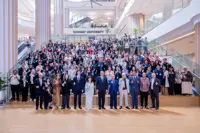
Speaking on a panel for Gamuda on the topic “Driving ESG Governance and Climate Action” was truly an enjoyable and insightful experience alongside Amanah Lestari Alam and Ditrolic Energy.
Moderated by Prof Dr Jeyraj Selvaraj of Energy Dedicated Advanced Centre at Universiti Malaya, the session touched on what it takes for the public and private sectors, backed by mandatory regulatory enforcement – to drive Malaysia towards net zero by 2050.
On the panel, I spoke about how Gamuda embeds ESG right into the heart of our engineering and construction work through Sigma, our in-house sustainability tech suite.
Rather than treating sustainability as an afterthought, we use it to combine feasibility studies, geospatial tracking, and hands-on environmental monitoring – from tree surveys along urban and forested alignments to marine eDNA sampling – to keep our projects auditable and accountable from day one.
By pairing science-based targets with strict supply chain key performance indicators, we ensure our climate commitments are backed by real data and sustained monitoring, not just good intentions – a rigour that reinforces our standing as the only engineering and construction company in Malaysia validated by the Science Based Targets initiative.
I found it equally refreshing to hear Ditrolic Energy share a similar philosophy.
Instead of stopping at local regulatory minimums, they apply international International Finance Corporation’s Performance Standards across stakeholder engagement, livelihood preservation, and cultural heritage – and crucially, hold their contractors and subcontractors to those exact same standards.
Meanwhile, Amanah Lestari Alam seeks to turn individual mindset shifts into sustained environmental behaviour by connecting governments, industry, universities, non-governmental organisations and communities.
They further stressed that climate efforts must look beyond a land-based green transition: oceans are a major source of oxygen and carbon sinks, making marine ecosystems an essential part of environmental governance and climate action.
While COP was all about conversations, every day without fail, there were loud demonstrations.
They made the experience ever so colourful, and you could literally feel the protesters’ frustrations through their angry chants.
Their demands ranged from ending the exploitation of fossil fuels – particularly on indigenous lands to affordable housing, job availability for everyone and climate justice over broken promises as the world faces overshooting the 1.5°C warming threshold.
Yet every day, before walking past the many security gates, you check your COP31 app to see the heartening topics on the agenda.
With thematic days cutting across health, agriculture, energy, green finance, social development, marine, nature and land use, there were always interesting conversations and emerging trends to explore.
In the Malaysian context, there were several key highlights.
Natural Resources and Environmental Sustainability Minister Datuk Seri Arthur Joseph Kurup launched Sukuk Prisma with the Securities Commission Malaysia to the global market.
It is a purpose-driven sustainable sukuk framework designed to mobilise capital for climate adaptation, resilience and transitional financing.
This includes flood mitigation, coastal protection, agriculture and the resilience of power grids. Debuting on the global stage at COP gave the initiative timely international visibility and sparked palpable enthusiasm among attendees.
Pos Malaysia also highlighted its progress in sustainable logistics, with over 1,500 electric delivery vehicles covering more than 30 million green kilometres nationwide – something we never would have imagined years ago, when we perhaps took our parcel deliveries for granted.
Its sustainability head Jarod Ho shared that today, one in every three parcels is delivered green. As he noted, green delivery is an enabler, not the destination.
As UEM Lestra managing director Harman Faiz candidly shared with me about his COP experience, data centres are here to stay, and our country needs a greater push for renewable energy. Annual dialogues like COP help draw critical attention to grid readiness and project bankability.
Overall, the Malaysian Green Technology and Climate Change Corporation did a commendable job uniting the local public and private sectors, bringing together over 100 speakers across 50 sessions, attracting over 7,000 delegates under the Malaysia Pavilion.
On a lighter note, it was also mind-blowing seeing the sheer number of media conferences held simultaneously, alongside mini sets for influencers and stand-up video interviews. Between the protests, the panels and the cameras, there was relentless commotion with thousands walking by.
Amid all that noise, some of the people I spoke to – especially those privileged enough to have attended a few COPs in the past – felt a bit jaded, dismissing it as “all talk and no action”.
Yet I was reminded of the optimism of the young people participating, like Abigail Malakun, a Sabahan currently pursuing her master’s at Oxford who joined COP as co-chair of the Young Engineers/Future Leaders Working Group on Climate Action (SDG 13).
She summed it up nicely: “It’s better to have some talk and some action than no talk at all.” After all, the future belongs to them, and youth voices must continuously be heard and meaningfully represented in climate discussions and decision-making processes.
That scepticism is understandable when the scale of the work ahead feels daunting. Yet history has shown time and again that when the stakes are high enough, human grit and ingenuity rise to solve the biggest challenges.
While others debate the timeline, we at Gamuda remain focused on what we have always done best – putting engineering to work on the defining clean energy and sustainable infrastructure challenges of our time.
Because beneath the noise of 92,000 voices, everyone there is ultimately fighting for the same thing: leaving future generations an Earth they can still call home.
Ong Jee Lian is Gamuda group chief communications and ESG officer.