THERE is something endearing about a photograph of a silver-haired gentleman smiling as he holds up two familiar forms of cooking oil, one bottled, the other in a pouch. He could be unveiling an invention. Instead, he is explaining something found in almost every Malaysian kitchen.
Other photographs show attentive faces, applause and lively conversations. Nothing grand, yet something meaningful is unfolding: professional knowledge acquired over decades being shared freely with the community.
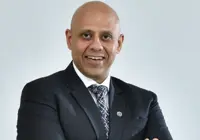
Meet Qua Kiat Seng, Teoh Beng Chuan and Steven JJ Lee. Two have retired from corporate careers, while Lee remains an entrepreneur. I affectionately call them three not-so-young men, although Lee might demand a recount!
On Oct 31, 2026, they came together at Acacia by Pacific Senior Living in Klang for “Choosing the Right Cooking Oil”, exploring consumer choices, Malaysia’s palm oil journey and red palm oil. Their mission is education, not sales.
Qua put their progress plainly: “We just wrapped up our 24th talk in Klang on Oct 31, 2026 with 75 attendees, bringing our total to 1,385 people reached so far, and engagement was fantastic throughout.”
The figures are his own, but they show this is no passing retirement pastime. Twenty-four sessions require persistence, preparation and probably the occasional battle with a reluctant projector!
To me, this is more than a story about cooking oil.
It is about generosity, purpose and the conviction that while careers may end, knowledge need never retire.
Qua graduated from the University of Singapore in 1974. His career in refining, oils and oleochemicals took him through Unilever and ICI in Malaysia, Australia and the Netherlands. He later chaired Kuala Lumpur Kepong Bhd ’s Standard Soap in Britain and is now an adjunct senior lecturer at Monash University Malaysia.
In 2015, he helped establish the Institution of Chemical Engineers’ Palm Oil Processing Special Interest Group. Monash hosted his cooking-oil talk in March 2024, one example of an outreach commitment that has outlasted his corporate career.
His motivation was captured in a 2020 interview with The Chemical Engineer: “I volunteer because at this phase of my life it is about giving back to society and my homeland.”
There is our story in a nutshell. Or, appropriately, in a palm kernel! A corporate appointment ends, but the desire to contribute need not. The dividend of experience can be shared without waiting for an annual general meeting.
Qua began with a practical question. Faced with olive, sunflower, canola, soybean, coconut and palm oils, what should a family choose? Is expensive necessarily healthier? Does a reassuring label tell the whole story?
Many bottles proudly declare themselves “cholesterol-free”, although vegetable oils naturally contain no cholesterol.
Such a claim does not establish that one oil is nutritionally superior. Consumers need to examine ingredients, fatty-acid composition, cooking methods and price, rather than admire the packaging. We may spend longer researching a handphone than the oil going into our wok!
The questions could have come from any Malaysian coffee shop. How many times can frying oil be reused? Can olive oil be used for frying? Is canola really “engine oil”? Is cloudy oil spoiled? What about an expired bottle? Which oil is healthiest?
There are no universal shortcuts. Oil deteriorates with heat, time and contamination, so no fixed number of reuses guarantees safety. Suitable olive oils can be used for frying. Food-grade canola is not engine oil. Palm olein can crystallise and appear cloudy in cooler conditions without necessarily becoming spoiled. Rancidity, storage and product dates still matter.
Misconceptions spread particularly quickly when an isolated scientific finding is repackaged as an absolute truth. The consumer deserves context: what a study actually measured, whom it involved and whether its conclusion applies to everyday meals. That is precisely why experienced educators who can explain uncertainty are valuable.
Nor is there one champion for every household and cooking purpose. Different oils have different nutritional and heat-related properties. Overall diet, portion sizes and preparation count too. Established dietary guidance generally recommends limiting saturated fat, favouring suitable unsaturated fats and avoiding industrial trans fats.
A homemaker concerned about cholesterol, a hawker managing frying costs and a family watching its budget need practical answers, not slogans. Science should enlighten, not frighten, and good advice must be affordable enough to use.
Teoh spent more than 35 years downstream, moving from Lam Soon and Sime Darby through international marketing to leadership of the Palm Oil Refiners Association of Malaysia. He retired in 2021, but his industry knowledge remains very much in circulation.
He was emphatic about the trio’s independence: “Contrary to what some may think, we are conducting these talks on a pro bono basis. No company is paying us to promote its products, brand name or its corporate image. We are not selling anything. Neither are we asking the participants to buy anything.”
Sharing their experience, he said, is a passion. Nor did he disguise his advocacy.
“In essence, we are unabashed to say we are promoting palm oil,” he explained, arguing that “lies, half-truths and misinformation” have unfairly shaped perceptions.
“In short, we wish to put right a wrong.”
His conviction deserves respect. So does the distinction between correcting misinformation and brushing aside legitimate concerns. Credible advocacy recognises both.
Teoh traced oil palm from its West African origins and 19th-century introduction to Malaya to commercial planting at Tenna-maram Estate in Selangor in 1917. Few then foresaw its contribution to Malaysian livelihoods, industrial development and international trade.
In 2025, Malaysia had approximately 5.7 million ha planted with oil palm and produced 20.28 million tonnes of crude palm oil, according to the Malaysian Palm Oil Board.
Yet, statistics say little about the people behind them.
Having spent much of my working life among palms, I know every fresh fruit bunch has a human story. Smallholders, harvesters, mill workers, scientists, transporters and their families have helped build an industry that paid school fees, opened opportunities and connected rural communities with urban markets. Sabah and Sarawak know those benefits, alongside the responsibilities of land management and conservation.
Teoh also followed the fruit through mills and refineries. Palm oil comes from the flesh, palm kernel oil from the seed. Their processed derivatives enter foods, soaps, detergents and other familiar products. The palm may accompany us from breakfast to bath time without introducing itself!
Oil palm produces more oil per ha than many competing crops, an important land-use advantage. But higher yields do not excuse deforestation, wildlife losses or poor labour practices.
Steven JJ Lee, a Universiti Putra Malaysia graduate in Food Science and Technology, is founder and chief executive of HARVIST. His biography credits him with involvement in more than 40 edible-oil processing plants internationally.
His subject is red palm oil. While Malaysians know golden-yellow refined oil, the fruit naturally contains reddish-orange carotenoids, including beta-carotene, which the body can convert into vitamin A. Specialised processing can retain more of these pigments and vitamin E compounds, including tocotrienols.
It is an intriguing example of Malaysian innovation, but nutritional promise is not proof of medical benefit. Early studies involving red palm oil and rice's glycaemic response require independent scrutiny; no cooking oil should be advertised as a miraculous treatment for disease.
Steven also promotes demonstrations and factory visits, turning an industrial plant into an unexpected classroom. Perhaps a child seeing fruit transformed into oil will one day become a scientist or engineer.
His gratitude adds a touching human note: "I am incredibly grateful to have been guided by two experienced seniors and pioneers in the palm oil industry." He thanks Teoh and Qua for bringing him along. "Seeing the happy faces of the participants and feeling their genuine appreciation makes every single effort worthwhile." He says the journey has left him with memories to cherish for life.
Here is mentorship across generations, not merely three names on a programme. Experience has found a younger voice, while appreciation has become a shared reward.
Qua explains the science of oils, Teoh the national story behind the crop, and Steven the possibilities of innovation. One tells us what goes into our wok, another where it comes from, and the third what else we can make of it.
But why stop at three? Malaysia has scientists, agronomists, engineers, nutritionists, educators and retired professionals with decades of knowledge. The palm oil fraternity invests in production, research, sustainability and market development. Public understanding deserves support too, from associations, companies, universities and partners beyond the industry.
The need is not simply more publicity. Industry conferences already speak effectively to people who know the business. The challenge is to reach those outside the industry, especially young people who may recognise a palm oil controversy online but not the fruit itself. A conversation built around questions is more useful than another polished defence.
Support must not mean buying the message. Let the industry help with venues, logistics and learning materials while independent specialists check scientific claims. Trust grows when difficult questions are welcomed, not edited out.
Start by training the trainers. Develop balanced modules in Bahasa Malaysia, English and other appropriate languages. Pair experienced retirees with younger professionals and volunteers. Give them demon strations, reliable sources and the freedom to say, "We do not yet know."
Reach today's generation on its own platforms. Commission creative young Malaysians to make lively TikToks, Instagram Reels, YouTube Shorts, animations and podcasts. Imagine one-minute explanations of cooking-oil myths, a fruit's journey to the frying pan or the palm-derived ingredients hiding in everyday products. Add wit and striking visuals, but disclose sponsorship and check the science. If misinformation can go viral, why shouldn't good science?
Then bring the outreach into schools, colleges, rural towns, neighbourhoods and senior living communities. Invite doctors and dietitians as independent partners who can scrutinise nutrition claims, not as captive audiences for promotion. Youngsters should be able to handle a fresh fruit bunch, ask awkward questions and understand agriculture's environmental trade-offs.
Begin modestly. Train local teams, ask what participants knew before a session and what they learned afterwards, then improve the next presentation. In Sabah and Sarawak, adapt language and delivery to local communities. Count understanding, not merely views, brochures or applause.
This is national service without uniforms or another committee to decide when the next committee should meet! It calls for practical materials, credible volunteers and a willingness to share.
I often return to the Malay saying, "Tak kenal, maka tak cinta." How can we appreciate what we scarcely understand? Many Malaysians use palm-derived products without seeing a fruit bunch, visiting a mill or meeting a smallholder. Some hear only economic praise, others only controversy. Both deserve a fuller picture. Knowing does not mean admiring uncritically; it means recognising contributions, questioning shortcomings and caring enough to improve.
That is why these three men move me. A working life is spent acquiring expertise and pursuing targets. Later comes a different question: what shall we do with everything we have learned? Retirement deserves its rest, but those who wish to contribute can mentor and teach without another title.
Our parents taught us not to waste a drop of cooking oil. Perhaps we should be just as careful not to waste a lifetime of accumulated wisdom.
Let three voices inspire many. From one gathering to schools and neighbourhoods nationwide. From industry knowledge to public understanding. That is a legacy no retirement certificate can close and no bottle can contain.
Three Malaysians. Three journeys. One generous purpose. By Malaysians, for Malaysians.
That, surely, is the good oil worth passing on.
Joseph Tek Choon Yee has over 30 years of experience in the plantation industry, with a strong background in oil palm research and development, C-suite leadership and industry advocacy. The views expressed here are the writer’s own.