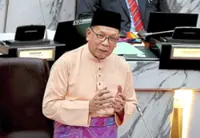
I recently shared the Sultan of Selangor’s statement regarding Ronnie Liu and Wong Siew Ki on my Facebook page. What struck me most was not the disagreement itself, but the nature of many of the comments. A large number of them were driven more by emotion than careful thinking. Many seemed unable to separate the actual issues involved, while others immediately framed the matter purely through racial or religious lenses.
In reality, there are two interconnected yet separate issues here.
The first is the issue of adab, cultural sensitivity, and how one engages institutions within the context of Malaysia’s constitutional monarchy and multicultural society.
The second is the broader policy discussion involving pig farming, urbanisation, environmental management, and long-term planning for a state like Selangor.
Many people seem to confuse the two.
From what I understand, the Sultan’s unhappiness was not simply about whether one agrees or disagrees with pig farming. Rather, it was about how the matter was discussed publicly, the tone used, and whether sufficient wisdom and sensitivity were exercised when engaging such a sensitive issue involving the palace, the rakyat, and the wider social fabric of Malaysia.
This is something many Malaysians today fail to appreciate. In life, it is not only what you say that matters, but also how, when, and where you say it. One may legally argue a point and yet still fail in wisdom, manners, and cultural sensitivity.
In Asia, and especially in Malaysia, adab matters. Respectful engagement matters. Tone matters. Context matters. Institutions matter.
This does not mean one cannot disagree. But disagreement must still be exercised with wisdom, maturity, and awareness of the broader social fabric of the nation.
Now let us come to the second issue, the policy discussion itself.
Selangor today is no longer a semi-rural state. It is one of the main economic engines of Malaysia and will only become more urbanised, industrialised, and densely populated in the decades ahead. As development expands, it becomes increasingly important to ask difficult but necessary questions about land use, environmental sustainability, public health, congestion, and social harmony.
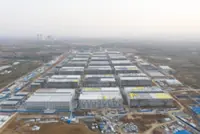
This should not be viewed only through the lens of pig farming. The same thinking should apply to poultry farming and other forms of heavy agricultural activity if they create major environmental, congestion, health, or social pressures when located too close to major urban centres and water catchment areas.
At the same time, we must also be honest that pig farming carries additional environmental and biosecurity challenges compared to many other forms of livestock farming. Pig waste decomposes much faster, produces stronger odours, and can create more concentrated environmental pressures if not managed properly. Malaysia’s painful experience with the Nipah virus outbreak should also remind us that poorly managed livestock systems can have serious consequences.
This is why many countries are slowly moving towards more state-of-the-art, closed, modern farming systems with strict environmental controls, advanced waste management, and proper biosecurity measures. Whether it is pig farming, poultry farming, or other intensive livestock activities, Malaysia too must slowly but surely move in that direction.
Of course, such transformation is capital intensive. It cannot happen overnight. Farmers, industries, and governments need time, support, technology, and proper transition plans. But we must at least agree on the direction we want to move toward as a nation.
Perhaps certain industries are also more suitable in states with lower population density and larger land availability, rather than highly congested urban corridors like Selangor. Sarawak, for example, already has larger land areas and lower density that may allow for more suitable long-term planning for certain agricultural activities.
What is unfortunate is that Malaysia’s political class and wider society still seem unable to calmly and maturely discuss such issues based on facts, long-term planning, environmental realities, and national priorities. Everything quickly becomes racialised or religiously charged. Instead of discussing planning, technology, environmental management, logistics, and future development, the conversation immediately turns into:
“Who is taking what away from whom?”
That is not healthy nation-building.
In many ways, it is also unfortunate that such matters eventually require royal intervention or public royal displeasure before serious reflection takes place. Ideally, these are issues that mature political leaders, policymakers, and society itself should already be able to analyse and discuss responsibly without inflaming racial or religious sentiments.
If Malaysians truly do not want royalty to repeatedly enter such arenas, then we ourselves must mature politically and socially. We must learn to conduct proper situation analysis, think long-term, study realities honestly, and ask one simple question:
What is truly best for the country and future generations?
At the end of the day, not every policy discussion is an attack on a race or religion. Sometimes it is simply about managing a modern nation wisely and preparing responsibly for the future.
Malaysia must continue learning how to balance rights with responsibilities, economics with environmental sustainability, development with harmony, and freedom with wisdom.
Only then can we move forward as a mature nation.