UNIVERSAL basic income (UBI), in some form or other, has been discussed over most of the last century and into this one.
What exactly is UBI? It is a policy where the government provides all citizens with a regular sum of money, regardless of their income or employment status.
There have been small-scale pilot programmes to test out whether UBI, a revolutionary idea, can work.
No country has a national-level full-fledged UBI programme running, with the closest being a cash-transfer programme in Iran.
The main argument for having a universal and unconditional cash-transfer programme is that there will be no question of whether people are deserving of it. The cost of such such a programme – assuming there is an effective way of dispersing the cash – will be lower since all citizens are eligible.
There will also be no need for any infrastructure to parse through details on income eligibility.
As to arguments that it disincentivises people from working or working more hours, UBI transfers are not reduced when a person progresses out of poverty or certain income thresholds due to the unconditionality of the programme.
Recently, a two-day workshop on UBI in a Malaysian setting was held by the Basic Income Earth Network (BIEN), in which insights and possibilities were shared on how this initiative can be implemented.
It is arguable whether the current cash-transfer programme, the Sumbangan Tunai Rahmah (STR) or even the iterations before it – going back to the Bantuan Rakyat 1Malaysia that was rolled out in 2012 – can be considered as UBI since there are eligibility criteria.
Still, Malaysia is certainly no stranger to cash transfers or other initiatives to alleviate hardship and poverty.
A general observation made by BIEN panellists is that the STR, Sumbangan Asas Rahmah (Sara) and other cash-transfer programmes targeted at various socio-economic groups have all evolved in an ad-hoc way and should be restructured to work more sustainably in which cash transfers are paid monthly (versus some being paid quarterly) to all citizens without preconditions.
For BIEN and UBI advocates, these cash transfers to individuals can empower people to make their own choices on expenditure. For these people, unstable income or low wages is a structural problem, which UBI can partly alleviate.
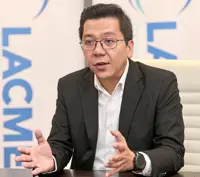
Lee Seng Kiat, a BIEN executive committee member, believes that the persistence of cash transfer programmes in Malaysia, despite the changes in government over the past 10 years, demonstrates the need for a more robust and efficient programme that is far less polarising in terms of whether recipients are deserving or not.
“Some of the existing benefits are conditional to being unemployed or disabled, which collaterally leads to a disincentive to work. By being unconditional, UBI is therefore not ‘money for nothing’, but ‘money for anything’, including work,” he says.
UBI advocates often champion the most affordable and simplest solution for cash transfers, which is often existing infrastructure that governments can use.
In Malaysia, the solution is the national identity card or MyKad, which has features ranging from accessing government services to financial transactions. Lee says for MyKad to be used, the registry for citizens needs to be strictly updated.
More controversially, there needs to be a legal path to citizenship, which may not sit so well politically, given the complicated history surrounding citizenship in Malaysia.
Then, there is the problem of how to fund the UBI.
The Malaysian government’s debt-to-gross-domestic-product ratio stood at 63.1% as at end-June 2024, with the government aiming to lower the ratio through fiscal consolidation involving subsidy rationalisation for electricity, water and diesel. Further rationalisation of the electricity tariff and RON95 petrol is expected in the second-half of 2025.
The argument is that there is no way Malaysia can afford UBI given its debt load but Dr Geoffrey Williams, an economist and business consultant, lays out several possibilities in funding UBI.
“The possibilities for funding a UBI in Malaysia have not been fully evaluated but are likely to be perfectly affordable, either from existing spending or from other sources,” he says.
Williams and BIEN’s global chairman, Dr Sarath Davala, believes that UBI is affordable for the country as the amount to start with can be modest, as low as RM100 monthly per person, which is still double that of the RM50 under STR or Sara.
Dr Sarath says BIEN’s UBI vision is not about meeting all basic needs but to give poorer recipients some basic security that can unleash human potential and motivate people to improve their lives.
Williams calculates that this will cost the government RM36bil annually. In comparison, the subsidy rationalisation is estimated to save RM19.5bil while the bill for STR/Sara comes to RM13bil annually.
Savings from subsidy rationalisation, together with shifting the STR/Sara payments to UBI cash transfers, can cover 85% of Malaysians. Other alternatives Williams suggests are to have a 1% electronic payments tax to raise up to RM28.8bil or a superfund consolidating the smaller government-linked funds to raise RM50bil.
These alternatives will not disturb current government spending plans.
John Michael, BIEN’s Asia-Pacific lead, says UBI does not remove the incentive to work; it is about providing people with the security to seek better opportunities, improve skills, care for others, or build something of their own, citing a pilot UBI project in Hyderabad, India, where participants used the income to reduce financial stress, invest in education, and explore alternative livelihoods.
He says that in Malaysia, where many are in gig jobs, and where automation and wage stagnation are real concerns, UBI can serve as a foundation for a more resilient and fair society.
Already a subscriber? Log in
Get 20% OFF The Star Digital Access
Cancel anytime. Ad-free. Unlimited access with perks.