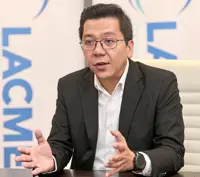
The crypto buzz


THE cryptocurrency and blockchain technology scene has seen a number of developments over the past few weeks.

Prime Minister Datuk Seri Anwar Ibrahim has expressed his commitment to explore a digital finance policy embracing cryptocurrency and blockchain technology.

It was revealed that he has held discussions with the United Arab Emirates government as well as crypto giant Binance to develop a digital finance policy.

This week, Binance former CEO Changpeng “CZ” Zhao was said to be coming to Kuala Lumpur to meet with government officials as well as speak to an audience of crypto enthusiasts.

The meeting seems to have been called off for now.

Recall that Binance effectively halted its US operations in the aftermath of a June 2023 lawsuit from the US Securities and Exchange Commission that accused the exchange and CZ of mishandling customer funds, misleading investors and regulators, and breaking securities rules.

That November, CZ pleaded guilty to anti-money laundering and sanctions violations and Binance agreed to pay US$4.3bil in a settlement with the United States. CZ also served some time in prison in the United States.

Meanwhile, industry players welcome the new thrust by the Prime Minister to push for a national blockchain policy but question what happened to the National Blockchain Technology Roadmap 2021-2025, which was launched in 2022 by the then government’s Science, Technology and Innovation Minister Datuk Seri Dr Adham Baba.

With nothing significant having come out of that roadmap, will a new one be any different, they question.

But first up, why is it important to have a blockchain roadmap and what would happen if a country doesn’t have one.

Bear in mind that Malaysia already has some level of cryptocurrency and blockchain regulations by the Securities Commission, which licenses a number of exchanges to allow Malaysians to legally trade in cryptocurrencies.

Under the regulations, the said exchanges have to demonstrate compliance with anti-money laundering and counter-terrorism financing regulations, including customer due diligence measures.

This is crucial because money laundering remains one of the biggest users of cryptocurrencies today.

Going by some reports, the total value of cryptocurrency transactions linked to illicit activities last year is estimated at US$40.9bil.

Aside from money laundering, hackers also tend to collect their ransom in crypto currencies.

Until today, one can surreptitiously use over-the-counter mechanisms to buy and sell crypto in cash, affording you the ability to transact outside the monitoring of the authorities including the taxman.

It has also been reported that criminals employ various strategies for laundering funds, including crypto mixers (or tumblers), cross-chain bridges, and multiple wallet transfers (referred to as “hops”) to obscure the origins of illicit funds.

Despite advancements in blockchain tracking technology, these methods allow for significant obfuscation of fund flows, the reports indicate.

Crypto enthusiasts, however, counter these negative elements of their industry by noting that in the “fiat” or cash world of currencies, the same and even more bad users, in value terms, are prevalent.

“At least in the crypto world with blockchain technology, there is always a chance of tracing the sources of the cryptocurrencies,” notes one player.

Indeed, the promises of blockchain and cryptocurrencies do sound impressive.

Last year, government MP Syerleena Abdul Rashid urged Putrajaya to consider utilising blockchain technology to enhance transparency and combat corruption, noting that the technology enhances trust, transparency and security in the digital economy.

She cited the case of Georgia which had implemented blockchain solutions to secure land registry records, reducing fraud in real estate transactions.

She also said Estonia uses blockchain technology to protect public data using keyless signature infrastructure.

Meanwhile, Anwar last December had appointed former Thailand prime minister Thaksin Shinawatra as an informal adviser to assist Malaysia as Asean chair 2025.

Thaksin has recently said that as part of that role, he has been assigned to make a proposal and recommendation for Asean to start working towards adopting a cryptocurrency.

However, it isn’t clear if this is an idea to have an Asean cryptocurrency to be used by countries in the region for trade purposes.

Such an idea or common currency could be extremely challenging, considering the vast differences among the wealth and financial strengths of the countries.

As for the national blockchain policy, industry players reckon that it is necessary to future-proof the country and that financial technology innovation that is already going on with the local banking players is too slow.

It is for this reason they are hoping for a national policy that entails both the public and private sectors working together to foster innovation in the sector or risk having regional countries overtake us in this sector.

Get 20% OFF The Star Digital Access

Monthly Plan

RM 13.90/month

RM 11.12/month

Billed as RM 11.12 for the 1st month, RM 13.90 thereafter.

Best Value

Annual Plan

RM 12.33/month

RM 9.87/month

Billed as RM 118.40 for the 1st year, RM 148 thereafter.

Follow us on our official WhatsApp channel for breaking news alerts and key updates!

Next In Insight

The leader-manager
Hidden subsidy behind cheap labour
A limited retirement solution
Riding on AI boom
Indonesia: Playing the long game
The student loan conundrum
Human agency in the future of AI
When oil palm estates run short of hands
Wall Street titans’ trading numbers are a worry
AI uncertainty is rising, so is investor conviction

Others Also Read