PETALING JAYA: The plantation sector’s outlook remains supportive as elevated crude palm oil (CPO) prices are expected to persist through the second half of 2026 (2H26), underpinned by tightening supply and resilient demand, according to Hong Leong Investment Bank (HLIB) Research.
“While drier weather conditions warrant monitoring, we expect elevated CPO prices to persist through 2H26 amid tightening supply and resilient demand, supporting our ‘overweight’ stance,” it said.
The research house maintained its 2026 and 2027 average CPO price assumptions at RM4,450 and RM4,300 per tonne, respectively. Its top picks are IOI Corp Bhd and Hap Seng Plantations Holdings Bhd, with target prices of RM5.10 and RM2.80, respectively.
HLIB Research said the recently concluded second-quarter (2Q26) results season was mostly in line, with five out of six plantation companies under its coverage meeting expectations, while Johor Plantations Bhd (JPG) fell short due mainly to weaker-than-expected fresh fruit bunch (FFB) production.
Aggregate core earnings rose marginally by 1% quarter-on-quarter (q-o-q) to RM861mil, as stronger upstream earnings from a seasonal recovery in FFB production and higher realised palm product prices were offset by weaker performances at Hap Seng Plantations, JPG and Kuala Lumpur Kepong Bhd (KLK).
On a year-on-year (y-o-y) basis, aggregate core earnings were flat, with better performances from Hap Seng Plantations and IOI largely offset by weaker contributions from JPG and KLK.
JPG was affected by lower FFB production and higher production costs, while KLK was dragged down by its share of losses from associate Synthomer.
FFB production was also mixed, with three of the six planters recording declines in 2Q26. HLIB Research attributed this to changes in cropping patterns and, in JPG’s case, aggressive replanting activities.
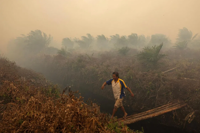
The research house also highlighted increasingly dry weather conditions since June, linked to the ongoing El Niño, with the dry spell appearing more pronounced in Indonesia than Malaysia.
While it remains too early to determine the impact on plantation productivity, HLIB Research cautioned that drier conditions could affect yields with a lag.
Meanwhile, downstream prospects have improved, particularly for oleochemicals.
HLIB Research said the segment recovered both q-o-q and y-o-y, driven by stronger oleochemical demand following supply chain disruptions in the petrochemical industry amid tensions in the Middle East.
Although competition from Indonesian producers remains challenging, near-term demand is expected to stay supported by restocking activity amid geopolitical uncertainties and ahead of the implementation of the European Union Deforestation Regulation or EUDR.
It estimates that every RM100-per-tonne change in its average CPO price assumption would affect the earnings of plantation companies under its coverage by between 3% and 8%.