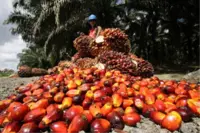
PETALING JAYA: The plantation sector could see output and yields affected by the El Nino phenomenon from next year, although the monsoon season anticipated towards the end of this year may mitigate the severity of the impact.
Tradeview Capital portfolio manager Ng Tzyy Loon expects the effects on fresh fruit bunches (FFB) to emerge only after a considerable lag, leaving 2026 production relatively resilient before a potential supply contraction in 2027.
“We think that the El Nino effect is likely to lag, with FFB yield damage typically showing up 12 to 24 months out. Therefore, 2026 volumes should hold, but 2027 is where the output hit lands,” Ng told StarBiz.
He regarded the haze that’s associated with dry weather in Malaysia as a relatively minor consideration for production, describing it as “more optics than a real yield driver”.
Instead, Ng said the greater support for crude palm oil (CPO) prices would come from tightening supply and Indonesia’s planned B50 biodiesel mandate, which would require a 50% palm-based component in the fuel blend.
“The impact on price is likely due to tighter supply and Indonesia’s B50 mandate eating about 35% of its own CPO,” he said.
Ng expects plantation companies’ earnings in 2026 to be supported by a favourable combination of reasonable production volumes and higher realised CPO prices.
The picture could become more uneven in 2027, when lower regional output may benefit upstream plantation companies through higher CPO prices but raise feedstock costs for downstream refiners.
“For 2027, it is more like a swing year where pure upstream players with high Malaysian FFB exposure benefit most as higher prices more than offset lower volume, while downstream refiners face a feedstock cost squeeze,” Ng said.
He identified SD Guthrie Bhd and Kuala Lumpur Kepong Bhd (KLK) as potential beneficiaries among the large-capitalisation plantation companies, given their upstream exposure and fertiliser costs that had already been locked in.
Ng advised investors to avoid companies solely exposed to downstream refining as the industry enters a potentially tighter supply cycle.
Separately, Bernama reported that the monsoon season expected in December could mitigate the effects of a potential Super El Nino on Malaysia’s palm oil production, according to Malaysian Palm Oil Council (MPOC) chief executive officer Belvinder Sron.
She said the impact of the weather anomaly was generally felt after nine to 12 months, with Malaysia’s production having fallen by 13%, or 2.6 million tonnes, in 2016 following the previous Super El Nino in 2015.
Rainfall between September and November would therefore be critical in determining the severity of the dry conditions and their effect on 2027 production, although the dry weather developed later in 2026 than it did in 2015.
Belvinder said conditions had become drier in Sumatra and Kalimantan since late June, while Malaysia had yet to experience critical dryness despite rising temperatures.
In its statement on Aug 19, the MPOC said CPO prices were expected to remain firm above RM4,600 per tonne in September, supported by tightening supply fundamentals and geopolitical disruptions to global vegetable oil trade.
The council said Malaysia’s palm oil production increased by 9.4% month-on-month (m-o-m) to 1.79 million tonnes in July, but remained below the level recorded a year earlier. This marked the fifth consecutive month of year-on-year (y-o-y) production declines since March.
Exports rose by 14.5% m-o-m to 1.39 million tonnes, driven mainly by stronger purchases from India ahead of Deepavali and continued demand from sub-Saharan Africa, according to the MPOC.
Palm oil stocks nevertheless increased to 2.62 million tonnes in July, but the council did not regard the build-up as a major concern because strong biodiesel demand and the front-loading of exports had kept Indonesian inventories relatively low.
The MPOC said Malaysia’s production generally peaked in September or October before declining in the fourth quarter.
Production growth during the first seven months of 2026 had been supported largely by improvements in the oil extraction rate (OER) of FFB.
The OER was significantly above its 10-year average between January and May following favourable rainfall six months earlier, but subsequently fell below the historical average in June and July.
The council expects it to remain below average for the rest of 2026.
Consequently, Malaysia’s palm oil production could decline y-o-y in the fourth quarter as the seasonal downtrend coincides with weaker extraction rates, tightening supply towards the end of the year, the MPOC said.
Geopolitical disruptions could provide additional price support, with shipping through the Bab al-Mandeb Strait and Red Sea disrupted, while traffic through the Strait of Hormuz had declined, it said.
The MPOC said operations at several major ports and crushing plants in the Black Sea region had also been suspended following an escalation of the Russia-Ukraine conflict, creating uncertainty over sunflower oil exports during the next one to two months.
These disruptions were shifting vegetable oil demand in major importing countries towards palm oil, particularly in India ahead of its festive season.
India’s palm oil imports surged by 49.8% m-o-m in July, compared with increases of 31% for soybean oil and 3.6% for sunflower oil, the council said.
The MPOC added that CPO futures contracts for 2027 traded on Bursa Malaysia Derivatives were above RM5,000 per tonne as at mid-August, reflecting concerns over the possible impact of El Nino.
Meanwhile, Apex Research maintained an “overweight” call on the plantation sector and forecast average CPO prices of RM4,500 per tonne in 2026 and RM4,700 per tonne in 2027.
The research house expects CPO prices to average RM4,600 per tonne in the second half of 2026 (2H26) before rising to RM4,800 in 1H27 and easing to RM4,600 in the subsequent half.
Apex Research retained its 2026 Malaysian CPO production forecast of 20.7 million tonnes, with output during the first seven months accounting for about 52% of the full-year projection.
It expects seasonal improvements to continue over the remainder of 2026 as El Nino-like weather conditions are only beginning to emerge.
However, production in 1H27 could be flat or decline by about 7% y-o-y due to the delayed effects of El Nino on yields, the research house said.
Apex Research expects the yield impact to be most pronounced during 1H27 before progressively easing in the next half.
A longer-than-expected El Nino episode could prolong the pressure on yields and create upside risk to Apex Research’s CPO price forecasts.
The research house added that demand arising from India’s festive-season restocking and biodiesel mandates could limit inventory accumulation as production moves towards its seasonal peak.
Apex Research’s preferred plantation stocks are SD Guthrie, Hap Seng Plantations Holdings Bhd, KLK and Sarawak Plantation Bhd, all of which carry “buy” calls.
The research house favours SD Guthrie and KLK for their exposure across the integrated upstream and downstream value chain, while Hap Seng Plantations and Sarawak Plantation provide pure upstream exposure accompanied by relatively attractive dividend yields.