SHANGHAI: Amid surging global demand for artificial intelligence (AI) computing power and the resulting strain on electricity grids, Chinese green energy enterprises are stepping up efforts to provide integrated China solutions for digital economy decarbonisation.
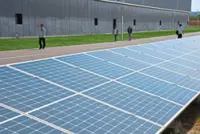
JinkoSolar, one of the world’s largest solar module manufacturers, has explicitly identified energy storage – specifically tailored for AI data centres (AIDCs) – as its “second growth curve”, according to Qian Jing, global vice-president of the company.
The strategic pivot comes as the world grapples with the massive energy footprint of the AI boom.
According to the IEA, global electricity generation to supply data centres is projected to grow from 460 terawatt-hours (TWh) in 2024 to over 1,000 TWh in 2030 and 1,300 TWh in 2035.
China is by far the largest data centre market today together with the United States.
While data centre electricity supply is dominated by coal, renewables, mostly solar PV and wind, are expected to add nearly 90 TWh between 2024 and 2030, supported by an increase in the share of renewables in the electricity grid mix, provincial co-location mandates and policies to prioritise the construction of data centres in renewables-rich western parts of China, it said.
Renewables, according to the International Energy Agency, remain the fastest-growing source of electricity for data centres, with total generation forecast to increase at an annual average rate of 22% between 2024 and 2030, meeting nearly 50% of the growth in data centre electricity demand.
Against this backdrop, Qian said that the explosive, rigid demand for AI computing is fundamentally reshaping the value of energy storage.
“Energy storage is transitioning from a ‘cost centre’ to a ‘profit centre’ by creating diversified revenue streams for data centres, which makes this sector highly price-insensitive,” she said.
According to Qian, unlike traditional grid-side or commercial storage, AIDC storage achieves a business model leap from simple electricity price arbitrage to “computing value plus diversified revenue”.
Through peak-valley arbitrage and demand-shaving, it drastically reduces the exorbitant electricity costs of computing hubs.
Furthermore, storing green power helps data centres meet strict low-carbon mandates, while excess capacity can generate additional income through power grid ancillary services.
This “computing plus storage” high-value model commands a significant premium in overseas markets, including the United States, Europe and the Middle East, where there is an acute need for reliable, direct-connected green power for computing infrastructure, supported by flexible local electricity pricing mechanisms, she said.
To meet the rising demand, JinkoSolar has already signed a series of benchmark solar-plus-storage projects across the Middle East, Europe, the United States and China, eyeing to support the low-carbon transition of global AI data centres while diversifying revenue streams.
Solar module production fell last year for the first time in 20 years, reflecting slowing demand, high inventories and low prices that left much of the industry unprofitable, said Tan Youru, a solar analyst at BloombergNEF. Also at play were rising trade barriers that pushed more module assembly outside of China, he added. — China Daily/ANN