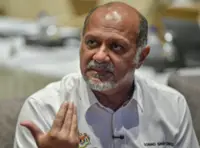
KUALA LUMPUR: The energy transition should be leveraged as a catalyst for broader economic restructuring, with strategic focus areas including artificial intelligence (AI), semiconductors and data centres, to enhance productivity and strengthen the country's economic prospects.
Economy Minister Akmal Nasrullah Mohd Nasir said the energy transition agenda should not be viewed solely through the lens of decarbonisation as integration of energy, digitalisation and economic growth is crucial to strengthening Malaysia's resilience and long-term competitiveness.
"We must look beyond treating energy and digitalisation as separate segments. The objective is to integrate these growth drivers from a holistic perspective,” he said.
"Therefore, a whole-of-government and whole-of-nation approach is needed in order to further strengthen integration,” he said during a Ministerial Session on "Powering Malaysia's Next Growth Chapter: Energy, Economy & Digital In Sync" at the Energy Transition Conference 2026 (ETCon26) on Thursday.
Akmal Nasrullah said Malaysia must place greater emphasis on productivity and value creation as it pursues more integrated economic growth, as energy, digitalisation and economic complexity are closely interconnected.
He said given the growing energy and water demands of digital technologies, energy serves as the foundation for digitalisation as it enhances productivity and drives higher-value economic activities.
"From productivity, we should aim for greater economic complexity and better incomes for our citizens. That is why Malaysia must move beyond sectoral growth and adopt a more holistic approach,” he said.
Akmal Nasrullah also urged the nation to maintain a reliable baseload power supply while advancing its energy transition agenda to ensure long-term energy security and grid stability.
He said natural gas would become increasingly important in maintaining energy security and grid stability as Malaysia gradually reduces its reliance on coal.
"We have to ensure the continuity of our gas supply. Currently, we are going through the process of coming up with the National Gas Roadmap (NGR), and hopefully we can deliver it (NGR) this year.
"The closure of the Strait of Hormuz is a way for us to test our concept as the gas market requires a holistic approach in order for Malaysia to remain resilient,” he added.
Furthermore, Akmal Nasrullah said Malaysia remains an attractive and lower-risk investment destination, supported by policy stability and consistency.
"Energy transition is not only about decarbonisation, but an opportunity for economic restructuring and moving into higher-value industries.
"Strategic investments should help create skilled jobs, develop local talents and strengthen Malaysia’s long-term competitiveness,” he added. - Bernama