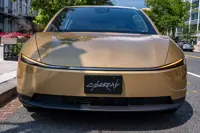
PETALING JAYA: The Investment, Trade and Industry Ministry (Miti) has introduced tighter regulations for the import of completely-built-up (CBU) electric vehicles (EVs).
In a statement, Miti said all CBU EV imports into Malaysia will be subject to two main conditions, effective July 1, 2026.
The first is a minimum cost, insurance, and freight (CIF) value requirement of RM200,000, while the second requirement is a motor power limit of 180 kilowatts (kW) and above.
According to Miti, the policy comes after the expiry of the special exemption period for the EV imports on Dec 31, 2025.
Following the end of the exemption period, the policy on CBU EVs has been reverted to the existing regulations.
The new conditions had been communicated to franchise-approved permit holding companies through an engagement session held on April 30, 2026, the ministry said.
An industry observer told StarBiz that the new regulations are likely aimed at promoting the local assembly of EVs, which would spur job creation in the sector, build up a local vendor ecosystem and encourage wider technology transfer.
“The new rules do not affect EVs that are currently assembled here, including models under marques such as Proton, Perodua, TQ Wuling and Volvo.
“However, the regulation is expected to have an adverse impact on EV sales, particularly for popular brands such as BYD and Tesla.”
Meanwhile, the industry observer opined that local consumers will be left with fewer choices in the EV market as a result of the revised framework.
With the new floor of RM200,000 CIF value, as well as the 180kW power output minimum, a number of entry-to-mid-range EVs will be effectively squeezed out of the fully imported route, resulting in only high-end vehicles qualifying.
“Consumer adoption of EVs is expected to drop, as the policy will have a negative impact on sales of popular marques like Chery, iCaur, BYD, Tesla, and Zeekr,” they noted.
“Proton is the clear beneficiary here, while Perodua may not benefit unless it can improve the appeal of its sole EV model.”
Taking into account that EV companies already have stocks in Malaysia, including those at port and in transit, Miti said it would allow remaining stocks to be sold according to rules under the special exemption period until they are exhausted.
The ministry also stated it remains committed to ensuring a balanced and consistent policy environment to support the development of the local automotive industry while protecting the nation’s economic interests and rights of vehicle users.
In 2022, the government gave a full exemption of import and excise duties, as well as sales tax for all CBU EVs, with the goal of supporting the local EV industry.
While the exemption period was originally scheduled to run until the end of 2023, it was extended twice before it expired at end-2025.