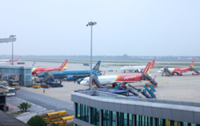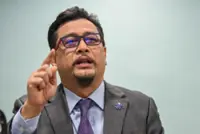
PETALING JAYA: Passenger connectivity between Terminal 1 and Terminal 2 of the Kuala Lumpur International Airport (KLIA) is slated for either the second or third quarter of this year, says Transport Minister Anthony Loke.
He said the first phase of the connectivity programme would involve passengers without checked-in baggage, he told The Edge in a report.
“The more complex part is handling passengers with check-in baggage, which involves coordinating different airlines and ensuring the baggage transfer system works seamlessly. That will come in the second phase,” he said.
Loke said in the report that the key was managing immigration and security checks efficiently.
“All airlines have agreed, and the goal is to streamline connectivity while maintaining proper protocol,” he said.
Loke said that while airlines compete commercially, airlines also need to complement one another to strengthen KLIA as a regional hub.
“Currently, KLIA has strong connectivity within Asean, flying to second-and third-tier cities in Indonesia, Thailand and the Philippines,” he said.
“Our objective is to harness the strengths of Malaysia Airlines, AirAsia and Batik Air said Loke.
He added that the upgrade of the baggage handling system at KLIA, which was a three-year programme, was expected to be completed by December last year but it is still a long way before completion.
On the privatisation of Malaysia Airports Holdings Bhd (MAHB), Loke said he supported the restructuring and privatisation of the airport operator given that operational decisions were “frustratingly slow” in the past.
“Every decision had to go through the board, which included independent directors who often lacked the expertise, acted in their own interests or simply obstructed progress,” he said in the report.
Using the KLIA aerotrain system as an example, Loke said the decision to replace it should have been made well before 2017 given the system’s lifespan of 25 years.
But the award only came in 2022 because of indecision, conflicting interests and a focus on corporate bottom lines rather than national or strategic priorities.
“Previously, MAHB treated national infrastructure like a business for short-term returns. Projects like the Penang International Airport expansion were stalled because cash flow was insufficient, particularly during Covid-19. Investments were frozen, regardless of strategic importance,” he said.
On the new proposed container port in Port Dickson by Tanco Holdings Bhd, Loke said the container port was a private project and the land was private.
“They approached us for approval to build a port and after consideration, we granted them approval in principle. This included going through the National Physical Planning Council for a port in that location,” he said.
He said Tanco Holdings was now applying for planning permission from the state authority.
“Once they get approval to build the port, they will also need an operating licence from the relevant agencies, primarily the Marine Department.
“They must also meet all technical conditions before operations can begin,” he said.
“The process is sequential: first, state approval to build the jetty and port facilities; then, an operating licence from us once all conditions are met,” Loke said.
Loke said the operations of a private port or jetty are not unusual.
“Pengerang in Johor, Lekir and Lumut in Perak have them. Our position is: If investors want to take the risk, the government should not stand in their way,” he said.