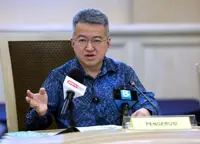
PETALING JAYA: A RM10bil launch pipeline across all markets in 2026 sets the stage for newly appointed Gamuda Land chief executive officer Gim Teck Yew, who stepped into the role in December last year.
Fresh from his tenure as the deputy chairman and chief operating officer of Gamuda Land Vietnam, Gim is now focused on steering the property development arm of Gamuda Bhd towards doubling its sales and profit over the next three years.
“I will carry our ‘town-making’ DNA to more cities, ensuring we continue to build communities that people aspire to live in,” the 35-year-old told StarBiz.
Gamuda Land has built a reputation for refined, lifestyle-oriented townships with extensive landscaping and parks.
This philosophy is applied to its overseas ventures, shaping demand while positioning the locations as premier addresses.
In addition to townships and quick turnaround projects (QTP) in Malaysia and Vietnam, its diversified portfolio includes purpose-built student accommodation in the United Kingdom, mixed-use development in Singapore, and high-rise residential projects in Australia.
Gamuda Land’s growth strategy is anchored on three pillars – regional and overseas market expansion, township maturity and value enhancement, and recurring income from value-accretive assets, Gim shared.
Malaysia remains Gamuda Land’s home base anchor. Here, the strategy centres on deepening and enhancing existing townships, while continuing to innovate and refine core product offerings.
“We have 930 ha of land bank in the Klang Valley, which gives us 10 to 15 years of development pipeline,” Gim said.
In the United Kingdom, the company’s portfolio includes student accommodation projects in London and Scotland, and 75 London Wall, a 14-storey Grade-A office development. Together, these assets combine development upside with recurring income potential.
In Australia, the developer aims to continue pursuing property opportunities that complement the group’s engineering and infrastructure footprint.
Within Gamuda Land’s portfolio, QTP and townships play complementary roles, Gim said.
It is able to achieve faster capital recycling and generate steady earnings from a relatively modest capital base with QTPs, while townships unlock long-term value through phased development, placemaking and community building.
“When deciding on the optimal mix between township projects and QTPs, we consider factors such as market dynamics, land availability, project scale, capital efficiency and whether the land is shovel-ready. Parcels with approved development allow us to execute quickly and align with demand.
“This allows us to deploy resources in a way that balances risk and return, ensures steady earnings, and supports the group’s broader target of sustainable, medium-to long-term growth,” Gim said.
With over two decades of presence in Vietnam, Gamuda Land stands out for its deep market insights, strong local partnerships and established credibility among homebuyers.
“We don’t just have the know-how, we also have the know-who and know-why,” Gim said.
“We are able to capitalise on the reputation, branding and trust that we have in Vietnam.”
Its townships in Hanoi, Ho Chi Minh City and Hai Phong have cultivated a following among the middle-to upper-income segments, the combined size of which reached about 40 million people, comparable to the total population of Malaysia and Singapore.
“This expanding base of working-age consumers, coupled with improving living standards and rising aspirations for quality housing, contributes to sustained and structural housing demand,” Gim said.
With a gross domestic product (GDP) growth of about 8% – the highest in South-East Asia – Vietnam’s expansion is supported by strong domestic consumption, a resilient manufacturing base and sustained foreign direct investment.
While the government prioritises financing for infrastructure development, this dynamic works in Gamuda Land’s favour, Gim shared.
By choosing sites carefully, it stands to benefit from the appreciation in real estate values, which typically follows the completion of infrastructure projects, he said.
Over the last three years, Gamuda Land’s QTP portfolio in Vietnam has generated about RM7.5bil in gross development value (GDV).
Signature projects such as Eaton Park and Elysian have been fully sold, alongside strong take-up of landed residential developments such as Springville, The Meadow and Artisan Park, an evidence of a growing appreciation for high-quality homes within serene, well-serviced communities.
Gamuda Land remains optimistic about its prospects in Vietnam, with land acquisitions and project rollouts planned over four-to six-year horizons.
Ambiance – Gamuda Land’s first project in Hai Phong – is scheduled for launch in May, while Central Park in Hanoi is targeting a September launch, both contributing over RM3bil in GDV.
“We have acquired four new project sites in Ho Chi Minh City and Hai Phong. With a combined GDV of approximately RM4bil, they are targeted to be launched from financial year 2027 (FY27) onwards,” Gim said.
In Malaysia, a QTP in SS15, Subang Jaya, is slated for a September launch, alongside two residential products for the mid-market as Gamuda Gardens and Gamuda Cove continue to mature.
Gamuda Land is also capitalising on the growth dynamics from the Johor-Singapore Special Economic Zone, actively assessing new land acquisition opportunities in the southern state.
Three additional acquisitions in Vietnam are in the pipeline and will be announced in due course, Gim shared.
In Singapore, Chencharu Close, a mixed-use development with a GDV of RM6.6bil, will offer 875 private residences, commercial space, a hawker centre and an integrated bus depot.
The rare transit-oriented precinct is due to launch early next year.
“Collectively, across all markets, the total GDV of these upcoming launches is expected to exceed RM10bil, supporting our target to double sales and profit over the next three years.
“These projects reflect our focus on strategically located, capital-efficient developments that drive sustainable growth, strengthen communities and deliver long-term value.”
Execution discipline remains Gim’s immediate priority, with an emphasis on ensuring timely launches, maintaining steady construction progress and efficient conversion of sales into earnings.
Over the next five years, his focus will centre on disciplined regional expansion, reinforcing Gamuda Land’s Malaysian core while pursuing selective landbank expansion and further enhancing capital efficiency and portfolio balance.
With the property development sector susceptible to global and regional political and economic trends, the key, Gim noted, lies in the agility to respond to risks.
Gamuda Land remains vigilant in monitoring macroeconomic volatility, regulatory shifts and execution risk as it expands regionally, he said.
“Ultimately, diversification remains our strongest risk mitigant.
“With exposure across five key markets – spanning townships, mid-scale residential and recurring-income assets – we are building a balanced portfolio designed to withstand cycles while delivering sustainable long-term growth,” Gim said.